Vietnam’s Ministry of Industry and Trade trained local authorities to operate a centralized public service system, ahead of nationwide implementation.
Building a centralized platform to standardize administrative procedures
On December 18, at its headquarters, the Ministry of Industry and Trade (MoIT) held a training conference on operating the centralized information system for handling administrative procedures, marking a key transition from system development to preparation for official nationwide operation.
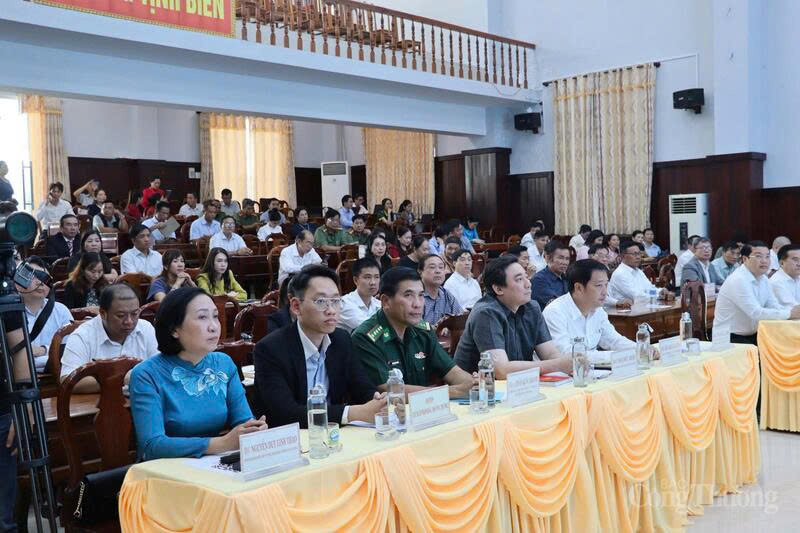
The conference was jointly organized by the E-Commerce and Digital Economy Agency (iDEA) and VNPT Group, with the participation of iDEA leaders, representatives from MoIT departments and agencies, as well as officials from People’s Committees, Departments of Industry and Trade, and local authorities in all 34 provinces and centrally governed cities, both in person and online.
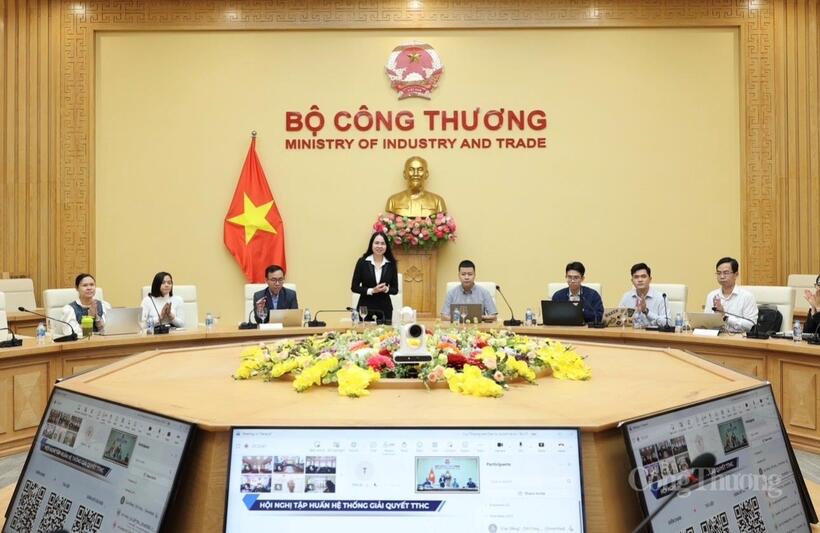
Le Hoang Oanh, Director General of the E-Commerce and Digital Economy Agency, delivers the opening remarks. Photo: Kimtamine
In her opening remarks, Le Hoang Oanh, Director General of the E-Commerce and Digital Economy Agency, stressed that the training represents a pivotal step in moving from system construction to real-world operation. It aims to help local authorities master digital workflows for receiving, transferring, processing, and resolving administrative procedures in the industry and trade sector, ensuring seamless connectivity and synchronization between central and local levels.
According to the Director General, the centralized public service system is not merely a technical tool, but also a key administrative reform instrument that helps transform the way administrative procedures are organized and operated toward greater transparency, standardization, and data-driven management.
The deployment of the centralized system is aligned with major policies of the Party and Government on digital transformation and administrative reform. In particular, Conclusion Notice No. 35-TB/TGV dated July 11, 2025, of the Central Steering Committee’s Working Group on science, technology, innovation and digital transformation assigns ministries to restructure administrative procedures and provide online public services under a centralized model integrated with the National Public Service Portal.
Under this approach, the central level builds the system, while localities exploit and use it in a unified manner ensuring consistency, convenience for citizens and businesses, cost savings, avoidance of duplicate investments, and overcoming fragmented, decentralized local systems.
Implementing this mandate, the MoIT conducted field surveys in localities and assigned the iDEA, in coordination with VNPT, to develop the centralized administrative procedure information system in full compliance with guidelines under Official Dispatch No. 5721/BKHCN-CDSQG dated October 17, 2025, of the Ministry of Science and Technology on system architecture at ministerial and provincial levels.
To date, the MoIT has completed the standardization of 277 administrative procedures under its decentralized authority and deployed them uniformly on the Ministry’s centralized system.
The system is designed with a clear objective: establishing a shared platform at ministerial level for nationwide use, moving toward a single workflow, a unified set of electronic forms, and a centralized data system that is accurate, complete, clean, dynamic, and consistent. Electronic forms are designed once and applied nationwide, while any regulatory updates or data adjustments are implemented centrally across the sector.
Data generated throughout the processing of administrative procedures are centralized, gradually forming a comprehensive industry and trade database. This lays the groundwork for reducing and replacing paper-based dossiers and enabling seamless integration with the National Public Service Portal under a “national digital one-stop-shop” model.
Clarifying governance roles in the centralized model
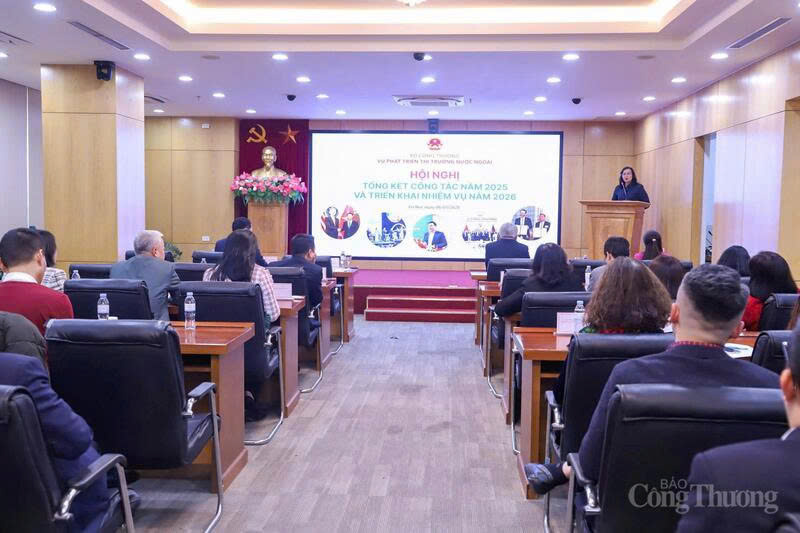
Alongside clarifying the overall model and technical platform, the conference focused strongly on local-level implementation considered the decisive factor for effective system operation. In this context, the role of unit-level administrators was identified as critical, directly affecting consistency, continuity, and lawful authority from central to local levels.
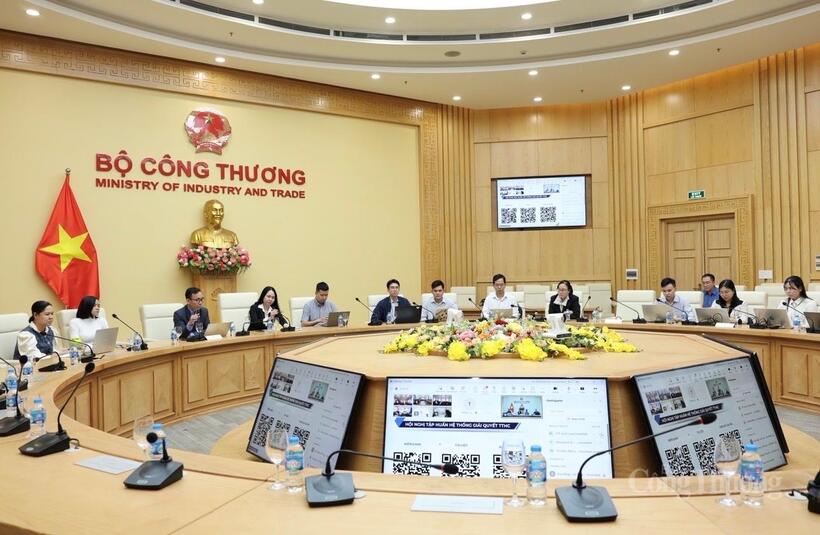
Overview of the training conference on operating the MoIT’s centralized administrative procedure system. Photo: Kimtamine
Under the system design, the unit administrator holds the highest level of authority at the provincial level for industry and trade administrative procedures. This role may be performed on a full-time or concurrent basis and is directly responsible for data management, user administration, and configuration of administrative procedures, ensuring accurate reflection of local organizational structures and compliance with assigned authority.
Clearly defining this role aims to strengthen local accountability, enhance proactive system use, and avoid over-reliance on technical service providers. It is also a core requirement for ensuring the effectiveness of the “central build - local use” model.
The unit governance framework is built around four main pillars: improving system operational efficiency; ensuring strict compliance with procedures and authority; enhancing provincial initiative; and maintaining complete, accurate, and unified administrative data. These are essential prerequisites for turning administrative data into a valuable resource for management, supervision, and administrative reform.
Training content focused on helping administrators operate all key system components in a synchronized manner from organizational structures, user and time management, to data standardization of administrative fields, procedures, and workflows ensuring smooth, unified operation that meets practical management needs.
Key elements such as agency directories, user lists, working time management, sector classification, and workflow configuration were highlighted as critical technical factors enabling automated deadline calculation, progress tracking, and compliance monitoring. These elements form the basis for enhancing transparency, accountability, and service quality for citizens and businesses.
At the conclusion of the conference, the MoIT urged local authorities to promptly complete preparation tasks, actively participate in the pilot operation phase, and provide timely feedback on challenges, ensuring smooth and synchronized nationwide operation of the centralized administrative procedure information system from January 1, 2026.
Beyond equipping officials with technical skills, the training conference underscored the MoIT’s determination to transform administrative procedure management from a fragmented model to a centralized, data-driven approach. Once operational, each processed dossier will not only be handled more efficiently and transparently, but also become a “data unit” serving management, oversight, and policy formulation contributing to more effective state management and improved service quality for citizens and businesses in the industry and trade sector.
Vietnam’s seafood exports to US have surged from USD 39 million in the 1990s to nearly USD 2 billion today, marking three decades of remarkable growth.
Vietnam and Cambodia are stepping up efforts to modernize border trade infrastructure to support bilateral commerce and strengthen regional economic connectivity.
The VCC’s 2025 review highlighted major achievements and outlines key tasks for 2026 to strengthen competition oversight and safeguard consumer rights.
Prime Minister Pham Minh Chinh urged ministries to review mechanisms, remove bottlenecks and accelerate nuclear power projects to ensure progress, nationwide.
At a session with the Central Policy and Strategy Commission, Party General Secretary To Lam urged a shift to a science and technology-based development model.
At a year-end review conference, Deputy Minister Phan Thi Thang called for stronger coordination and policy action to boost export markets and sustain trade growth.
Chairing the 5th meeting of the railway projects steering committee, Prime Minister stresses clear task allocation, strict accountability and resource focus.
On December 29, Prime Minister Pham Minh Chinh chaired a conference on ensuring security and social order to support socio-economic development in the Mekong Delta.