Cross-border e-commerce offers Vietnamese agricultural products faster access to the ASEAN market.
Leveraging an existing consumption space
As the global economy continues to face unpredictable volatility, e-commerce is emerging as a new pillar of modern distribution systems, particularly in developing economies. For Vietnam, e-commerce not only expands the market space for goods in general but also creates a highly promising “shortcut” for agricultural products and local specialties to directly access the ASEAN market, a region that shares many similarities in culture, consumer preferences and purchasing behavior.
Instead of relying entirely on traditional export channels with multiple layers of intermediaries, cross-border e-commerce enables Vietnamese enterprises to shorten the journey of bringing products to international markets. However, to effectively capitalize on this opportunity, enterprises must have a solid understanding of online support models while simultaneously building operational, logistics and financial capacities that are compatible with the specific characteristics of agricultural products.
Cross-border e-commerce allows vietnamese enterprises to shorten the path to international markets.
The transition from the domestic market to cross-border e-commerce is becoming an inevitable trend in modern distribution systems. Speaking on the sidelines of the Conference on Supply Demand Connectivity and Promotion of Vietnamese and Local Products on E-commerce Platforms and Digital Platforms, held in December 2025, Mac Quoc Anh, Vice Chairman and Secretary General of the Hanoi Small and Medium Enterprises Association, said that after the pandemic, e-commerce has shifted decisively from a supporting role to a central position in distribution chains. This transformation has taken place as traditional retail space costs continue to rise, while conventional distribution chains increasingly reveal structural limitations, particularly at the intermediary stage.
For agricultural products, participation in e-commerce platforms not only helps expand market outlets but also enables enterprises to sell directly to end consumers. This allows businesses to move away from a passive position and gradually shift from a purely consumption-oriented objective toward building and enhancing brand value. As the distance between producers and consumers is shortened, Vietnamese agricultural products gain greater opportunities to assert quality standards, traceability and product narratives.
According to experts, e-commerce can be viewed as a “pre-established consumption space,” where enterprises do not need to build their own overseas distribution systems but instead place products on existing platforms. Through real-time data generated by these platforms, businesses can progressively penetrate regional consumption chains, test market responses and adjust their strategies accordingly.
One of the key breakthroughs of cross-border e-commerce lies in the simplification of operational processes. While traditional exports require numerous complex procedures, Vietnamese enterprises can now sell to ASEAN markets in ways that are largely similar to domestic sales. This is made possible by the integrated toolsets provided by major platforms, including multi-country store synchronization, centralized inventory management, cross-border logistics services and multilingual customer support.
As a result, even small and medium-sized enterprises with limited resources can reach millions of international consumers without building cumbersome export-import structures. Cross-border e-commerce therefore represents an effective “shortcut,” enabling businesses to reduce both the time and costs associated with market entry.
Building digital content as a mandatory requirement
Despite its significant potential, placing Vietnamese agricultural products on international e-commerce platforms is only the first step. For products to maintain a stable presence and achieve sustainable growth, enterprises must simultaneously address multiple critical links, ranging from logistics and digital content development to financial capacity and risk management.
Logistics is widely regarded as the “lifeblood” of agricultural exports, particularly in a cross-border e-commerce environment. Agricultural products are inherently perishable and often have short shelf lives; if they are not promoted and distributed in a timely manner to the right target audiences, they can quickly become difficult to sell. For products such as seafood, requirements related to preservation, freezing and transportation to ensure quality are even more stringent.
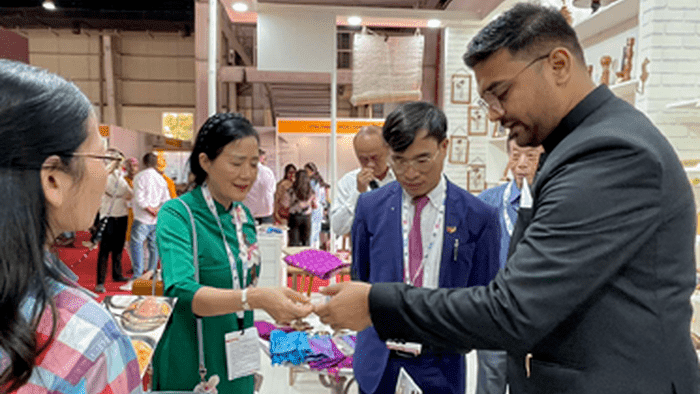
Placing Vietnamese agricultural products on international e-commerce platforms is only the first step. Photo: VNA
Alongside logistics, digital content development is considered a mandatory condition to prevent Vietnamese agricultural products from becoming “invisible” among millions of global offerings. Practical experience from initiatives such as the “OCOP Market” shows that although enterprises initially faced numerous challenges due to limited familiarity with e-commerce and constrained supply capacity, millions of products were successfully sold thanks to close support from ministries and agencies, combined with systematic content development.
For export activities, the establishment of dedicated content channels by localities to introduce cultural values and regional specialties will serve as an important foundation for long-term branding strategies.
Cross-border e-commerce is opening an effective “shortcut” for Vietnamese agricultural products to conquer the ASEAN market. However, to ensure that this pathway does not become a “dead end,” enterprises must make thorough preparations in terms of operational capacity, logistics systems, digital content and financial readiness, while also strengthening their ability to manage and utilize data. Close coordination among state management agencies, major e-commerce platforms and logistics providers will be essential in building a robust ecosystem, enabling Vietnamese agricultural brands to establish a stronger and more sustainable presence on the region’s digital marketplace.
For Vietnam, e-commerce not only expands market space for goods in general but also creates a highly promising “shortcut” for agricultural products and local specialties to directly access the ASEAN market a region characterized by strong cultural affinities, similar consumer tastes and comparable purchasing behavior.
The Ministry of Industry and Trade is seeking feedback on a draft decree on power works protection and hydropower safety, set to replace Decree No. 62/2025/ND-CP.
The State visit by Vietnam’s top leader to Sri Lanka on May 7 - 8 underscores deepening bilateral ties, paving the way for expanded cooperation in trade and investment, and stronger engagement with South Asia.
Party General Secretary and State President To Lam began a state visit to India, as the two countries mark 10 years of comprehensive strategic close partnership.
According to Ambassador Ton Thi Ngoc Huong, the 48th ASEAN Summit holds special significance as it marks the first overseas trip by Prime Minister Le Minh Hung in his capacity as head of the newly formed government.
On the afternoon of May 4, Prime Minister Le Minh Hung chaired the Government’s regular meeting for April 2026, the first such session of the 16th-term Government.
More than 300 companies are set to participate in business matching activities at the International Electronics and Smart Appliances Expo Vietnam (IEAE 2026), scheduled to take place from May 28 to 30 in Ho Chi Minh City.
Vietnam has issued a plan to implement the Law on E-commerce, defining tasks, timelines and coordination to ensure effective enforcement from July 1, 2026.
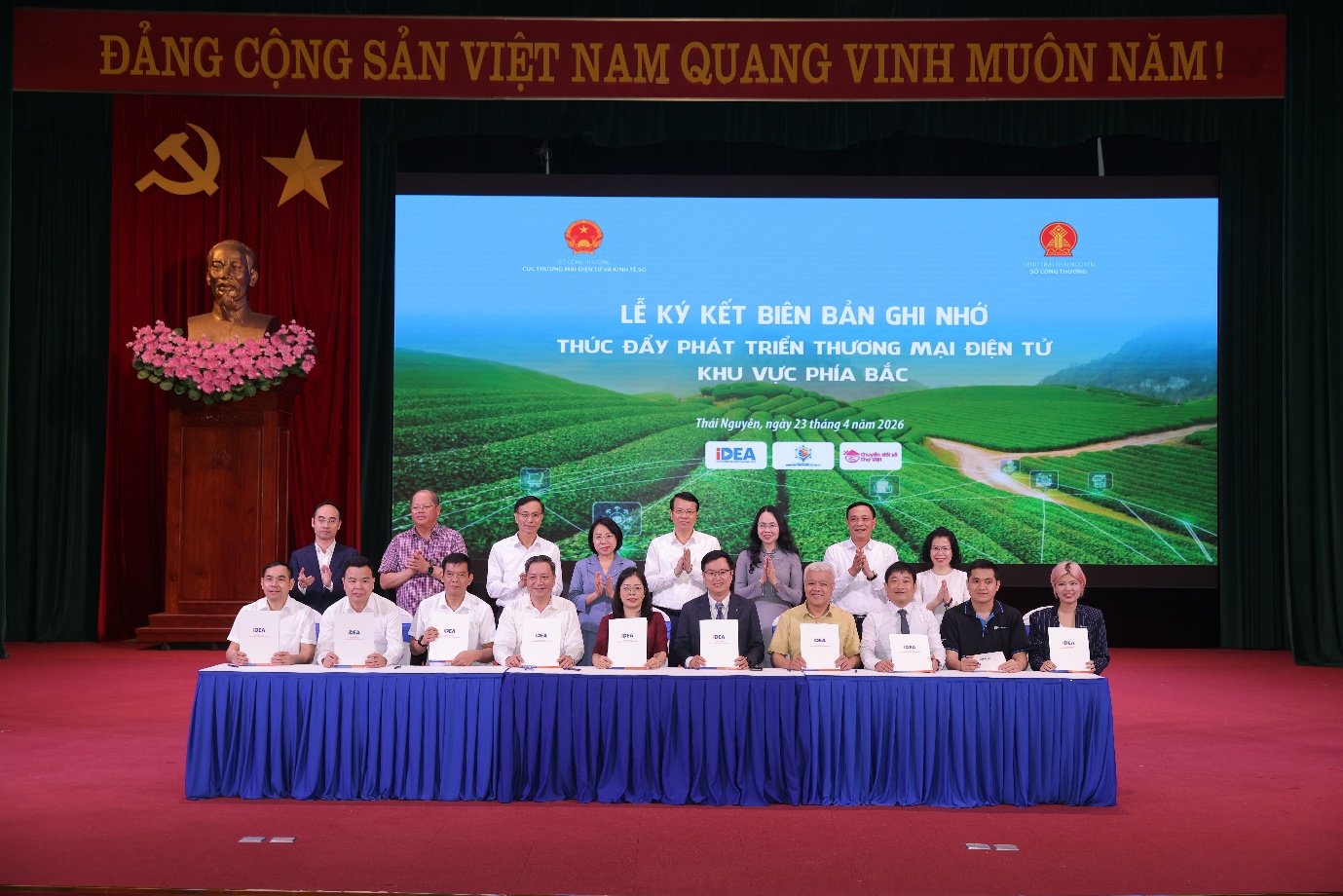
The programme in Thai Nguyen promotes e-commerce in northern Vietnam, linking localities with digital firms to expand markets and boost Vietnamese goods.