Vietnam’s farm, forestry and fishery exports surpassed USD 70 billion in 2025, setting the stage for sustainable growth and market expansion in 2026.
In 2025, Vietnam’s agricultural, forestry and fishery exports recorded impressive growth, reaching more than USD 70 billion, up 12% year on year. This result provides an important foundation for the sector to enter 2026 with the goal of expanding markets, increasing added value and pursuing sustainable development.
Broad-based growth, several products post strong gains
According to estimates, Vietnam’s agricultural, forestry and fishery export turnover in December 2025 reached approximately USD 6.21 billion, up 9.7% from the previous month and 7.9% compared to the same period in 2024. For the full year, total export value is estimated at USD 70.09 billion, up 12% year on year, reflecting a clear recovery and growth momentum across the sector.
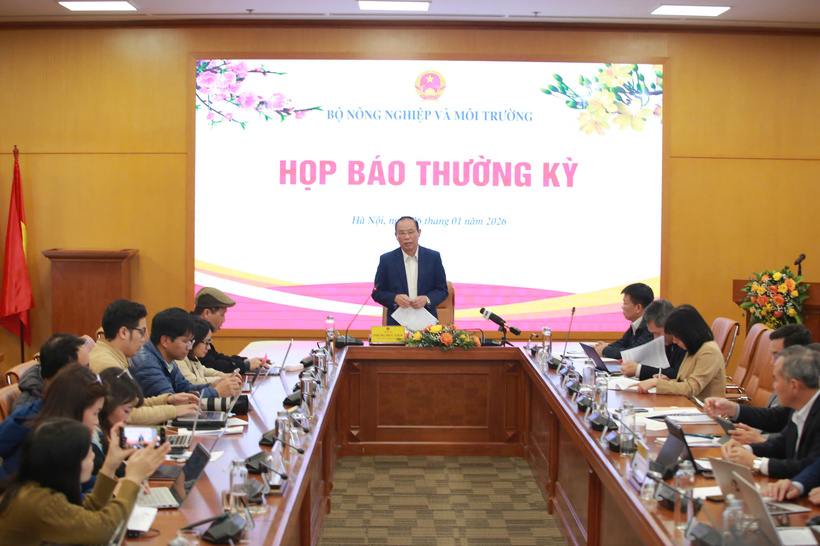
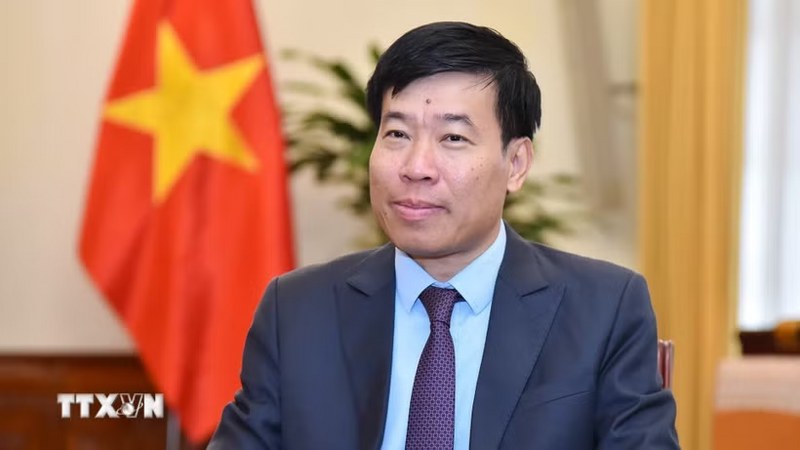
Deputy Minister of Agriculture and Environment Phung Duc Tien chairs a press briefing on January 6, 2026.
In the export structure, agricultural products continued to play a leading role, with a value of USD 37.25 billion, up 13.7%. Seafood exports reached USD 11.32 billion, up 12.7%, while forestry products were valued at USD 18.5 billion, up 6.6%. Notably, livestock products reached USD 627.8 million, up 17.4%, while inputs for agricultural production surged by 27.1%, indicating an expansion of the agricultural value chain.
By market, Asia remained Vietnam’s largest export destination, accounting for 45.2% of total turnover, followed by the US at 22.8% and Europe at 13.2%. Compared with the previous year, exports to Europe increased by as much as 34.2%, while shipments to Africa rose by 68.1%, demonstrating that market diversification efforts have yielded positive results.
In terms of individual markets, China, the US, and Japan continued to be the three largest destinations, with market shares of 22.3%, 20.6% and 7.1%, respectively. Exports to China increased by 15.9%, while shipments to Japan rose by 20.5%, further consolidating the position of Vietnamese agricultural products in key markets.
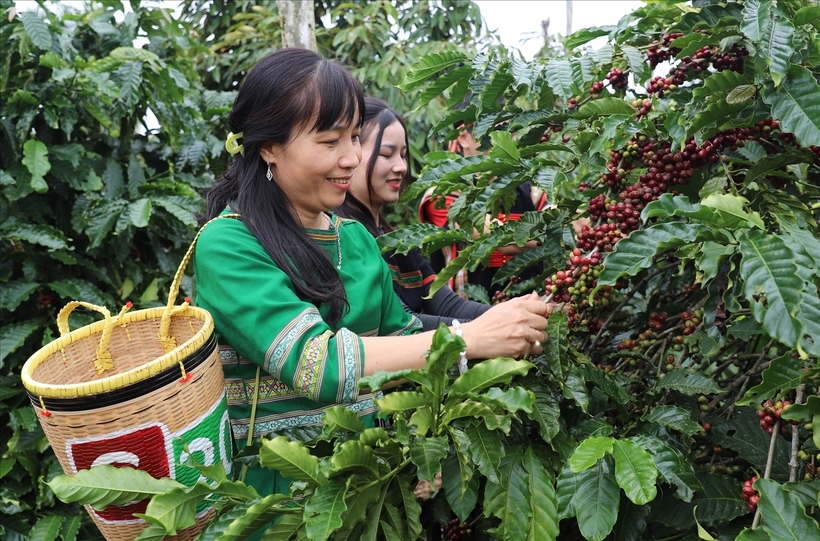
Across product groups, several items recorded outstanding growth. Coffee emerged as the brightest spot, with export value reaching USD 8.57 billion, up 52.5% in value, driven by a sharp rise in average export prices to more than USD 5,600 per tonne. Cashew nuts reached USD 5.19 billion, up nearly 20%, while fruit and vegetable exports totaled USD 8.56 billion, up 19.8%, with China remaining the dominant market.
By contrast, some commodities such as rice, rubber and tea were affected by price fluctuations and changing market demand. Rice exports in 2025 reached USD 4.02 billion, down 29.1% in value, while rubber exports stood at USD 3.25 billion, down 5%. Nevertheless, new and niche markets continued to post positive growth, providing room for recovery in the period ahead.
Focusing on quality, market expansion and value addition
Entering 2026, agricultural, forestry and fishery exports are expected to continue facing numerous challenges, ranging from global economic volatility and trade protectionism to increasingly stringent requirements on quality, food safety and sustainable development.
Against this backdrop, the sector’s objective goes beyond increasing export turnover to improving the quality of growth, raising the share of deeply processed products and expanding market presence in high-value destinations. A consistent orientation is to maintain Vietnam’s position among the world’s top 15 exporters of agricultural, forestry and fishery products, while increasing the proportion of processed goods to around 40%.
In the export structure, agricultural products continue to play a leading role, with a value of USD 37.25 billion, up 13.7%.
China, the US, the EU, Japan, and the Republic of Korea have been identified as key markets. At the same time, the agricultural sector is stepping up efforts to access new and potential markets in the Middle East, Africa and South Asia, aiming to reduce dependence and enhance resilience against external shocks.
To achieve these goals, Deputy Minister of Agriculture and Environment Phung Duc Tien said the sector is determined to implement a comprehensive set of solutions.
First, priority will be given to reviewing and improving the legal framework, as well as standards and technical regulations on the management of agricultural, forestry and fishery product quality, in line with international practices. This is considered a critical foundation for creating a favorable environment for enterprises and farmers to invest in production and develop high-quality agricultural value chains.
At the same time, efforts will be intensified to promote private sector development in agriculture, encourage start-ups and innovation, and ensure equal access for enterprises to capital, land and other resources, particularly in processing and logistics.
Another key solution is to accelerate the development of processing, preservation and mechanization, along with the application of high technology, in order to reduce costs and increase added value. Managing food safety along the entire value chain, developing production clusters linked to raw material areas, and strengthening domestic and international distribution systems are seen as sustainable pathways.
The agricultural sector is also placing strong emphasis on digital transformation and the development of the digital economy in the organization of production and consumption, while enhancing linkages among farmers, cooperatives, enterprises and markets, and integrating more effectively into global supply chains.
In parallel, negotiations to open markets and remove technical barriers, including SPS and TBT measures, will continue to be strengthened. Building the brand of Vietnamese agricultural products as high-quality, safe and environmentally friendly is identified as a long-term, strategic task.
In addition, diversifying markets and access methods, promoting official exports, strengthening traceability, adopting green packaging, developing logistics and expanding cross-border e-commerce are seen as key solutions to enhance competitiveness and ensure sustainable growth of agricultural, forestry and fishery exports in 2026 and the years ahead.
Prime Minister Le Minh Hung attends the 48th ASEAN Summit in Cebu, reaffirming Vietnam’s strong commitment to ASEAN cooperation and regional resilience.
The Ministry of Industry and Trade is seeking feedback on a draft decree on power works protection and hydropower safety, set to replace Decree No. 62/2025/ND-CP.
The State visit by Vietnam’s top leader to Sri Lanka on May 7 - 8 underscores deepening bilateral ties, paving the way for expanded cooperation in trade and investment, and stronger engagement with South Asia.
On the afternoon of May 4, Prime Minister Le Minh Hung chaired the Government’s regular meeting for April 2026, the first such session of the 16th-term Government.
More than 300 companies are set to participate in business matching activities at the International Electronics and Smart Appliances Expo Vietnam (IEAE 2026), scheduled to take place from May 28 to 30 in Ho Chi Minh City.
Vietnam has issued a plan to implement the Law on E-commerce, defining tasks, timelines and coordination to ensure effective enforcement from July 1, 2026.
The programme in Thai Nguyen promotes e-commerce in northern Vietnam, linking localities with digital firms to expand markets and boost Vietnamese goods.