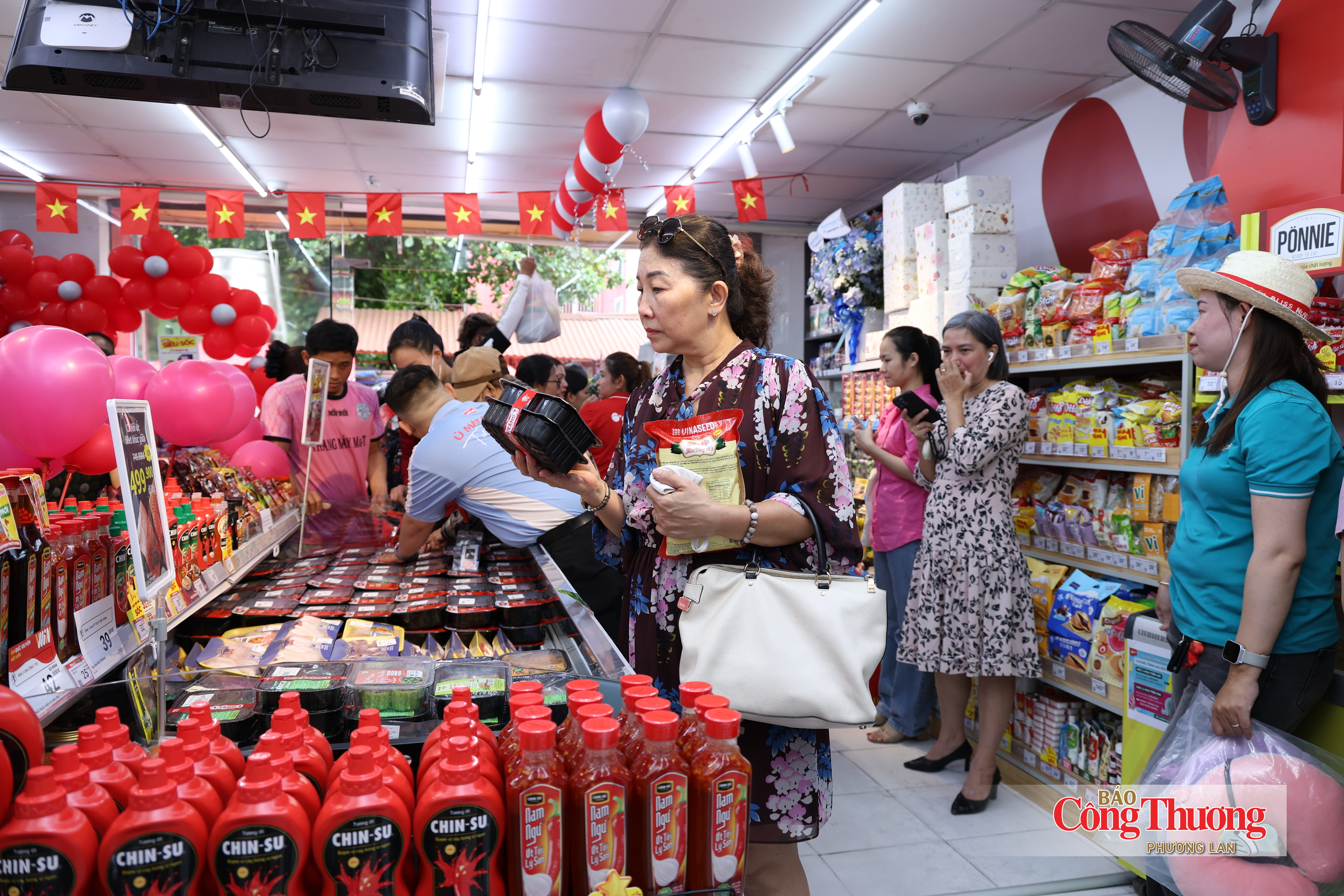
The inclusion of ESG in the evaluation criteria for the Vietnam Industry, Trade and Services Awards 2026 not only broadens the framework for assessing businesses but also helps establish new benchmarks for responsible, transparent and sustainable growth.
Setting new development standards
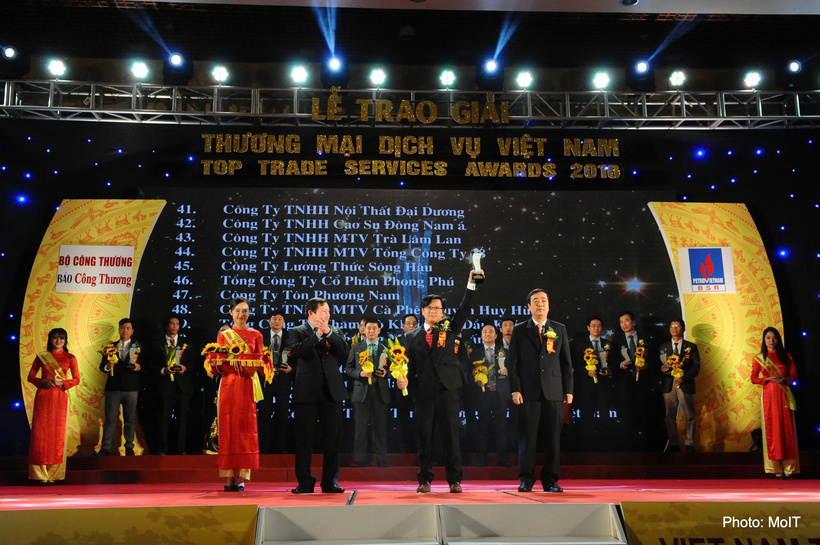
In celebration of the 20th anniversary of Vietnam's accession to the World Trade Organization (WTO), Vietnam Ministry of Industry and Trade has relaunched the Vietnam Industry, Trade and Services Awards 2026, formerly known as the Vietnam Trade and Services Awards, to honor enterprises with outstanding business performance and significant contributions to the development of the industry and trade sector as well as the broader economy.
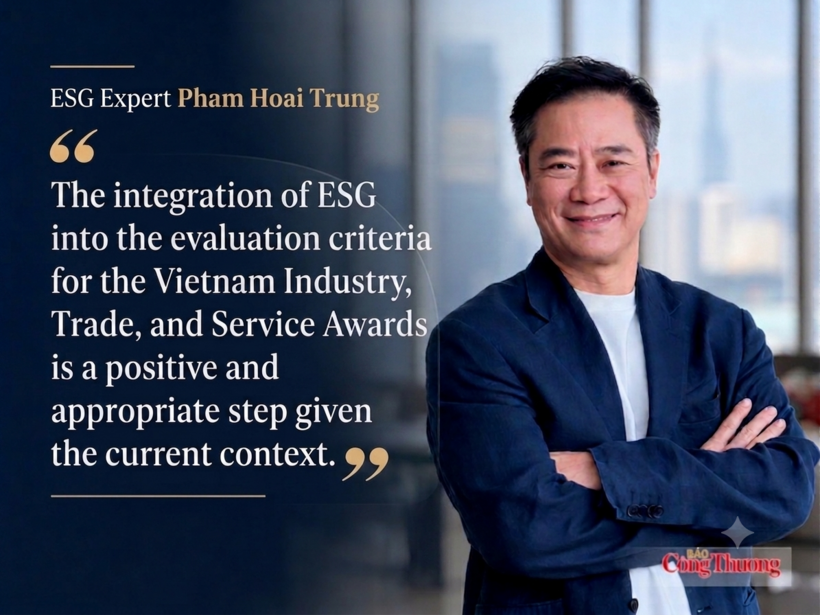
According to ESG expert Pham Hoai Trung, after nearly two decades of deep integration into the global trading system, Vietnamese enterprises have made remarkable progress in terms of scale, production capacity, exports, services, distribution, technology and participation in international supply chains. However, today's business environment is fundamentally different from the early years of integration.
In the past, competitive advantages were largely built on labor costs, pricing, manufacturing capacity and market expansion. Today, businesses must demonstrate not only that they offer quality products at competitive prices, but also that those products and services are created through responsible, transparent and sustainable business models.
Against this backdrop, a ministerial-level award in the fields of industry, trade and services cannot fully reflect a company's capabilities if it focuses solely on revenue, profit, brand recognition or business scale. A notable feature of this year's awards is their more comprehensive approach, evaluating enterprises across multiple dimensions, including business performance, product and service quality, market capability, innovation, digital transformation, social responsibility and sustainable development.
This approach reflects the view that an outstanding enterprise is one that not only grows rapidly but also achieves high-quality growth. Extending the awards to both domestic and foreign-invested enterprises also creates a broader and more balanced assessment framework.
Under the award regulations, the criterion "Sustainable Development and Social Responsibility" accounts for 20 points, including ESG implementation. According to Pham Hoai Trung, this is a positive step that reflects the reality that evaluating businesses solely on revenue, profit, brand value, growth rate or market size is no longer sufficient.
An exemplary enterprise must not only achieve rapid growth but also demonstrate responsibility, sound risk management and positive contributions to the environment, employees, communities and supply chains. Allocating 20 points to this criterion shows that ESG is no longer a supplementary or image-building activity but has become an integral component of corporate competitiveness. Including ESG in the award criteria sends a clear message: businesses must not only deliver strong financial performance but also demonstrate that the way they achieve it is sustainable.
Measuring ESG through indicators and evidence
For ESG to become a fair, transparent and industry-appropriate benchmark, the evaluation process cannot rely on subjective judgments or general claims about being "green." According to Pham Hoai Trung, ESG must be quantified through measurable indicators, verifiable evidence and tangible improvements achieved by enterprises.
Within the 20-point allocation for the "Sustainable Development and Social Responsibility" criterion, the scoring system could be divided into three components, with environmental factors accounting for around 7-8 points, social factors 5-6 points and governance 5-6 points. However, these weightings should be adjusted to reflect the characteristics of each industry.
ESG expert Pham Hoai Trung.
For industrial enterprises, where environmental impacts are generally greater, environmental indicators should receive an appropriate weighting. These may include energy consumption per unit of output, energy-saving rates, greenhouse gas inventories, emissions intensity, water reuse rates, waste recycling rates, environmental compliance, investment in clean technologies and the adoption of management systems such as ISO 14001 and ISO 50001.
For trade and service enterprises, environmental criteria could focus on eco-friendly packaging, reducing single-use plastics, low-emission logistics, green retail practices, energy-efficient operations, green procurement and product traceability.
Pham Hoai Trung also suggested that the scoring framework could consist of two layers: common ESG criteria applicable to all enterprises and industry-specific criteria tailored to different sectors. This approach would ensure a consistent basis for comparison while avoiding a one-size-fits-all evaluation of businesses with different operating characteristics.
In addition to performance indicators, ESG submissions should be supported by verifiable evidence, including sustainability reports, emissions inventory reports, ISO certifications, energy data, labor records, compliance reports, internal policies and documented year-on-year improvements. Under such a framework, ESG would no longer be merely a source of bonus points for companies that make positive claims, but rather a mechanism for identifying businesses that genuinely demonstrate stronger governance, more efficient operations and more sustainable competitiveness.
The adoption of ESG as an award criterion is also expected to create a broader ripple effect across the Ministry of Industry and Trade's business community, as the awards are intended not only to recognize achievements but also to guide future development standards.
The criterion creates positive pressure for businesses to review their operating models. Industrial enterprises will need to pay greater attention to energy efficiency, emissions reduction, waste management, occupational safety and clean technologies. Trade and service enterprises, meanwhile, will be encouraged to strengthen green retail practices, eco-friendly packaging, low-emission logistics, customer data protection, service quality and consumer responsibility.
ESG also establishes a new benchmark for comparing enterprises. Once incorporated into the scoring system, sustainable development is no longer an optional effort to improve corporate profiles but becomes an essential element of competitiveness. Companies with stronger data management, greater transparency, clearer social responsibility and better preparedness for the greening of supply chains will gain an advantage in building market credibility.
The impact of ESG criteria may also extend throughout supply chains. As buyers, importers, banks, investors and consumers increasingly prioritize ESG, the awards can encourage businesses to proactively prepare the necessary data, reports, certifications and governance systems rather than react to growing requirements related to product traceability, carbon footprints, labor responsibility, environmental standards and information transparency.
According to Pham Hoai Trung, if ESG criteria are more clearly quantified, supported by verifiable evidence and designed to prevent greenwashing, the awards will become more than a recognition program. They could serve as a practical tool for advancing the green transition across the Ministry of Industry and Trade's business community. In that case, each award-winning enterprise would be recognized not only for strong business performance but also as a model of responsible growth, helping promote a culture of sustainable production and consumption across the market.
ESG expert Pham Hoai Trung: "Including ESG in the award scoring framework is a sound first step. The next step is to make ESG measurable, comparable and verifiable in practice."
A visit and fact-finding tour in Can Tho city by National Assembly Chairman Tran Thanh Man and President of the National Assembly of Côte d’Ivoire Patrick Achi has opened up opportunities for Vietnamese businesses to showcase their production and processing capabilities, expand markets and strengthen connectivity with Côte d’Ivoire.
NSMO is proactively preparing operating plans, strengthening on-call arrangements and coordinating with relevant units to ensure the national power system operates safely and reliably during Viet Nam’s National Day holiday from August 29 to September 2, 2026.
Growing freight flows create room for Hung Yen’s logistics sector, but better connectivity and services are needed for the province to become a leading regional hub.
In the seven months of 2026, industry, retail sales and imports and exports all posted strong growth. The Ministry of Industry and Trade (MoIT) continues to roll out solutions to contribute to achieving the double-digit growth target.
The Electricity Authority of Viet Nam (EAV), under the Ministry of Industry and Trade, and the Global Energy Alliance for People and Planet have recently signed a Memorandum of Understanding (MoU) to strengthen cooperation in supporting Vietnam’s energy transition.
A visit and fact-finding tour in Can Tho city by National Assembly Chairman Tran Thanh Man and President of the National Assembly of Côte d’Ivoire Patrick Achi has opened up opportunities for Vietnamese businesses to showcase their production and processing capabilities, expand markets and strengthen connectivity with Côte d’Ivoire.
NSMO is proactively preparing operating plans, strengthening on-call arrangements and coordinating with relevant units to ensure the national power system operates safely and reliably during Viet Nam’s National Day holiday from August 29 to September 2, 2026.
The Electricity Authority of Viet Nam (EAV), under the Ministry of Industry and Trade, and the Global Energy Alliance for People and Planet have recently signed a Memorandum of Understanding (MoU) to strengthen cooperation in supporting Vietnam’s energy transition.
Bringing supporting industries within the scope of the Key Industries Law is expected to establish a unified legal framework, expand development opportunities for businesses, and enhance domestic localization capacity.
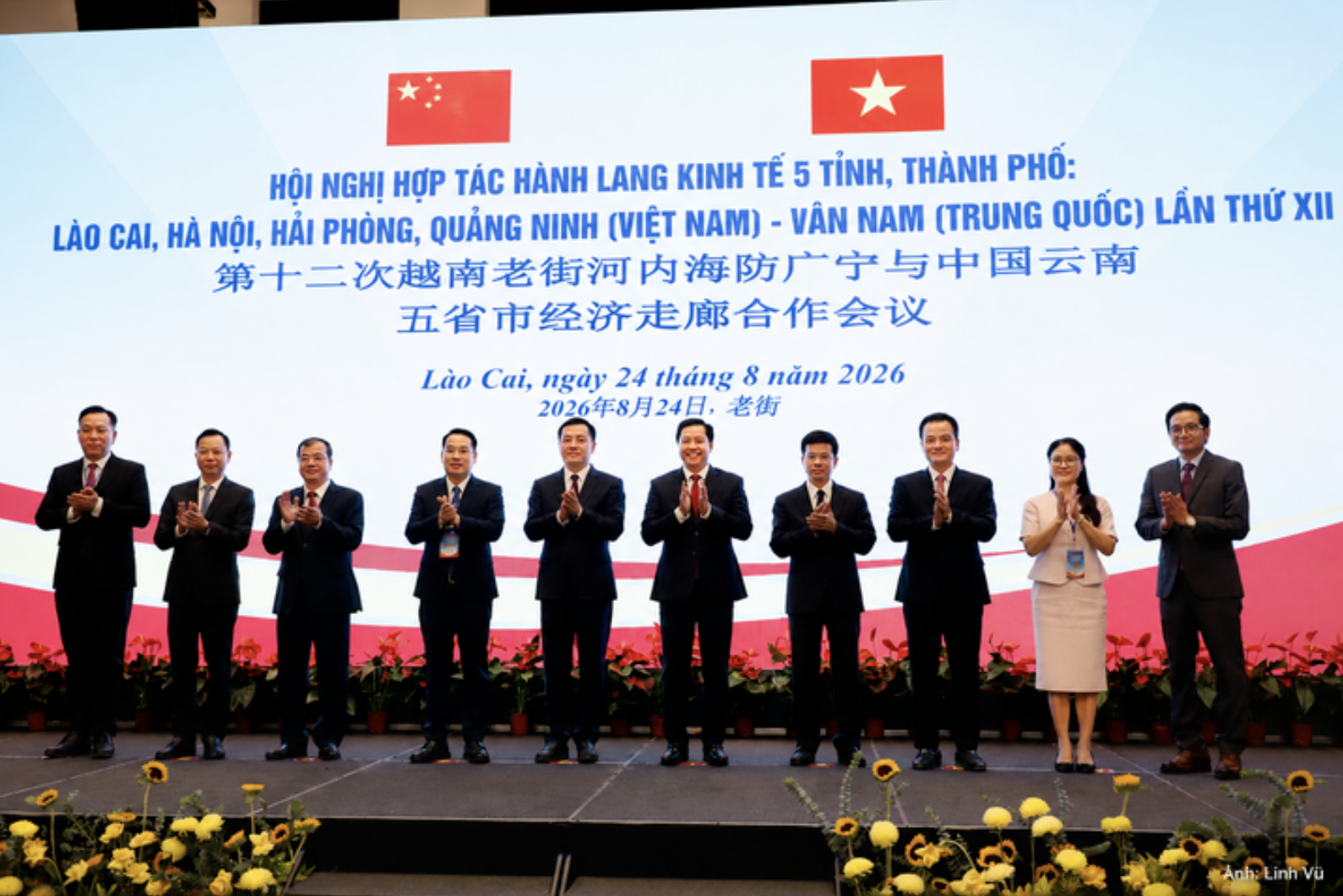
This morning (August 24), the 12th Conference on Cooperation among the Five Provinces and Cities along the Kunming-Lao Cai-Hanoi-Hai Phong-Quang Ninh economic corridor between Vietnam and China was held in Sa Pa, Lao Cai Province.