General Secretary said double-digit growth is sustainable only if resources are fully accounted for, efficiently allocated and anchored in macroeconomic stability.
On March 2, General Secretary To Lam held a working session with the Central Policy and Strategy Commission on the drafting of a Central Resolution outlining strategic solutions to promote double-digit economic growth in tandem with establishing a new growth model.
Designing a growth model through 2045
Addressing the meeting, General Secretary To Lam acknowledged and highly appreciated the contributions aimed at finalizing the draft Resolution on strategic solutions to foster double-digit economic growth associated with shaping a new growth model.
He emphasized several key orientations. First, it is necessary to correctly define the scope and stature of the Resolution, placing it within a historical context and a development-oriented mindset. The Resolution must serve as a “master blueprint” for Vietnam’s double-digit growth model through 2045. This represents a strategic determination and a historic choice to realize the nation’s development aspirations. However, such growth must ensure stability, quality, inclusiveness, greenness and self-reliance.
The General Secretary clarified that this entails conveying strong resolve and steadfast commitment to objectives without wavering in the face of challenges; upholding high quality and firmly rejecting growth at all costs or trade-offs involving macroeconomic stability, environmental protection and social progress. A long-term vision is required to ensure that today’s growth does not undermine the foundations for tomorrow’s development or deplete resources for future generations. A clear roadmap, aligned with objective economic laws, must be established. Earlier phases should lay the groundwork for subsequent stages, ensuring sustained double-digit growth over the long term to realize the 2045 target.
“This must be defined as a guiding principle for action so that the entire political system shares a unified understanding and acts in concert, ensuring that the Resolution is implemented consistently, effectively and sustainably,” he stressed.
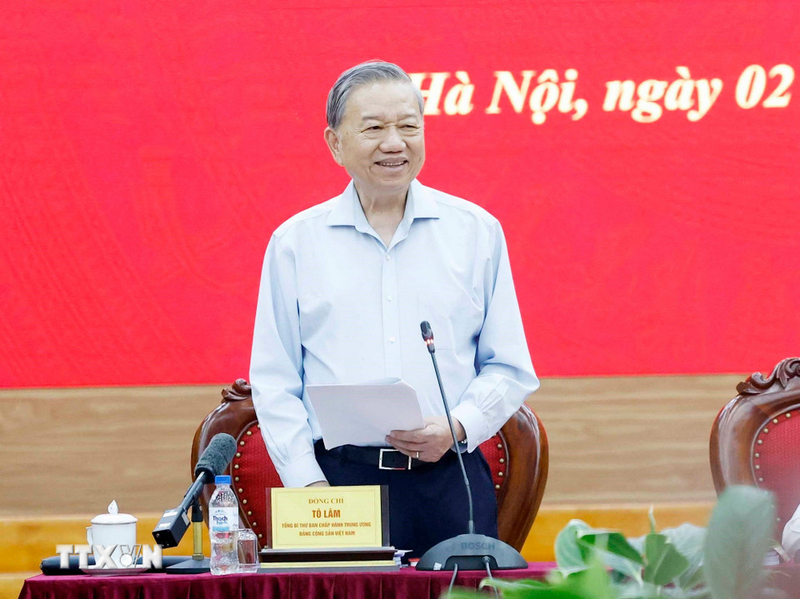
General Secretary To Lam delivers remarks. Photo: VNA
He further directed that the content of establishing a new growth model be clarified. This must involve a fundamental transformation of the economy’s driving structure, in other words, changing the “engine” of the economy rather than merely adjusting operating policies.
This systemic transition requires synchronized and comprehensive change from the central to local levels, from the public to the private sector, shifting from a management mindset to one of facilitation and creation in order to build a modern, high-productivity and globally competitive economy. At the same time, the new growth model must not focus solely on economic aspects but properly integrate sustainable development issues: growth must go hand in hand with higher incomes, improved living standards, job creation, reduced unemployment, poverty alleviation, narrowed income gaps, environmental protection, and socio-cultural development.
“Creating a positive and optimistic atmosphere is critically important; people’s incomes and living standards must be improved. Growth that fails to enhance people’s lives is unacceptable,” the General Secretary underscored.
Highlighting the need to clarify feasible resources to achieve double-digit growth, he noted that such a growth scenario is challenging but must be grounded in concrete calculations. It is necessary to clearly identify sources of capital mobilization, including domestic savings, FDI, and capital markets, as well as market-based resource allocation mechanisms and clearly defined macroeconomic safety thresholds.
“Above all, the principle of economic accounting and efficient resource allocation must be strictly observed. High growth is sustainable only when all budgetary resources, land, natural resources, credit capital and public assets are properly and fully accounted for, allocated efficiently and subject to accountability,” he emphasized.
He also stressed the need for proactive risk governance to ensure high yet safe and sustainable growth. All growth decisions must be assessed in relation to risk exposure and the economy’s resilience. This requires close alignment with reality, strengthened forecasting capacity and flexible management to tightly control risks related to inflation, public debt, and financial and monetary markets, while effectively responding to geopolitical, trade and global supply chain disruptions.
Rapid growth must be accompanied by environmental protection, social security, reduced regional disparities and strengthened public trust. Economic development must be closely integrated with national defense and security, and foreign policy must be implemented effectively to maintain a peaceful and stable environment for long-term development.
He underscored the importance of strict implementation discipline and institutional mechanisms. A synchronized leadership, governance and supervisory system must be established to mobilize society toward development goals. Double-digit growth can only be achieved under the firm leadership of the Party, effective governance, clear decentralization, and a transparent, integrity-based environment that inspires trust and harnesses the collective strength of citizens and businesses.
Substantive reform in implementation is required, shifting from being “correct in policy” to being “correct and effective in action.” Accountability of leaders must be strengthened, performance managed by outcomes, and stagnation, avoidance and fear of responsibility eliminated. This is decisive in turning the political will for double-digit growth into tangible results.
Science and technology as pillars of growth
To realize growth objectives, the General Secretary outlined key tasks and solutions. A fundamental shift in development thinking across the political system and society is required. Growth should be viewed not merely as an economic indicator but as a central, urgent and strategic political task. The mindset of playing it safe, short-termism and fragmented approaches must be replaced with a spirit of “daring to think, daring to act and daring to take responsibility,” alongside coordinated action, clear division of responsibilities and close cooperation between central and local authorities and businesses.
On that basis, science and technology, innovation and digital transformation must become the core drivers of the new growth model, supported by institutions that encourage research and development. The innovation ecosystem, digital infrastructure, big data and artificial intelligence must be strengthened, along with close linkages among the State, enterprises, research institutes and universities to commercialize research outcomes and integrate more deeply into global value chains.
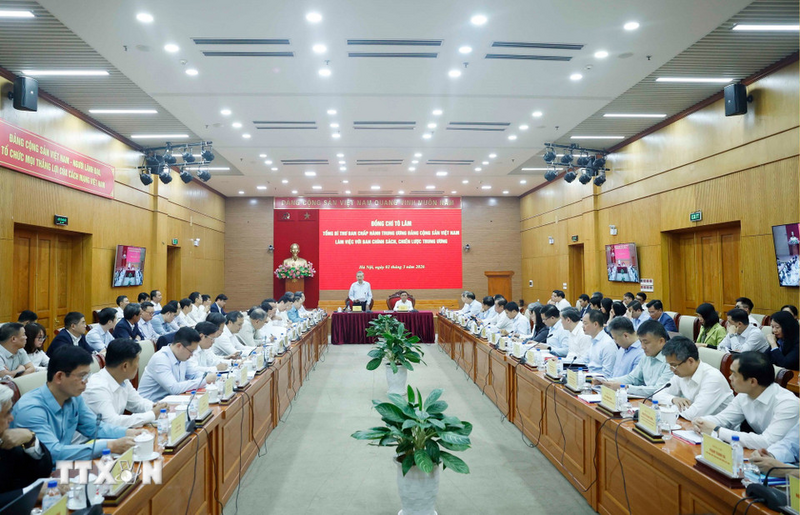
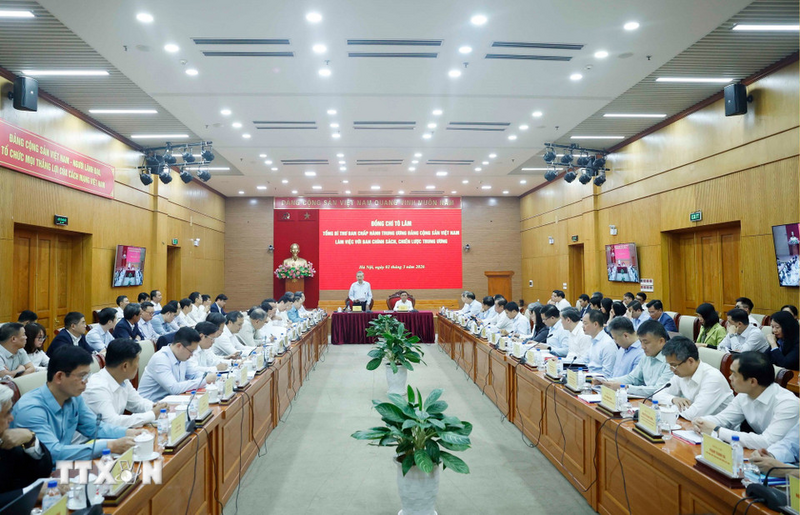
Delegates attend the working session. Photo: VNA
Institutional reform must be substantive and comprehensive, turning institutions into a competitive advantage. Legal regulations must be clear and uphold the rule of law. A cadre corps, especially leaders and heads of agencies must be built with vision, competence and integrity. A clean political system free from corruption must effectively support citizens and businesses.
Macroeconomic stability must be maintained, inflation controlled, major balances ensured, strategic infrastructure developed, high-quality human resources fostered and national governance capacity enhanced; growth must be aligned with social equity, environmental protection and climate adaptation.
“We will not trade growth for inflation, asset bubbles or uncontrolled public debt. Fiscal and monetary policies must be closely coordinated to meet these requirements,” he stressed.
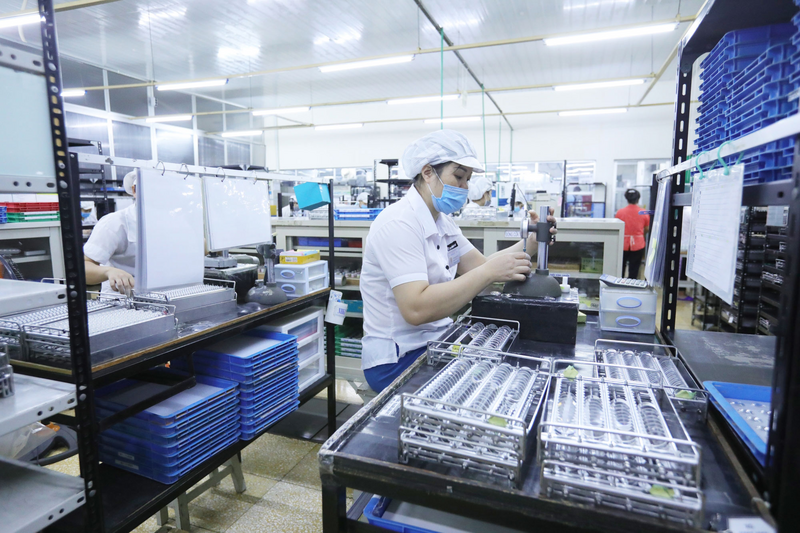
The industrialization process must be redefined toward high technology, smart manufacturing and the digital economy, upgrading the economic structure and mastering core technologies.
The domestic market of over 100 million people must become a sustainable pillar of growth. This requires synchronized development of all types of markets, income enhancement, modern consumption stimulation, expanded private investment and the leading role of public investment, while promoting high value-added exports in balanced alignment with the domestic market.
A harmonious economic structure among the state, private and FDI sectors must be established on the basis of fair competition and value chain linkages, generating synergies and enhancing the autonomy of each sector.
National development space must be reorganized toward substantive regional linkages, concentrating human resources on growth poles, economic corridors, financial centers and innovation hubs, and effectively exploiting marine, urban and digital economic spaces.
International integration must shift toward a proactive and selective approach, closely linked with strengthening internal capacity, increasing value added and elevating the position of Vietnamese enterprises within global value chains.
Growth must be embedded within the broader framework of ensuring national defense and security, social welfare and environmental protection, without trading stability, equity and sovereignty for mere growth. This will create a solid and enduring foundation for sustainable development and long-term national strength.
The General Secretary requested the Central Policy and Strategy Commission to carefully study, distill and fully incorporate the contributions in order to finalize this important draft Resolution and report it to the Politburo.
The revised Investment Law 2025 reduces conditional sectors and eases procedures, creating stronger momentum to attract and retain foreign capital in Vietnam.
General Secretary said double-digit growth is sustainable only if resources are fully accounted for, efficiently allocated and anchored in macroeconomic stability.
Rising tensions in the Middle East may drive up oil prices and freight costs, disrupting Vietnam’s import-export and supply chains the Import-Export Department warns
Vietnam’s manufacturing PMI rose to 54.3 in February, the highest in four months, as output and new orders strengthened and business confidence improved.
Technological innovation, equipment optimization and smarter energy management are vital to cutting consumption and boosting long-term competitiveness in industry.
The Prime Minister urged renewable energy cooperation and encouraged Portuguese firms to join offshore wind power and energy infrastructure projects in Vietnam.
On February 26, Prime Minister Pham Minh Chinh received Belgian Ambassador to Vietnam Karl Van Den Bossche to discuss bilateral cooperation in economy and trade.
The Ministry of Industry and Trade convened a meeting to advance public service culture, aiming to foster pride, discipline and cohesion across the sector.