|
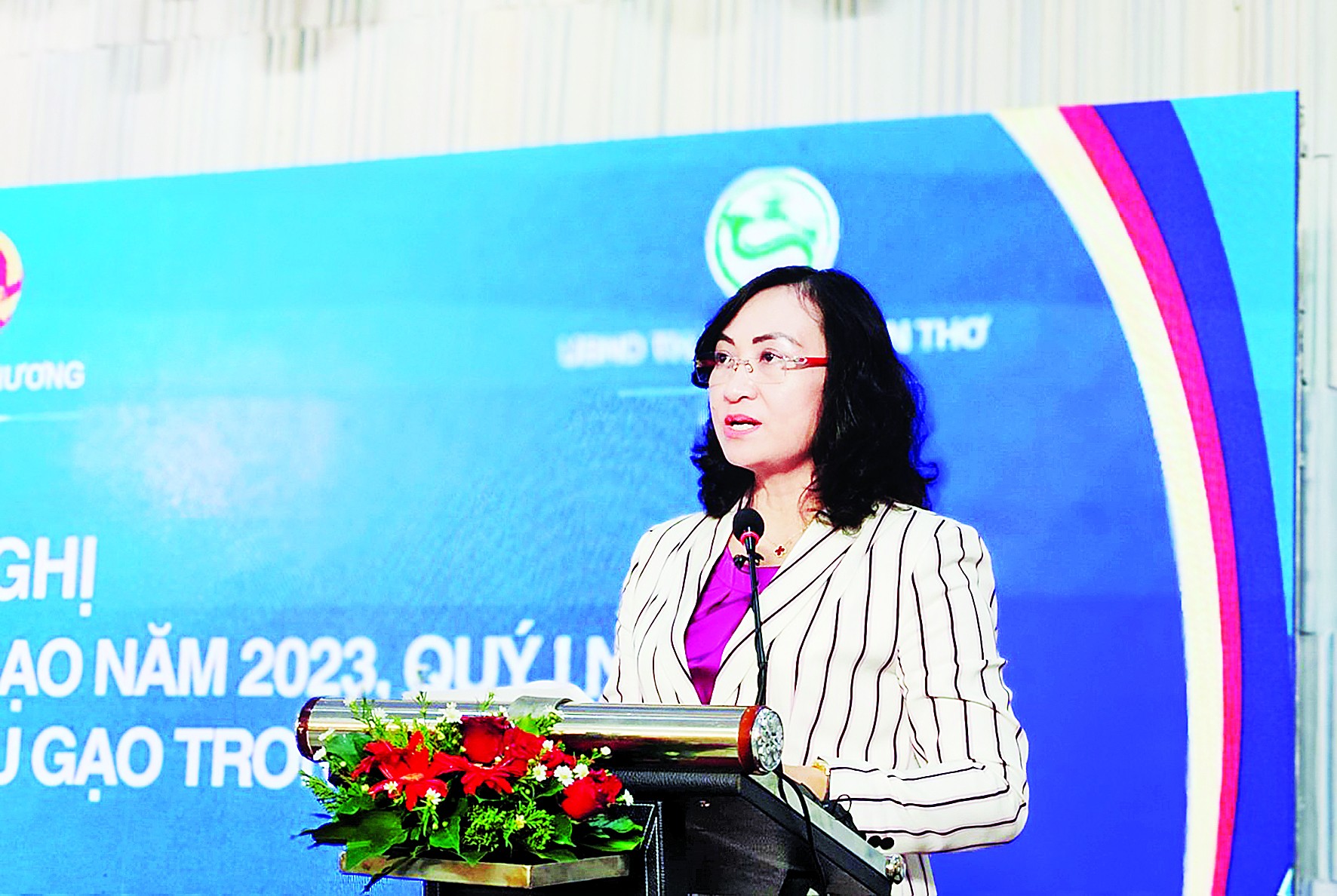
| Deputy Minister of Industry and Trade Phan Thi Thang gives a speech at the conference to review Vietnam’s rice exports in 2023 and the first quarter of 2024 |
Bright prospect for rice exports
A conference to review Vietnam’s rice exports in 2023 and the first quarter of 2024, and guide the country’s rice exports for the year was organized in Can Tho City on April 26 by the Ministry of Industry and Trade in coordination with the Ministry of Agriculture and Rural Development and the Can Tho City People’s Committee. Nguyen Anh Son, Director of the Ministry of Industry and Trade’s Agency of Foreign Trade, said at the event that rice exports reached more than 2.18 million tonnes in volume and almost US$1.43 billion value in the first quarter of 2024, 17.6 and 45.5 percent higher than the same period last year, respectively, with export prices growing 23.6 percent to reach an average of US$653.9 per tonne.
The Philippines remained the largest importer of Vietnamese rice, accounting for 46.4 and 45.5 percent of Vietnam’s rice export volume and value, respectively, followed by Indonesia. Rice sales to the Indonesian market were up 199.7, 308.8 and 36.4 percent in volume, value and prices, respectively; Malaysia up 28.8, 60.6 and 24.7 percent.
Exports of fragrant rice, ST rice products, premium white rice, and Japonica rice increased significantly. Rice exporters have effectively utilized market opportunities brought in by new-generation FTAs. In addition to traditional markets of China, the Philippines, and Africa, Vietnam has exported to discerning markets like European countries.
Nguyen Phuoc Thien, Vice Chairman of the Dong Thap Provincial People’s Committee, said adverse developments in the global economic and political situation and the growing demand for food reserves have helped his province attract an increasing number of rice export orders and export rice at high prices. However, increases in the global rice prices have led to increases in the domestic rice prices, which makes it difficult for purchasers of rice for export.
Nguyen Ngoc Nam, Chairman of the Vietnam Food Association (VFA), said importing countries’ continuous policy changes have challenged rice exporters. Indonesia is gradually reducing its dependence on rice supply from Vietnam by opening smaller contracts for other countries like Malaysia, while European markets have increasingly stringent requirements for quality and traceability of products.
Nam proposed that the Ministry of Industry and Trade strengthen market research, forecasting of import demand, stimulate promotion of rice sales to foreign markets, and help businesses build export orientations through updating them on policy information.
|
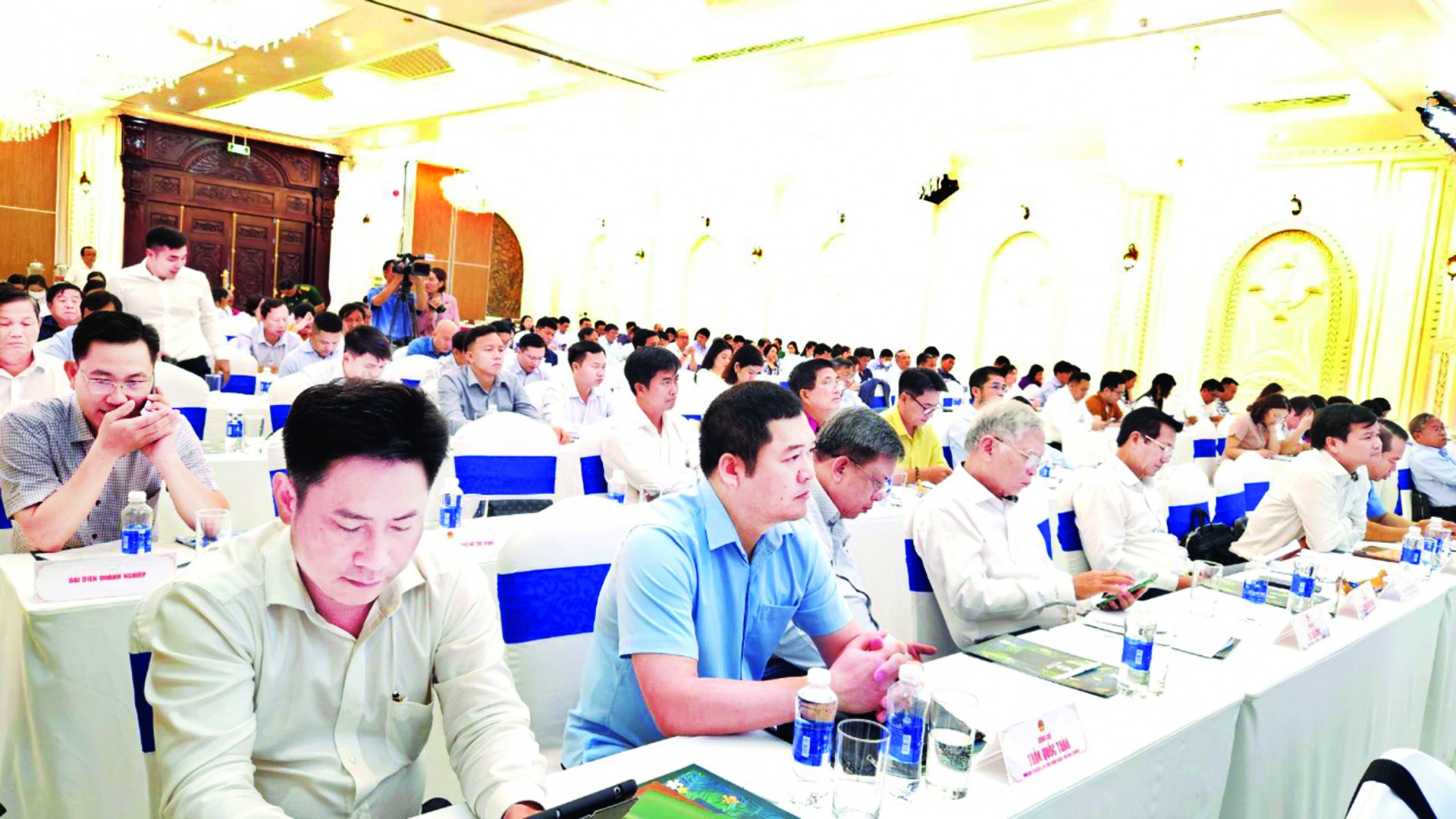
| At the conference to review Vietnam’s rice exports in 2023 and the first quarter of 2024 |
Building value chains to increase value
Vina Rice Director Tran Truong Tan Tai said his company has chosen exporting high-quality, high-value rice to discerning markets of the EU, Canada, Japan, and the Republic of Korea (RoK) at a price of US$980 upwards per tonne, and significant investment in building value chains is crucial in this regard.
Businesses should and need to develop branding and invest in rice production and technology, Tai said. The State Bank of Vietnam needs to have financial support policies for businesses in order to help them purchase rice from farmers at stable prices, he added.
At the conference, Deputy Minister of Industry and Trade Phan Thi Thang emphasized the need to fully ensure national food security in all situations and the domestic market’s stability, and at the same time boost sustainable, efficient rice exports in compliance with the country’s conditions.
She also emphasized the importance of cooperation between rice traders and farmers, as well as cooperation among businesses, which is crucial to ensure stable rice supply and quality. Market expansion and diversification, and improvement of Vietnamese rice prestige in foreign markets are important, Thang said.
Businesses need to take the initiative in updating themselves on information from the Ministry of Industry and Trade, relevant ministries and sectors, and the Vietnam Food Association in order to efficiently leverage FTAs that Vietnam has signed and will sign, Thang said.
The Ministry of Industry and Trade will further gather recommendations and proposals from ministries, sectors, localities, associations, and rice exporters to ease problems faced by businesses and reach efficient and sustainable development of rice production and exports, Thang said.