The Ministry of Industry and Trade (MoIT) urges training institutions to adapt to restructuring, build links with businesses and align workforce training with the practical needs of each major industry.
Developing a workforce training strategy for the industry and trade sector
At the conference to review training and professional development in the 2025 - 2026 academic year and outline tasks for the 2026 - 2027 academic year on the afternoon of October 29, Deputy Minister of Industry and Trade Phan Thi Thang stressed that institutions under the Ministry must proactively adapt to organisational restructuring. She also called for stronger links between educational institutions, management agencies and businesses to improve training effectiveness and meet the workforce development needs of the entire industry.
According to Deputy Minister Phan Thi Thang, the restructuring of the training institution system is being carried out in line with the Party's policies and the Government's plan. For universities, the restructuring orientation has been established and institutions are preparing their proposals. Meanwhile, the identified approach for colleges is to transfer them to local authorities.
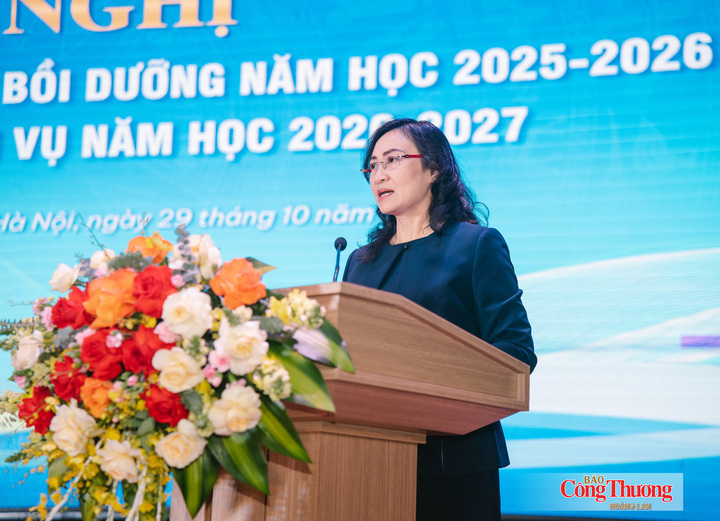
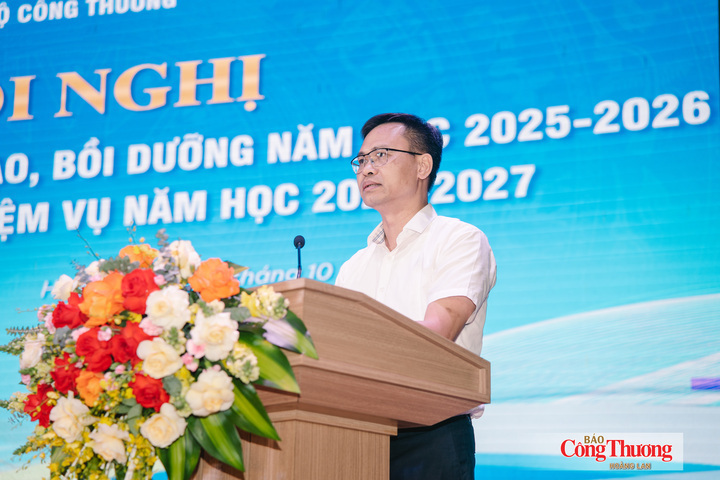
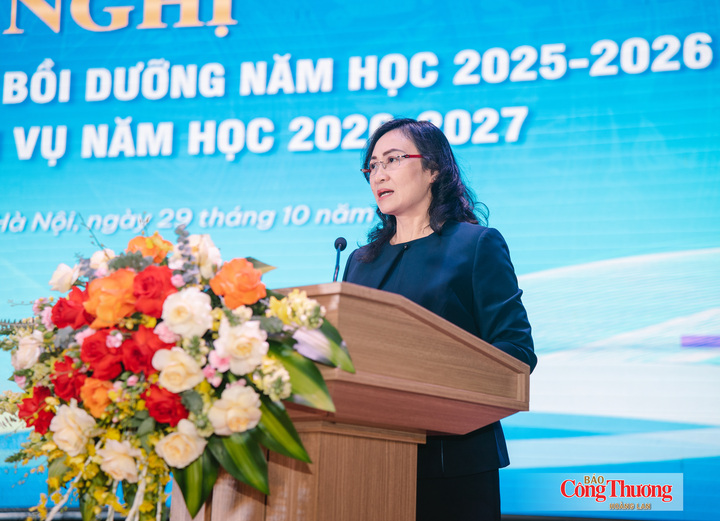
Deputy Minister of Industry and Trade Phan Thi Thang delivers remarks at the conference.
The MoIT wishes to retain certain universities and specialised training institutions to meet the industry's workforce development needs. However, their organisation and restructuring must comply with the overall direction. Therefore, institutions need to proactively adapt to changes in their management arrangements while continuing to fulfil their role in training personnel for sectors under the Ministry.
Deputy Minister Phan Thi Thang said that transferring institutions to local authorities would mainly change the management authority responsible for organisational matters, personnel and budgets, while training in the industry's specialised fields must continue. Institutions should maintain their links with the Ministry so that they can continue providing training in line with the requirements of individual sectors.
Alongside organisational restructuring, Deputy Minister Phan Thi Thang highlighted the task of developing an overall workforce training strategy for the entire industry in 2027. Work on the sectoral development strategy is being urgently completed for submission to the Government for promulgation. On this basis, the MoIT will implement workforce training orientations suited to the development requirements of each sector.
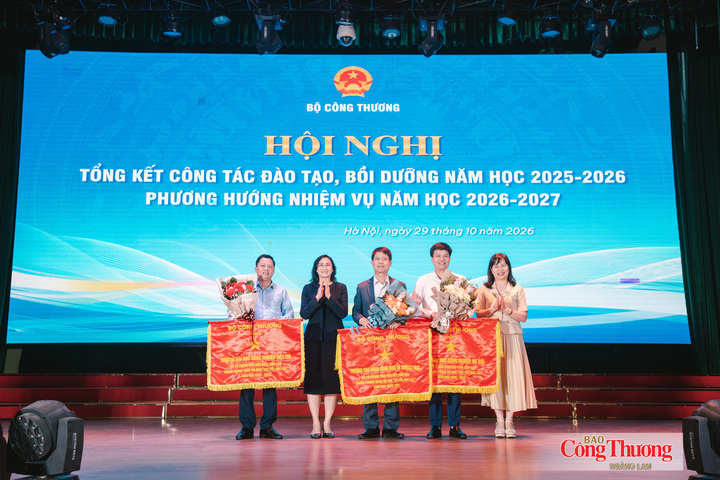
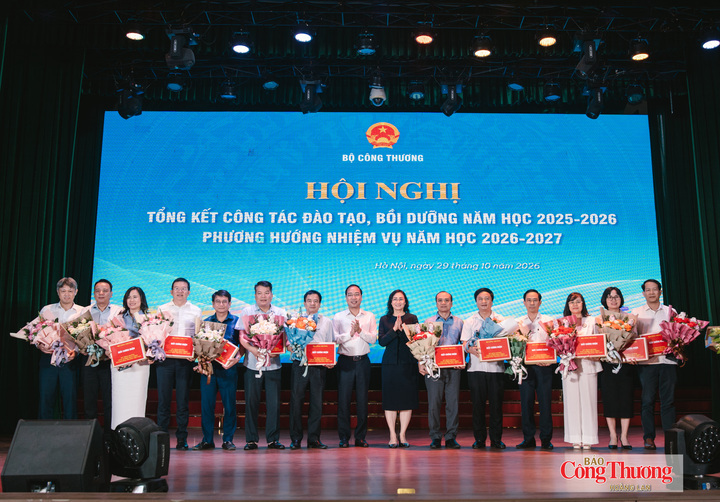
Deputy Minister Phan Thi Thang presents the MoIT's Emulation Flags to organisations.
According to the Deputy Minister, training institutions under the Ministry currently offer programmes in various fields, including energy, minerals, engineering, trade and other sectors. However, the industry as a whole does not yet have a comprehensive and specific training strategy to guide workforce demand and allocate training responsibilities among institutions and localities.
To address this, the Department of Personnel and Organization has been assigned to lead the development of the strategy, working with specialised units in industry, minerals, electricity, oil and gas and related fields to identify specific workforce needs. This will enable the industry to determine which sectors require training, which localities need personnel and which institutions are best suited to provide the training, while strengthening coordination between educational institutions and local authorities.
Deputy Minister Phan Thi Thang called on universities and colleges to proactively contribute their views and help develop training orientations that closely reflect actual needs. Clearly identifying workforce requirements in each sector will provide a basis for institutions to develop plans, organise training and improve the quality of their graduates.
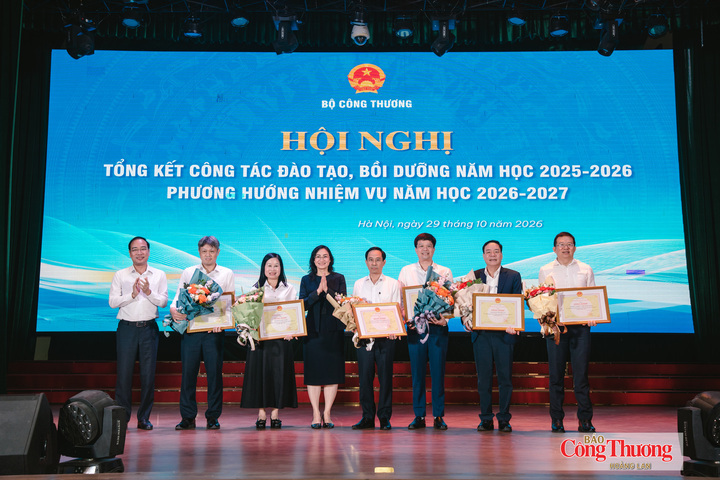
MoIT leaders present certificates of merit from the Minister of Industry and Trade to organisations.
For institutions transferred to local authorities, the Deputy Minister expressed her expectation that they would continue to participate in the industry's overall training strategy. This would enable them to maintain their role in training personnel for specialised fields while preserving close links with sectoral management agencies at both central and local levels.
Improving training quality and ensuring that training outcomes are aligned with practical conditions and employers' needs will also remain a key priority. Institutions need to focus on the quality of their teaching staff, strengthen practical skills training, improve training effectiveness and enhance graduates' employment prospects.
The Deputy Minister commended institutions for their efforts in student recruitment, cooperation with local authorities, businesses and associations, and gradual improvements in financial autonomy. In the coming period, training institutions need to step up exchanges and experience-sharing, coordinate training activities and allocate responsibilities appropriately among institutions with similar disciplines and geographical areas of operation, thereby avoiding competition for enrolment within the same system.
Leaders of the Department of Personnel and Organization and the Ministry Office present certificates of merit to organisations.
To improve training quality, the MoIT will make greater use of its network of Viet Nam Trade Offices abroad, together with units responsible for trade promotion, overseas market management, multilateral trade, industry, science and technology, to help institutions access scientific and technological advances, expand international cooperation and enhance the capacity of their teaching staff.
Deputy Minister Phan Thi Thang proposed studying the inclusion of training cooperation in cooperation programmes between the Government of Viet Nam and other countries. This would create more opportunities for lecturers to study, access new knowledge and gain exposure to new technologies, particularly in the energy sector and emerging industries.
In addition, institutions need to strengthen engagement with businesses to understand workforce needs, occupational skills and recruitment requirements, and adjust their training programmes accordingly. Regarding training and professional development for officials, civil servants and public employees in the industry and trade sector at the local level, institutions should proactively coordinate with provincial Departments of Industry and Trade and relevant agencies to develop short-term programmes based on practical needs. Potential areas of focus include logistics, trade and state management.
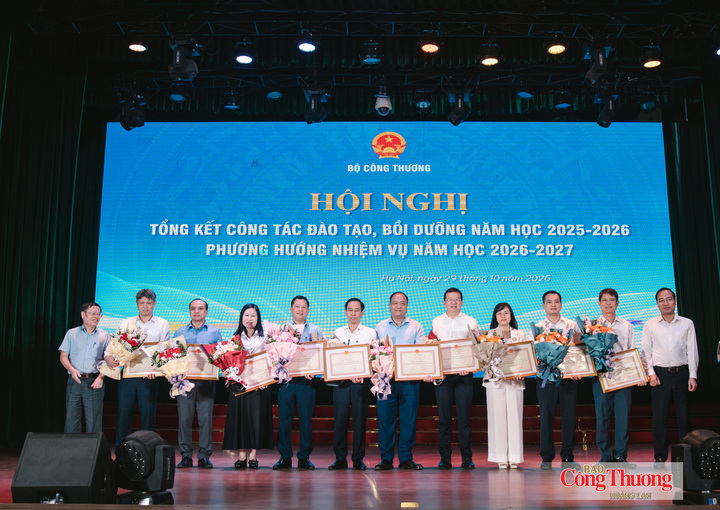
MoIT leaders present the Commemorative Medal “For the Development of Viet Nam's Industry and Trade Sector” to organisations.
Improving the quality of vocational training
At the conference, Tran Thanh Dam, Director of the Department of Vocational Education and Continuing Education under the Ministry of Education and Training, said that the restructuring of vocational education institutions was being carried out in accordance with directions from the central authorities. In recent years, the MoIT has implemented this work in a serious and urgent manner, gradually streamlining its network of affiliated colleges.
However, according to the Ministry of Education and Training representative, the transfer of vocational education institutions under ministries and ministerial-level agencies to local authorities still requires further clarification for specialised fields. For the MoIT, the identification of vocational education institutions operating in specialised fields must be based on current regulations, including Resolution No. 42/2026/NQ-CP dated September 26, 2026, on identifying public vocational education institutions in specialised fields for restructuring and reorganisation, while also taking practical circumstances into account.
Tran Thanh Dam, Director of the Department of Vocational Education and Continuing Education under the Ministry of Education and Training, delivers remarks at the conference.
Alongside the completion of restructuring plans, Tran Thanh Dam called on the MoIT to focus investment more intensively on institutions that will remain under the Ministry, creating favourable conditions for them to build on their strengths, improve training quality and fulfil their role in supplying personnel for sectors under the Ministry.
The leadership of the Department of Vocational Education and Continuing Education also called on the MoIT to continue restructuring and improving the quality of vocational education institutions in a more focused and substantive manner. Following the restructuring, investment resources should be concentrated more heavily on institutions that continue operating, enabling them to strengthen their training capacity and meet the workforce needs of individual sectors.
For training institutions, the requirements include reforming institutional governance, modernising management through digital transformation, improving management mechanisms and enhancing the efficiency of resource utilisation. Professional management needs to be closely linked with personnel and financial management. Institutions should also focus on student recruitment, high-quality workforce training, and updating their programmes to include new occupations and future skills, thereby meeting the development requirements of the knowledge-based, digital, green and circular economies, particularly in STEM fields.
Alongside the renewal of curricula and training methods, due attention must be paid to developing teaching staff and education managers, ensuring adequate staffing, an appropriate workforce structure and qualifications that meet required standards. Management agencies have also proposed studying and implementing training-ordering mechanisms to develop and provide professional development for personnel engaged in vocational education and teaching.
Another important task is to promote cooperation among the State, educational institutions, businesses and society; strengthen international integration; develop occupational and digital skills and global citizenship awareness; build a learning society; and promote lifelong learning. Vocational education institutions need to make full use of their role in providing continuing education and retraining for workers, particularly when the MoIT requires personnel development to serve its management responsibilities.
Tran Thanh Dam also called on the MoIT to continue supporting training institutions in resolving difficulties related to mechanisms, policies and operational arrangements following restructuring. Institutions should proactively report obstacles and propose amendments or additions to existing regulations for management agencies to consider and submit to the competent authorities, creating more favourable conditions for training activities.
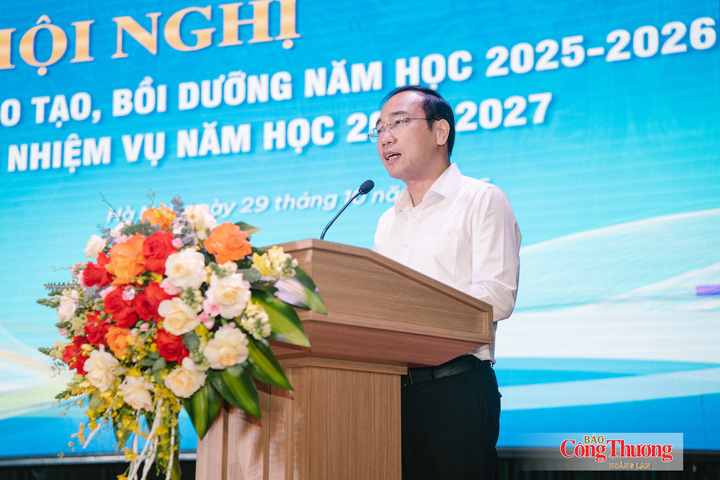
Tran Quang Huy, Director of the Department of Personnel and Organization, delivers remarks at the conference.
In response to the guidance provided by Deputy Minister of Industry and Trade Phan Thi Thang, Tran Quang Huy, Director of the Department of Personnel and Organization, affirmed that the department would work closely with educational institutions and units under the Ministry to carry out assigned tasks, contributing to more effective workforce development across the industry and trade sector.
According to Tran Quang Huy, the development of a workforce development strategy in the coming period will be closely aligned with the industry's overall development strategy, while making full use of the strengths of training institutions and the existing workforce. The objective is not only to meet the industry's personnel needs but also to enhance public recognition of the contributions made by training institutions to the industry and trade sector in particular and the country as a whole.
At the conference, the Department of Personnel and Organization announced commendation decisions and presented the MoIT's Emulation Flags, certificates of merit from the Minister of Industry and Trade, and the Commemorative Medal “For the Development of Viet Nam's Industry and Trade Sector” to individuals and universities and colleges under the Ministry.
Industry and Trade Newspaper is pleased to present a podcast series on the implementation of Politburo Resolution No. 57 in the Ministry of Industry and Trade.
Consumer Fest 2026 attracted over 23,000 visitors in Hung Yen Province on October 31, promoting consumer rights and responsible consumption across the community.
New Zealand is prioritising Viet Nam as a growth market, expanding education partnerships and opportunities for students through long-term cooperation.
A new international-standard 3S dealership in Ho Chi Minh City will provide integrated vehicle sales, maintenance, repair and genuine spare parts services for transport businesses.
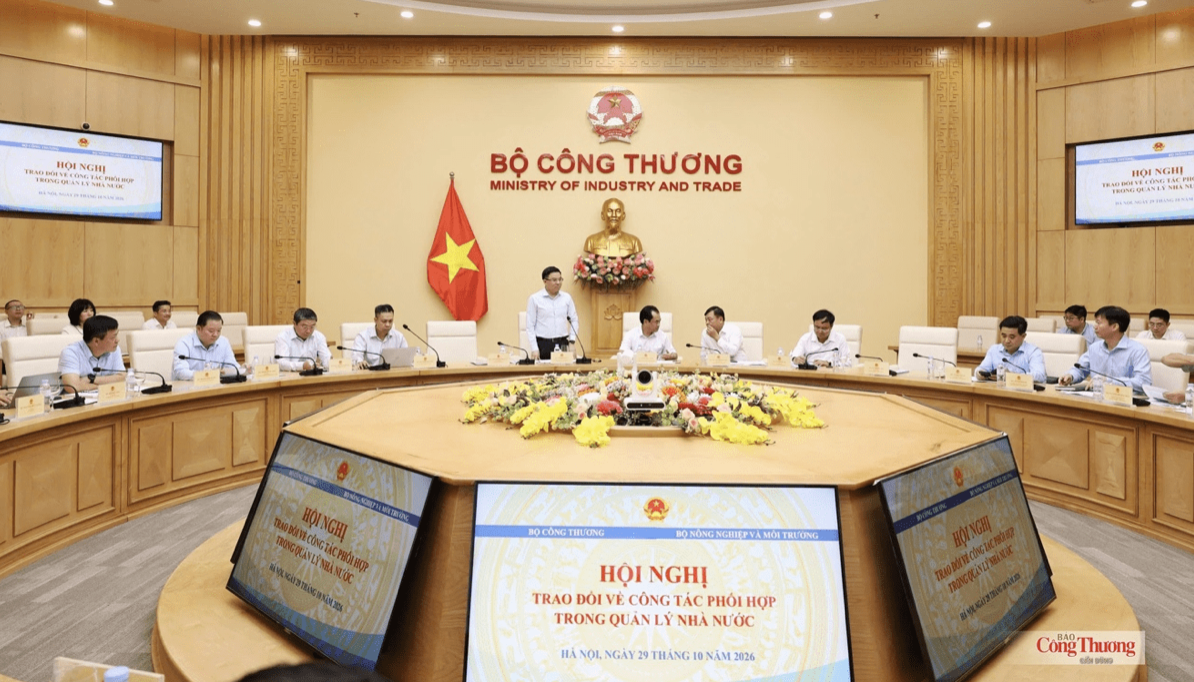
The two sides discussed solutions to outstanding issues involving reservoir operations, power plant emissions, land management, and import-export activities.
The Ministry of Industry and Trade (MoIT) urges training institutions to adapt to restructuring, build links with businesses and align workforce training with the practical needs of each major industry.
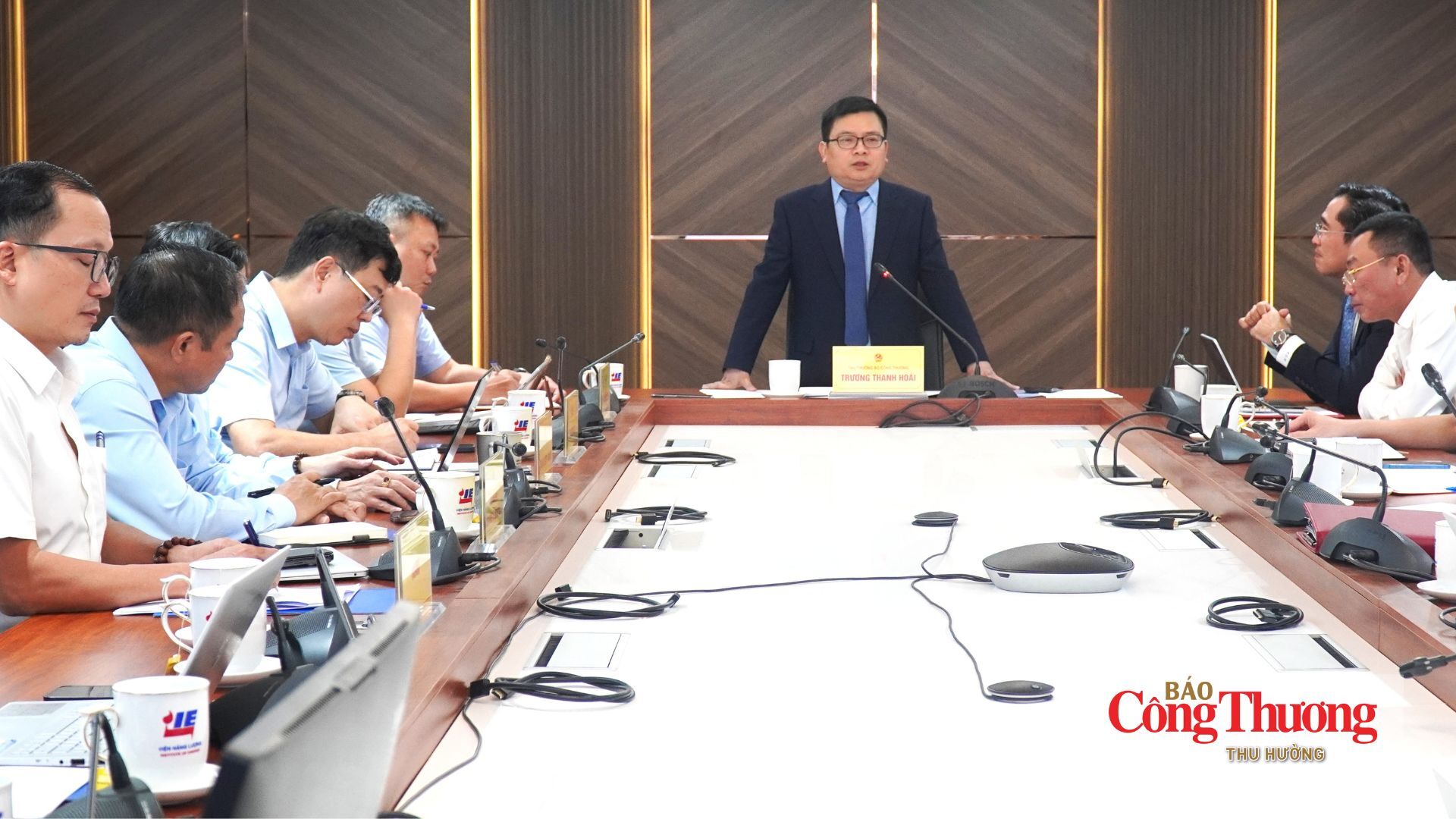
On October 26, Deputy Minister of Industry and Trade Truong Thanh Hoai held a working session with the Institute of Energy to discuss power sector development tasks and announce the appointment of the Institute's new director.