Leaders of Cambodia, Thailand, Laos, Timor-Leste and the Philippines shared their visions for peace, integration, resilience and people-centred development.
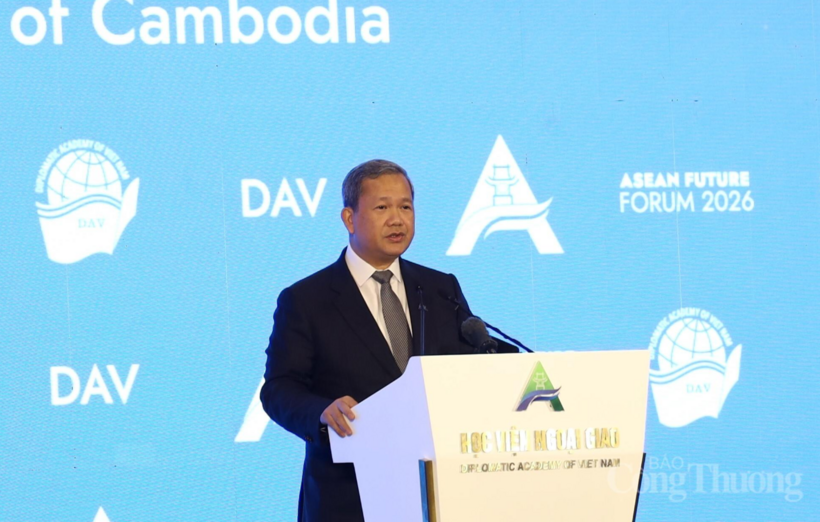
Cambodian Prime Minister Hun Manet highly values the role of ASEAN Future Forum
At ASEAN Future Forum 2026, Cambodian Prime Minister Hun Manet stressed that, as the world simultaneously faces crises in the international order, development models and strategic trust, ASEAN must continue to serve as a space for peace, cooperation and development. According to the Cambodian leader, safeguarding the achievements of integration, promoting inclusive growth and ensuring that all policies are directed towards the people will be decisive factors shaping the future of the ASEAN Community.
Cambodian Prime Minister Hun Manet
At the forum, Prime Minister Hun Manet expressed his appreciation to the Government of Vietnam for the invitation to attend the event and highly valued Vietnam’s initiative in creating a strategic dialogue platform on key regional and global issues. Referring to the forum’s theme, “Shaping our common future: Peace, prosperity and people at the centre,” the Cambodian Prime Minister noted that before discussing the future, it is essential to take a clear-eyed view of the current state of the world and the factors directly affecting peace, security and sustainable development.
According to Prime Minister Hun Manet, despite being established only a few years ago, the ASEAN Future Forum has become an important platform for frank, strategic and forward-looking exchanges. It provides an opportunity for countries to assess emerging challenges while seeking practical solutions through dialogue, cooperation and shared responsibility.
He agreed with the assessment made by Party General Secretary To Lam at the 21st Shangri-La Dialogue regarding the three major crises confronting the world today: the crisis of the international order, the crisis of development models and the crisis of strategic trust. On that basis, Prime Minister Hun Manet focused his remarks on three key issues related to peace, the economy and people.
Thai Prime Minister expects conclusion of the ASEAN Digital Economy Framework Agreement in 2026
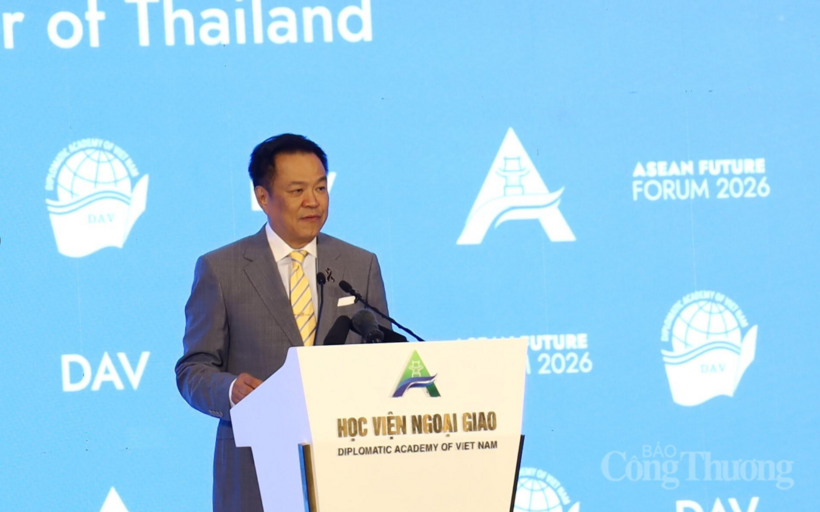
Addressing ASEAN Future Forum 2026, Thai Prime Minister Anutin Charnvirakul emphasised that ASEAN is facing both challenges and opportunities amid an increasingly fragmented and uncertain world. According to him, strengthening ASEAN centrality, enhancing resilience and ensuring that the benefits of development reach all people will be decisive factors for the region’s future.
Thai Prime Minister Anutin Charnvirakul
Speaking at the forum, Prime Minister Anutin Charnvirakul praised Vietnam’s initiative in organising the event and noted that it has become an important platform for discussions on the future of the region amid profound global changes.
Discussing future directions for ASEAN, the Thai Prime Minister stressed that the bloc should first make full use of its strategic advantages. According to him, ASEAN’s success over the past five decades has been closely linked to its ability to balance national interests with regional interests. This has been a key factor underpinning ASEAN centrality and helping the grouping serve as an anchor of peace and security in the region.
Prime Minister Anutin Charnvirakul affirmed that ASEAN centrality remains essential because it enables the region to maintain constructive relations with all partners while safeguarding its own interests.
He stressed that ASEAN should capitalise on its strategic location at the crossroads of major maritime routes in the Indo-Pacific, thereby strengthening connectivity in all dimensions, particularly digital connectivity. The Thai Prime Minister said Thailand looks forward to the conclusion of the ASEAN Digital Economy Framework Agreement this year in order to unlock the full potential of the regional digital economy.
Lao Prime Minister Sonexay Siphandone: strengthening unity and resilience to help ASEAN thrive in a new era
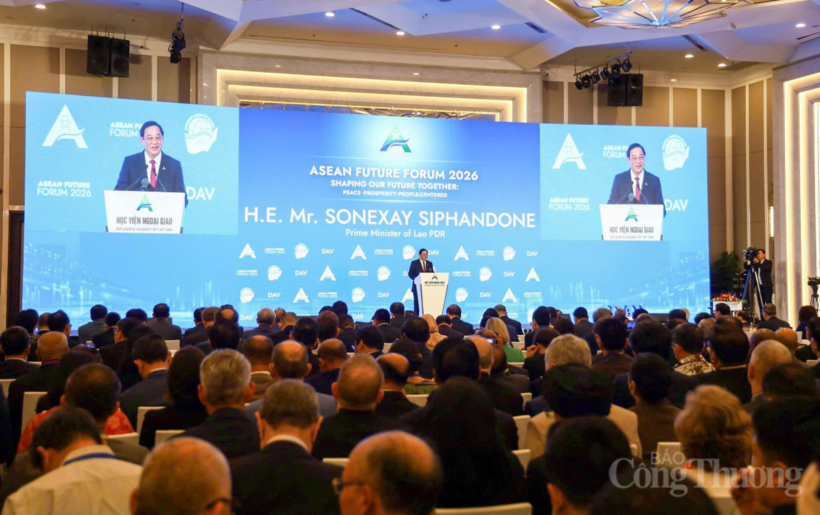
Addressing the ASEAN Future Forum 2026, Lao Prime Minister Sonexay Siphandone stressed that ASEAN should continue to strengthen internal unity, enhance resilience and uphold its central role amid increasingly complex regional and global developments, while promoting connectivity, digital transformation and energy cooperation for sustainable regional development.
Lao Prime Minister Sonexay Siphandone
Under the theme “Building our common future: Peace, prosperity and people at the centre,” Prime Minister Sonexay Siphandone expressed his appreciation to Prime Minister Le Minh Hung, as well as the Government and people of Vietnam, for their warm hospitality, and congratulated Vietnam on the successful organisation of the event.
According to the Lao Prime Minister, the theme of the forum is highly relevant to current developments in the region and the world. He noted that the ASEAN Future Forum has become an important platform for countries to exchange visions and explore new approaches to addressing emerging challenges and opportunities at both regional and global levels.
According to Prime Minister Sonexay Siphandone, amid increasingly unpredictable geopolitical and geoeconomic developments, ASEAN must further strengthen internal unity, enhance resilience and continue to uphold its central role based on ASEAN’s core principles and the “ASEAN Way”.
Sharing his vision for ASEAN’s future, Prime Minister Sonexay Siphandone stressed that ASEAN should remain steadfast in its fundamental principles and the “ASEAN Way”, while maintaining its leadership role and central position within the regional architecture. According to him, preserving ASEAN centrality is essential for safeguarding multilateralism and maintaining regional peace and stability. He also highlighted the need to strengthen ASEAN’s resilience across all sectors so that the region can effectively respond to emerging challenges while taking advantage of future development opportunities.
Timor-Leste Prime Minister Xanana Gusmao: ASEAN should proactively shape the future in the AI era
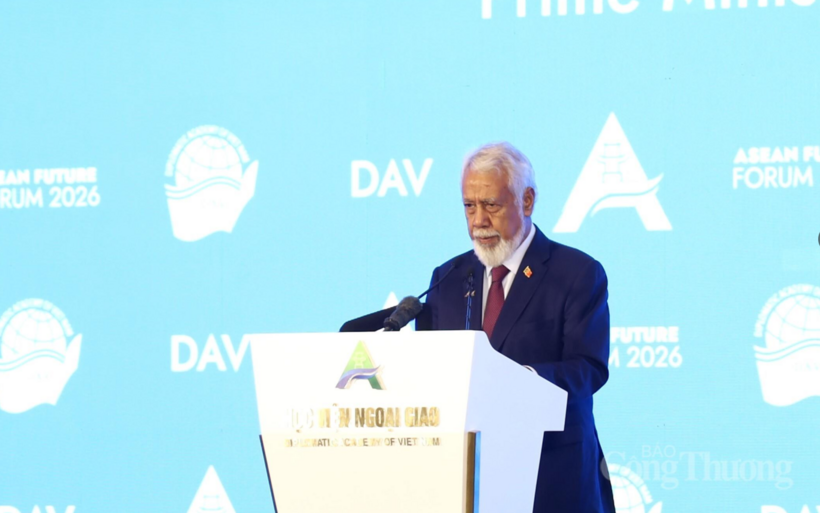
At ASEAN Future Forum 2026 in Hanoi, Timor-Leste Prime Minister Xanana Gusmao said he was honoured to return to Vietnam and attend the event as the representative of a full ASEAN member state.
Timor-Leste Prime Minister Xanana Gusmao
Prime Minister Xanana Gusmao noted that Timor-Leste has participated in the ASEAN Future Forum since its early editions. He recalled that he delivered a video message at the inaugural forum, while Timor-Leste President Jose Ramos-Horta delivered a keynote address at last year’s event.
According to the Timor-Leste Prime Minister, attending ASEAN Future Forum 2026 carries special significance as it marks the first time Timor-Leste has participated in the forum as a full member of the ASEAN family. He also expressed his appreciation to the Government of Vietnam and the Diplomatic Academy of Vietnam for organising the forum and providing an opportunity for leaders, policymakers, scholars, youth representatives and regional partners to discuss ASEAN’s future.
Referring to the theme “Shaping our common future: Peace, prosperity and people at the centre,” Prime Minister Xanana Gusmao said it is particularly relevant at a time when the world is undergoing profound changes.
According to him, ASEAN has demonstrated that diversity is not a weakness but can instead be a source of strength, wisdom and patience. This spirit, he noted, should continue to guide the region in addressing future challenges. In pursuing peace and prosperity, ASEAN must also prepare for the profound economic and social transformations driven by artificial intelligence.
He further proposed that ASEAN develop a regional digital governance framework reflecting the bloc’s shared values, protecting its people and ensuring that technology serves human dignity. According to him, this is also why the ASEAN Future Forum is important, as it enables member states to discuss common challenges and explore solutions aimed at people-centred development.
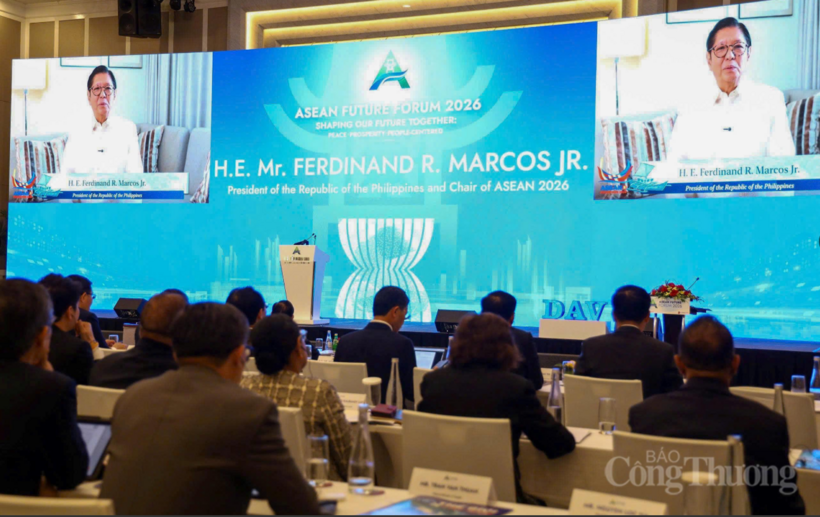
Philippine President Ferdinand Marcos Jr.: ASEAN must maintain unity and proactively shape the future
In a recorded message delivered to ASEAN Future Forum 2026 in Hanoi, Philippine President Ferdinand Marcos Jr. commended Vietnam’s initiative in organising the forum under the theme “Shaping our common future: Peace, prosperity and people at the centre”.
Philippine President Ferdinand Marcos Jr.
According to the Philippine President, the forum’s theme shares many similarities with the theme of the Philippines’ ASEAN Chairmanship Year, “Together, shaping the future”. He added that the event also reflects the growing friendship between Vietnam and the Philippines, particularly as the two countries commemorate the 50th anniversary of diplomatic relations.
He stressed that the forum was held following Party General Secretary To Lam’s visit to Manila, further demonstrating the two countries’ shared commitment to ASEAN Community-building, the promotion of peace, cooperation and mutual respect. According to President Ferdinand Marcos Jr., the ASEAN Future Forum provides an opportunity for leaders, policymakers, experts and stakeholders to discuss the choices that will shape ASEAN’s future.
Discussing the region’s future development, the Philippine President said ASEAN is entering a new phase of economic transformation. According to him, ASEAN has overcome numerous crises in the past, and each time, the region has demonstrated that its strength lies in consultation, cooperation and moving forward together.
Concluding his message, President Ferdinand Marcos Jr. affirmed that the future will continue to test ASEAN. However, if the bloc can maintain unity, pragmatism and a people-centred orientation, ASEAN will not only be able to respond to the future but also proactively shape it for the benefit of its people.
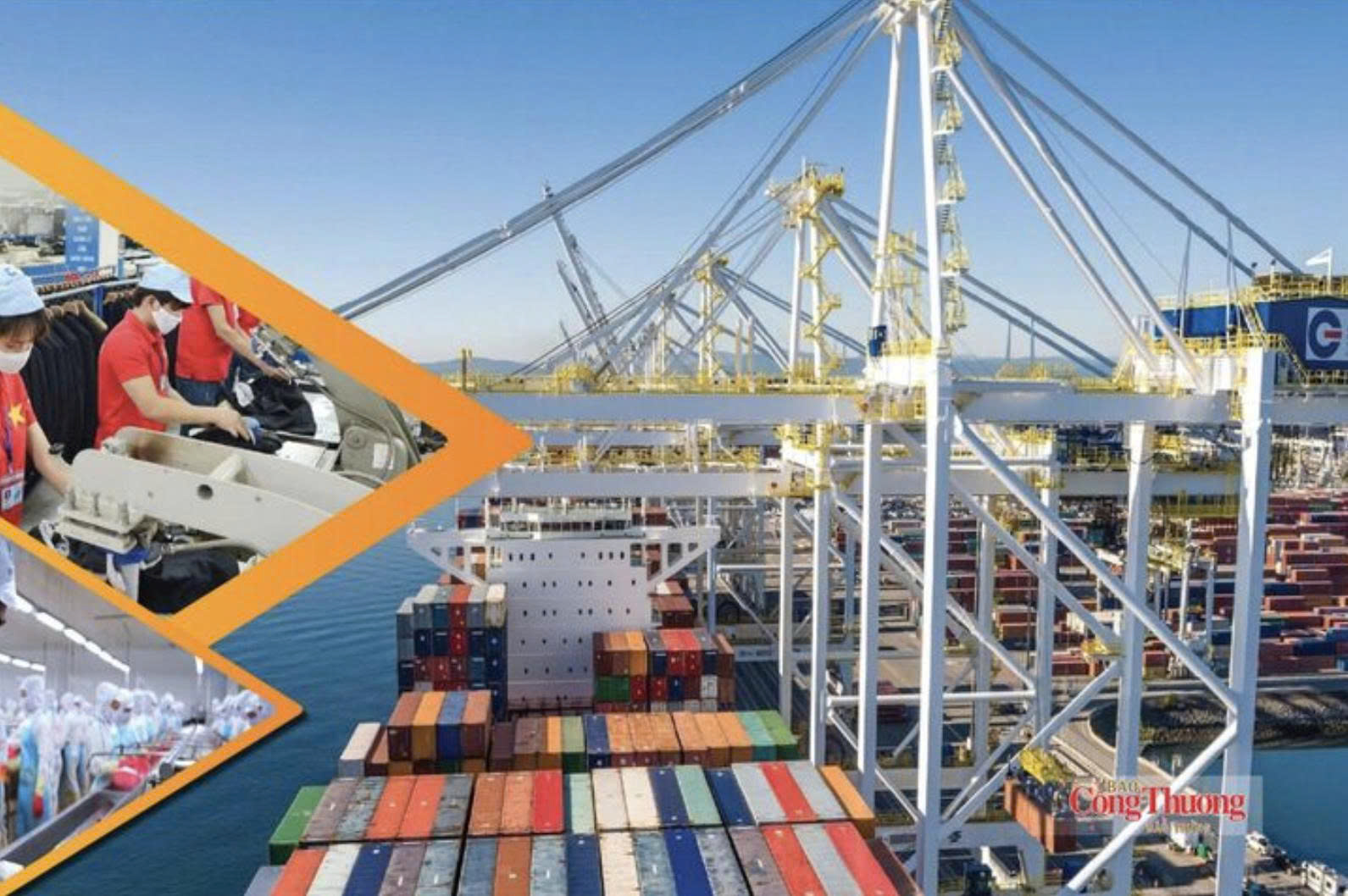
Viet Nam’s Ministry of Industry and Trade hopes that Viet Nam and Panama will continue to coordinate closely and leverage Panama’s role as a bridge for Vietnamese goods to access Latin American and Caribbean markets.
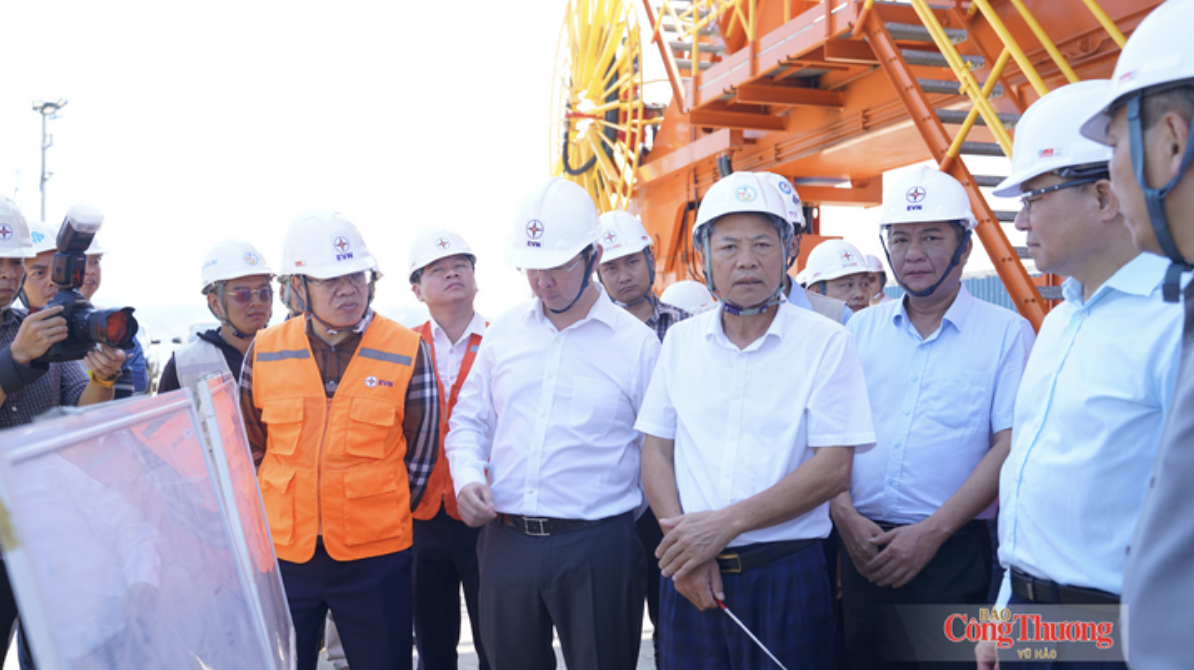
On the afternoon of October 4, in Quang Tri province, Minister of Industry and Trade Le Manh Hung conducted an on-site inspection and held a working session with relevant agencies and units at the Quang Trach Power Centre.
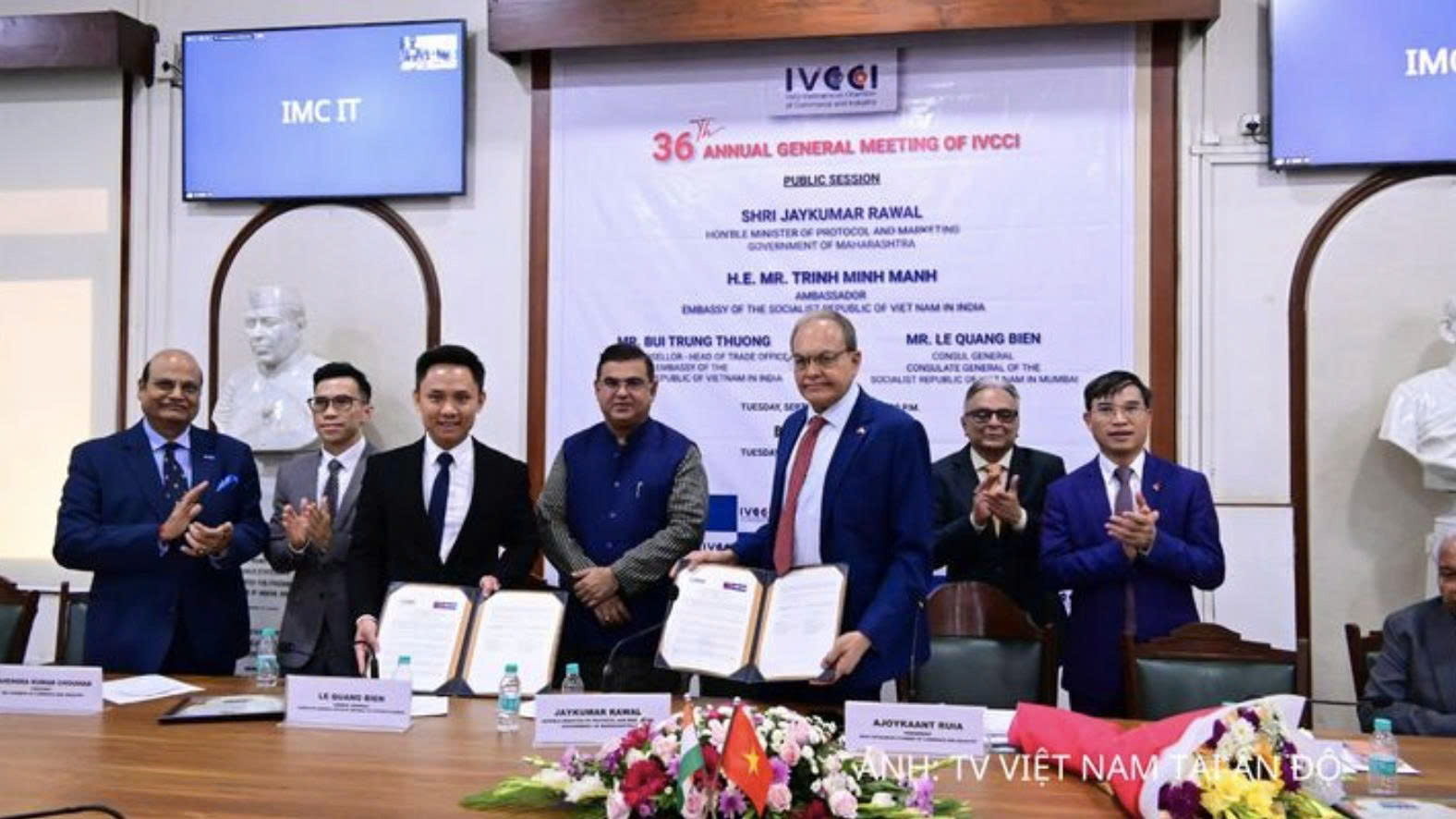
At its 36th annual general meeting in Mumbai, IVCCI proposed expanding its operations across India and establishing a Viet Nam-India Business Council to promote economic, trade, and investment cooperation.
The Energy - Petroleum Agency is tasked with ensuring energy supplies, refining policies and advancing the energy transition to strengthen national energy security.
Viet Nam’s Ministry of Industry and Trade hopes that Viet Nam and Panama will continue to coordinate closely and leverage Panama’s role as a bridge for Vietnamese goods to access Latin American and Caribbean markets.
On the afternoon of October 4, in Quang Tri province, Minister of Industry and Trade Le Manh Hung conducted an on-site inspection and held a working session with relevant agencies and units at the Quang Trach Power Centre.
At its 36th annual general meeting in Mumbai, IVCCI proposed expanding its operations across India and establishing a Viet Nam-India Business Council to promote economic, trade, and investment cooperation.
The Energy - Petroleum Agency is tasked with ensuring energy supplies, refining policies and advancing the energy transition to strengthen national energy security.