
RCEP expands export opportunities for Vietnamese goods in ASEAN
19:05 | 23/03/2025 13:31 | 30/10/2026Trade
RCEP creates new export opportunities in ASEAN, while Vietnamese businesses must meet market requirements and manage trade risks effectively.


On October 27, speakers at a session entitled “Building a Trusted and Interoperable ASEAN Digital Economy Policy Framework,” held as part of the Autumn Economic Forum 2026, examined the barriers facing small and medium-sized enterprises (SMEs) in accessing regional digital markets. They also discussed solutions involving infrastructure, policy and digital service connectivity.

Delegates attend the discussion session on building a trusted and interoperable ASEAN digital economy policy framework.
Reducing technology costs and policy compliance burdens
Nguyen Thuy Duong, Chairwoman of EY Viet Nam Consulting Joint Stock Company, said the growth of digital payments was creating more opportunities for cross-border transactions and service provision. However, SMEs continued to face barriers to digital transformation due to limited financial resources, personnel and data governance capabilities.
According to Duong, businesses need not only to invest in technology but also to meet requirements for security, data governance and transaction reliability. Access to shared digital platforms and services at affordable costs is therefore important, helping SMEs reduce the pressure of having to build entire systems independently.

Nguyen Thuy Duong, Chairwoman of EY Viet Nam Consulting Joint Stock Company, shares her views at the event.
Nguyen Van Thuat, Deputy Director General of the Authority of Digital Economy and Digital Society under the Ministry of Science and Technology, said reducing compliance costs, improving businesses’ access to technology and facilitating their participation in digital markets were priorities requiring greater attention.
The solutions he outlined included promoting shared digital platforms, developing affordable trusted services, supporting digital transformation and expanding regulatory sandboxes. Policy improvements should focus on removing barriers to business operations while enabling companies to test new products, services and business models.
From the perspective of technology solution providers, Stephen Oh, Chief Technology Officer of the Republic of Korea’s KQC, identified the cost of investing in security equipment as a major obstacle for SMEs engaging in digital transactions. He proposed developing shared digital signature services under a pay-as-you-go model.
This approach aims to reduce upfront investment requirements and enable businesses to access security and transaction authentication services suited to their operational scale.
Strengthening connectivity to facilitate cross-border transactions
Sharing Malaysia’s experience, Ellina Roslan, Senior Director of MyDigital Malaysia, discussed the model of the National Digital Economy Council, chaired by the Prime Minister. The model is designed to strengthen coordination among regulatory agencies, address cross-sectoral issues and accelerate the implementation of digital economy development policies.
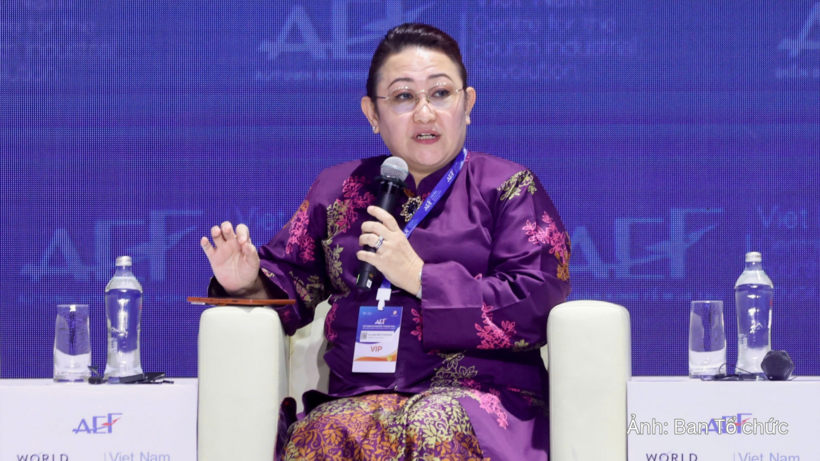
Ellina Roslan, Senior Director of MyDigital Malaysia.
According to the discussion, inter-agency coordination plays an important role in implementing policies, particularly because digital economic activities simultaneously involve technology, finance, data and trade.
Meanwhile, Felix Sharief, Vice President of Dana Indonesia, highlighted the benefits of developing fast payment systems, standardizing QR codes and improving connectivity between platforms. These measures are directly relevant to service integration and the expansion of transactions across regional markets.
One example cited by Sharief was that integration time could be reduced from approximately two years to one month through the standardization of open application programming interfaces (Open APIs). The use of common connectivity standards was presented as a way to shorten the time required to integrate services.
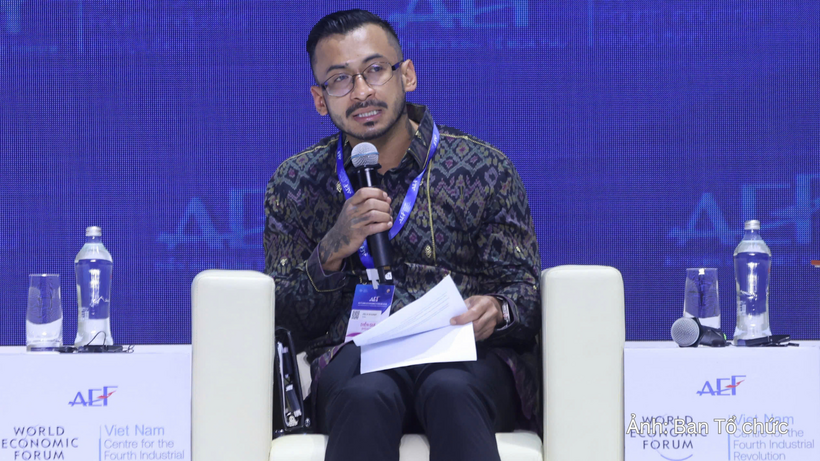
Felix Sharief, Vice President of Dana Indonesia.
For SMEs, payment solutions and platform connectivity can facilitate access to payment systems, reduce difficulties in integrating services and support the expansion of business transactions. However, the example of reducing integration time from two years to one month should be understood in the specific context cited by the speaker, rather than as a timeframe applicable to all businesses.
The discussion highlighted that enabling SMEs to participate in the digital economy involves more than access to technology. It also depends on compliance costs, policy coordination mechanisms and interoperability between platforms. These issues are central to efforts to develop a trusted and interoperable ASEAN digital economy policy framework.
19:05 | 23/03/2025 13:31 | 30/10/2026Trade

19:05 | 23/03/2025 13:30 | 30/10/2026Science - Technology

19:05 | 23/03/2025 13:28 | 30/10/2026News and Events

19:05 | 23/03/2025 17:51 | 29/10/2026News and Events

19:05 | 23/03/2025 21:27 | 28/10/2026News and Events