Vibrant post-holiday customs clearance at border gates has set the stage for Vietnam’s trade to move toward the USD 1 trillion mark.
Positive momentum from the outset
Following the nine-day Lunar New Year holiday from February 14 to 22, 2026, trading activities at northern border gates quickly regained momentum. On February 24, border gates across Lang Son province officially resumed normal operations, marking a significant kickoff for the country’s import-export activities in 2026.
According to the Management Board of the Dong Dang - Lang Son Border Gate Economic Zone, from February 21 to 23, more than 1,170 cargo vehicles were cleared through local border gates. On the first day of post-holiday operations alone, vehicle traffic was projected to reach 300 - 350 trucks. Key exports and imports included agricultural produce, fresh fruits, electronic components and consumer goods.
At Tan Thanh border gate, many enterprises proactively dispatched vehicles ahead of reopening hours to secure early customs clearance and ensure timely delivery to partners. Traffic was efficiently segregated, with separate lanes for export cargo, import cargo and empty vehicles. Customs authorities, border guards, quarantine forces, terminal operators and logistics firms worked in close coordination, maintaining regular information exchanges and promptly addressing on-site bottlenecks.
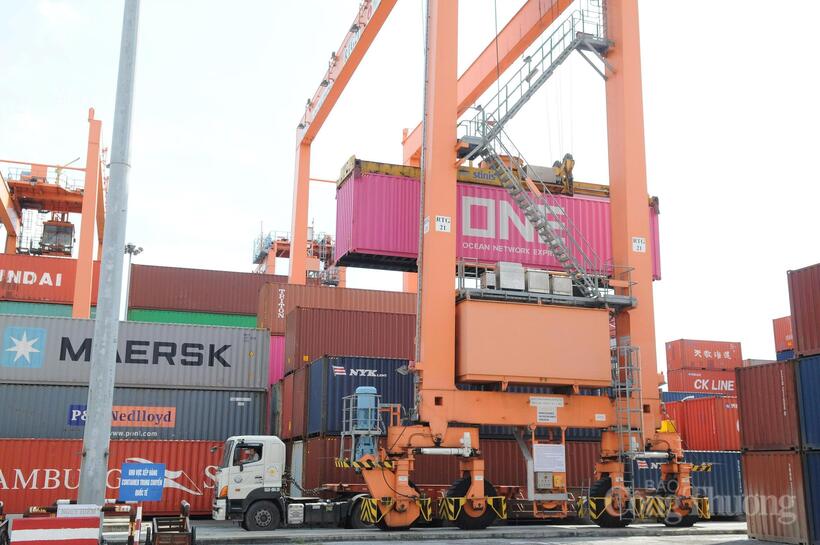
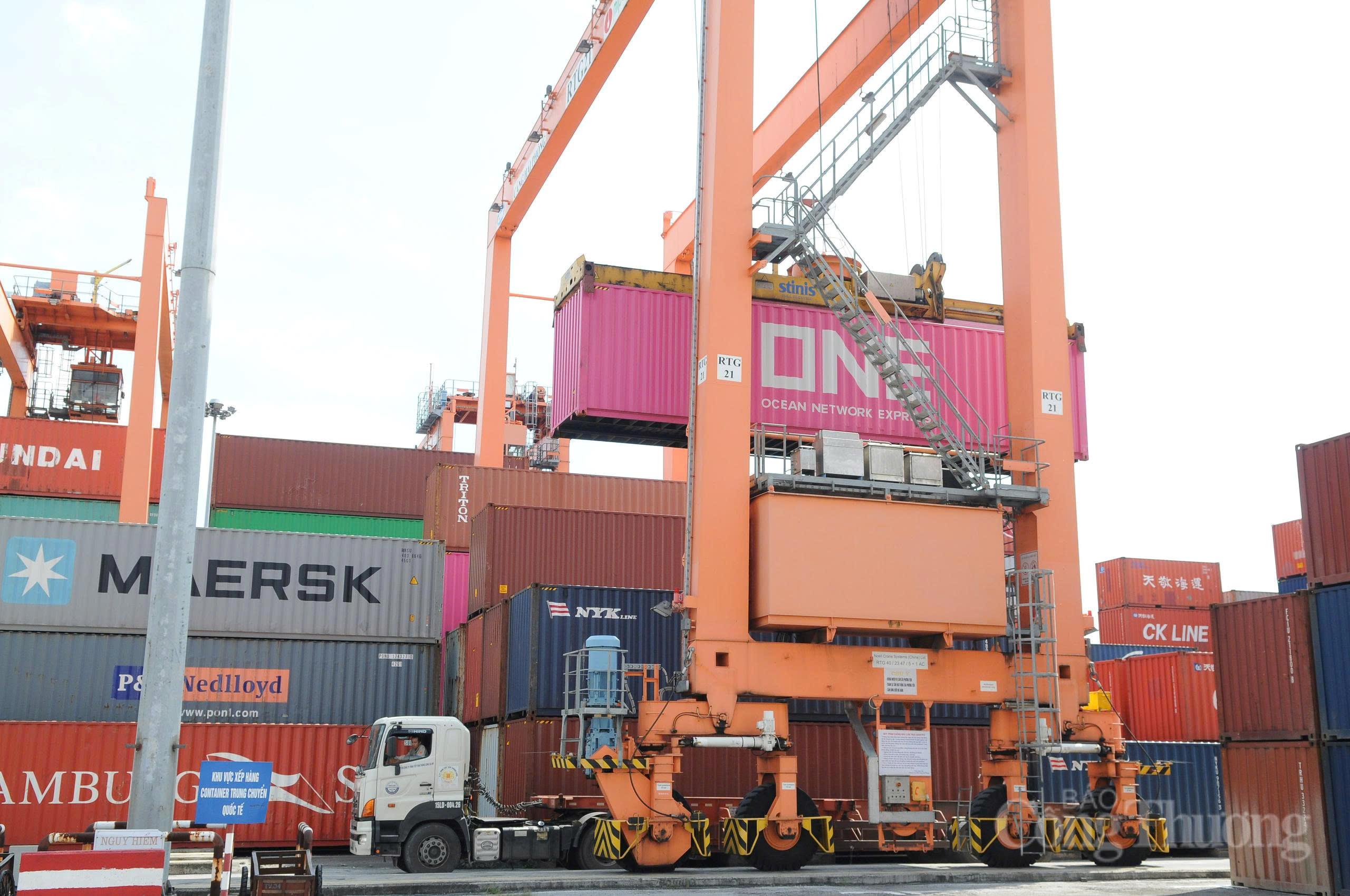
Import-export posts strong gains from the outset of the Lunar New Year. Photo: Can Dung
The smooth operation of this “clearance chain” not only eased congestion pressure but also bolstered confidence among businesses and drivers. As a result, production and trade activities resumed in earnest from February 23, the first working day after the holiday creating favorable momentum for the entire first quarter of 2026.
On February 24, import-export activities at the Mong Cai International Border Gate in Quang Ninh province also returned to normal pace. According to the Mong Cai International Border Gate Customs Sub-Department, between February 18 and 20, the unit processed 199 import-export declarations, with total turnover exceeding USD 15.4 million. Cumulatively, from January 1 to February 20, the number of declarations reached 17,208, up 38.1% year-on-year, while total trade turnover approached USD 874 million, an increase of 30.5% compared to the same period in 2025.
During the 2026 Lunar New Year holiday, import-export activities at the border gate were conducted under a pre-scheduled clearance mechanism from February 20 to 23 (the fourth to seventh days of the Lunar New Year), meeting urgent business needs while ensuring that officials and civil servants observed the holiday in a safe and economical manner.
The bustling atmosphere at border gates was mirrored at export-oriented enterprises. On the morning of February 23, the seventh day of the Lunar New Year and the first working day after the nine-day break Garment 10 Corporation held its annual production launch ceremony to meet export order schedules. The strong start by one of Vietnam’s largest textile and garment enterprises is expected to help sustain the sector’s 2025 export turnover of USD 46 billion.
According to data from the Customs Department under the Ministry of Finance, total import-export turnover in the first half of February 2026 reached USD 41.67 billion. Of this, exports accounted for USD 20.36 billion and imports USD 21.3 billion, resulting in a trade deficit of USD 0.95 billion, significantly lower than the USD 3.19 billion deficit recorded in the same period last year.
Although turnover declined 14.2% compared with the second half of January 2026, this remains a relatively high level given the pre-holiday period and fewer actual working days. Notably, compared with the same period last year (USD 31.49 billion), turnover in the first half of February 2026 increased by more than USD 10 billion.
Earlier data from the General Statistics Office showed that in the first month of 2026, total import-export turnover reached USD 88.16 billion, up 39% year-on-year. Exports rose 29.7% while imports surged 49.2%. Nine product categories posted turnover exceeding USD 1 billion, with coffee and seafood entering this group for the first time. These figures underscore Vietnam’s sustained trade momentum from the very beginning of the year, despite seasonal factors and the prolonged holiday.
Toward the USD 1 trillion mark and higher-quality growth
The foundation for 2026 builds on the impressive results of 2025, when total import-export turnover exceeded USD 930 billion, up 18.2%. Exports reached a record USD 475 billion for the first time, while the trade surplus surpassed USD 20 billion, marking the 10th consecutive year of surplus.
Under current policy direction, exports in 2026 are targeted to grow by 15 - 16%, equivalent to USD 546 - 550 billion, requiring a monthly average of roughly USD 45 - 46 billion. Total import-export turnover is projected to increase by more than 8% compared with 2025, officially surpassing the USD 1 trillion threshold, with the trade balance expected to maintain a surplus of over USD 23 billion.
However, as trade scale approaches the trillion-dollar mark, the challenge extends beyond expanding turnover to enhancing growth quality. In an interview with the Newspaper of Industry and Trade, Le Quoc Phuong, former Deputy Director of the Industry and Trade Information Center under the Ministry of Industry and Trade, noted that the most significant bottleneck lies in the limited intrinsic capacity of domestic enterprises. Technological capability and innovation remain modest; most firms are still engaged in processing and assembly stages with low value-added; and many operate on a small scale with weak linkages.
The foreign-invested sector continues to account for approximately 75% of total export turnover. While this reflects the substantial role of FDI, it also underscores the need to significantly raise the proportion of value created by domestic enterprises.
In 2026 and the years ahead, key priorities for promoting more sustainable export growth include developing supporting industries and increasing localization rates; fostering innovation and digital transformation; upgrading FDI attraction through more selective approaches; expanding supporting services such as logistics, finance and marketing; and complying with green and sustainability standards.
Vietnam’s import-export activities in 2026 have begun with proactive and synchronized coordination between state management agencies and the business community. The focus now lies not only on expanding scale but also on increasing value-added content and strengthening the economy’s resilience amid an increasingly volatile global landscape.
On February 25, the Secretariat of the Communist Party of Vietnam held a nationwide conference to study, disseminate and implement Resolutions No.79 and 80-NQ/TW.
The Ministry of Industry and Trade has issued urgent measures to implement Government resolutions, aiming to drive growth and ensure energy security in 2026
Despite short-term fluctuations, exports to the UAE remain above USD 5 billion, reflecting a stable foothold as CEPA paves the way for deeper cooperation.
Vietnam’s wood exports reached USD 1.6 billion in January 2026, up 12.5% year-on-year, with strong gains in China and Japan and stable demand in the US market.
On February 25, the Secretariat of the Communist Party of Vietnam held a nationwide conference to study, disseminate and implement Resolutions No.79 and 80-NQ/TW.
The Ministry of Industry and Trade has issued urgent measures to implement Government resolutions, aiming to drive growth and ensure energy security in 2026
Deputy Prime Minister Bui Thanh Son set growth targets for four energy pillars, urging double-digit breakthroughs and 14th National Congress Resolution execution