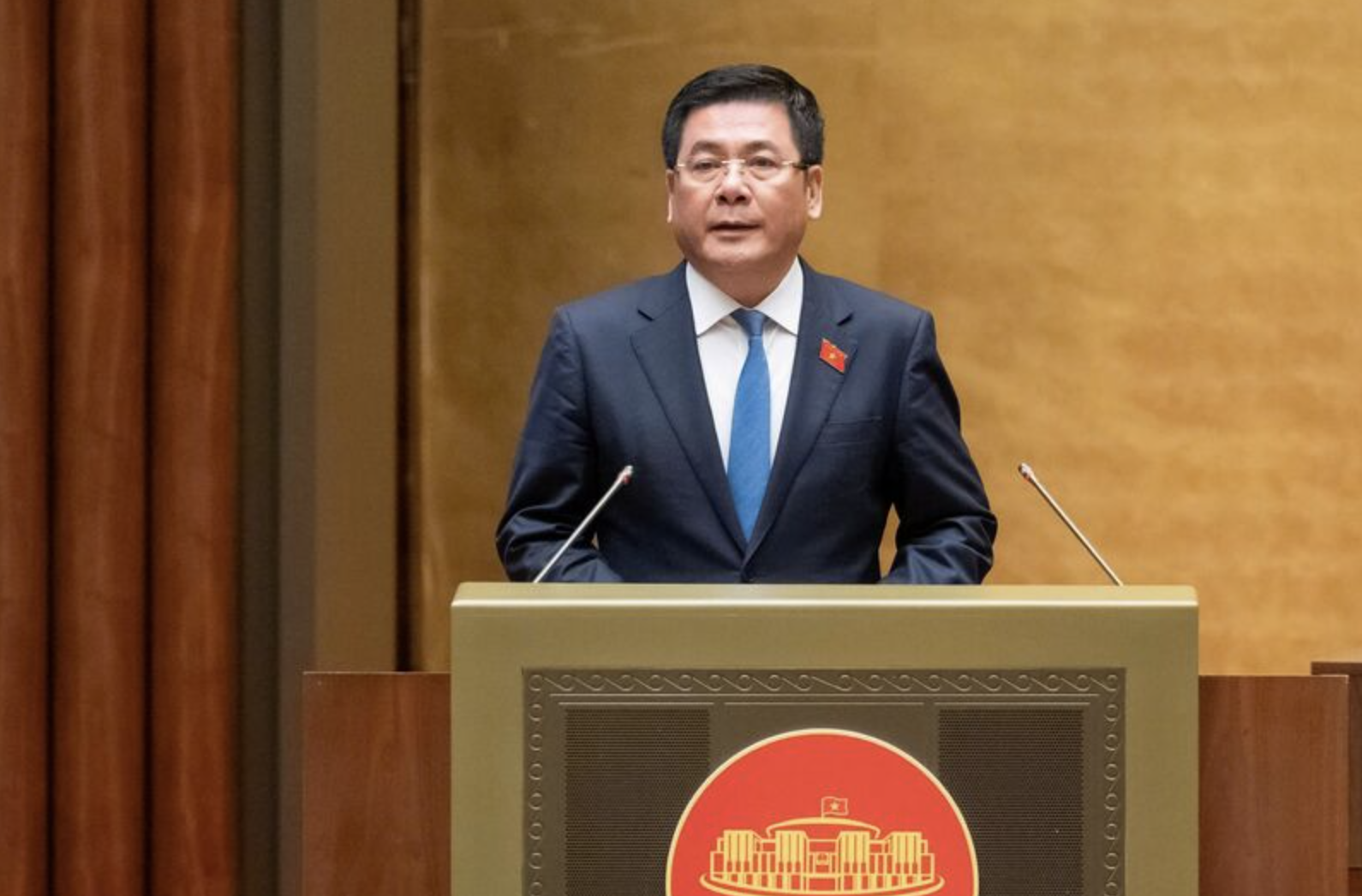
According to the INIR mission, Vietnam demonstrates a methodical, responsible nuclear power strategy that meets international standards.
Facilitating favorable conditions for project implementation
Over the past two weeks, the Ministry of Science and Technology (MOST) with the Vietnam Agency for Radiation and Nuclear Safety (VARANS) serving as the focal point, has chaired and coordinated with relevant Vietnamese ministries and sectors to work with the mission from the International Atomic Energy Agency (IAEA) to conduct a comprehensive assessment of the national nuclear power infrastructure (Integrated Nuclear Infrastructure Review Mission - INIR Mission).
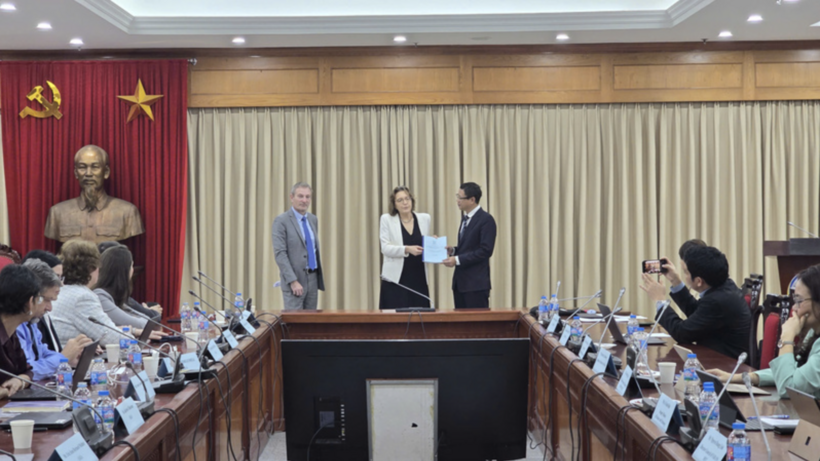
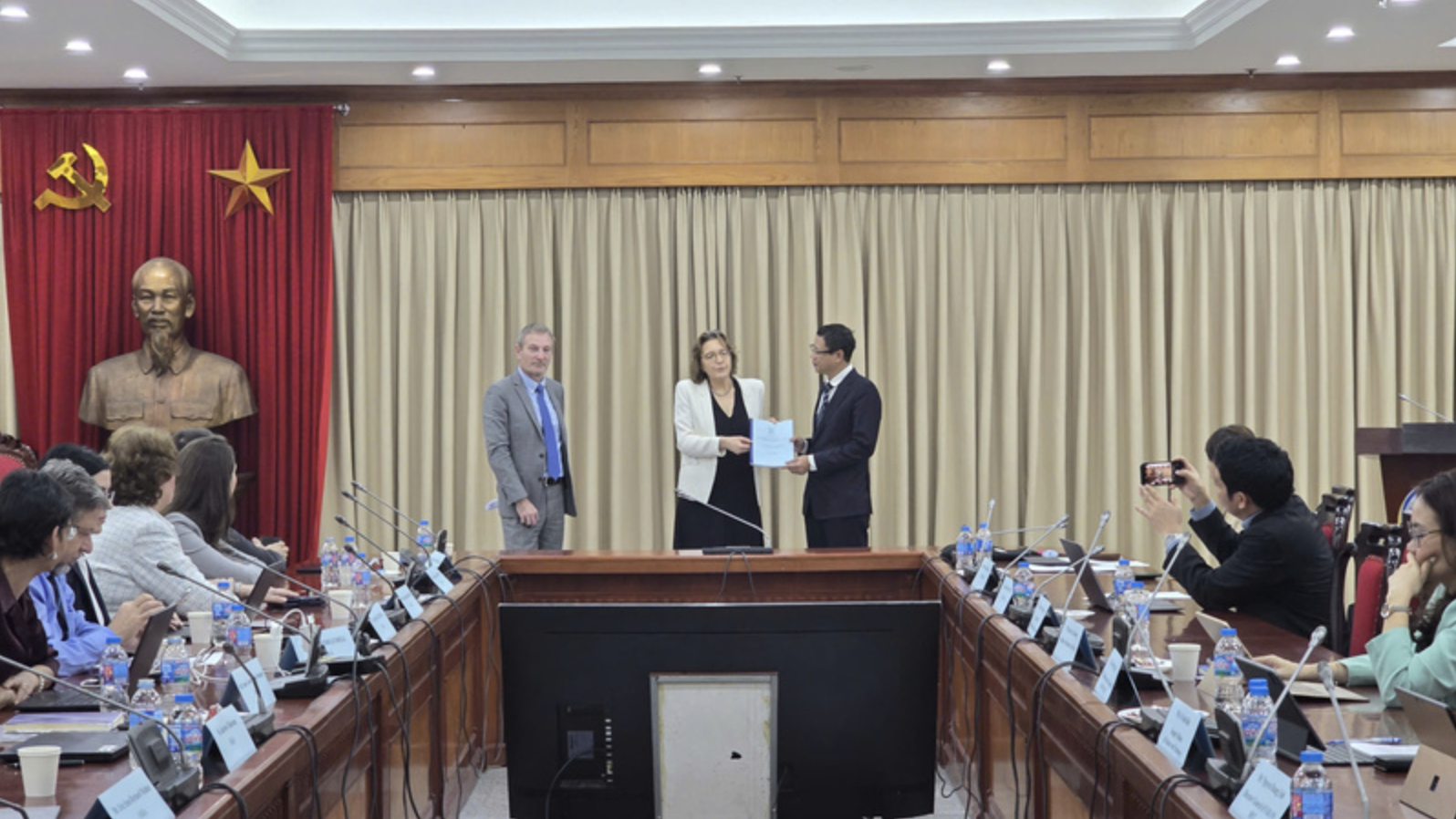
Director of the IAEA Division of Nuclear Power Aline Des Cloizeaux presents the preliminary draft INIR report to Deputy Minister of Science and Technology Le Xuan Dinh.
The mission was led by Head of the Nuclear Infrastructure Development Section Eric Mathet at the IAEA, comprising 10 experts and one observer. The primary objective of this mission was to assess the status of Vietnam's national nuclear infrastructure against the conditions described in the IAEA's evaluation methodology for Phase 2. Assessing a nation's readiness to invite bids or negotiate contracts for the construction of its first nuclear power plant.
Based on this assessment, the mission identified areas requiring further action and provided recommendations and suggestions for the Government and relevant Vietnamese agencies to develop an action plan to address limitations and shortcomings in the near future.
During their time in Vietnam, the experts engaged in direct exchanges and discussions with representatives from relevant agencies under the Ministry of Science and Technology, Ministry of Industry and Trade, Ministry of Foreign Affairs, Ministry of Agriculture and Rural Development, Ministry of Natural Resources and Environment, Ministry of Education and Training, Ministry of Finance, Ministry of Public Security, Vietnam Electricity (EVN), Vietnam National Oil and Gas Group (Petrovietnam), and the Khanh Hoa provincial People's Committee. The goal was to review, examine, and objectively and comprehensively assess all 19 nuclear power infrastructure issues.
The INIR mission concluded that Vietnam has made significant strides in restarting and accelerating the implementation progress of the Ninh Thuan Nuclear Power Plant project as well as developing the necessary infrastructure.
Numerous solutions and decisions have been adopted at all levels, including the National Assembly, the Prime Minister, and relevant ministries and agencies. In 2025, Vietnam promulgated the Law on Atomic Energy (Amended) and approved specific mechanisms to create favorable conditions for the deployment of the nuclear power project.
Additionally, the INIR mission's preliminary draft report offered 38 recommendations and 13 suggestions, emphasizing areas requiring further action to benefit Vietnam. Specifically, these include strengthening the legal and regulatory frameworks for radiation safety, nuclear safety, security, and nuclear safeguards; implementing plans to enhance human resource capacity; finalizing preparations for the bidding and construction phases; developing a national strategy on the nuclear fuel cycle and radioactive waste management; and updating coordination mechanisms among all stakeholders.
Methodical approach in alignment with international standards
The expert group acknowledged two “good practices” in Vietnam that could serve as experience for other countries developing nuclear power.
First, the National Assembly's adoption of Resolution No.189/2025/QH15 demonstrates a strong political commitment to the nuclear power program while establishing specific mechanisms to simplify investment procedures, accelerate site clearance, expand capital mobilization and contractor selection capabilities, and enhance coordination between ministries, sectors, and localities. The IAEA views this practice as a decisive factor in ensuring the program's progress and sustainability.
Second, Vietnam has effectively utilized its existing experience and environmental monitoring network to serve the nuclear power project preparation process. This is a practice recommended by the IAEA as it helps improve the quality of environmental assessments, increases transparency, and reduces project preparation time.
These two practices demonstrate that Vietnam is approaching the nuclear power program in a methodical manner, consistent with international standards, and showing a determination to deploy it responsibly and efficiently.
According to the tentative schedule, in the first quarter of 2026, the IAEA and Vietnam will coordinate to finalize the INIR draft report. In the second quarter of 2026, the IAEA will send the official report to the Government of Vietnam after completing the necessary procedures.
The IAEA highly appreciated Vietnam's efforts in preparing the Self-Evaluation Report for this mission. The working group, comprising experts with extensive experience in nuclear power infrastructure fields, thoroughly studied Vietnam's Self-Evaluation Report.
Director of the IAEA Division of Nuclear Power Aline Des Cloizeaux, presented the preliminary draft INIR report to Deputy Minister of Science and Technology Le Xuan Dinh.
The 10th Edition of Travel Predictions reveals that travelers in 2026 are embracing ultra-personalised journeys that reflect their quirks, goals and passions.
Vietnam’s seafood exports to US have surged from USD 39 million in the 1990s to nearly USD 2 billion today, marking three decades of remarkable growth.
A decade after the Paris Agreement, Vietnam has made key early gains, signaling deeper integration into global efforts on emissions reduction and the carbon market.
Vietnam and Cambodia are stepping up efforts to modernize border trade infrastructure to support bilateral commerce and strengthen regional economic connectivity.
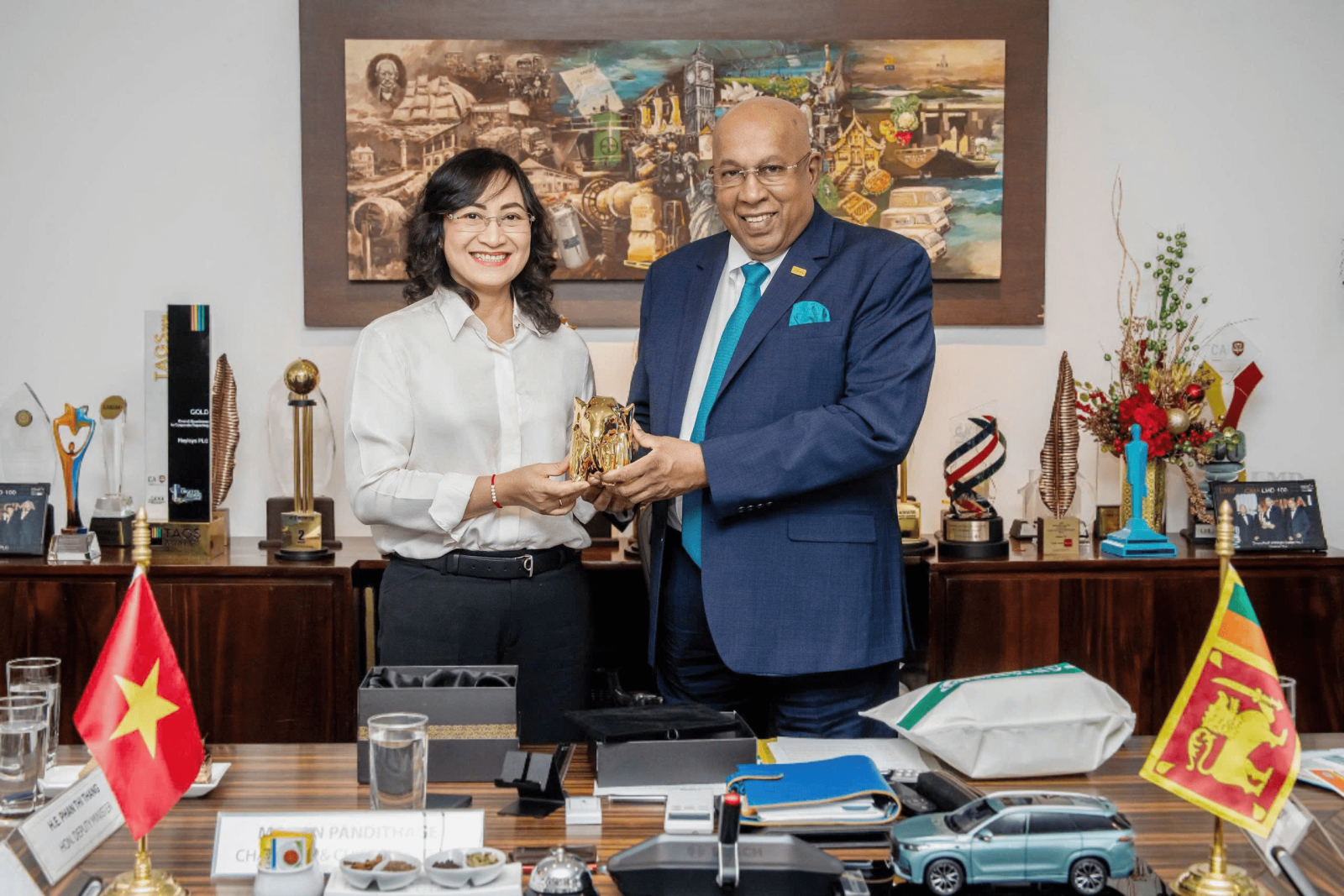
During a working trip to Sri Lanka, Deputy Minister Phan Thi Thang advanced key initiatives to deepen bilateral trade ties and strengthen business connectivity.
During a working trip to Sri Lanka, Deputy Minister Phan Thi Thang advanced key initiatives to deepen bilateral trade ties and strengthen business connectivity.
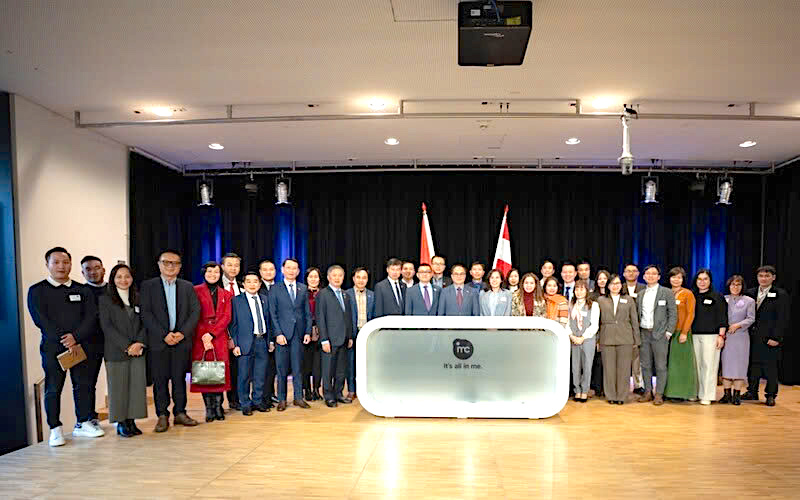
Vietnam and Austria strengthened collaboration in skilled labor and training at the bilateral Cooperation Forum held on December 10 at IMC Krems University.
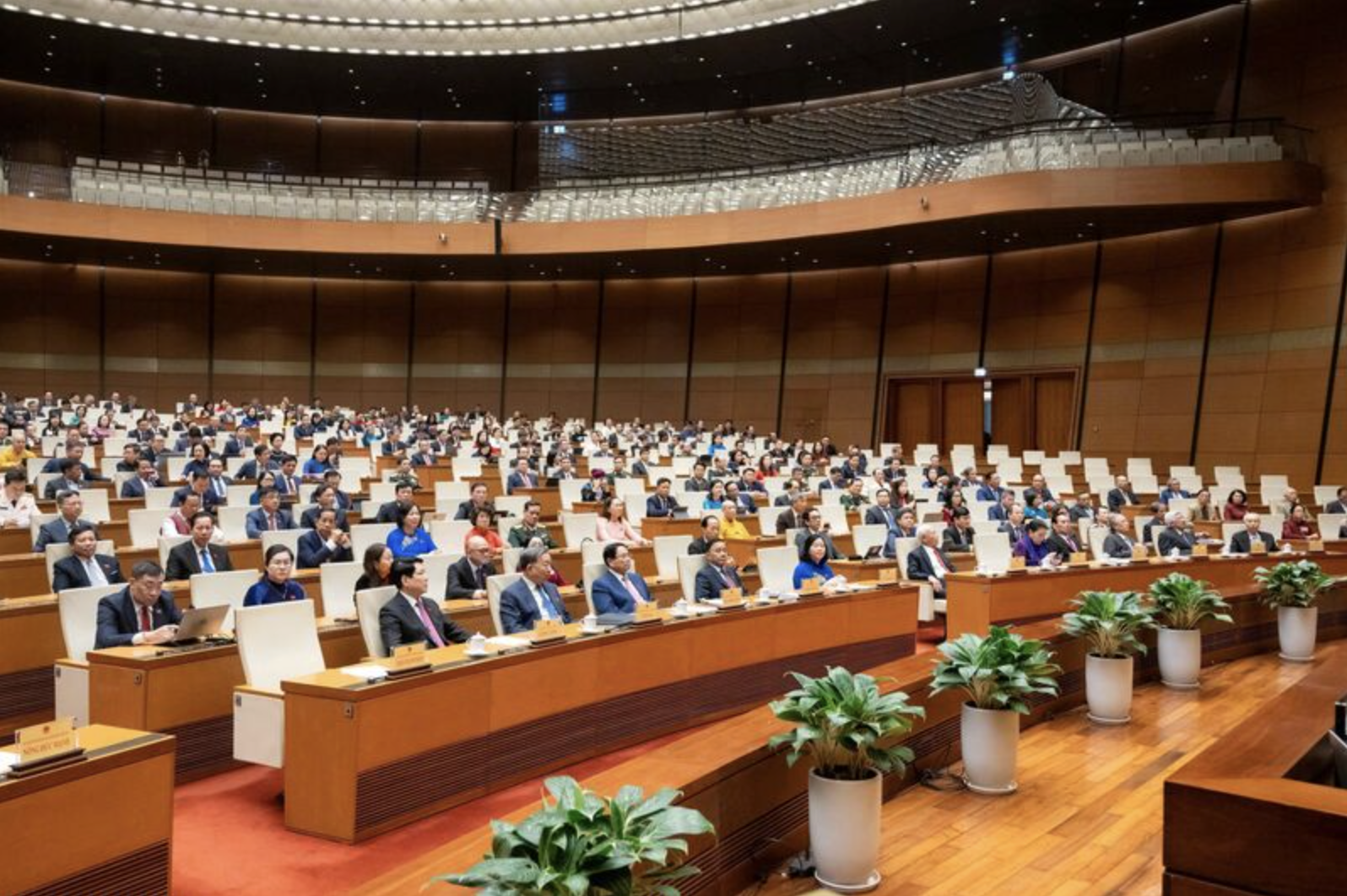
The 15th National Assembly officially concluded its 10th Session on the afternoon of December 11 after 40 days of continuous, urgent, and rigorous work.