Vietnam - China cooperation in the Red River Basin is deepening, boosting infrastructure links, supply chains and cross-border trade.
Amid a profound restructuring of the global economy, with regional supply chains playing an increasingly pivotal role, strengthening economic and trade cooperation between Vietnam and China, particularly at the local level not only carries bilateral significance but also contributes to reshaping the position of each region within the global trade network.
From local connectivity to interregional strategy
In an effort to expand the “economic cooperation space” in the Red River Basin one of the most dynamic development corridors between the two countries, the Trade Promotion Agency under the Vietnam’s Ministry of Industry and Trade recently coordinated with the Department of Commerce of Honghe Hani and Yi Autonomous Prefecture, Yunnan Province, to organize a Vietnam - Yunnan (China) trade delegation. The program brought together representatives from seven northern Vietnamese provinces and cities in the Red River Basin, along with 30 enterprises across multiple sectors.
The initiative was developed in alignment with the consensus reached during high-level visits between Vietnam and China, as well as the spirit of cooperation reaffirmed in the Joint Statement between the two countries. It serves to concretize orientations for enhancing local-level economic and trade connectivity in the new phase.
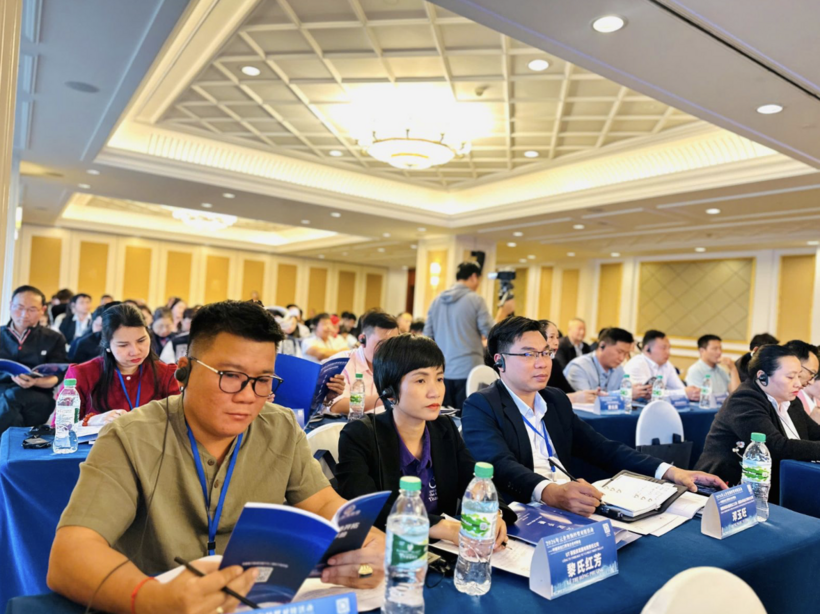
The Vietnam - Yunnan (China) Trade Delegation Program is organized under the leadership of the Trade Promotion Agency. Photo: Newspaper of Industry and Trade
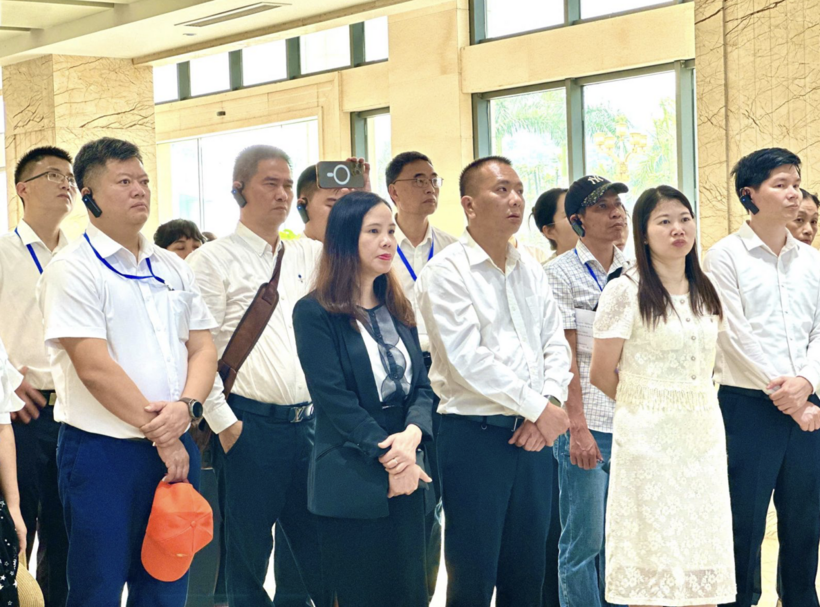
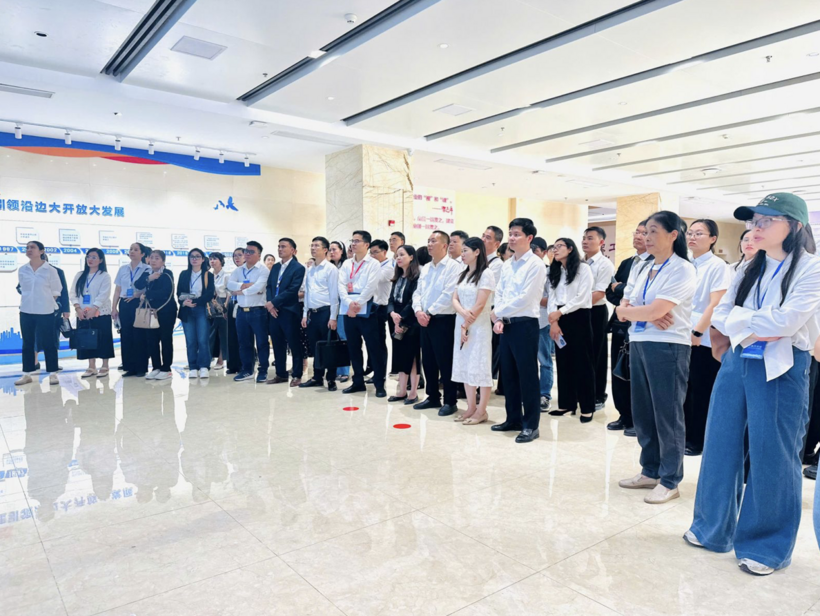
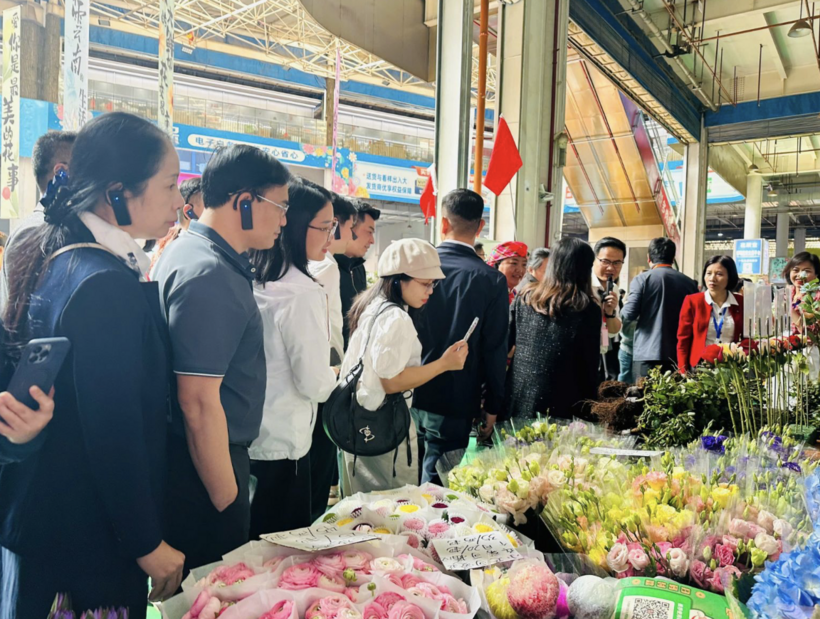
Within the framework of the program, the delegation participated in a range of practical activities. In Hekou, members conducted site visits and working sessions on the planning and development of supervision zones, the progress of the Ba Sai bridge project, and smart border gate models, while also examining cargo clearance operations at the Beishan International Logistics Yard. In Mengzi, the delegation visited and engaged with the Export Agricultural Products Integrated Service Center. In Kunming, they explored major wholesale markets, including the Dounan Flower Market and the Jinma Zhengchang fruit and vegetable market.
Through hands-on professional training programs on local economic and trade development in the Red River Basin, administrative officials from both sides gained practical insights into China’s implementation of high-quality growth models at the local level, ranging from raw material zoning and supporting industry development to logistics optimization and digital trade
The delegation takes part in various hands-on professional training programs in Yunnan. Photo: Newspaper of Industry and Trade
According to Nguyen Thi Thuy, Deputy Director of the Trade and Investment Promotion Support Center under the Trade Promotion Agency and head of the delegation, the program established a high-quality platform for administrative officials from both countries to access policies, exchange experiences, expand cooperation networks, and strengthen friendship ties. This, in turn, contributes to promoting economic and trade cooperation between localities, particularly in the Red River Basin.
“These practical activities serve as concrete evidence of efforts to realize commitments on developing high-quality human resources in the fields of economics and trade, thereby deepening and sustaining the Comprehensive Strategic Cooperative Partnership between the two countries,” she said.
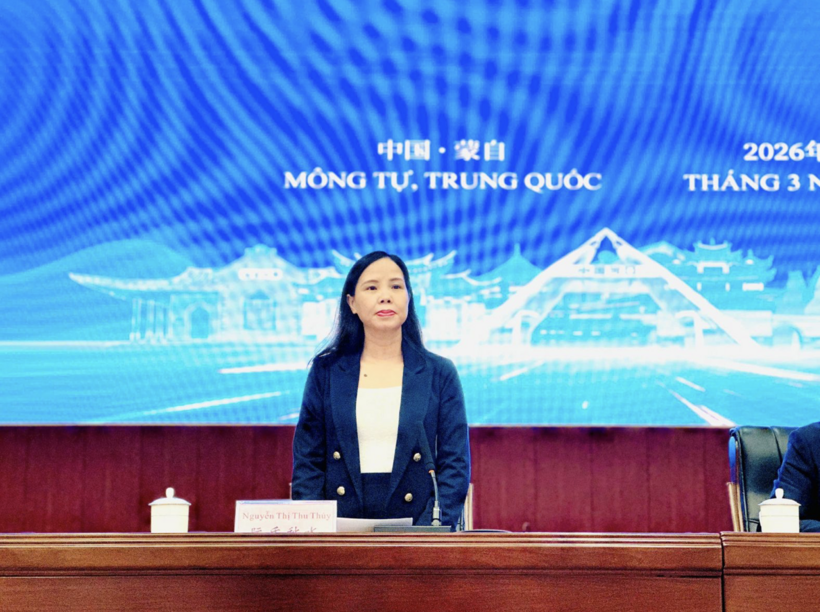
A key highlight of the program was the implementation of the “7+8” cooperation mechanism, linking seven localities in Yunnan Province with eight northern Vietnamese provinces and cities. Speaking at a forum on high-quality economic development in the Red River Basin, Nguyen Thi Thuy emphasized that the 7+8 cooperation framework is opening up new development space, marked by strategic opportunities that both leverage complementary advantages and enhance the efficiency of cross-border supply chains.
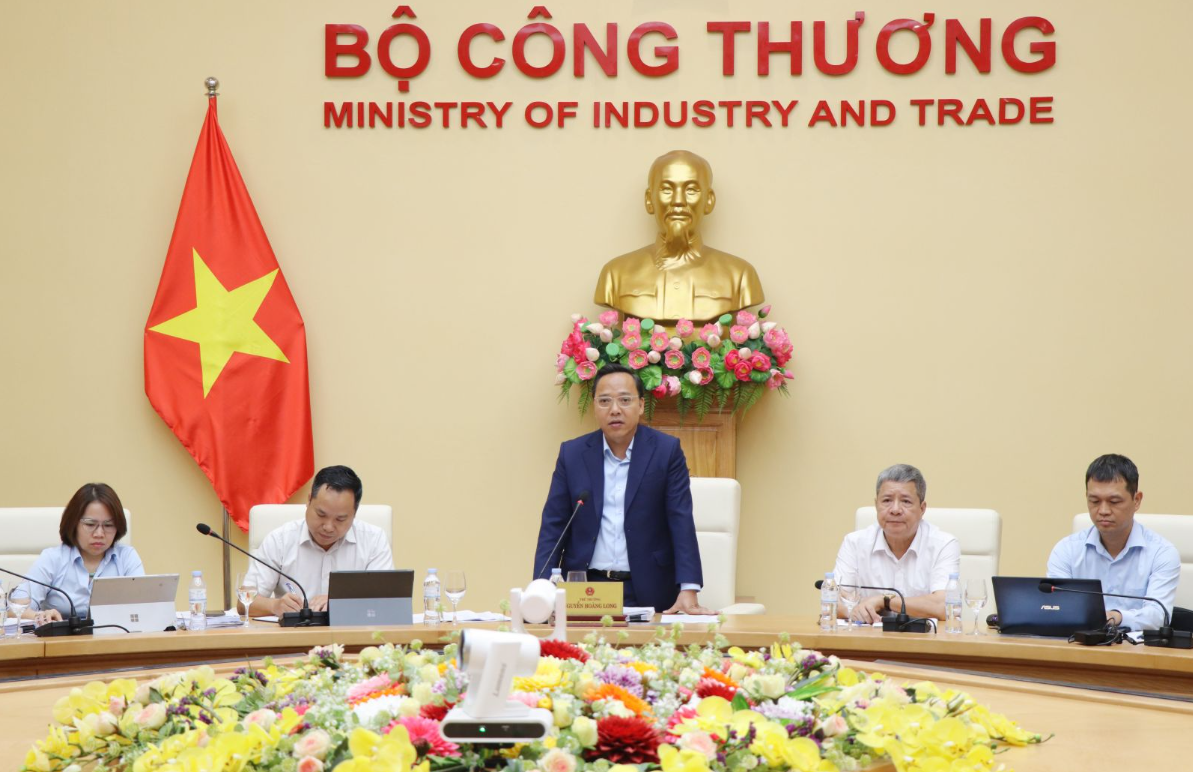
According to Nguyen Thi Thu Thuy, a key highlight of the program is the implementation of the “7+8” cooperation mechanism, linking seven localities in Yunnan province with eight provinces and cities in northern Vietnam. Photo: Newspaper of Industry and Trade.
She identified four main drivers underpinning this cooperation. Firstly, strategic infrastructure connectivity, both physical and institutional is being strengthened, particularly through cross-border transport projects that form modern logistics “arteries.” Secondly, the relocation of high-tech supply chains is creating opportunities to attract quality investment flows and develop cross-border supporting industry ecosystems. Thirdly, formal, high-quality agricultural trade is positioning the Red River Basin as a “green raw material zone.” Fourthly, the digital economy and e-commerce are accelerating cross-border trade expansion.
To elevate high-quality economic cooperation in the Red River Basin, Nguyen Thi Thuy underscored the need for more decisive and substantive action. Priority should be given to breakthroughs in connectivity infrastructure, including the completion of cross-border transport and logistics systems and the deployment of smart border gates to shorten clearance times. At the same time, harmonizing technical standards and conducting quality inspections at border areas would help reduce costs for exporters.
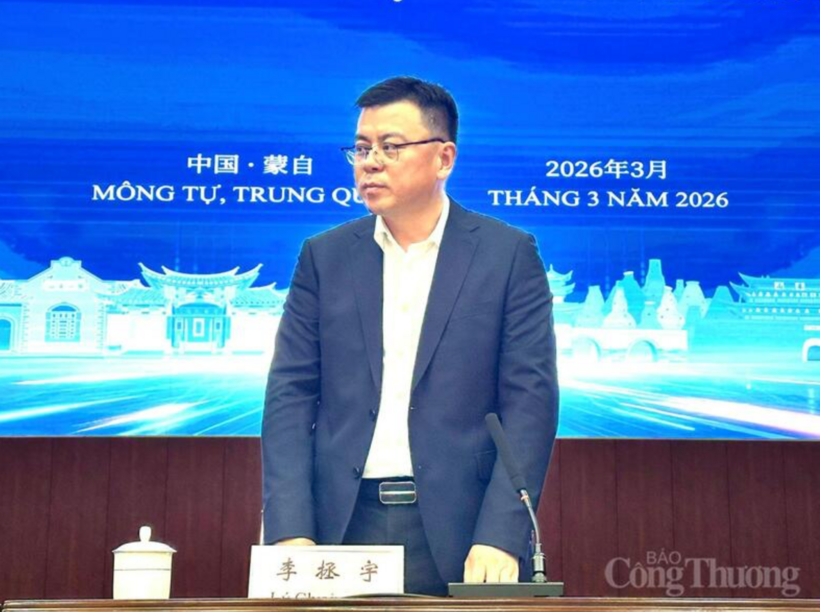
Li Zhangwu and representatives from Yunnan attended the panel discussion. Photo: Newspaper of Industry and Trade.
Additionally, establishing special mechanisms in Lao Cai to attract projects in deep agricultural processing and electronics assembly would create higher value-added locally. Trade promotion activities should also be upgraded through data-driven approaches, enhancing real-time supply-demand matching while combining traditional trade fairs with digital platforms.
From the Chinese side, Li Zhangwu, Standing Committee Member of the Honghe Prefectural Party Committee and Vice Governor of Honghe Prefecture, proposed three areas of cooperation: enhancing border infrastructure connectivity, leveraging industrial complementarities, and strengthening consensus among localities. Both sides agreed that economic and trade cooperation is an inevitable necessity, aimed at achieving sustainable and mutually beneficial development.
Opportunities for substantive and long-term trade and investment promotion
Throughout the program, both sides organized a series of trade promotion activities, including conferences and seminars. Notably, the Vietnam - China Import-Export Enterprise Networking Conference attracted nearly 100 enterprises from both Vietnam and Yunnan. The event aimed to showcase strengths and potential, address challenges in import-export activities, and facilitate direct engagement between businesses to explore partnership opportunities.
These events not only fulfilled the objective of promoting long-term economic and trade cooperation potential but also delivered tangible outcomes for the business community. Many enterprises successfully identified prospective partners, opening pathways for sustained collaboration.
Through the trade activities held within the program, many enterprises identify potential partners, opening up prospects for long-term cooperation. Photo: Newspaper of Industry and Trade
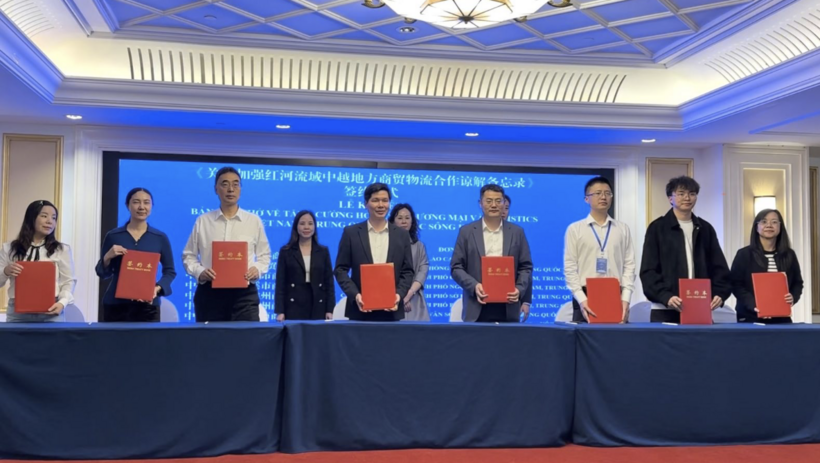
To effectively harness the strengths of eight Vietnamese provinces and cities and seven prefectures and cities in Yunnan province, the Lao Cai Department of Industry and Trade signed a Memorandum of Understanding on strengthening trade and logistics cooperation in the Red River Basin with commerce authorities from Honghe, Kunming, Dali, Chuxiong, Yuxi, Pu’er, and Wenshan.
Nguyen Thi Thuy noted that the MoU aims to implement key shared understandings and the Joint Statement of senior leaders of the two Parties and countries, while also concretizing outcomes from the annual conference of provincial Party Secretaries from Lao Cai, Lai Chau, Tuyen Quang, and Dien Bien (Vietnam) and Yunnan (China). It is expected to promote economic and trade development in the Red River Basin and address bottlenecks in cross-border logistics, trade, customs clearance, and industry.
“The parties have agreed to establish a cooperation mechanism on trade and logistics in the Red River Basin. The MoU reflects a new approach, shifting from fragmented cooperation to building an integrated cross-border trade and logistics ecosystem, with proactive participation from both authorities and the business community,” she emphasized.
The Lao Cai Department of Industry and Trade (Vietnam) signs a Memorandum of Understanding on strengthening Vietnam - China trade and logistics cooperation in the Red River Basin. Photo: Newspaper of Industry and Trade
This cooperation framework is grounded in key multilateral agreements such as the Regional Comprehensive Economic Partnership (RCEP) and the ASEAN - China Free Trade Agreement (ACFTA), with the goal of building supply chains that are “seamless, stable, and resilient.”
Within the framework of the program, the delegation also visited and worked at the Jinma Zhengchang fruit market and the Dounan Flower Market in Kunming. Photo: Newspaper of Industry and Trade
According to participating localities, the outcomes of this mission are expected to be further advanced through the effective implementation of cooperation agreements, expanded connectivity, and improved trade promotion initiatives. These efforts will contribute to fostering more substantive, efficient, and sustainable economic and trade relations between Vietnam and China in the new phase.
In 2025, bilateral trade between Yunnan and Vietnam reached CNY 22.37 billion (approximately USD 3.13 billion), marking a 1.1% increase year-on-year. Vietnam is currently Yunnan’s third-largest trading partner.
The Ministry of Industry and Trade reviews progress in implementing Resolution No.70-NQ/TW, urging stronger coordination to ensure national energy security and project delivery.
The business community continues to acknowledge and express its appreciation for the Ministry of Industry and Trade's steadfast support in helping Vietnamese products reach international markets.
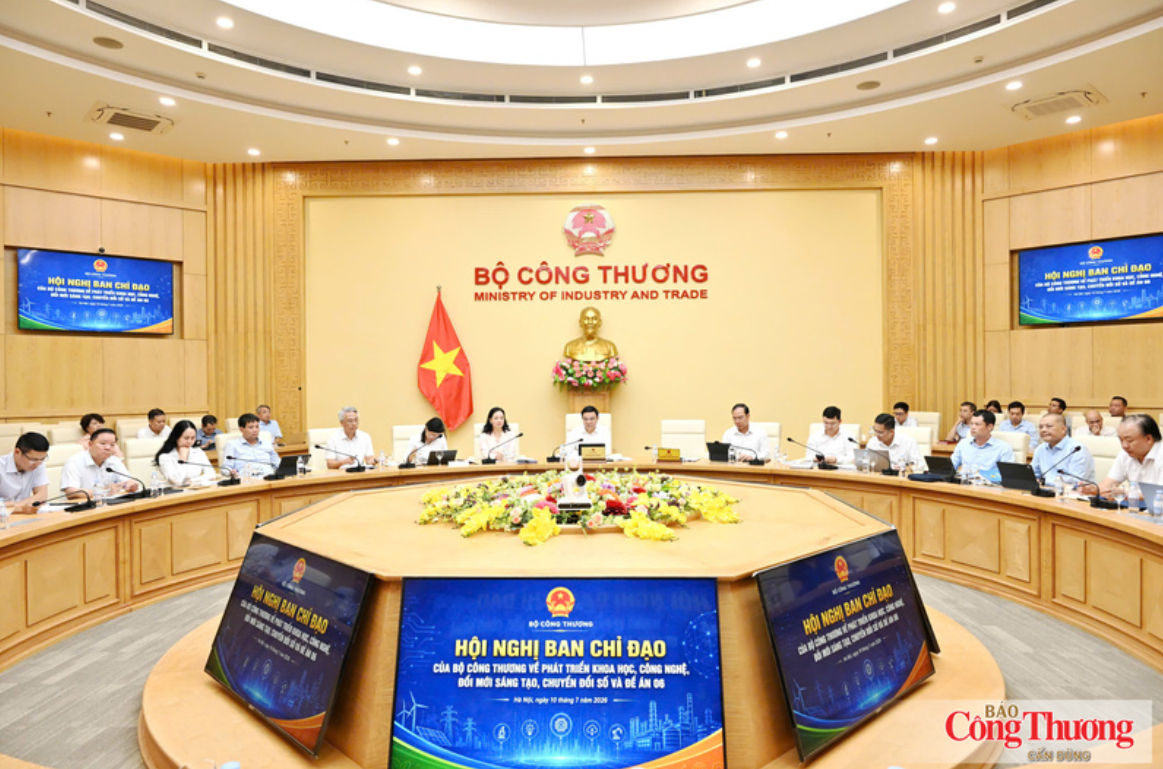
On July 10, Minister of Industry and Trade Le Manh Hung chairs a meeting to review the implementation of science, technology, innovation, digital transformation and Scheme 06.
Portugal claimed the DIFF 2026 championship as Da Nang's fireworks festival attracted record visitor numbers and global acclaim, marking its most successful season.
The Vietnam Industry, Trade and Services Awards 2026 have attracted nearly 200 entries, including a large number of foreign-invested (FDI) enterprises.
The Ministry of Industry and Trade reviews progress in implementing Resolution No.70-NQ/TW, urging stronger coordination to ensure national energy security and project delivery.
The business community continues to acknowledge and express its appreciation for the Ministry of Industry and Trade's steadfast support in helping Vietnamese products reach international markets.
On July 10, Minister of Industry and Trade Le Manh Hung chairs a meeting to review the implementation of science, technology, innovation, digital transformation and Scheme 06.
The Vietnam Industry, Trade and Services Awards 2026 have attracted nearly 200 entries, including a large number of foreign-invested (FDI) enterprises.
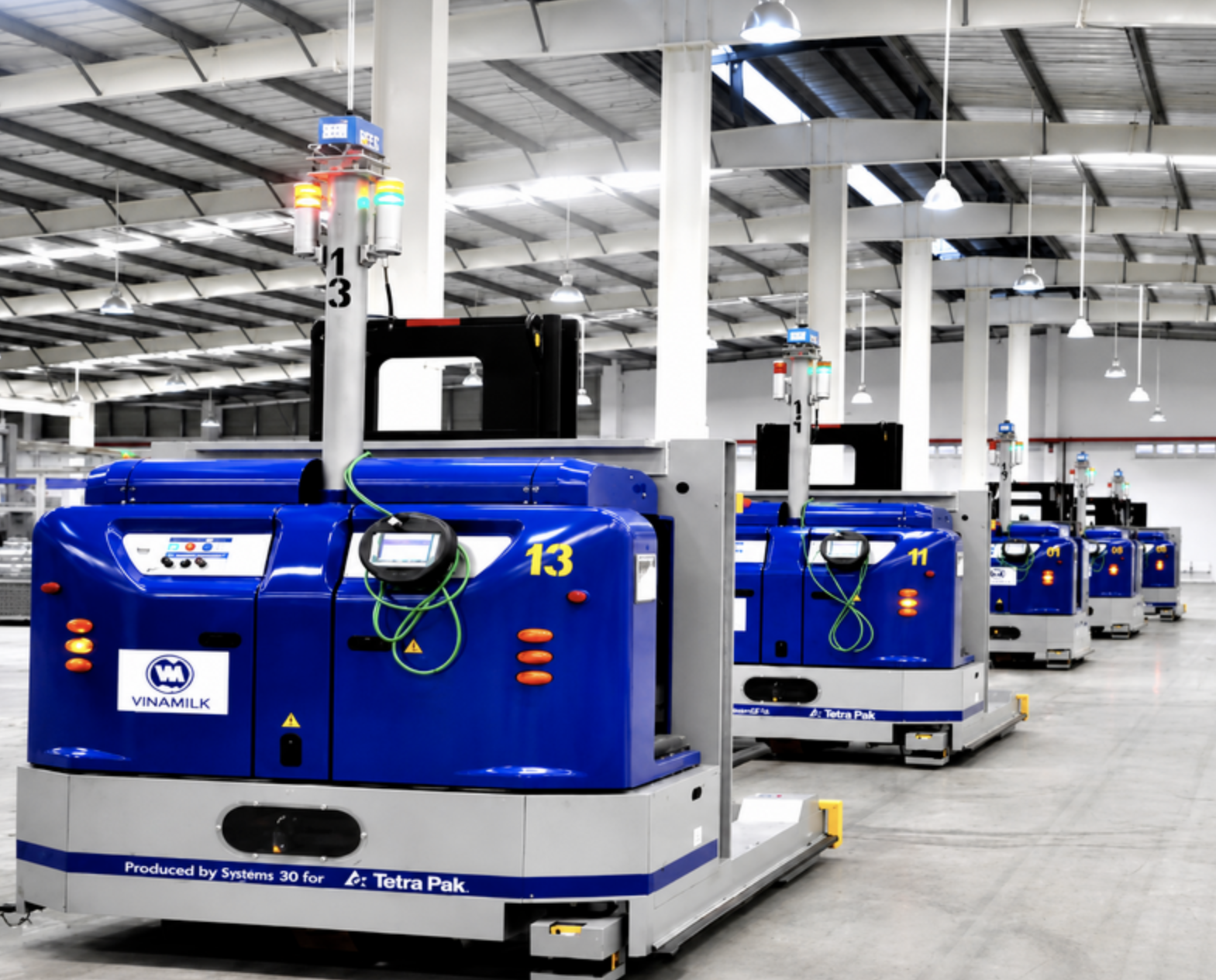
AI, the Internet of Things (IoT) and automation are making their way into factories and industrial parks across Ho Chi Minh City, redefining productivity and reshaping the role of human workers.