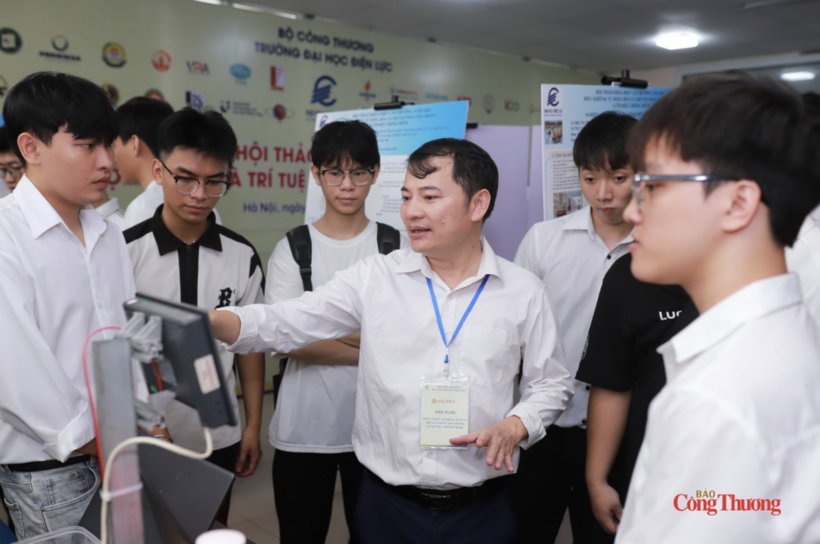
The Ministry of Industry and Trade is promoting closer links between training and businesses to develop a workforce that meets industry and trade sector needs.
The Ministry of Industry and Trade has called for a review, assessment and forecast of demand for highly skilled and technical workers in the industrial and trade sectors, aligned with the development requirements of each sector and the workforce needs of businesses.
Forecasting workforce demand in line with sectoral development requirements
Under Official Letter No.7284/BCT-TCCB dated September 11, 2026, implementing Prime Minister’s Decision No.1685/QD-TTg, the Ministry of Industry and Trade has requested its affiliated and subordinate units to review tasks related to improving labour productivity, developing the labour market and human resources, education and training, science and technology, innovation, and digital transformation.
The Department of Personnel and Organization has been assigned to take the lead in reviewing, assessing and forecasting demand for highly skilled and technical workers in the industrial and trade sectors. The forecast will cover the number, structure, qualifications, occupations and skills of the workforce, in line with the development requirements of each sector and the workforce needs of businesses.
Official Letter No.7284/BCT-TCCB dated September 11, 2026, issued by the Ministry of Industry and Trade, requests its affiliated and subordinate units to review tasks related to improving labour productivity, developing the labour market and human resources, education and training, science and technology, innovation and digital transformation. Photo: Phuong Cuc
The findings will serve as a basis for policymaking and for the formulation and implementation of strategies, programs, projects and plans for human resource development in the industry and trade sector.
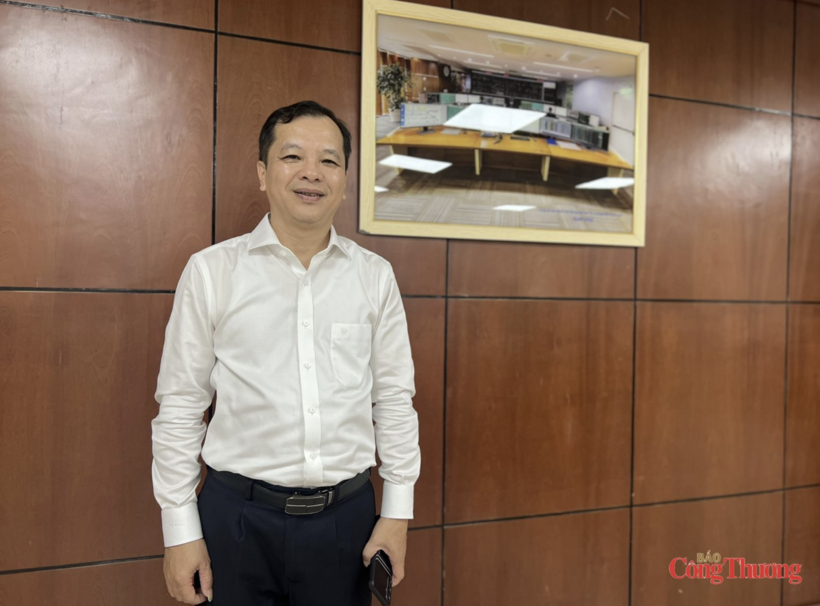
According to him, Vice Chairman of the Scientific and Training Council of the Institute for Industry and Trade Policy and Strategy, workforce forecasting has become increasingly important as the functions and responsibilities of the industry and trade sector evolve.
He said that as new responsibilities are assigned to the sector, its workforce must be prepared accordingly to ensure that it can meet current requirements as well as development orientations in the coming period.
From a training perspective, he said stronger links should be established among the State, educational institutions and businesses. In this framework, State management agencies have a role to play in management, as well as in collecting and making effective use of data to support policymaking.
This approach is also reflected in Official Letter No.7284/BCT-TCCB. State management agencies responsible for individual sectors and fields are tasked with providing information and data, assessing sectoral development trends, changes in technology and production and business methods, and workforce demand within their respective areas of management.
Workforce forecasting, therefore, should not be based solely on the current number of workers. It should also take into account sectoral development trends, technological changes and businesses’ actual workforce requirements.
The Department of Personnel and Organization has also been assigned to serve as the focal point for monitoring and urging the implementation of Prime Minister’s Decision No.1685/QD-TTg by the Ministry of Industry and Trade; consolidating implementation progress and results; and compiling difficulties, obstacles, recommendations, and proposals to advise the Ministry’s leadership on reporting to the Ministry of Home Affairs.
Linking training with workforce demand
Alongside workforce forecasting, the Ministry of Industry and Trade has called for stronger links among businesses, industry associations and educational and training institutions in identifying workforce needs, organizing training and employing workers.
Official Letter No.7284/BCT-TCCB encourages demand-driven training and training commissioned by businesses. It also calls for greater participation by businesses and industry associations in developing and updating training programs and connecting learners with the labour market.
Dr. Hoang Truong, Vice Chairman of the Scientific and Training Council of the Institute for Industry and Trade Policy and Strategy. Photo: Le An
He said that narrowing the gap between training and employment requires a shift towards a model in which businesses participate more deeply in the training process. According to him, the first step is “co-design”, under which businesses and educational institutions jointly develop training programs based on actual workforce requirements.
On that basis, educational institutions can develop formal training programs, open and flexible training programs, and professional development programs that meet businesses’ needs, particularly in fields strongly affected by digital transformation, the green transition and new standards.
The next step is “co-training”, with the roles of educational institutions and businesses clearly defined. Greater business participation in the training process would help learners gain closer exposure to the practical requirements of the labour market.
The next step is “co-employment”. According to him, businesses should create opportunities for learners to gain access to equipment, technology, management methods and actual working environments. This would enable learners to adapt more quickly to their jobs after graduation and reduce the need for retraining.
Under Official Letter No.7284/BCT-TCCB, educational institutions under the Ministry of Industry and Trade are also required to review their training content, programs and methods based on the sector’s workforce needs. Particular attention should be paid to digital skills, artificial intelligence skills, green skills, vocational skills, and the ability to adapt to technological innovation, automation, and digital transformation.
He said State management agencies need to establish channels for receiving feedback from the process of employing workers and use such information in designing training programs. This information can be collected and analyzed by research institutes and specialized units to support policy adjustments.
Accordingly, human resource development in the industry and trade sector can be implemented through a continuous cycle of forecasting workforce demand, co-design, co-training, co-employment, feedback and adjustment. Within this cycle, the Department of Personnel and Organization serves as the focal point for monitoring, consolidating and coordinating efforts, helping align human resource development more closely with the development requirements of each sector and field and the actual workforce needs of businesses.
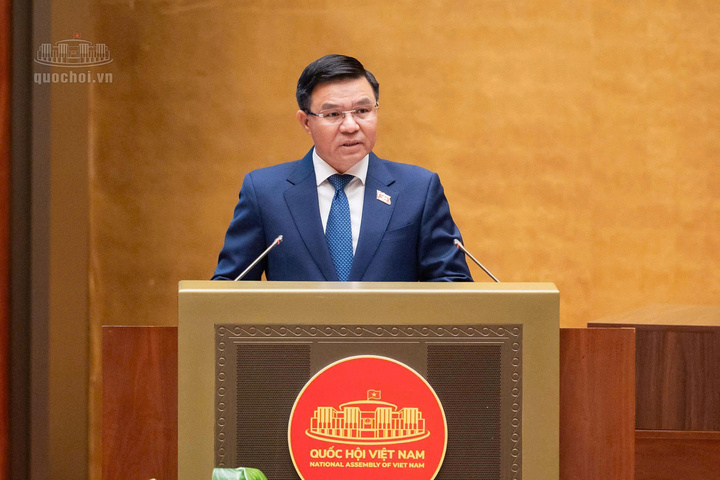
On October 20, at the second session of the 16th National Assembly, Minister of Industry and Trade Le Manh Hung presented the Government's submission on the draft Law amending and supplementing a number of articles of the Electricity Law.
On October 20, Minister Le Manh Hung presented proposed amendments to four laws on commerce, competition, foreign trade management and consumer rights.
Digital skills, AI adoption and online exports are expected to help young entrepreneurs transform their businesses and expand into international markets.
General Secretary of the Communist Party of Vietnam Central Committee and State President To Lam, his spouse and a high-ranking Vietnamese delegation attended a state banquet hosted by King Frederik X and Queen Mary in Copenhagen on the evening of October 19 (local time).
The Ministry of Industry and Trade is promoting closer links between training and businesses to develop a workforce that meets industry and trade sector needs.
GREENTECH HA NOI 2026 showcases green technologies and energy-efficient solutions that help businesses cut emissions, optimize costs, promote sustainable production.
On the sidelines of the BRICS Summit in New Delhi, Senior Lieutenant General Nguyen Truong Thang held a meeting with Indian Defence Secretary Rajesh Kumar Singh, agreeing to expand defence cooperation.
Viet Nam has identified strengthening energy security and resilience, accelerating a clean and just energy transition, and promoting innovation, investment and regional connectivity as three strategic priorities in responding to profound changes in the global energy landscape.
The Viet Nam-Japan Business Forum 2026 will take place in Hanoi, bringing together around 250 delegates for trade and investment matchmaking and business networking.