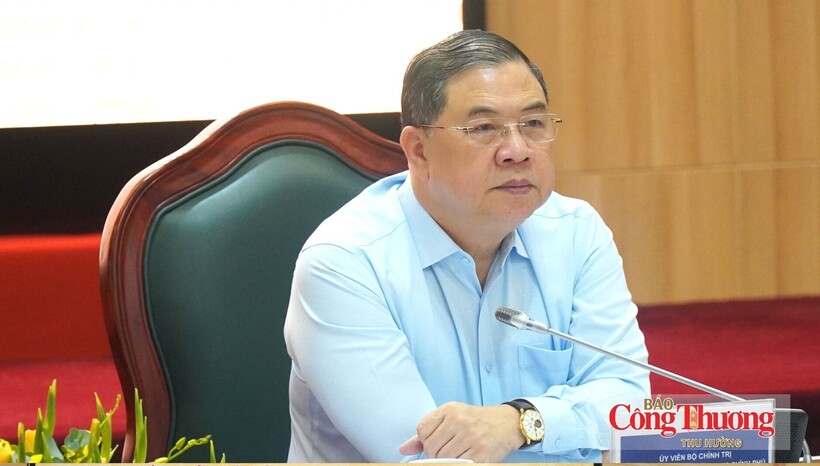
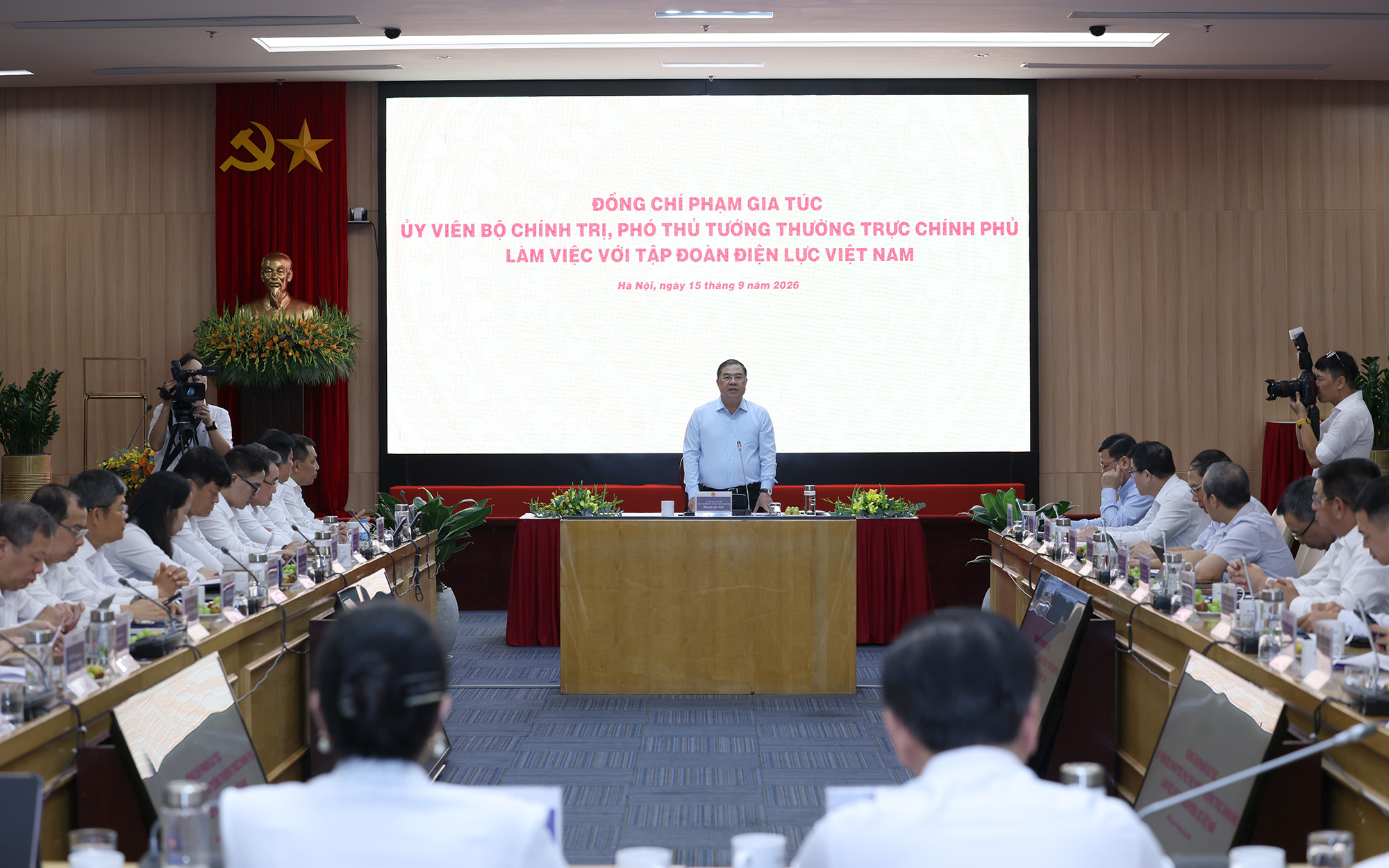
On September 15 in Ha Noi, Political Bureau member and Standing Deputy Prime Minister Pham Gia Tuc held a working session with the Vietnam Electricity (EVN).
Also attending the meeting were leaders of the Office of the Government, the Ministry of Industry and Trade, the Ministry of Finance, the Ministry of Agriculture and Environment, and the State Bank of Viet Nam. Representing EVN were the group’s leaders, together with leaders of its member corporations and functional departments.
Building EVN into a strong economic group
In his opening remarks, Standing Deputy Prime Minister Pham Gia Tuc highlighted highly of the electricity sector’s contributions over the past 72 years to socio-economic development, national defence and security, and improvements in people’s living standards. He also recognized and commended the contributions made by EVN and more than 97,000 officials, workers and employees across the electricity sector in recent years.
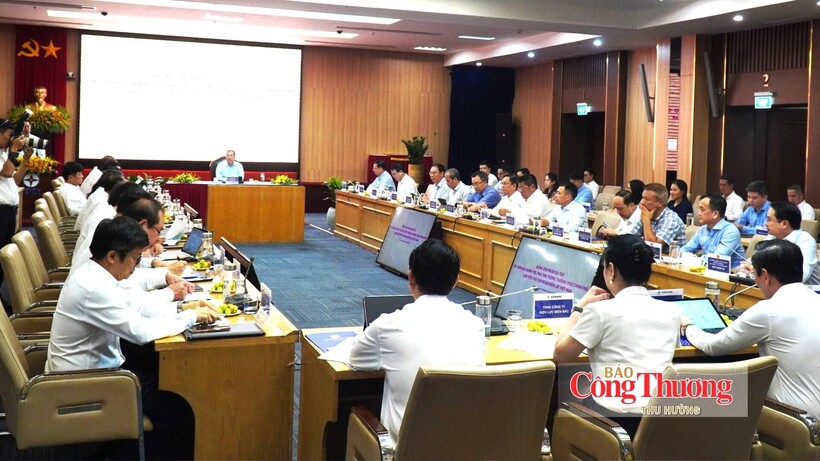
An overview of the working session.
According to the Standing Deputy Prime Minister, as the country sets a high growth target and identifies science, technology, innovation and digital transformation as key drivers, the role of the electricity sector is becoming increasingly important. The development of data centers, high-tech industries and new manufacturing sectors requires a stable, high-quality and safe power supply at reasonable costs, with the capacity to respond rapidly to rising demand.
At the same time, the global situation continues to evolve in a complex and unpredictable manner, placing increasingly demanding requirements on energy security. If Viet Nam is to become a new manufacturing hub in the region and participate more deeply in global supply chains, it must ensure the fundamental conditions for such development, with electricity being a key factor.
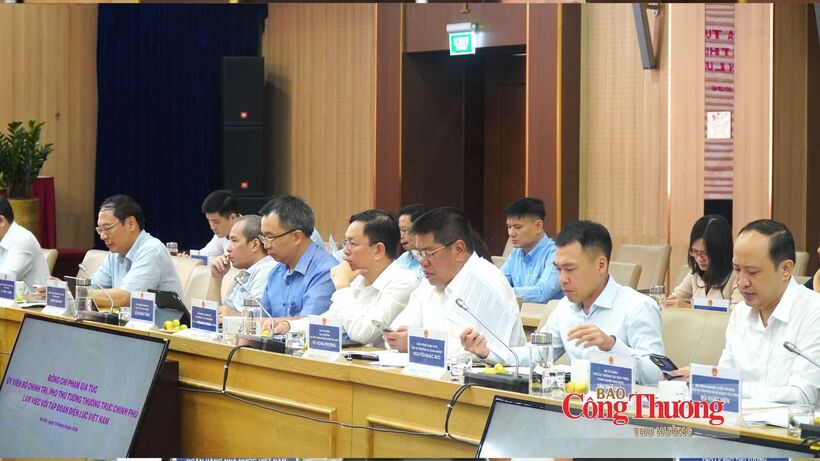
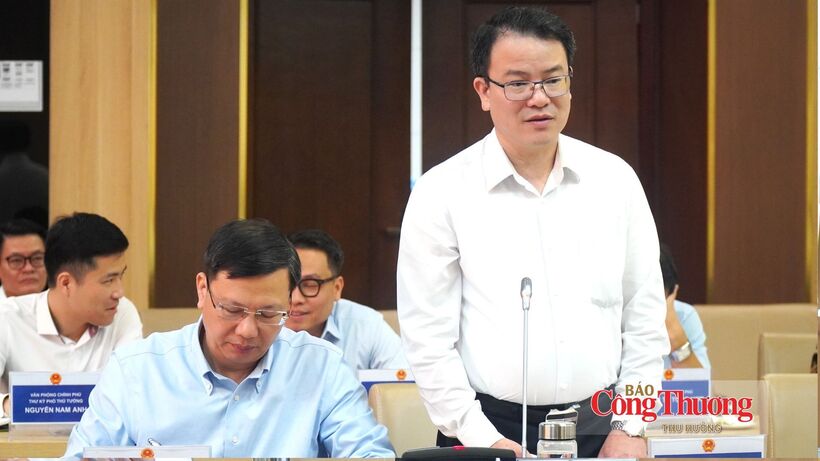
Representatives of ministries and sectors attending the working session.
Under the development orientation for 2026 - 2030, Viet Nam aims to maintain double-digit GDP growth, which will drive continued strong growth in electricity demand and put considerable pressure on the power system. The Standing Deputy Prime Minister said EVN and state-owned enterprises must continue to play a pivotal role, while effectively mobilizing resources from all economic sectors to develop the power system.
Regarding EVN’s restructuring, the Standing Deputy Prime Minister stressed that this should not be merely an exercise in streamlining the organizational apparatus, but must be linked to the goal of building a stronger group, mastering science and technology, enhancing competitiveness and contributing more effectively to energy development and the country’s economic growth.
The Standing Deputy Prime Minister asked EVN to identify the building of the group into a strong, large-scale economic group with high competitiveness as a strategic and overarching objective. Accordingly, by 2030, EVN aims to be among the three Vietnamese enterprises included in the Top 500 largest companies in the world, while seeking a high ranking rather than merely setting the goal of being included in the ranking.
The Standing Deputy Prime Minister asked EVN to conduct a comprehensive assessment of its production and business activities, clarifying results, limitations and their causes, particularly its capacity to ensure power supply during periods of high demand. The group needs to proactively participate in the adjustment of the revised Power Development Plan VIII, identify shortcomings, improve the quality of load forecasting and propose feasible project lists to ensure synchronization between power sources and the grid.
Three major challenges to ensuring power supply security
Reporting to Standing Deputy Prime Minister Pham Gia Tuc on production and business activities and the group’s restructuring orientation, Dang Hoang An, Chairman of the Members' Council of Vietnam Electricity (EVN), said electricity demand continues to rise alongside the recovery and development of the economy. Against this backdrop, EVN has identified ensuring a safe and stable power supply and accelerating investment in power generation and grid infrastructure as key tasks, while setting the goal of building EVN into a strong, large-scale state economic group that plays a pivotal role in ensuring national energy security.
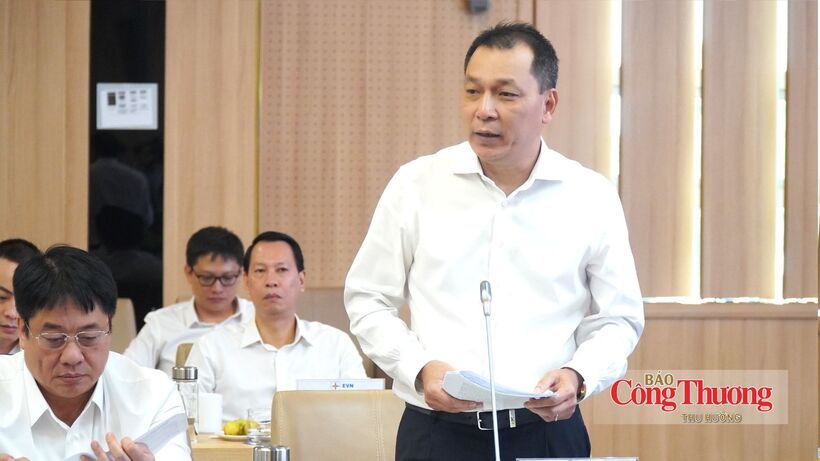
Dang Hoang An, Chairman of EVN’s Members' Council, reports on power supply and challenges ahead.
According to EVN’s report, over the past five years, despite the impacts of the COVID-19 pandemic, geopolitical conflicts, supply chain disruptions and major fluctuations in the global energy market, the group has made efforts to manage and operate the power system and ensure electricity supply for socio-economic development and people’s daily lives.
Notably, electricity demand has risen more sharply in 2026. In the first eight months of the year, total electricity generation and imports reached 235.82 billion kWh, up 9.3% year on year, while commercial electricity output reached 210.4 billion kWh, up 9.8%.
According to EVN, in addition to ensuring power supply, EVN and the energy sector are facing numerous difficulties, challenges and bottlenecks that need to be addressed soon to ensure national energy security and meet the country’s development requirements in the new period.
Dang Hoang An said that under the revised Power Development Plan VIII, by 2030, total power generation capacity serving domestic demand must reach at least 183,291 MW. This means that the power system will need to add approximately 93,000 MW of new generation capacity during 2026 - 2030 alone.
Of this amount, EVN has been assigned to invest in and is expected to complete 6,066 MW of generation capacity, together with approximately 1,700 MW of battery energy storage systems (BESS). The remaining capacity means that investors outside EVN, including state-owned economic groups and other economic sectors, will need to complete at least approximately 85,000 MW.
Given the requirement to develop a very large amount of generation capacity within a short period, Dang Hoang An identified three challenges requiring focused efforts to ensure national energy security in the coming period.
First, the balance between power supply and demand must be addressed to ensure power supply security. Bringing a large volume of new generation capacity into operation between now and 2030 is a major challenge. To achieve the generation capacity target under the revised Power Development Plan VIII, EVN proposed that decisive and synchronized solutions be implemented, including stronger efforts to urge and support investors in removing difficulties and obstacles, accelerating investment progress and bringing power generation projects into operation on schedule.
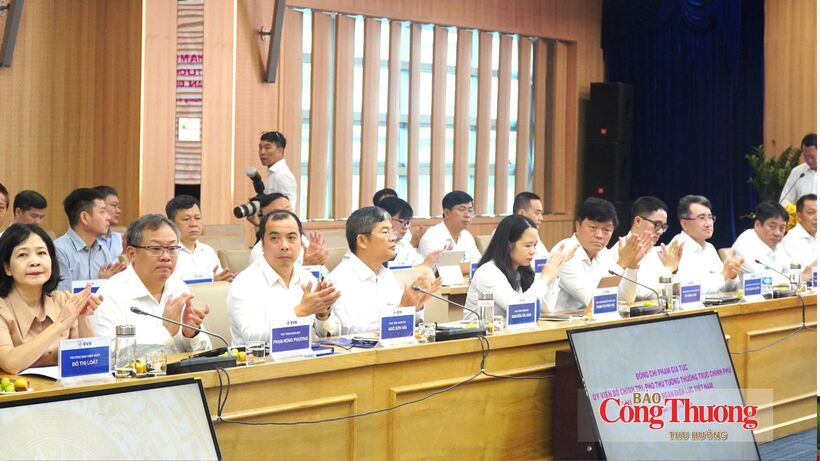
EVN leaders and representatives of the group’s functional departments attend the working session.
Second, the progress of investment and construction of power projects remains a challenge. In recent years, the National Assembly, the Government, and relevant ministries and sectors have issued numerous directions while gradually improving investment regulations and procedures. However, with approximately 85,000 MW of generation capacity required to be brought into operation by investors outside EVN by 2030, delays in investor selection or continued delays after investors have been selected could put the power supply-demand balance target at risk. In particular, site clearance remains one of the major bottlenecks for both generation and grid projects. Procedures related to land, environmental impact assessment, and conversion of land-use purposes also need to be fundamentally addressed to shorten project preparation and implementation time.
Based on this situation, EVN proposed continuing to comprehensively improve the legal framework, mechanisms and policies for the electricity sector, taking into account the specific characteristics of energy projects.
Third, the capital mobilization requirements for development investment during 2026–2030 are expected to be very large. Therefore, removing credit constraints and expanding access to long-term capital will be of great importance to ensuring energy security in the coming period.
The Chairman of EVN’s Members' Council proposed further improving the institutional framework for electricity sector development and ensuring national energy security, including more effectively removing bottlenecks related to investment, investor selection, land, site clearance and capital mobilization.
Removing investment bottlenecks and adding baseload power sources
At the working session, the Standing Deputy Prime Minister listened to views from representatives of relevant ministries and sectors on the difficulties, challenges and solutions raised by EVN and the Ministry of Industry and Trade. In particular, the ministries and sectors assessed that EVN had made significant efforts to ensure power supply, invest in generation and grid infrastructure, effectively carry out production and business activities, and fulfill assigned political and social tasks. However, amid requirements for high economic growth and continued rapid increases in electricity demand, while the progress of some generation projects remains slow and generation and grid development is not yet synchronized, ensuring energy security during 2027 - 2030 presents numerous challenges.
Tran Quoc Phuong, Deputy Minister of Finance.
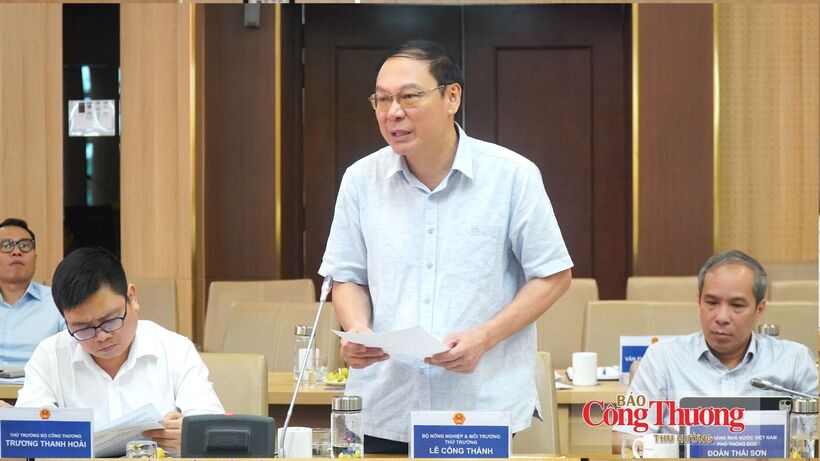
Le Cong Thanh, Deputy Minister of Agriculture and Environment.
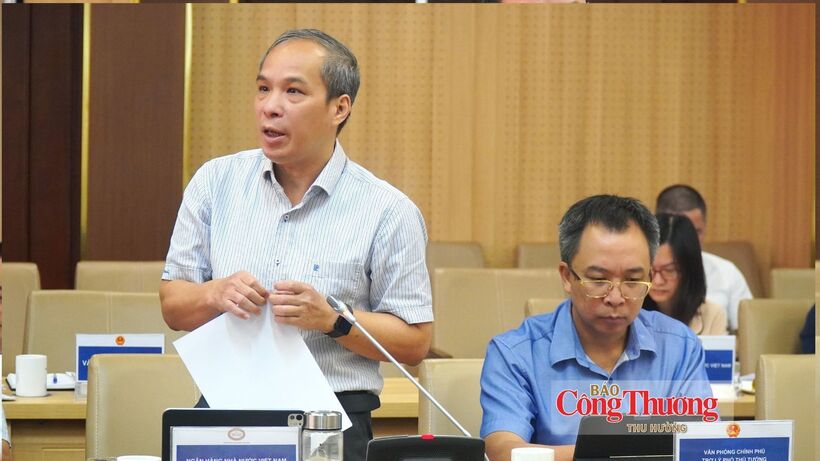
Doan Thai Son, Deputy Governor of the State Bank of Viet Nam.
At the working session, Deputy Minister of Industry and Trade Truong Thanh Hoai said that during the first eight months of 2026, the Ministry of Industry and Trade coordinated with EVN and relevant agencies to basically ensure power supply. However, with electricity demand continuing to rise, the supply-demand balance during 2027–2030 is expected to face significant challenges, particularly in northern Viet Nam, where the number of new generation sources coming into operation remains limited.
To ensure sufficient electricity for economic growth, the Deputy Minister said synchronized solutions were needed, covering generation and grid development as well as demand-side management. In the immediate term, it is necessary to accelerate generation projects currently under development, add baseload power sources, promote solar and wind power and energy storage, while strengthening transmission capacity from central Viet Nam to the north. EVN needs to proactively coordinate with the National Power System and Market Operation Corporation (NSMO) to regularly review the power supply-demand balance, particularly for 2027 - 2030.
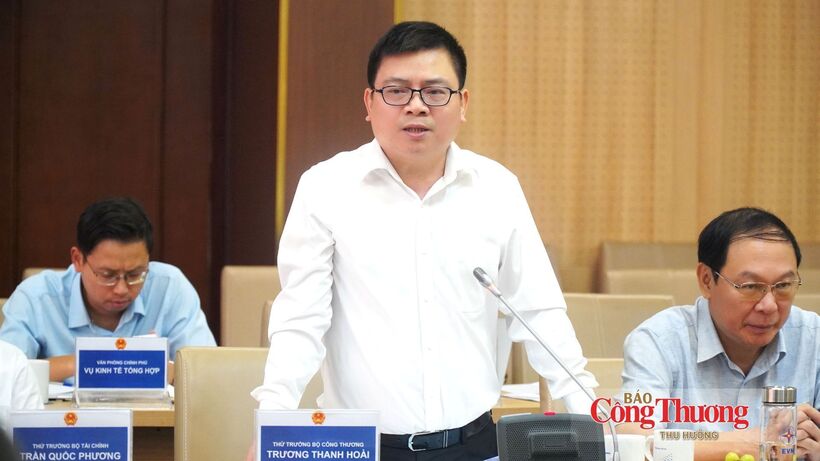
Deputy Minister of Industry and Trade Truong Thanh Hoai.
Deputy Minister Truong Thanh Hoai stressed that, alongside investment in generation and grids, electricity conservation, demand management and demand response must be considered important solutions. The development of rooftop solar power for self-generation and self-consumption should be promoted, particularly at state agencies, schools and hospitals.
At the same time, bottlenecks in investment procedures, environmental impact assessments and the conversion of forest-use purposes for power projects must be removed. According to the Deputy Minister, the progress of projects serving power supply during 2028 - 2029 is now so urgent that it “must be calculated by quarter rather than by six months.”
Regarding capital, investment requirements for the power system, particularly transmission infrastructure, are very large. Therefore, in addition to bank credit, channels such as corporate bonds and project bonds should be studied, while credit-related obstacles facing state-owned energy groups should be removed.
Deputy Minister Truong Thanh Hoai stressed: “Regardless of which restructuring model is adopted for EVN, the overarching objective must remain ensuring sufficient power supply for socio-economic development, particularly from now until 2030, when the power balance is expected to continue facing numerous challenges.”
power supply is a strategic issue in ensuring national energy securityIn his concluding remarks, Standing Deputy Prime Minister Pham Gia Tuc once again recognized and commended the contributions of EVN, its officials, workers and employees in ensuring energy security, serving socio-economic development and meeting people’s daily needs.
Standing Deputy Prime Minister Pham Gia Tuc listens to opinions from ministries and sectors.
The Standing Deputy Prime Minister said that in the coming period, the global and regional situation would continue to evolve rapidly and unpredictably, while electricity demand to support high growth would continue to rise. EVN must ensure a stable, safe and high-quality power supply at reasonable costs, while creating a foundation for socio-economic development.
The Standing Deputy Prime Minister asked EVN to identify the building of the group into a strong state-owned enterprise of large scale and high competitiveness as a strategic and overarching objective. According to the Standing Deputy Prime Minister, EVN must be strong enough to perform its pivotal and leading role in ensuring national energy security. The group needs to strengthen its internal capabilities and autonomy in strategy, technology and governance, while proactively coordinating with ministries and sectors to remove difficulties and create favorable conditions for development.
The Standing Deputy Prime Minister requested EVN to accelerate restructuring and reorganize its operations around clear pillars, linking restructuring with its development strategy, enhanced competitiveness and operational efficiency. In generation development and power production, the group needs to clearly determine the scale and share of generation capacity that EVN should retain to ensure its pivotal role in system operation, while improving the efficiency of managing and operating existing power plants.
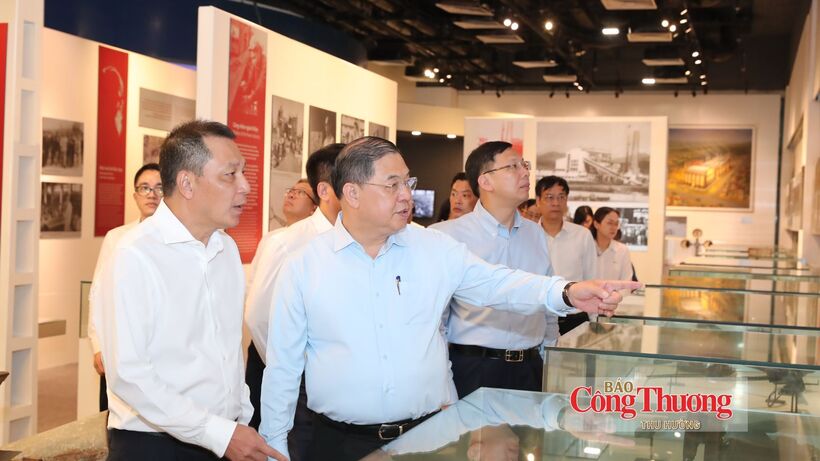
Standing Deputy Prime Minister Pham Gia Tuc visits EVN’s traditional room.
Regarding electricity business and services, EVN should continue improving the quality of electricity retail and technical services, placing customer satisfaction at the center. The electricity sector must take the lead in science, technology, innovation and digital transformation, while accelerating automation and digitalization in management, operation and service delivery.
EVN also needs to focus on developing the electricity industry, strengthening research capacity and mastering technologies, while gradually enhancing domestic production capacity for electrical equipment, energy storage systems and advanced transmission technologies. It should develop capabilities for manufacturing, maintenance and repair across the value chain to meet domestic demand and gradually target international markets.
Regarding generation and grid development, the Standing Deputy Prime Minister requested that resources be concentrated on accelerating key projects and proactively proposing urgent projects, particularly in northern Viet Nam. Generation development must be linked with grid development, with transmission infrastructure moving one step ahead so that power plants are not completed without sufficient transmission capacity to evacuate their output.
The Standing Deputy Prime Minister stressed the need to diversify investment forms, focus on developing interregional transmission lines, projects to evacuate power from areas with large generation capacity to areas with high demand, and projects serving electricity imports. At the same time, the development of rooftop solar power, self-generation and self-consumption power, wind power, energy storage systems and other appropriate energy sources should continue to be promoted.
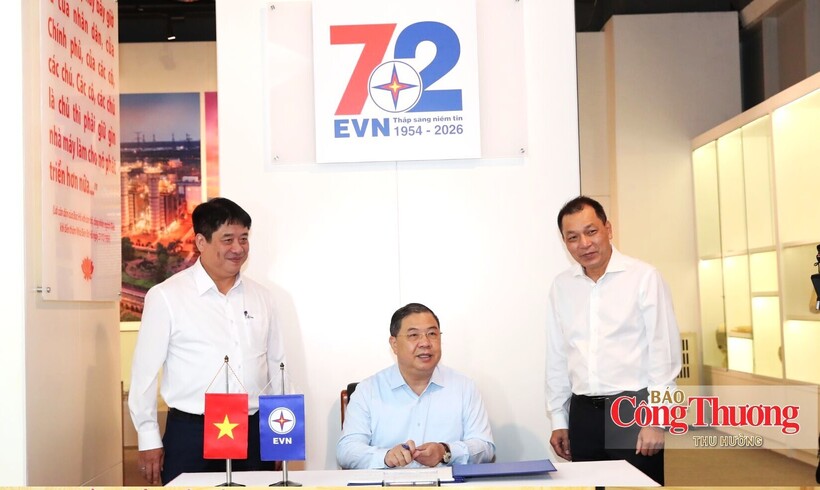
Standing Deputy Prime Minister Pham Gia Tuc signs the guest book in EVN’s traditional room.
The implementation of generation and grid projects must ensure progress, quality and efficient use of capital, comply with standards, technical regulations, norms and legal provisions, and ensure safety during construction and operation as well as environmental requirements, without allowing losses or waste to occur.
The Standing Deputy Prime Minister requested that outstanding difficulties in projects be addressed decisively, particularly those involving renewable energy projects, on the basis of legal regulations and policies and resolutions issued by competent authorities. Relevant agencies must closely coordinate with EVN to promptly remove difficulties and enable projects to deliver their intended benefits as soon as possible.
Regarding electricity price management, the Standing Deputy Prime Minister instructed EVN to comply with legal regulations, ensuring transparency and openness while harmonizing the interests of the State, enterprises and people.
The Standing Deputy Prime Minister stressed that institutions must genuinely facilitate development and serve the country’s high-growth objectives. Alongside institutional improvement, implementation is currently of particular importance. Ministries, sectors and EVN need to proactively coordinate, promptly identify and remove obstacles, and ensure that work is carried out quickly, in accordance with regulations and effectively.
Regarding EVN’s proposals on financial mechanisms, the Standing Deputy Prime Minister assigned the Ministry of Finance to take the lead and coordinate with the State Bank of Viet Nam and relevant agencies in studying and addressing the issues within their authority. Matters beyond their authority must be consolidated and reported to competent authorities for consideration and decision, ensuring compliance with legal regulations and preventing the emergence of request-and-grant mechanisms.
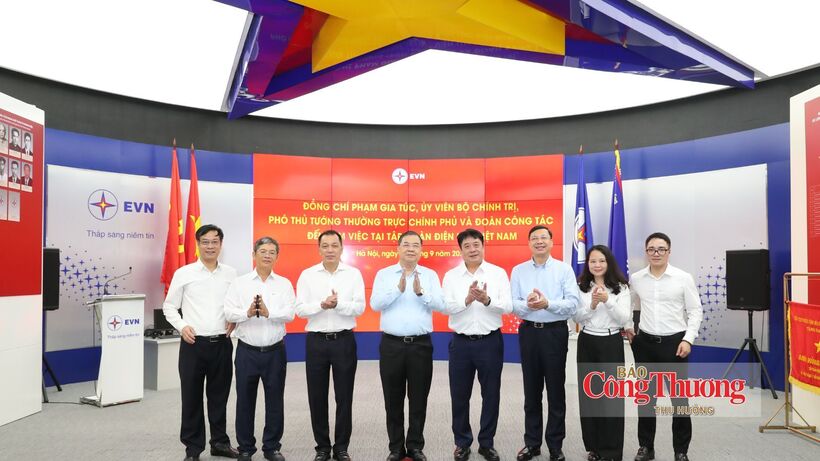
Standing Deputy Prime Minister Pham Gia Tuc poses for a group photo with EVN leaders and officials in the group’s traditional room.
The Standing Deputy Prime Minister also requested continued promotion of self-generation and self-consumption power and rooftop solar power; promotion of direct power purchase mechanisms; and stronger efforts in electricity conservation and demand response, particularly during peak periods. A culture of electricity conservation and appropriate, efficient electricity use should gradually be established, thereby reducing costs and investment pressure on the power system.
The Standing Deputy Prime Minister affirmed that power supply is not merely an economic task but a strategic issue of decisive importance to macroeconomic stability, national defence and security, and people’s lives. As the country sets high growth targets for many years to come, electricity demand will continue to rise, placing considerable pressure on EVN and the entire electricity sector.
The Standing Deputy Prime Minister asked EVN and relevant ministries and sectors to embrace a spirit of more decisive action, closer coordination and greater responsibility, and to carry out tasks at a faster pace, with higher quality and clearer results. He expressed his confidence that, with its tradition of solidarity, resilience and aspiration for advancement, EVN would successfully fulfill its assigned tasks, maintain its pivotal role in ensuring national energy security, and make practical contributions to the country’s rapid and sustainable development.
On September 15 in Ha Noi, Political Bureau member and Standing Deputy Prime Minister Pham Gia Tuc held a working session with the Vietnam Electricity (EVN).
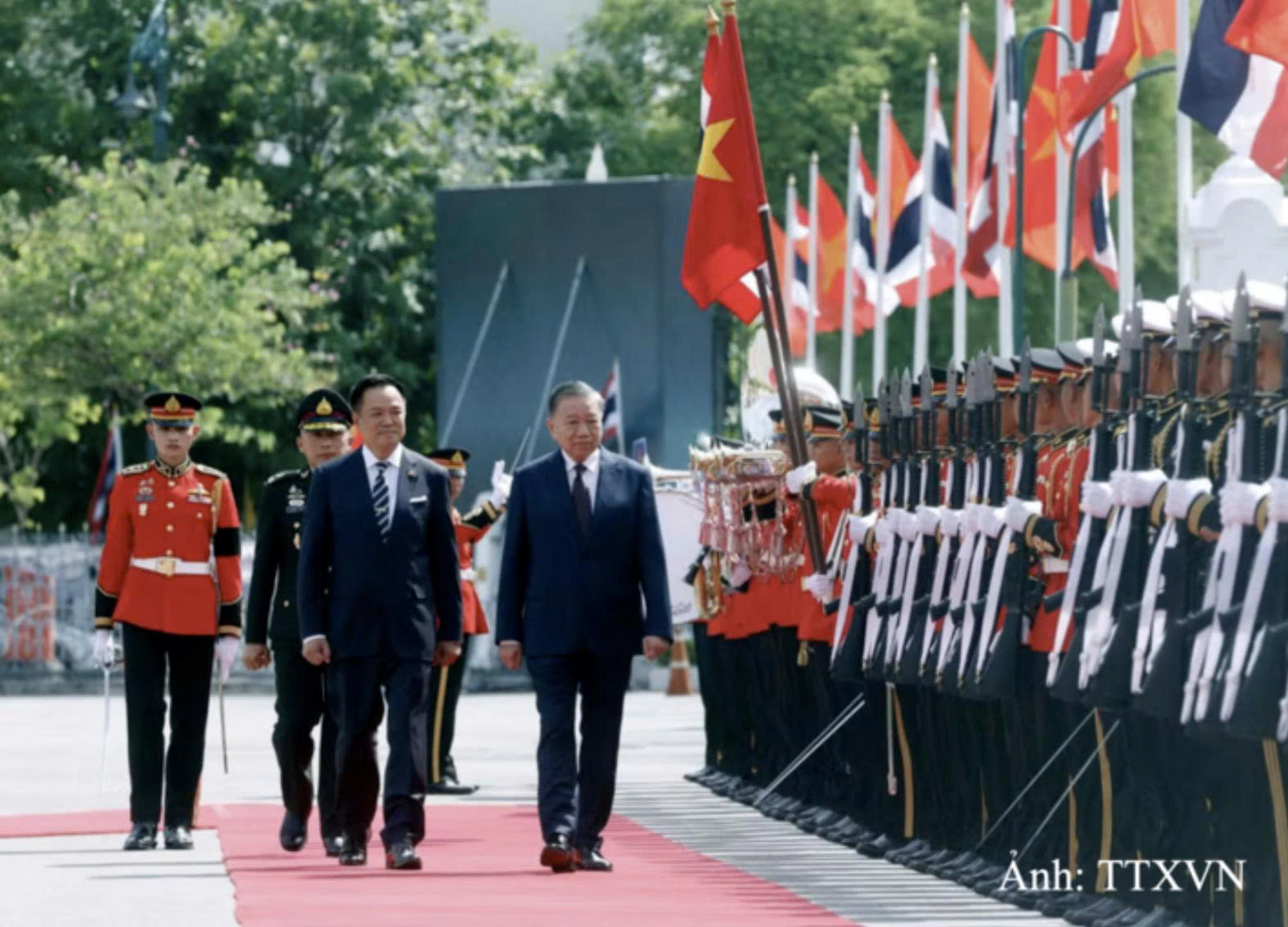
Building on 50 years of diplomatic relations, Viet Nam and Thailand have continued to nurture friendship, strengthen mutual trust, expand cooperation and work toward new milestones in bilateral ties.
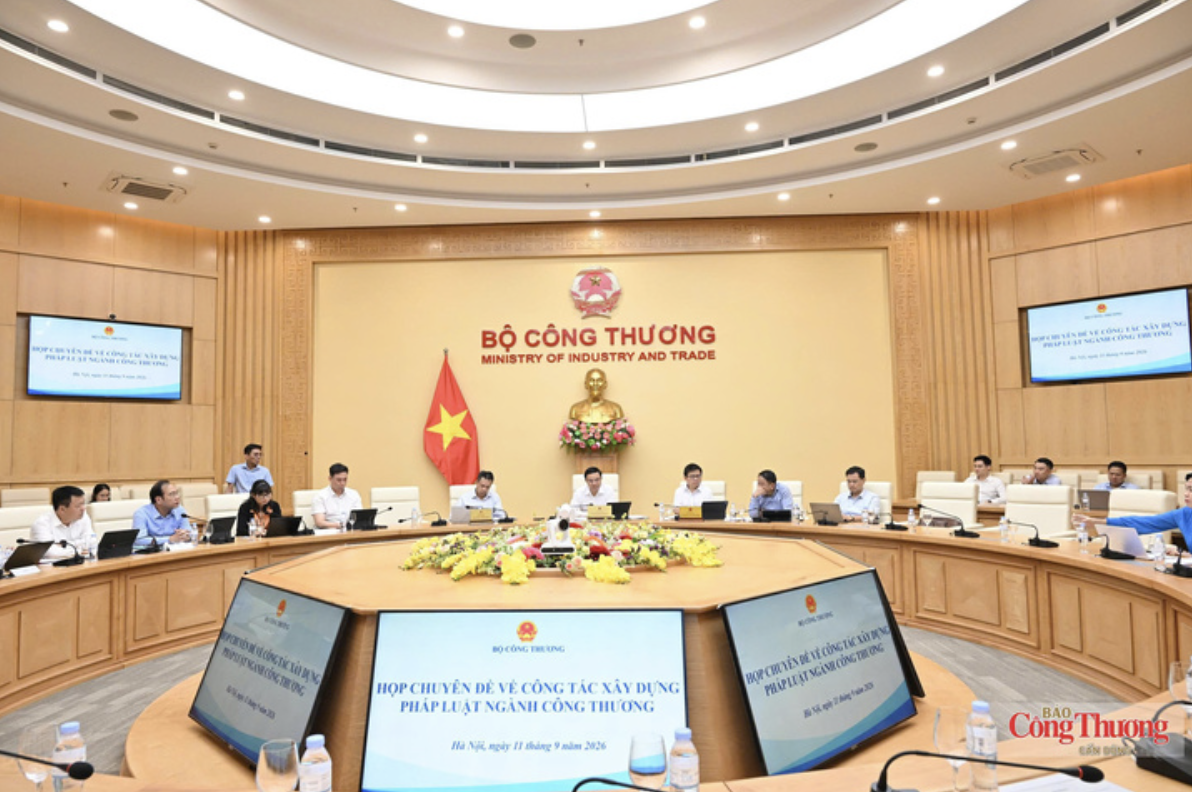
The Ministry of Industry and Trade completed all nine key Q3 legislative tasks and is prioritizing 56 remaining tasks to ensure timely, consistent and effective legal reform.
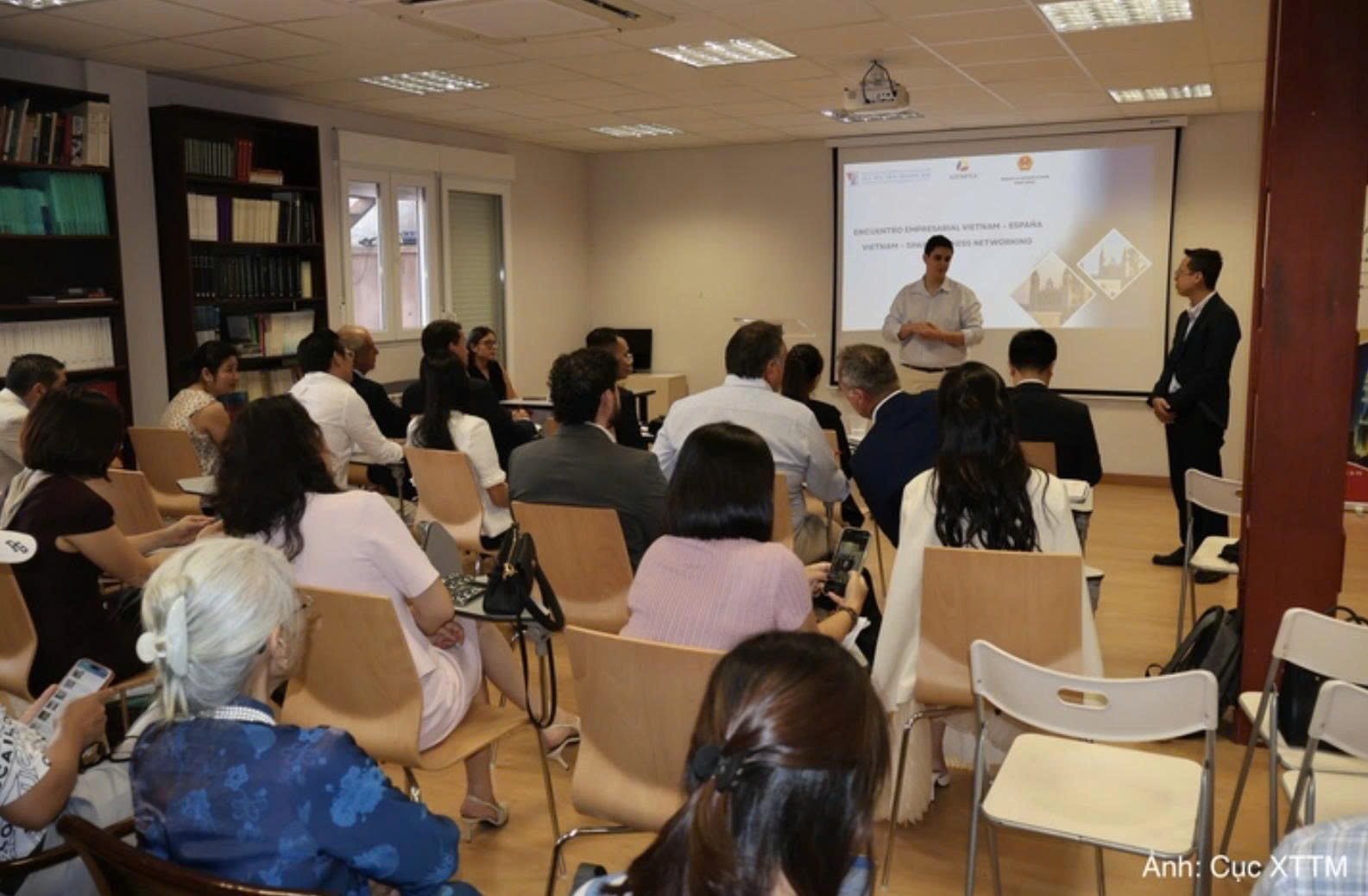
Vietnamese businesses are stepping up trade connections and seeking partners in Türkiye and Spain, opening up new opportunities to boost exports and gain access to European markets.
Access to advanced port technologies and stronger business connectivity are creating new opportunities for logistics cooperation between Viet Nam and China.
Building on 50 years of diplomatic relations, Viet Nam and Thailand have continued to nurture friendship, strengthen mutual trust, expand cooperation and work toward new milestones in bilateral ties.
The Ministry of Industry and Trade completed all nine key Q3 legislative tasks and is prioritizing 56 remaining tasks to ensure timely, consistent and effective legal reform.
Vietnamese businesses are stepping up trade connections and seeking partners in Türkiye and Spain, opening up new opportunities to boost exports and gain access to European markets.
Access to advanced port technologies and stronger business connectivity are creating new opportunities for logistics cooperation between Viet Nam and China.