Jan 21-23 in Panglao, SEOM 1/57 launched Philippines’ ASEAN chair year, moving priorities into action on DEFA, AEC tracking reforms and more.
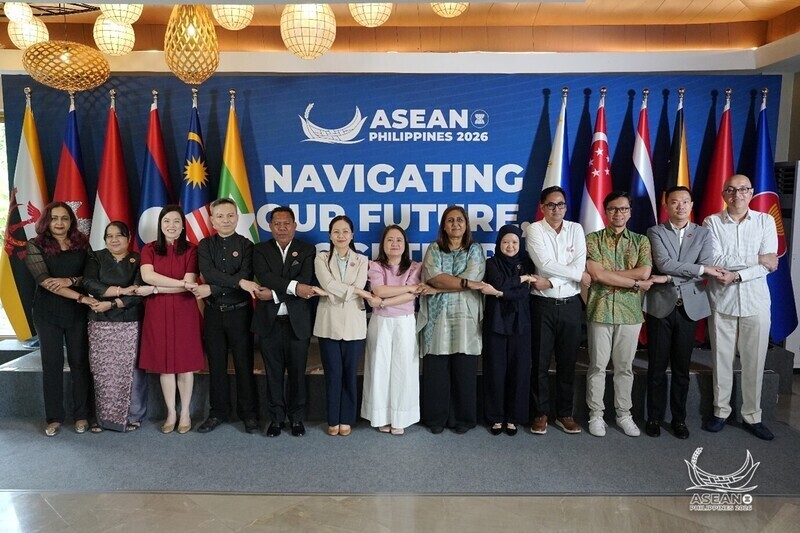
As ASEAN officially enters the transition from the ASEAN Economic Community (AEC) Blueprint 2025 to the AEC Strategic Plan 2026-2030, the First ASEAN Senior Economic Officials’ Meeting (SEOM 1/57) a run-up meeting for the ASEAN Economic Ministers’ Retreat 2026 was held from January 21 to 23 in Panglao, Bohol, the Philippines. The meeting was also significant as the first SEOM in the Philippines’ ASEAN Chairmanship Year 2026, serving as a bridge between strategic discussions at the SEOM Retreat and the year’s implementation phase.
The First ASEAN Senior Economic Officials’ Meeting (SEOM 1/57) was significant as the first SEOM in the Philippines’ ASEAN Chairmanship Year 2026.
If the SEOM Retreat plays the role of “shaping the vision,” SEOM 1/57 is seen as the first test of ASEAN’s ability to translate strategic priorities into concrete action programmes, roadmaps and operating mechanisms amid a heavy workload, increasingly cross-sector priorities, and a complex, volatile regional and global geoeconomic environment.
Reviewing implementation of decisions from the SEOM Retreat
A key item on the SEOM 1/57 agenda was reviewing the implementation of decisions adopted at the SEOM Retreat in December 2025. The meeting noted that several important tasks and decisions from the Retreat were still being carried forward, including: providing input to refine the Philippines’ Priority Economic Deliverables (PED) for its ASEAN Chairmanship Year 2026; identifying potential areas of cooperation under the ASEAN-CPTPP Dialogue; drafting the Monitoring, Evaluation and Learning (MEAL) Framework for the AEC; issues related to the ASEAN Geoeconomics Task Force (AGTF) and its work in the next phase; and proposals from the Economic Research Institute for ASEAN and East Asia (ERIA) to enhance the Institute’s effectiveness and its future contributions to regional economic cooperation. Against that backdrop, the meeting issued guidance to address bottlenecks and accelerate the completion of pending tasks and decisions.
ASEAN Geoeconomics Task Force (AGTF)
SEOM 1/57 devoted considerable time to discussing the future of the AGTF, based on an ASEAN Secretariat assessment showing that most of the Task Force’s recommendations have been mainstreamed into existing initiatives or the AEC Strategic Plan 2026-2030 leaving limited room for additional contributions from this mechanism. The discussion also reflected ASEAN’s push to streamline mechanisms, avoid overlap and resource fragmentation, and make better use of existing AEC institutions.
This approach points to a “maturing” institutional mindset within ASEAN, as the bloc is willing to consider concluding mechanisms that have fulfilled their historical roles, rather than maintaining them by inertia.
Ensuring continuity in the economic agenda
SEOM 1/57 also spent substantial time reviewing the remaining Priority Economic Deliverables (PED) under Malaysia’s ASEAN Chairmanship Year 2025, notably the ongoing review and upgrade of the ASEAN-India Trade in Goods Agreement (AITIGA). The candid acknowledgement of challenges both from the partner side and within ASEAN underscored a pragmatic approach to steering the agenda, while laying the groundwork for unfinished items to be carried forward into 2026 without disrupting overall momentum.
In parallel, the meeting discussed and provided views on 19 PEDs proposed by the Philippines for 2026. Overall, these PEDs are wide-ranging, highly cross-sector, and clearly reflect ASEAN’s emerging strategic concerns from strategic trade management, digital transformation, supply chains and semiconductors, to sustainable and inclusive development. However, these very features also raise the bar for cross-sector coordination, resource allocation, and efforts to avoid overextension, especially as many ASEAN bodies continue to manage transition work from the previous phase.
DEFA: A focal point of ASEAN’s digital economic agenda
Negotiations on the ASEAN Digital Economy Framework Agreement (DEFA) remained one of SEOM 1/57’s key priorities. With a large share of core provisions already agreed, ASEAN is moving closer to its goal of signing DEFA by the end of 2026. However, discussions also showed that many issues remain unresolved from technology products using cryptography and source code, to cooperation on submarine fibre-optic cable systems in sensitive areas that require a delicate balance between regional integration and domestic governance needs.
SEOM’s emphasis on limiting new proposals, while encouraging flexibility in approaches, suggests ASEAN is prioritising the completion of DEFA negotiations toward the early signing of what could become the world’s first region-wide agreement on the digital economy.
AEC monitoring and evaluation: From “annual priorities” to “results milestones”
A structural shift discussed at SEOM 1/57 was the replacement of the Annual Priorities (AP) mechanism with Annual Milestone Deliverables starting in 2026. Together with the development of the MEAL framework, this new approach aims to improve measurability, transparency, and results-based implementation across the AEC. This can be seen as ASEAN’s effort to address long-standing weaknesses in tracking commitment delivery, while building a governance foundation better suited to a deeper and more complex integration phase ahead.
Timor-Leste: From accession to meaningful participation
Timor-Leste’s process of acceding to ASEAN Economic Agreements continued to be closely monitored at SEOM 1/57. The near completion of accession to the first batch of priority instruments, along with gradual participation in meetings and negotiations under the AEC, reflects ASEAN’s efforts to balance enlargement with the quality of integration. Exchanges at SEOM 1/57 indicate ASEAN is moving toward a flexible approach, targeted technical support, and step-by-step pathways to bring Timor-Leste into more substantive participation in the region’s economic policy design and implementation.
From adjusting external mechanisms to managing workload governance
Beyond internal matters, SEOM 1/57 also continued discussions on adjusting working mechanisms with dialogue partners, the ASEAN-CPTPP Dialogue, and ERIA’s role in supporting policymaking. A common thread across these discussions was the need to optimise resources, avoid overload, and enhance tangible value-added for ASEAN.
SEOM 1/57 will run through January 23, 2026 to finalise preparations and lay an important foundation for the ASEAN Economic Ministers’ Retreat, expected to take place in March 2026.
Vietnam advances risk-based supervision with Japan’s support, aiming to enhance market transparency, investor protection, and align with international standards.
The Prime Minister reaffirmed the double-digit growth target, urging ministries, sectors and localities to act decisively to drive economic momentum in 2026.
Deputy Minister Truong Thanh Hoai urges Vinachem to develop two key labs meeting international standards to advance its role in strategic tech value chains.
The Prime Minister reaffirmed the double-digit growth target, urging ministries, sectors and localities to act decisively to drive economic momentum in 2026.
Deputy Minister Truong Thanh Hoai urges Vinachem to develop two key labs meeting international standards to advance its role in strategic tech value chains.