MoIT Minister Le Manh Hung clarified six key issues raised by National Assembly deputies regarding proposed amendments to four laws governing trade.
Removing overlapping provisions on contracts and trade sanctions
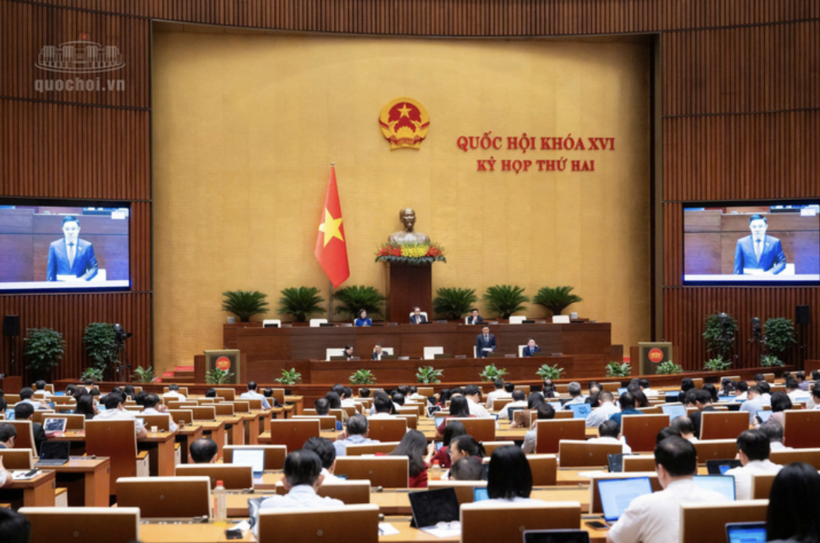
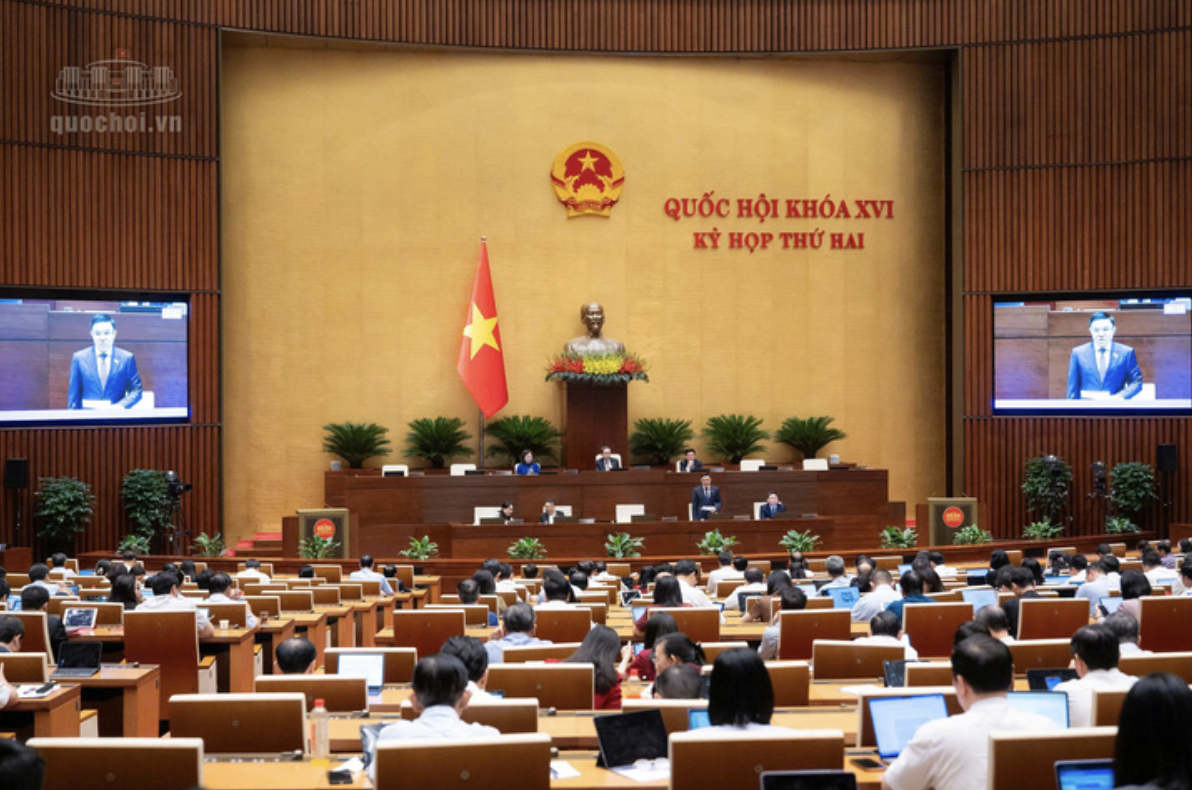
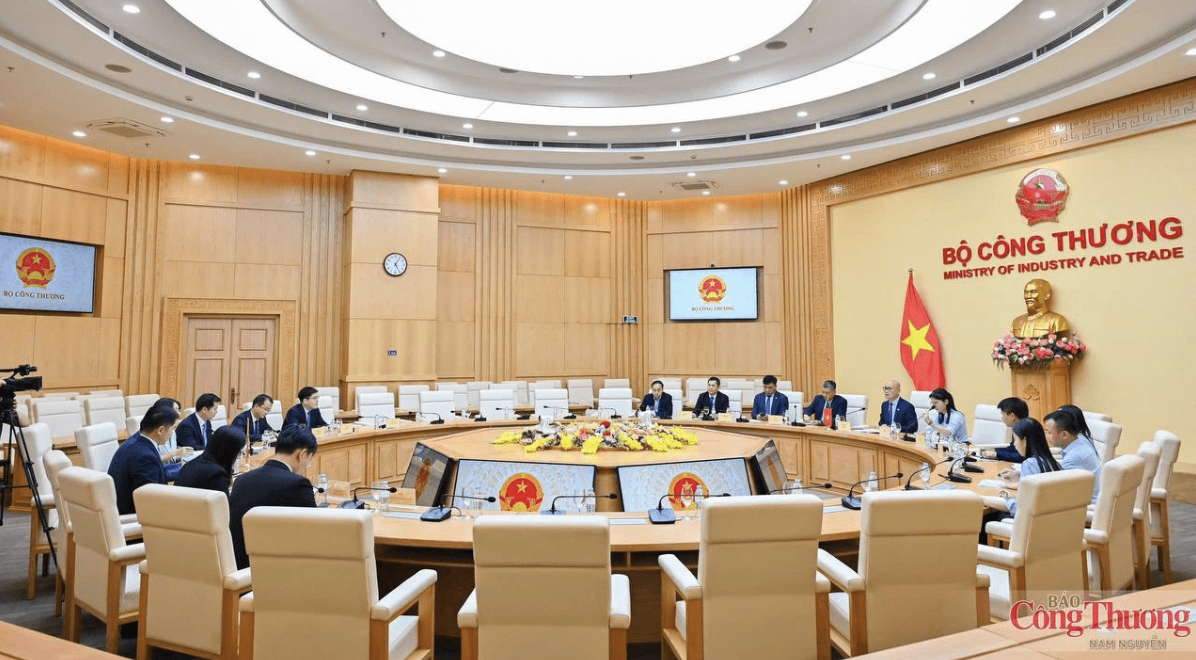
On October 28, during the second session of the 16th National Assembly, deputies discussed in a plenary session the draft Law amending and supplementing several articles of the Law on Commerce, the Law on Competition, the Law on Foreign Trade Management and the Law on Protection of Consumers’ Rights.
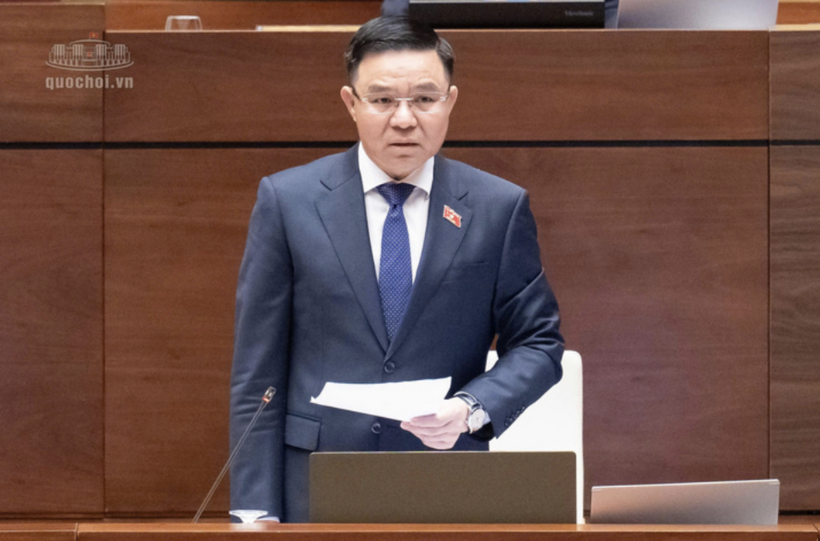
Authorized by the Prime Minister and representing the drafting agency, Minister of Industry and Trade Le Manh Hung delivered remarks to explain and clarify issues raised by National Assembly deputies.
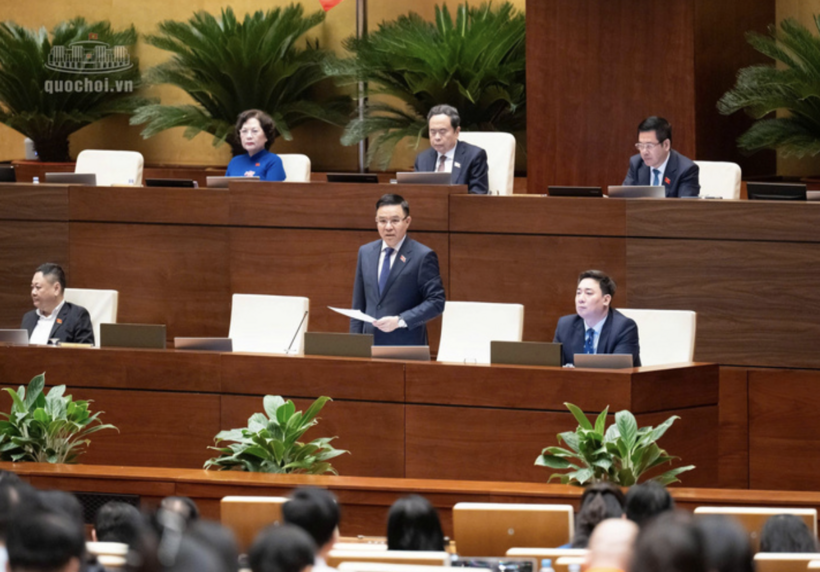
Minister of Industry and Trade Le Manh Hung delivers remarks clarifying issues raised by National Assembly deputies.
The Minister thanked deputies for contributing 204 comments during group discussions on October 20, 2026, as well as for their further contributions during the plenary session. The Government is seriously reviewing, incorporating and responding to the feedback, while clarifying six key issues.
First, regarding the removal of provisions on contracts and trade sanctions, Minister Le Manh Hung said clause 11, article 1 of the draft law proposes abolishing separate provisions on contracts and sanctions under the Law on Commerce. The move aims to address overlaps with the Civil Code, ensure consistent application of the law and reduce transaction costs.
Minister of Industry and Trade Le Manh Hung.
Second, regarding state monopolies and sales promotions, clause 1, article 1 of the draft law clarifies regulations on state monopolies by introducing time limits and requiring the list of activities to be published on the National Investment Information Portal. Lists related to national defence and security will be managed in accordance with the law on state secrets.
Regarding articles 92, 96 and 100 of the Law on Commerce, the Government proposes retaining limits on sales promotions to ensure fair competition and protect small and medium-sized enterprises, while allowing greater flexibility for concentrated promotional programmes. As for shopping vouchers, the Minister noted that their diverse legal characteristics mean further impact assessments are needed before specific provisions are incorporated into the law.
Third, regarding competition oversight in the digital environment, the amendments to articles 24 and 26 of the Law on Competition under Article 2 of the draft law aim to refine the criteria for determining dominant market positions and significant market power.
Under the proposed provisions, an enterprise with a market share of at least 10% may still be identified as holding a dominant market position if it also possesses significant market power. The assessment will take into account specific factors such as user data, network effects, switching costs and ecosystems.
The Minister affirmed that owning technology or data as a result of innovation would not automatically be considered a violation. Enforcement would target abusive conduct in accordance with the law.
The draft law also clarifies the definition of misleading digital interface design under Article 45 and adds Article 94a, which establishes a five-year statute of limitations for handling certain specific competition violations and a one-year period for other violations.
Decentralizing certificates of origin and clarifying responsibilities for consumer protection
Fourth, regarding decentralization and the simplification of foreign trade management procedures, the Minister said that articles 34 and 35 of the Law on Foreign Trade Management, as amended under clause 4 and 5 of article 3 of the draft law, would maintain the Ministry of Industry and Trade (MoIT)’s responsibility for unified state management and operation of a centralized electronic certificate of origin (C/O) system.
Provincial-level People’s Committees would directly issue, inspect and verify certificates of origin, alongside guidance, inspections and post-clearance reviews by central authorities.
The draft law also amends article 44 to remove the requirement to obtain prior approval for transit routes and replace it with a notification procedure involving customs authorities. Transit of weapons would still require approval from the Ministry of National Defence and the Ministry of Public Security.
Under article 14, the authority to grant exceptional permits for goods subject to temporary export or import suspensions would be decentralized to local authorities, reducing the need to seek opinions from specialized ministries.
Minister Le Manh Hung receives feedback and clarifies six key issues concerning the proposed amendments to four trade laws.
Fifth, regarding consumer protection, clause 1, article 4 of the draft law proposes amending Clause 2, Article 17 to require businesses to provide mechanisms enabling consumers to actively consent to or refuse the use of their personal data for each specific purpose separately, rather than being compelled to give blanket consent.
Sixth, regarding support for negotiations between consumers and businesses, the proposed amendments to articles 56, 57 and 77 clearly allocate responsibilities according to the geographical scope of a case.
For matters falling within a single commune, the commune-level People’s Committee would be responsible. Cases involving multiple communes would fall under the provincial-level People’s Committee, while matters spanning multiple provinces would be handled by the relevant ministries in accordance with their assigned responsibilities, including the MoIT and other related ministries.
The Minister said these provisions establish clear points of contact. The MoIT has been operating a hotline to receive information and will continue developing digital platforms for handling requests, making access easier for citizens and reducing the need for travel. These matters are now clearly stipulated in the Law on E-Commerce.
Concluding his explanation, Minister Le Manh Hung said the amendments to the four laws focus on three objectives: first, accelerating decentralization and delegation of authority; second, reducing administrative procedures and compliance costs; and third, substantively removing bottlenecks in production and business activities while protecting the lawful rights and interests of citizens and businesses.
“The Government will continue to work closely with the Economic and Financial Committee and other bodies of the National Assembly, seriously consider deputies’ opinions and finalize the draft law for submission to the National Assembly for consideration and decision,” Minister Le Manh Hung said.
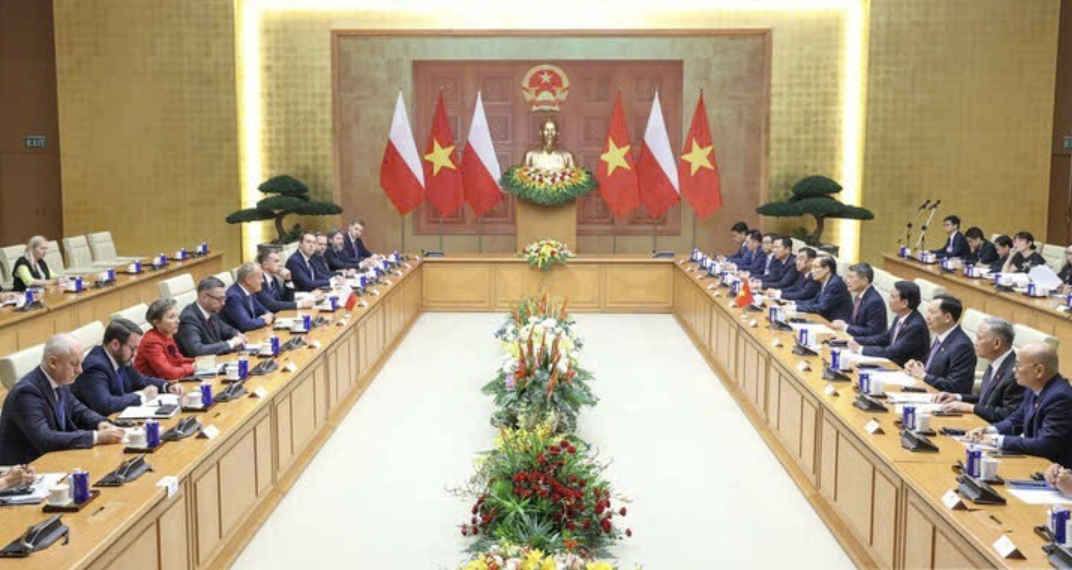
During the second session of the 16th National Assembly on the morning of October 28, under the chairmanship of National Assembly President Tran Thanh Man and with National Assembly Vice President Nguyen Hong Dien presiding, deputies discussed in a plenary session the draft law amending and supplementing several articles of the Law on Securities, the Law on Commerce, the Law on Competition, the Law on Foreign Trade Management and the Law on Protection of Consumers’ Rights. Eleven deputies delivered comments during the session, after which Minister of Industry and Trade Le Manh Hung responded to the feedback and clarified the issues raised.
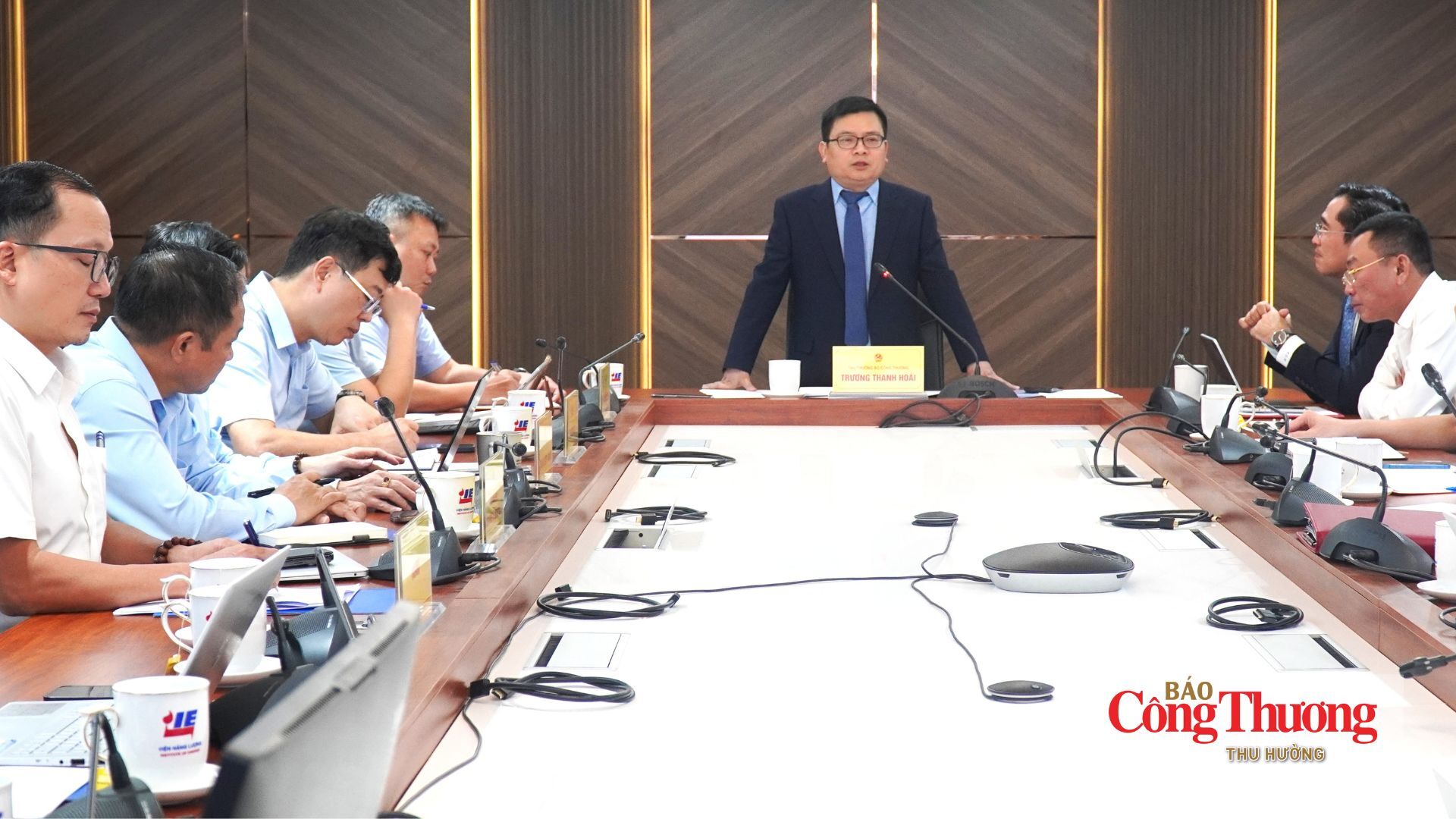
On October 26, Deputy Minister of Industry and Trade Truong Thanh Hoai held a working session with the Institute of Energy to discuss power sector development tasks and announce the appointment of the Institute's new director.
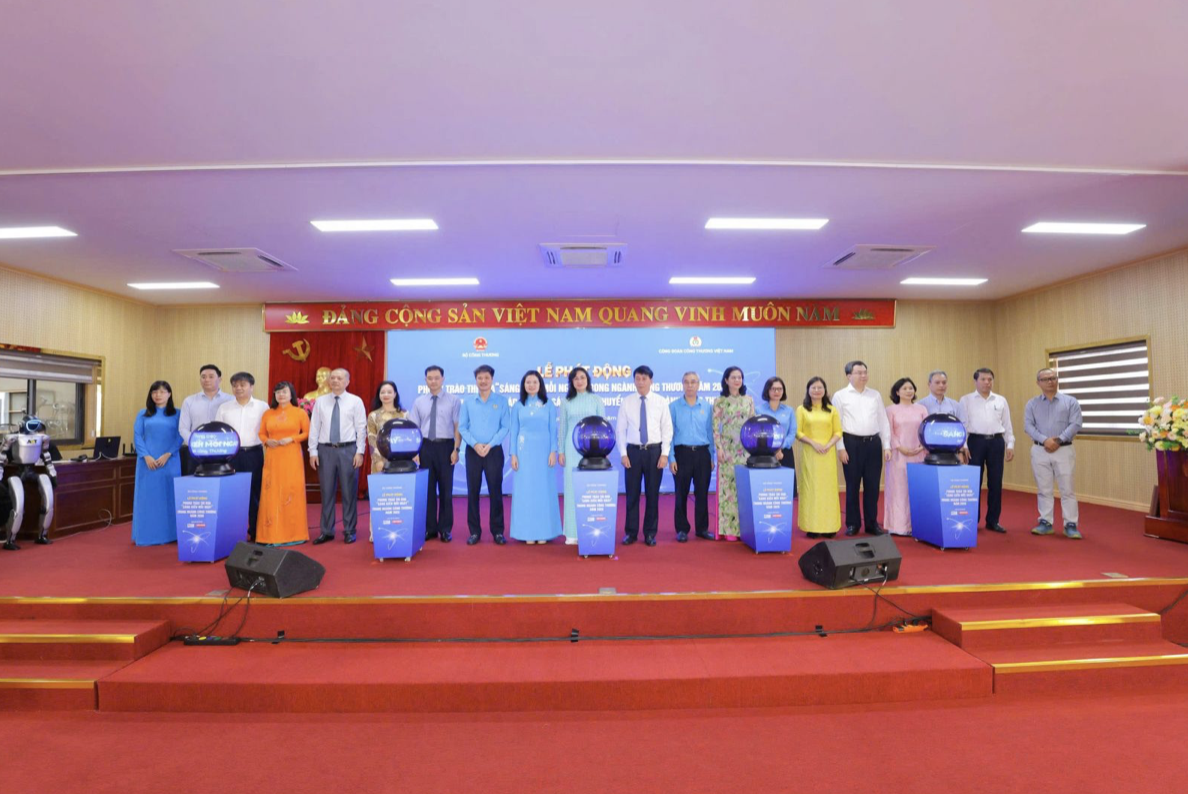
MoIT has launched two initiatives to encourage practical ideas and accelerate innovation and digital transformation across the industry and trade sector.