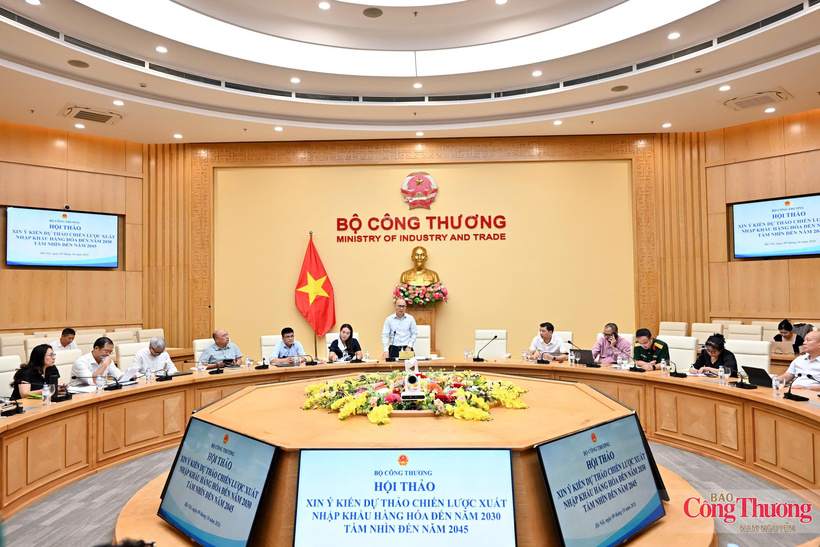
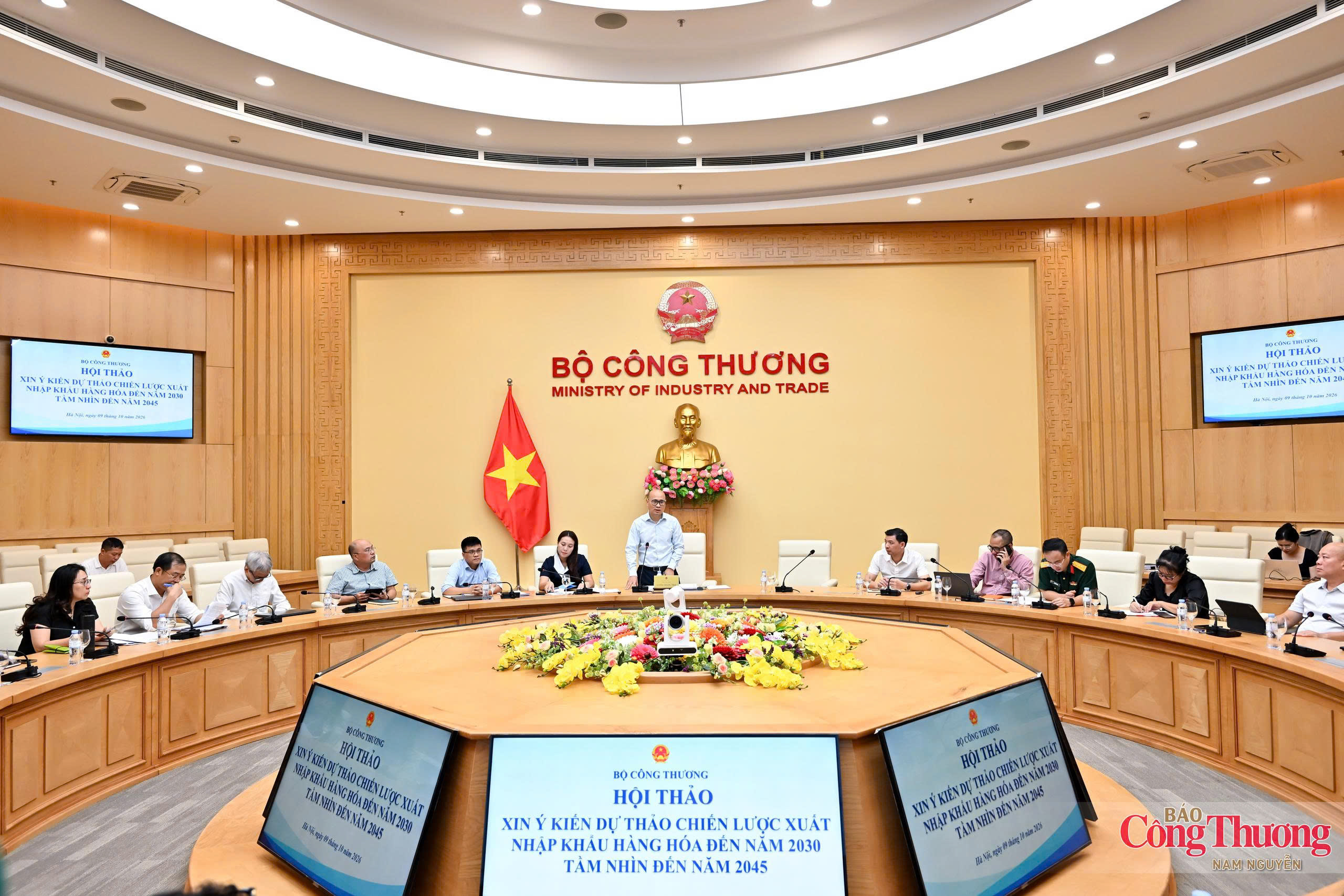
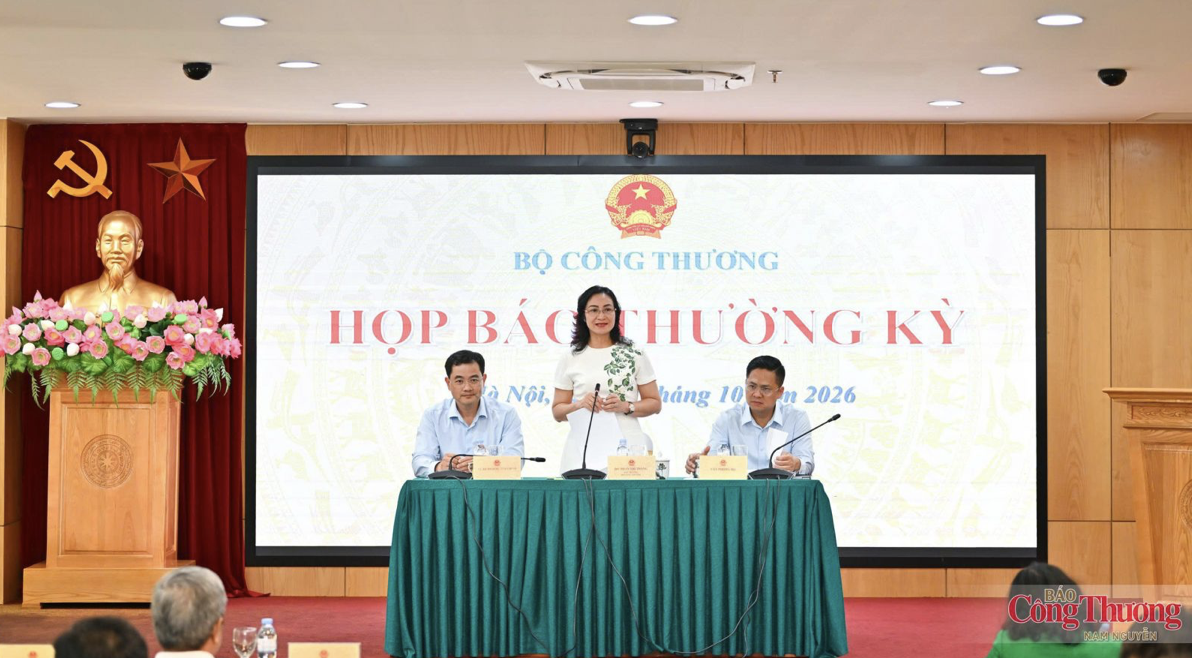
The Ministry of Industry and Trade held a consultation workshop on the Import-Export Strategy for Goods to 2030, with a vision to 2045, on the morning of October 9.
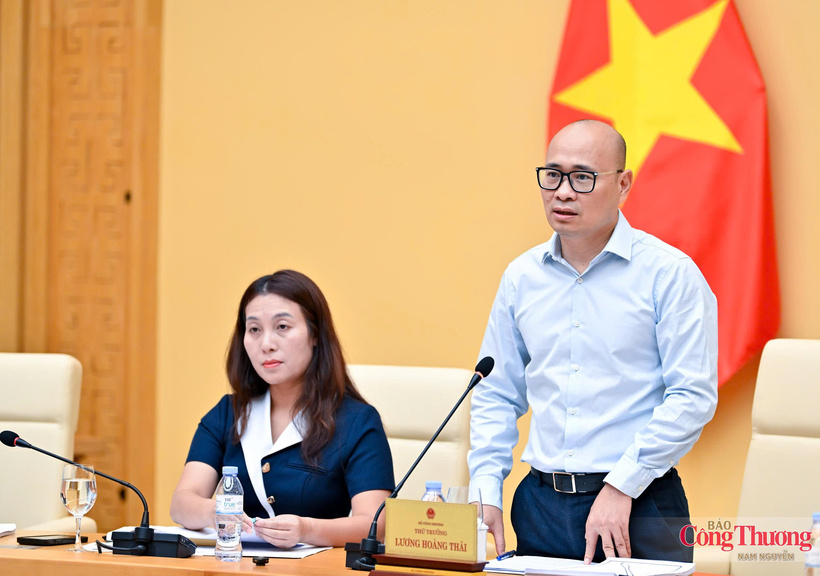
The workshop was chaired by Deputy Minister of Industry and Trade Luong Hoang Thai and attended by leaders of the Agency of Foreign Trade, which is responsible for drafting the strategy, representatives of units under the Ministry, other ministries and agencies, industry associations, and businesses.
The Ministry of Industry and Trade holds a consultation workshop on the Import-Export Strategy for Goods to 2030.
Creating new drivers for import-export activities
In his opening remarks, Deputy Minister Luong Hoang Thai emphasized that import-export activities were among the key drivers helping Viet Nam achieve its development goals. During certain periods, exports and foreign investment had played a leading role in economic growth.
Alongside achievements in export growth and contributions across various sectors, practical experience had also highlighted issues that needed to be addressed, particularly the need to improve the quality of growth. Accordingly, the Party and Government had directed the development of a new Import-Export Strategy for Goods to 2030, with a vision to 2045.
The Deputy Minister noted that import-export strategies in recent years had focused heavily on quantitative growth. When the economy was still relatively small, developing manufacturing industries required access to international markets and integration into the global economy to generate growth momentum.
However, Viet Nam's economy had since expanded significantly, while its trade openness had reached a high level. Only a small number of countries had a higher ratio of international trade to gross domestic product (GDP), while most had lower levels of trade openness. This new context required a shift in focus from expanding the volume of trade to improving the quality and efficiency of import-export activities.
One prominent issue was the role of foreign-invested enterprises (FIEs) in exports. According to the Deputy Minister, their share of Viet Nam's total export turnover had risen from more than 70% in the past to over 80% at present. Although the sector accounted for a substantial proportion of exports, the value retained by the domestic economy remained relatively modest. Solutions were therefore needed to increase the economic value generated by exports.
Several approaches could help address this issue. Viet Nam could focus on developing critical stages of supply chains and gradually strengthening its capacity to participate in production, while increasing domestic content and value added in key industries. Another approach was to improve the complexity of the economy.
The Deputy Minister said domestic value added was an important indicator, but assessments in certain industries needed to be more flexible and tailored to the characteristics of each sector.
He referred to expert recommendations on the economic complexity index, which reflects a country's participation in global supply chains through international trade. In electronics, for example, participation in production chains was not limited to assembly but also depended on the ability to undertake more sophisticated stages, from inspection and testing to manufacturing.
"Therefore, the Strategy should guide Viet Nam towards deeper participation in critical stages of production while ensuring alignment with strategies for developing science, technology and industry. This would enable import-export activities not only to expand in scale but also to strengthen production capacity and support a stable, sustainable balance of payments," the Deputy Minister stressed.
Deputy Minister of Industry and Trade Luong Hoang Thai delivers remarks at the event.
Another requirement was to strengthen risk management in international trade. Trade disputes and geopolitical conflicts were creating greater uncertainty for cross-border commerce. For an economy as open as Viet Nam's, external risks could have a significant impact on import-export activities. The ability to identify and manage these risks should therefore be a key component of the Strategy.
Supply chain security was also becoming increasingly important, in conjunction with the green and digital transitions, economic security and national defence.
In developed economies such as the United States and the European Union, trade management was becoming more closely linked to strategic priorities and economic security. This demonstrated that Viet Nam's ambitions to advance science and technology and participate in critical stages of supply chains had to go hand in hand with stronger security safeguards and risk management capabilities.
These issues needed to be considered in conjunction with broader development priorities, particularly the advancement of science and technology, foundational industries, and high-tech manufacturing. Although these were challenging tasks, the Party and Government had directed that the draft Strategy be completed within this year.
Deputy Minister Luong Hoang Thai noted that the Agency of Foreign Trade, other departments and agencies under the Ministry of Industry and Trade, and industry associations had contributed to the draft Strategy. However, many issues still required further discussion and refinement.
He called on relevant agencies, units and associations to provide candid, constructive and forward-looking feedback to ensure the Strategy addressed the requirements ahead.
The ultimate goal was for import-export activities to contribute not only to economic growth but also to qualitative improvements in socioeconomic development. Import-export should be regarded as a means of achieving the broader goal of economic development and upgrading Viet Nam's economy.
The Deputy Minister also called for continued coordination with the Ministry to finalize the draft, with completion targeted for late November or early December for submission to the Government in line with the planned schedule.
Boosting export growth to support double-digit economic expansion
According to Nguyen Cam Trang, a representative of the Agency of Foreign Trade, exports remained one of the key drivers of economic growth as the Government pursued a double-digit growth target.
Export growth targets for the coming period therefore needed to be reassessed to reflect the country's evolving development requirements. The targets were higher than those set for the previous period, requiring more decisive and coordinated measures, ranging from administrative reform and production capacity improvements to transport development and market expansion.
Alongside setting growth targets, another key priority was improving the quality and sustainability of exports. Although the draft Strategy outlined orientations for developing higher-value-added products, its proposed measures needed to be more specific. Efforts should extend beyond market development to encompass production, greater domestic value creation and stronger business capabilities.
Experience in recent years had shown that volatility in the global and regional economies directly affected import-export activities. The Strategy for the coming period therefore needed to provide for flexible responses to risks while creating new growth drivers through technological innovation and improved competitiveness.
Against this backdrop, the development of the Import-Export Strategy for Goods should focus on three priorities: reassessing export growth requirements and targets to ensure alignment with the country's new economic development orientation; responding proactively and flexibly to risks and fluctuations in export markets; and developing a more integrated import-export model aligned with industrial development plans and strategies to improve efficiency and value added.
The draft Import-Export Strategy for Goods to 2030, with a vision to 2045, aims to accelerate import-export growth to support Viet Nam's double-digit economic growth target for 2026-2030. At the same time, it seeks to shift decisively from extensive growth to intensive growth, improving the value added, productivity and competitiveness of Vietnamese goods.
Under the draft, average annual growth in merchandise export turnover is targeted at 15-16% in 2026–2030, while imports are expected to grow by an average of 12-13% annually. The Strategy aims to maintain a sustainable trade surplus, with the surplus equivalent to 3-6% of total export turnover on average during the period.
By 2045, Viet Nam aims to rank among the world's 10 largest countries by export and import turnover, with the trade surplus equivalent to 7-10% of export turnover.
Another important objective is to strengthen the role of domestic enterprises and increase the processing and technological content of exports. The share of domestic enterprises in total national export turnover is targeted at approximately 28-30% by 2030, rising to 38-40% by 2045.
Processed and refined goods are expected to account for 89-90% of total export turnover by 2030 and more than 92% by 2045. High-tech products are targeted to represent approximately 50% of the total export value of processed and manufactured goods by 2030, increasing to more than 55% by 2045.
Regarding trade scale, the draft sets out several growth scenarios through 2030. Under the medium-growth scenario, export turnover is projected to reach USD 953.7 billion by 2030. The high-growth scenario targets USD 1,041.1 billion, while the low-growth scenario projects USD 765 billion.
These scenarios underscore the need to expand exports alongside improvements in domestic production capacity, the development of processing and manufacturing industries, and stronger competitiveness for Vietnamese goods.
To achieve these objectives, the draft Strategy outlines measures to improve the institutional framework and the effectiveness of state management of import-export activities; develop and manage export and import markets; promote science and technology, innovation and digital transformation; strengthen the supply of high-quality goods; and manage imports to support domestic production and maintain a healthy trade balance.
The Strategy also emphasizes green exports and the circular economy to meet environmental and environmental, social and governance (ESG) standards. Other priorities include logistics development, cross-border e-commerce, regional linkages and a stronger role for industry associations.
The overarching focus of the draft Strategy is to increase the value added and domestic content of exports, strengthen the economy's autonomy, reduce dependence on external supplies, diversify markets and ensure sustainable import-export growth amid volatility in international trade.
The Ministry of Industry and Trade held a consultation workshop on the Import-Export Strategy for Goods to 2030, with a vision to 2045, on the morning of October 9.
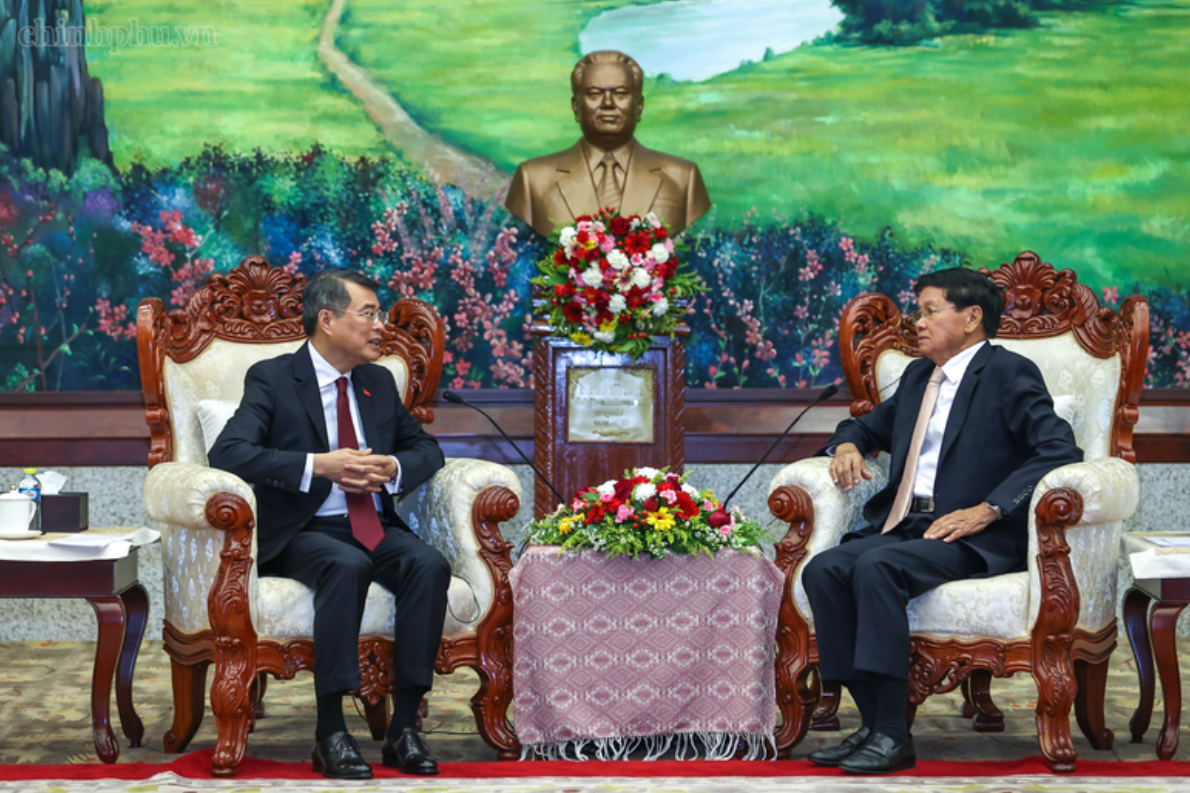
Prime Minister Le Minh Hung on October 8 paid a courtesy call on Lao General Secretary and President Thongloun Sisoulith in Vientiane as part of his on-going official visit to Laos.
The two sides expressed their delight at the positive developments in the bilateral relations in recent years, noting that there remains significant room for greater cooperation and complementarity, particularly in trade, investment and economic ties. They also held extensive discussions on strategic directions to further deepen and strengthen bilateral relations in a more substantive and practical manner.
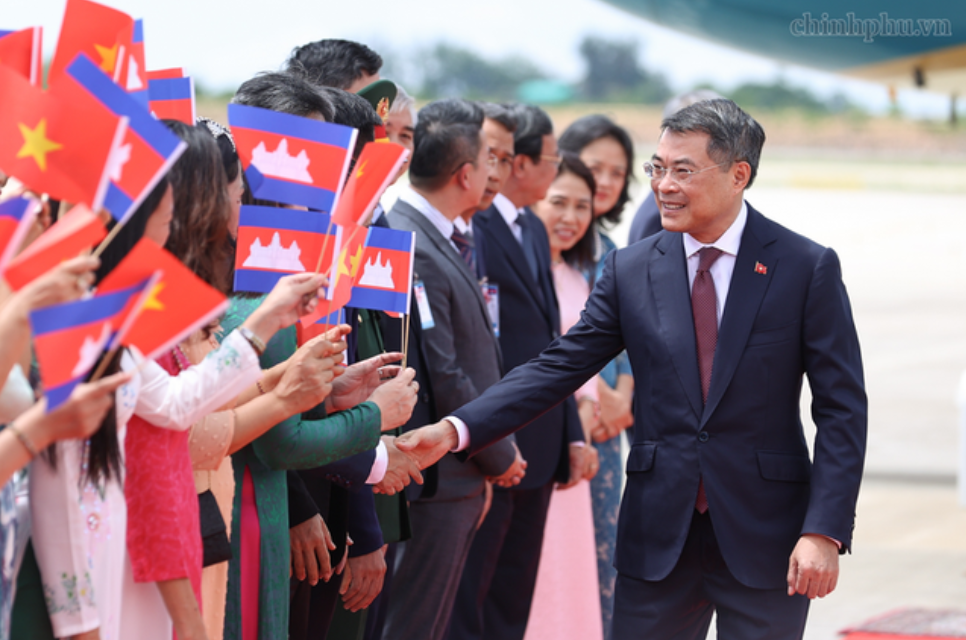
Prime Minister Le Minh Hung arrived in Phnom Penh on Friday afternoon, starting his two-day official visit to Cambodia at the invitation of Cambodian counterpart Hun Manet.
Prime Minister Le Minh Hung on October 8 paid a courtesy call on Lao General Secretary and President Thongloun Sisoulith in Vientiane as part of his on-going official visit to Laos.
The two sides expressed their delight at the positive developments in the bilateral relations in recent years, noting that there remains significant room for greater cooperation and complementarity, particularly in trade, investment and economic ties. They also held extensive discussions on strategic directions to further deepen and strengthen bilateral relations in a more substantive and practical manner.
Prime Minister Le Minh Hung arrived in Phnom Penh on Friday afternoon, starting his two-day official visit to Cambodia at the invitation of Cambodian counterpart Hun Manet.
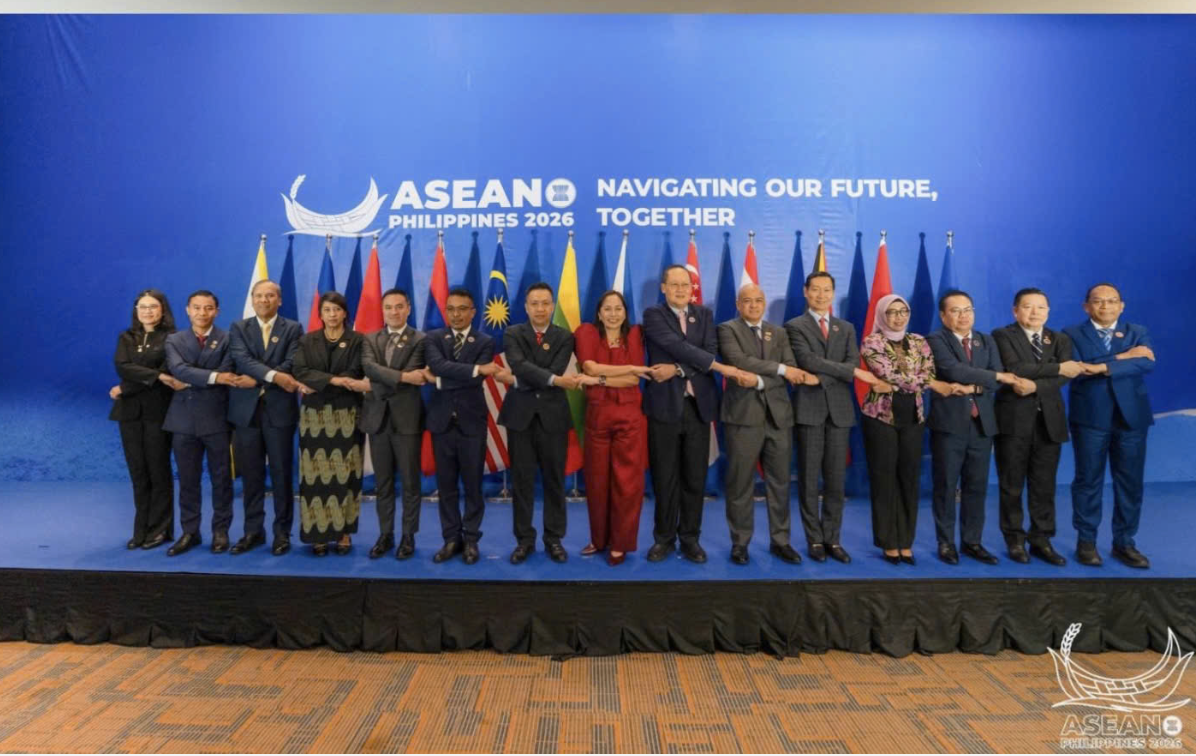
On 7 October 2026, the 44th ASEAN Ministers on Energy Meeting (AMEM 44) was held in Manila, the Philippines, under the chairmanship of Sharon S. Garin, Secretary of the Department of Energy of the Philippines. The meeting brought together energy ministers from ASEAN Member States, the Secretary-General of ASEAN, the ASEAN Centre for Energy, and representatives of ASEAN energy sector bodies and specialised networks. Deputy Minister of Industry and Trade Nguyen Viet Son led the Vietnamese delegati