The proposed amendments to the Petroleum Law are intended to further strengthen the legal framework, introduce appropriate mechanisms and policies to attract investment, and ensure the efficient exploration, development and utilization of the country's petroleum resources.
Strengthening the institutional framework to attract investment
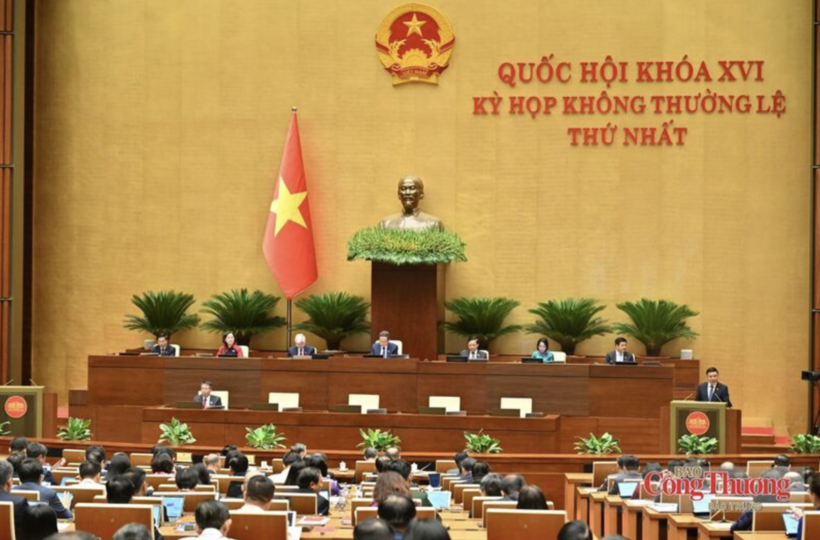
Following the opening session of the first extraordinary sitting of the 16th National Assembly on the morning of August 3, lawmakers heard proposals and appraisal reports on several legislative initiatives. These included a draft National Assembly Resolution on special mechanisms and policies to address legal violations involving the state sector, the private sector, and the application of science, technology, innovation and digital transformation; a draft Resolution establishing special mechanisms and policies to remove obstacles affecting projects and works serving the 2027 APEC Economic Leaders' Meeting in the Phu Quoc Special Zone of An Giang Province; and the draft revised Petroleum Law.
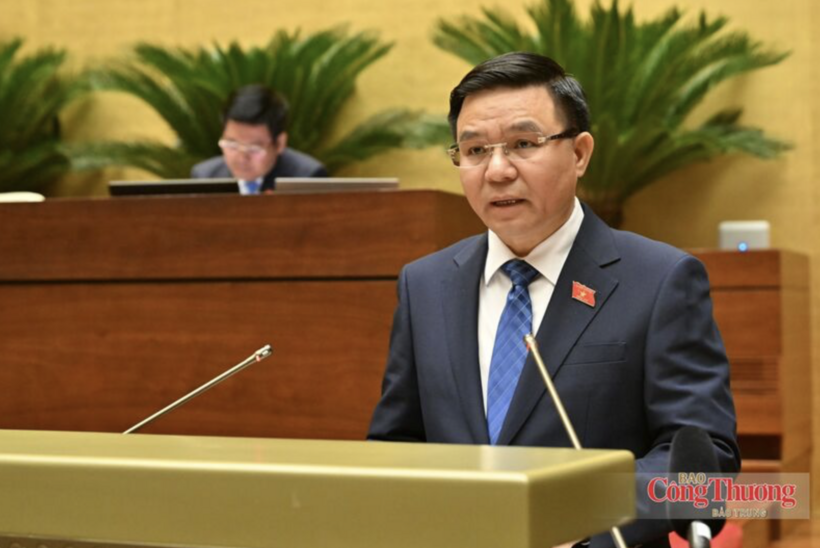
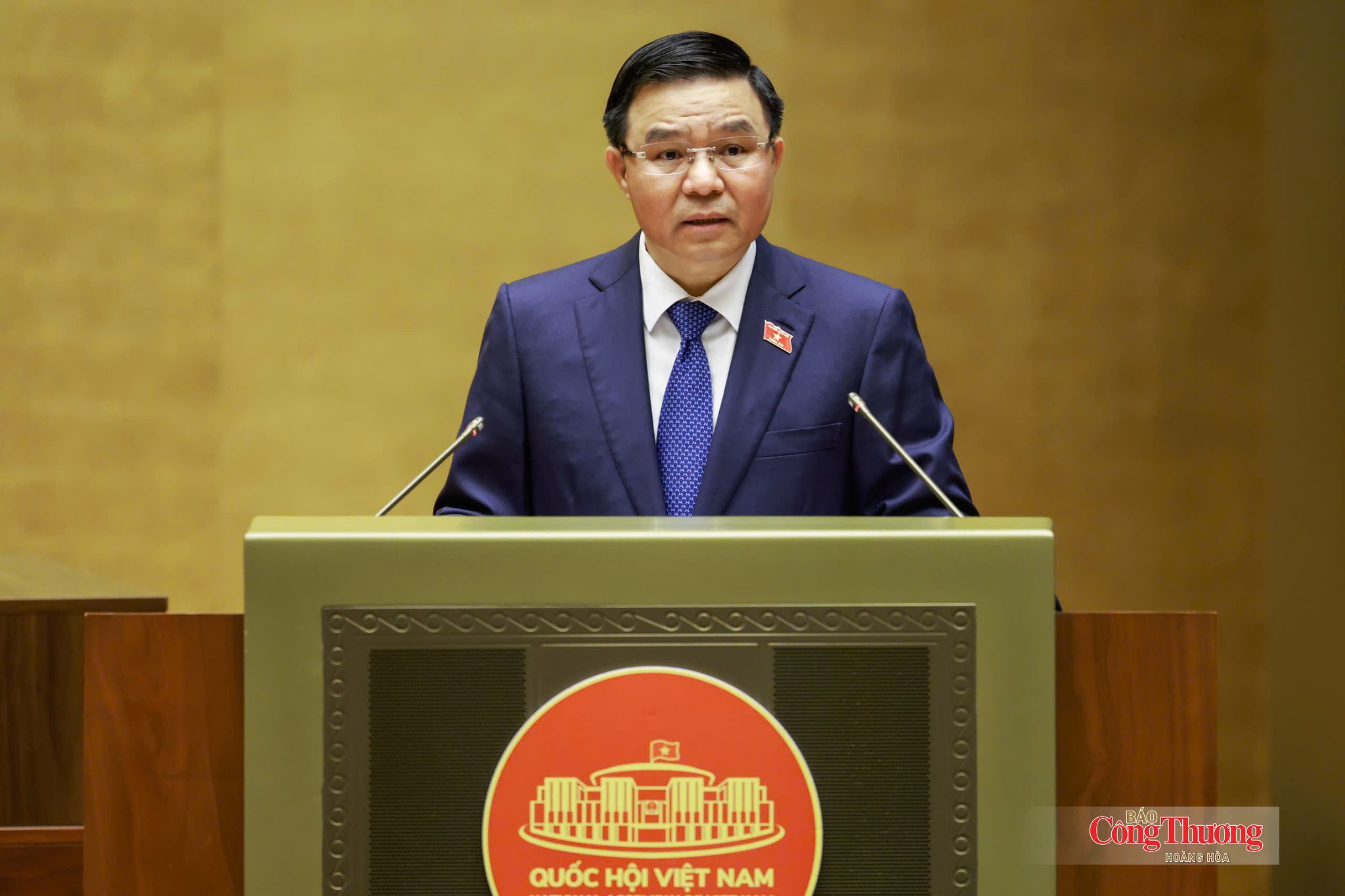
Authorized by the Prime Minister, Minister of Industry and Trade Le Manh Hung presented the Government's proposal on the draft revised Petroleum Law.
Minister Le Manh Hung said that after more than three years of implementation, the 2022 Petroleum Law has gradually demonstrated its effectiveness by providing a sound legal framework for petroleum activities, helping remove institutional bottlenecks, promote investment, improve the effectiveness of state management, and safeguard national energy security. However, amid the country's evolving development needs, shifts in global energy markets and practical implementation challenges, several provisions require further refinement to remove remaining constraints and unlock new growth potential for the petroleum industry.
The Minister emphasized that the revision of the Petroleum Law seeks to further institutionalize the Party's policies and guidelines, safeguard national interests, strengthen decentralization and delegation of authority, improve the effectiveness of state management, maximize the efficient use of petroleum resources, and contribute to maintaining national energy security and sovereignty.
Minister of Industry and Trade Le Manh Hung presents the Government's proposal on the draft revised Petroleum Law.
Accordingly, the draft Law focuses on translating the Party's and the State's strategic orientations for developing the energy industry, including the petroleum sector, into legislation. It also aims to streamline and simplify administrative procedures, expand decentralization while strengthening oversight and supervision, preserve and improve existing provisions to ensure stability and practical applicability, and introduce appropriate policies to enhance Vietnam's self-reliance in high-end petroleum technical services.
The draft revised Petroleum Law builds on the progressive provisions of the 2022 Petroleum Law while incorporating five major policy groups approved by the Government under Resolution No. 81/NQ-CP dated April 3, 2026. These include simplifying administrative procedures and expanding delegated authority; improving regulations governing petroleum contracts and petroleum operations; refining investment incentive policies; promoting the development of the petroleum value chain, high-end petroleum technical services and offshore energy; and establishing a legal framework for greenhouse gas emissions reduction, carbon capture and storage (CCS).
The draft Law is also designed to ensure consistency with Vietnam's legal framework, the international treaties to which the country is a party, and internationally accepted practices in the petroleum industry.
The draft comprises 12 chapters and 62 articles, compared with 11 chapters and 69 articles under the current Petroleum Law. While largely retaining the core provisions of the 2022 Law, it introduces amendments relating to basic petroleum surveys, contractor selection, petroleum contracts, petroleum operations, investment incentives, accounting, auditing, and the functions, powers and responsibilities of relevant stakeholders.
A notable addition, according to Minister Le Manh Hung, is the inclusion of provisions on enhanced recovery from mature oil fields, a legal framework for carbon capture and storage (CCS), and high-end petroleum technical services and offshore energy projects linked to petroleum operations, reflecting the industry's evolving development requirements.
"This revision of the Petroleum Law aims to further improve the legal framework governing basic petroleum surveys and petroleum activities, remove practical obstacles and bottlenecks, strengthen decentralization and delegated authority, and establish appropriate mechanisms and policies to attract investment while ensuring the efficient exploration and utilization of petroleum resources. At the same time, it will gradually expand new development opportunities for the petroleum industry through high-end technical services, offshore energy projects associated with petroleum operations, and efforts to reduce greenhouse gas emissions," Minister Le Manh Hung said.
Clarifying provisions on decentralization and delegated authority
Presenting the National Assembly's appraisal report on the draft revised Petroleum Law, Chairman of the Economic and Financial Committee Phan Van Mai said the Committee agreed on the necessity of the amendments, as well as the political and practical grounds for further improving the legal framework governing petroleum activities.
During the process of finalizing the draft Law, the Committee requested the drafting agency to fully discharge its responsibility to report and seek opinions from competent authorities on matters requiring approval before the draft is submitted to the National Assembly for passage, in strict compliance with Regulation No. 178-QD/TW issued by the Politburo.
The Committee also provided comments on a number of specific provisions of the draft Law.
Regarding activities related to carbon capture, processing, transportation, injection and storage (CCS), the application of high-tech petroleum technical services, and the development of offshore energy facilities associated with petroleum operations, the Committee endorsed the inclusion of principle-based provisions governing these activities. It noted that such provisions would facilitate the implementation of complementary and mutually supportive projects alongside petroleum operations, thereby strengthening the sector's attractiveness to investors.
Minister of Industry and Trade Le Manh Hung presents the Government's proposal on the draft revised Petroleum Law.
To further refine the draft, the Committee recommended a comprehensive review of the Law to ensure that its provisions remain consistent with its regulatory scope and are confined to matters of principle falling within the National Assembly's legislative authority, thereby providing an appropriate legal basis for the Government to issue detailed implementing regulations. It also proposed retaining the existing definition of "petroleum activities" under the current Law and carefully considering whether it is necessary to introduce the concept of a "petroleum value chain."
The Committee further urged the Government to direct relevant ministries and agencies to expedite the development of a comprehensive legal framework governing standalone CCS projects and independent offshore energy projects, ensuring a coherent and long-term regulatory approach that would facilitate the effective implementation of these new forms of investment.
With regard to the application of high-tech petroleum technical services, the Committee recommended clarifying the necessity, sector-specific nature and rationale for regulating this issue in the Petroleum Law. Should such provisions prove essential, the Law should set out only general principles affirming that the State will adopt policies to encourage the application of high-tech petroleum technical services.
On decentralization, delegation and assignment of authority, the Committee recommended reviewing the powers proposed for the Ministry of Industry and Trade to ensure consistency with the principles governing decentralization under the Law on Government Organization. It stressed the need to clearly define the Ministry's overarching responsibility for state management of petroleum activities, including matters relating to petroleum contracts. Regarding the authority to approve development policies for projects and oilfields comprising integrated onshore and offshore infrastructure and equipment, the Committee called for clear legal provisions given the involvement of multiple ministries, local authorities and planning regimes.
The Committee also proposed reviewing the powers assigned to the National Industry–Energy Group to ensure they are appropriate and feasible, while clearly defining the Group's functions, responsibilities, institutional mechanisms and operational conditions. It further recommended clarifying the scope of responsibility and legal effect of opinions issued by state management agencies on petroleum in relation to the Group's decisions concerning exemptions from, or adjustments to, work commitments in cases involving national defence, security or force majeure.
In addition, the Committee emphasized the need to clarify inspection, supervision and oversight mechanisms for delegated powers to ensure effective governance and the prudent management of the nation's petroleum resources.
Regarding investment incentives for petroleum activities and resource extraction policies applicable to marginal oilfields, field clusters and petroleum blocks under enhanced recovery operations, the Committee supported the policy of allowing the Prime Minister to approve higher levels of corporate income tax incentives, crude oil export tax incentives and maximum cost recovery limits, in line with Conclusion No. 101 of the National Assembly Standing Committee, with a view to enhancing competitiveness, attracting investment and safeguarding national energy security.
However, the Committee recommended supplementing practical information on the oil blocks and fields eligible for such incentives, while clearly defining the applicable criteria, beneficiaries and implementation conditions. It also called for further clarification of the basis for determining incentive levels aimed at improving petroleum recovery rates, and for revisions to Point c, Clause 1, Article 45 to ensure consistency with Government Report No. 411 and to specify that the Facility Decommissioning Security Fund should be used exclusively to cover decommissioning costs.
With respect to petroleum contracts, the Committee recommended refining the amended provisions to improve clarity and coherence, while clearly distinguishing between cases in which changes to contractual terms require formal contract amendments and those that do not require approval from the state authority responsible for petroleum management.
Regarding the treatment of costs incurred by the National Industry–Energy Group in fulfilling obligations on behalf of the State, the Committee agreed in principle that an appropriate cost recovery mechanism is necessary. It noted, however, that the proposed provisions are of significant importance, as they concern host government obligations and may have implications for state budget estimates and final accounts. The Committee therefore requested the Government to provide a comprehensive explanation of the practical basis, rationale and potential fiscal impact of the proposed policy.
Finally, concerning more breakthrough incentive mechanisms and policies, the Committee recommended that the Government continue studying new policy approaches during the process of institutionalizing Resolution No. 36-NQ/TW of the Party Central Committee on the Strategy for the Sustainable Development of Vietnam's Marine Economy through 2030, with a vision to 2045.
The Committee also urged the drafting agency to continue reviewing and refining the legal framework to establish a comprehensive, coherent and integrated regulatory system for offshore activities. Such a framework, it noted, would facilitate large-scale, multi-purpose investment projects, extend beyond traditional petroleum operations, and unlock the full economic potential of Vietnam's marine resources.
Bringing supporting industries within the scope of the Key Industries Law is expected to establish a unified legal framework, expand development opportunities for businesses, and enhance domestic localization capacity.
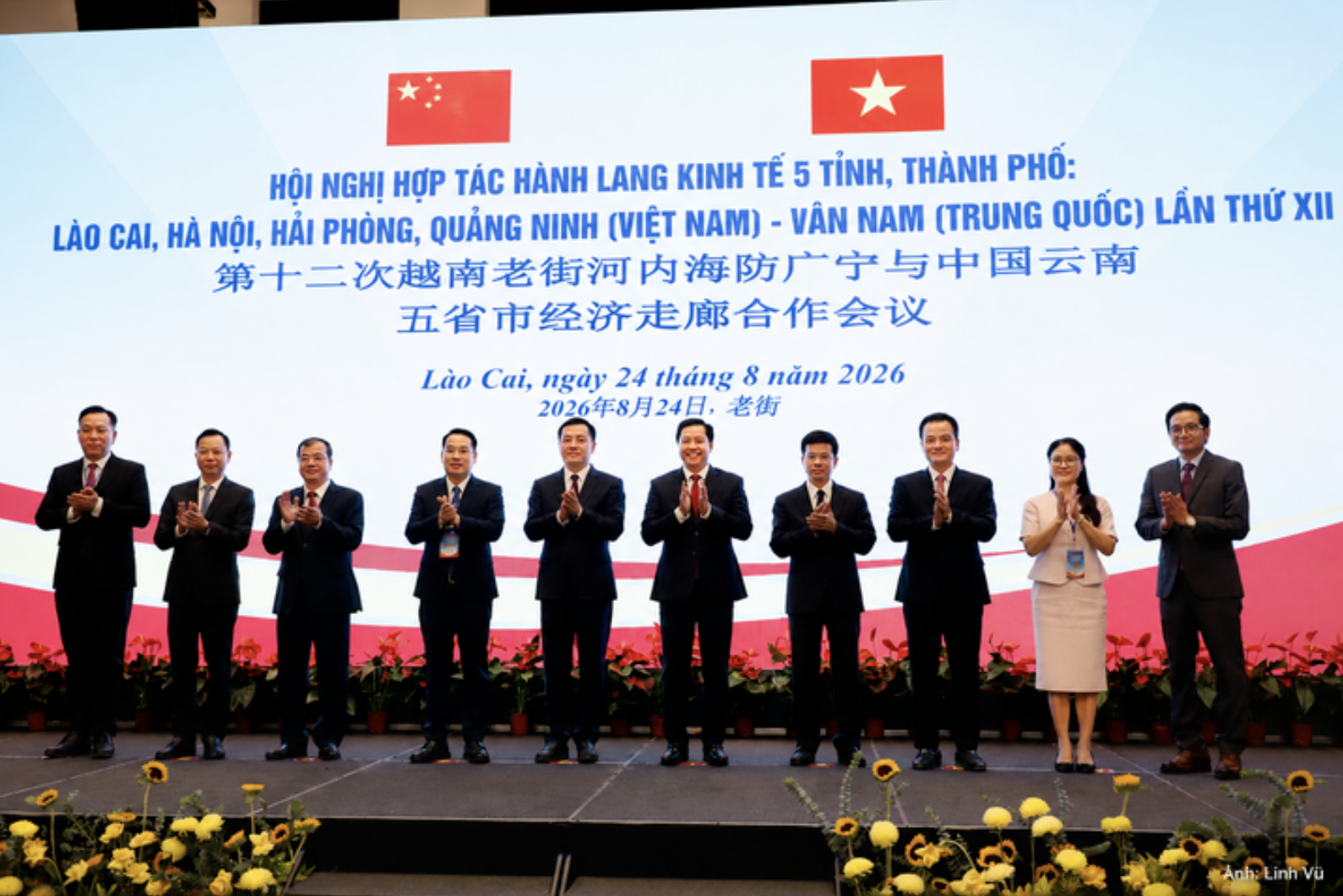
This morning (August 24), the 12th Conference on Cooperation among the Five Provinces and Cities along the Kunming-Lao Cai-Hanoi-Hai Phong-Quang Ninh economic corridor between Vietnam and China was held in Sa Pa, Lao Cai Province.
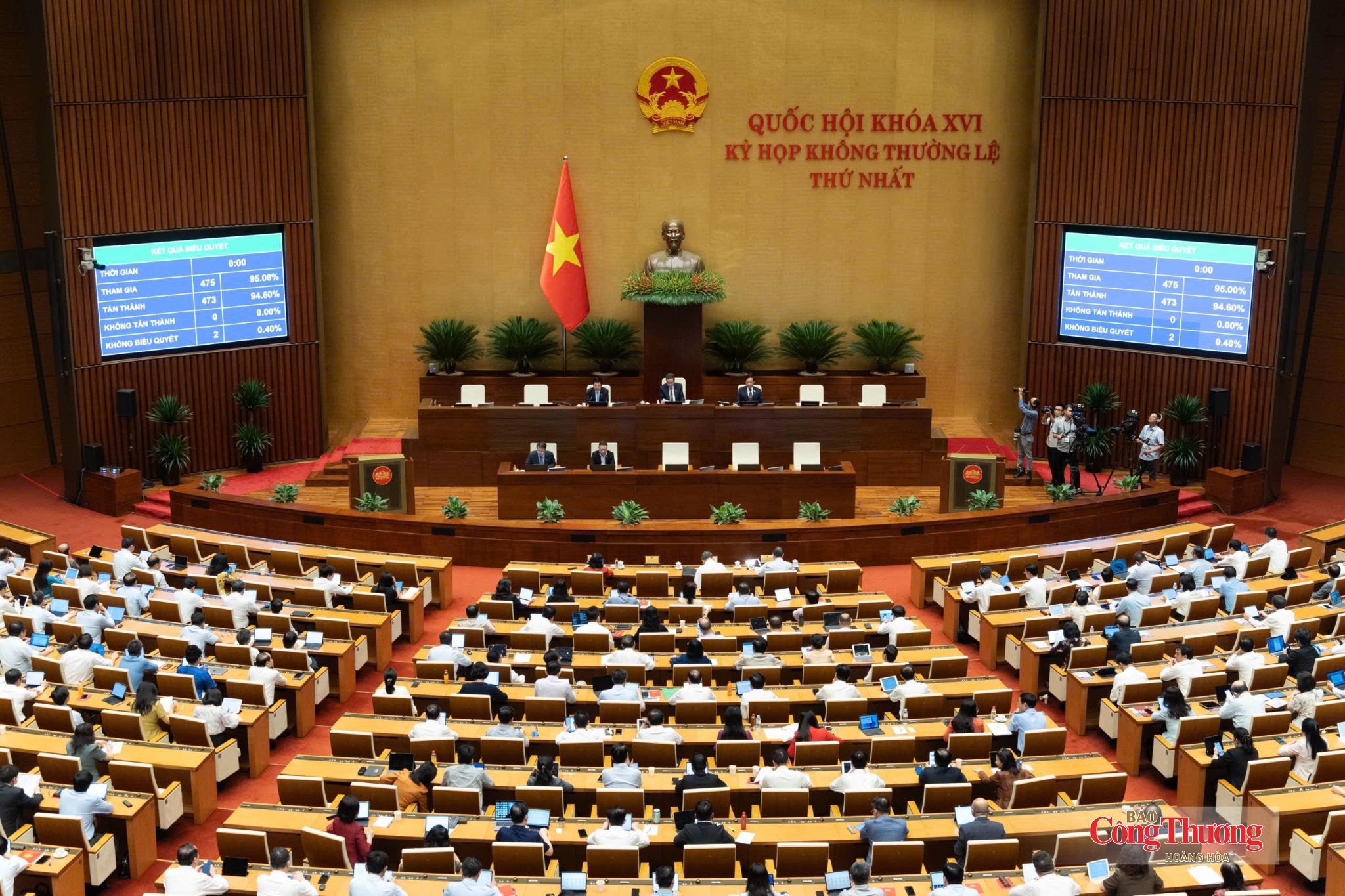
473 out of 475 National Assembly deputies participating in the vote voted in favour of the amended Petroleum Law at the First Extraordinary Session of the 16th National Assembly.
Bringing supporting industries within the scope of the Key Industries Law is expected to establish a unified legal framework, expand development opportunities for businesses, and enhance domestic localization capacity.
This morning (August 24), the 12th Conference on Cooperation among the Five Provinces and Cities along the Kunming-Lao Cai-Hanoi-Hai Phong-Quang Ninh economic corridor between Vietnam and China was held in Sa Pa, Lao Cai Province.
473 out of 475 National Assembly deputies participating in the vote voted in favour of the amended Petroleum Law at the First Extraordinary Session of the 16th National Assembly.
On August 23, at the First Extraordinary Session of the 16th National Assembly, the National Assembly voted to pass the amended Petroleum Law with an overwhelming majority.