473 out of 475 National Assembly deputies participating in the vote voted in favour of the amended Petroleum Law at the First Extraordinary Session of the 16th National Assembly.
Unlocking investment and increasing state budget revenue
Continuing the programme of the First Extraordinary Session of the 16th National Assembly, on the morning of August 23, under the chairmanship of National Assembly Chairman Tran Thanh Man and with Deputy National Assembly Chairman Nguyen Hong Dien presiding over the session, the National Assembly voted to pass the amended Petroleum Law.
Prior to the vote, authorised by the Prime Minister, Minister of Industry and Trade Le Manh Hung presented the report explaining, incorporating feedback on and revising the draft amended Petroleum Law.
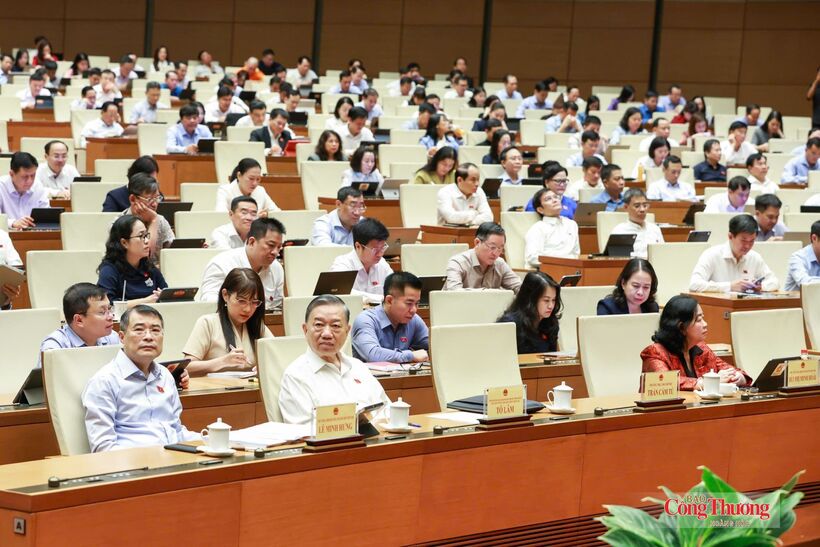
Party General Secretary and President To Lam, Prime Minister Le Minh Hung, and National Assembly deputies attend the August 23 session.
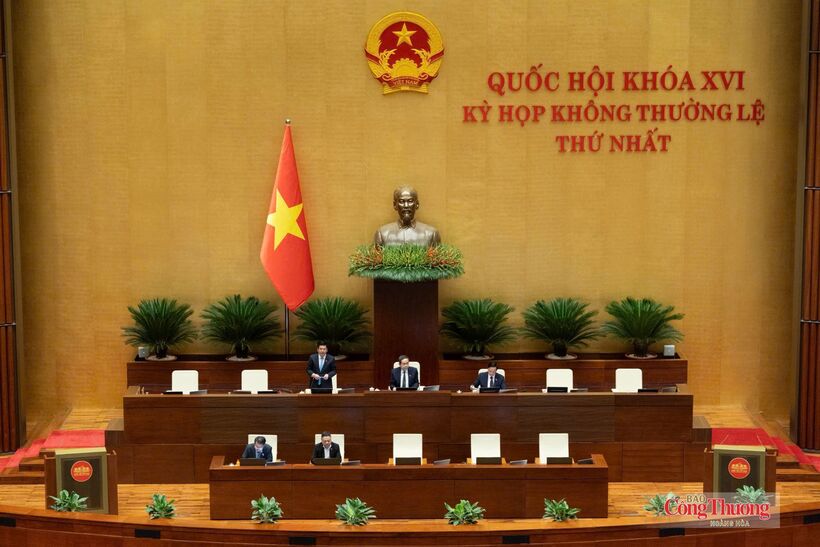
Deputy National Assembly Chairman Nguyen Hong Dien presides over the National Assembly's vote on the draft amended Petroleum Law.
Minister Le Manh Hung said that, in implementing the provisions of the Law on Promulgation of Legal Documents and Conclusion No.101 dated May 14, 2026, of the Standing Committee of the National Assembly, on May 19, 2026, the Government submitted Proposal No.409 to the National Assembly on the draft amended Petroleum Law.
The draft Law's dossier was reviewed by the National Assembly Committee for Economic and Financial Affairs, the Council for Ethnic Affairs and other National Assembly committees. The National Assembly discussed the draft in groups and at the plenary session during the First Extraordinary Session of the 16th National Assembly. Based on comments from National Assembly deputies and the appraisal opinions of National Assembly agencies, the Government seriously studied, incorporated and explained the feedback and revised the draft Law.
Subsequently, on August 4, 2026, the Government submitted Proposal No.546 and Report No.547 to the Standing Committee of the National Assembly on the incorporation of and explanation for comments from National Assembly deputies and appraisal opinions, focusing on seven groups of issues.
First, the draft Law was reviewed for constitutional and legal compliance, consistency and compatibility with international treaties, while ensuring national defence, security and the resources required for implementation.
At the same time, administrative procedures, decentralisation and delegation of authority, as well as requirements concerning science and technology, innovation, digital transformation, gender equality and ethnic policies, were reviewed.
Second, the draft Law continued to be refined with provisions on the capture, treatment, transportation, injection and storage of CO2; the application of high-tech techniques and services; and the development of offshore energy facilities associated with oil and gas activities.
Third, provisions were added on the decentralisation and delegation of authority to the state management agency in charge of petroleum and the assignment of authority to Vietnam National Industry-Energy Group (Petrovietnam).
Fourth, additional incentives were introduced for oil and gas activities and preferential policies for resource exploitation involving marginal fields, groups of fields and oil and gas blocks subject to marginal exploitation.
Fifth, issues related to oil and gas activities.
Sixth, the formulation, appraisal and approval of oil and gas field development plans and early oil and gas field exploitation.
Seventh, the handling of Petrovietnam's costs and transitional provisions.
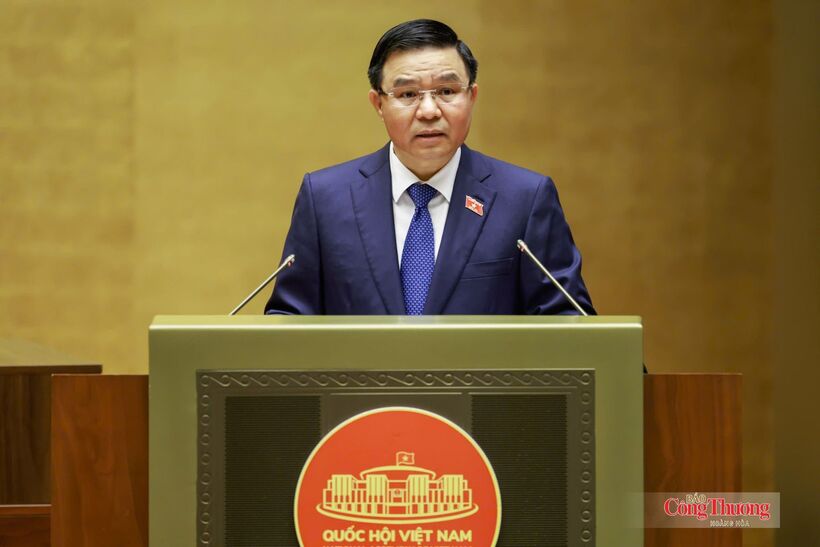
Minister of Industry and Trade Le Manh Hung presents the report explaining, incorporating feedback on and revising the draft amended Petroleum Law.
Notably, regarding the seventh group of issues, Minister Le Manh Hung said that National Assembly deputies had paid particular attention to three groups of issues, specifically:
First, decentralisation, delegation of authority and the role of Petrovietnam.
The Minister emphasised that a consistent and prominent principle of the draft Law is to strengthen the delegation of authority to the state management agency in charge of petroleum; assign authority to Petrovietnam; and simplify procedures to unlock resources, alongside stronger inspection and supervision in line with the Party's policies and the practical implementation of oil and gas activities in Vietnam. Certain powers related to national defence and security will remain subject to approval by competent authorities, ensuring direct State oversight.
The draft Law was also revised to clearly delineate Petrovietnam's functions and separate its roles as an oil and gas contractor and investor from the specific functions assigned by the State.
Second, investment incentive policies for oil and gas activities.
Given the fact that oil and gas projects are increasingly moving into deepwater and offshore areas, where geological conditions are complex, investment capital requirements are high and capital recovery periods are long, many small and marginal fields would not be sufficiently viable for investors to implement projects if conventional mechanisms were applied. Therefore, the draft Law adds incentive policies to encourage the development of small, marginal, deepwater and offshore fields; enhance oil recovery rates; and promote marginal exploitation of oil and gas fields, groups of fields and blocks. This will help attract investment, increase oil and gas production and contribute to the state budget.
Third, carbon capture and storage (CCS), the development of offshore energy facilities and high-tech oil and gas technical services associated with oil and gas activities.
Minister Le Manh Hung affirmed that, regarding this issue, the Government had clarified the scope of regulation, applying it only to activities directly associated with oil and gas activities; added provisions on post-closure responsibilities and the shared use of infrastructure; and ensured safety without affecting oil and gas activities. At the same time, the Government clarified the criteria and mechanisms to encourage the development of high-tech services in accordance with specialised legislation.
According to the Minister, over the past period, in order to complete the draft Law, the Government had seriously incorporated and fully explained comments from National Assembly deputies, appraisal opinions from National Assembly agencies and conclusions of the Standing Committee of the National Assembly, while continuing to revise and finalise the draft amended Petroleum Law. On that basis, the Government proposed that the National Assembly consider and pass the draft amended Petroleum Law.
473 out of 475 National Assembly deputies participating in the vote voted in favour of the amended Petroleum Law at the First Extraordinary Session of the 16th National Assembly.
Immediately after the report explaining, incorporating feedback on and revising the draft Law was presented, the National Assembly voted to pass the amended Petroleum Law. As a result, 473 out of 475 National Assembly deputies participating in the vote voted in favour of the amended Petroleum Law at the First Extraordinary Session of the 16th National Assembly.
Expanding development space for the oil and gas sector
The amended Petroleum Law consists of 12 chapters and 62 articles, compared with 11 chapters and 69 articles in the 2022 Petroleum Law. It basically retains the provisions of the 2022 Petroleum Law while amending and supplementing regulations on basic oil and gas surveys, contractor selection, petroleum contracts, oil and gas activities, investment incentives, accounting, auditing, and the functions, powers and obligations of relevant entities.
The Law adds provisions on marginal exploitation; a legal framework for carbon capture and storage (CCS); high-tech services; and offshore energy associated with oil and gas activities, meeting new development requirements in the oil and gas sector.
The amended Petroleum Law aims to continue improving the legal framework, address difficulties and obstacles arising from practical implementation, strengthen decentralisation and delegation of authority, and establish appropriate mechanisms and policies to attract investment and ensure the efficient exploitation and use of oil and gas resources. At the same time, it will gradually expand the development space of the oil and gas sector in association with high-tech services, offshore energy linked to oil and gas activities, and requirements for reducing greenhouse gas emissions.
More importantly, the amended Petroleum Law continues to institutionalise the Party's policies, safeguard national interests, strengthen decentralisation and delegation of authority, improve the effectiveness of state management, ensure the efficient exploitation of resources, and contribute to maintaining energy security and national sovereignty.
The amended Petroleum Law will take effect on March 1, 2027.
The amended Petroleum Law was formulated on the basis of inheriting progressive provisions of the 2022 Petroleum Law and concretising five groups of policies approved by the Government under Resolution No.81/NQ-CP dated April 3, 2026, including simplifying procedures; strengthening decentralisation and delegation of authority; improving regulations on petroleum contracts and activities; investment incentive policies; developing the oil and gas value chain, high-tech services and offshore energy; and establishing a framework for reducing greenhouse gas emissions and carbon capture and storage.
Building on 50 years of diplomatic relations, Viet Nam and Thailand have continued to nurture friendship, strengthen mutual trust, expand cooperation and work toward new milestones in bilateral ties.
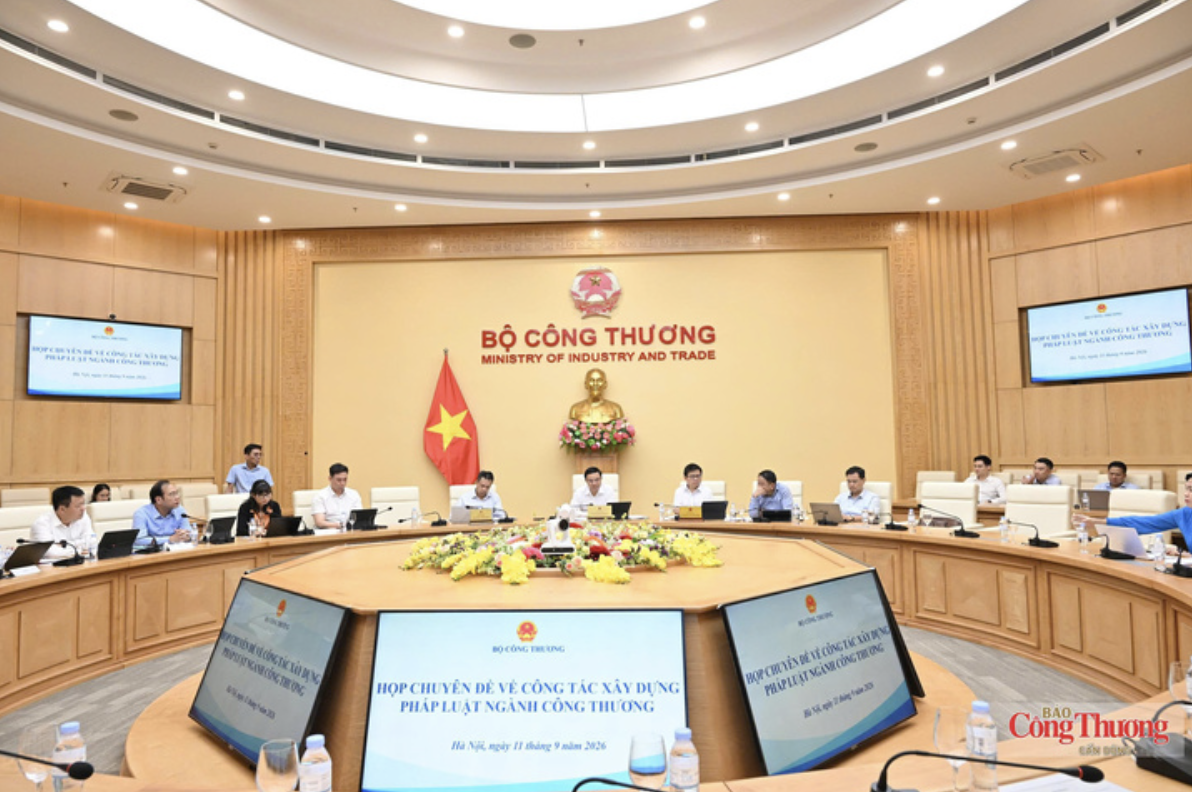
The Ministry of Industry and Trade completed all nine key Q3 legislative tasks and is prioritizing 56 remaining tasks to ensure timely, consistent and effective legal reform.
Vietnamese businesses are stepping up trade connections and seeking partners in Türkiye and Spain, opening up new opportunities to boost exports and gain access to European markets.
Access to advanced port technologies and stronger business connectivity are creating new opportunities for logistics cooperation between Viet Nam and China.
Building on 50 years of diplomatic relations, Viet Nam and Thailand have continued to nurture friendship, strengthen mutual trust, expand cooperation and work toward new milestones in bilateral ties.
The Ministry of Industry and Trade completed all nine key Q3 legislative tasks and is prioritizing 56 remaining tasks to ensure timely, consistent and effective legal reform.
Vietnamese businesses are stepping up trade connections and seeking partners in Türkiye and Spain, opening up new opportunities to boost exports and gain access to European markets.
Access to advanced port technologies and stronger business connectivity are creating new opportunities for logistics cooperation between Viet Nam and China.