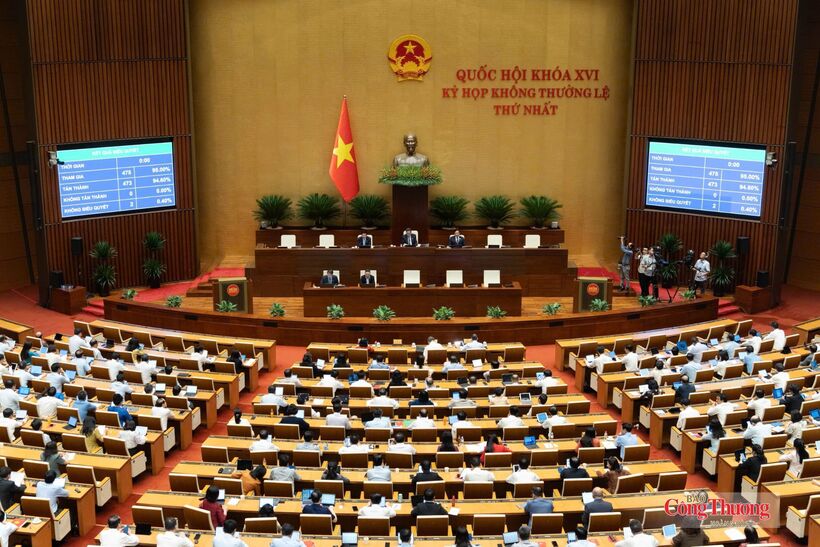
On August 23, at the First Extraordinary Session of the 16th National Assembly, the National Assembly voted to pass the amended Petroleum Law with an overwhelming majority.
Continuing the programme of the First Extraordinary Session of the 16th National Assembly, on the morning of August 23, under the chairmanship of National Assembly Chairman Tran Thanh Man and with Deputy National Assembly Chairman Nguyen Hong Dien presiding over the session, the National Assembly voted to pass the amended Petroleum Law.
The result showed that 473 out of 475 National Assembly deputies participating in the vote voted in favour of the amended Petroleum Law at the First Extraordinary Session of the 16th National Assembly.
The National Assembly votes to pass the amended Petroleum Law.
The amended Petroleum Law was formulated on the basis of inheriting the progressive provisions of the 2022 Petroleum Law and concretising five groups of policies approved by the Government under Resolution No.81/NQ-CP dated April 3, 2026, including:
First, simplifying procedures and strengthening decentralisation and delegation of authority.
Second, improving regulations on petroleum contracts and oil and gas activities.
Third, investment incentive policies.
Fourth, developing the oil and gas value chain, high-tech technical services and offshore energy.
Fifth, establishing a framework for reducing greenhouse gas emissions and carbon capture and storage.
At the same time, the Law ensures consistency with the legal system, international treaties to which Vietnam is a member, and international oil and gas industry practices.
The Law consists of 12 chapters and 62 articles, compared with 11 chapters and 69 articles in the 2022 Petroleum Law. It basically retains the provisions of the 2022 Petroleum Law while amending and supplementing regulations on basic oil and gas surveys, contractor selection, petroleum contracts, oil and gas activities, investment incentives, accounting, auditing, and the functions, powers and obligations of relevant entities.
Notably, the amended Petroleum Law adds provisions on marginal exploitation; a legal framework for carbon capture and storage (CCS); high-tech services; and offshore energy associated with oil and gas activities, meeting new development requirements in the oil and gas sector.
The amendments to the Petroleum Law aim to continue improving the legal framework, address difficulties and obstacles arising from practical implementation, strengthen decentralisation and delegation of authority, and establish appropriate mechanisms and policies to attract investment and ensure the efficient exploitation and use of oil and gas resources. At the same time, the Law will gradually expand the development space of the oil and gas sector in association with high-tech services, offshore energy linked to oil and gas activities, and requirements for reducing greenhouse gas emissions.
The amended Petroleum Law will take effect on March 1, 2027.
Before the National Assembly deputies voted to pass the Law, authorised by the Prime Minister, Minister of Industry and Trade Le Manh Hung presented the report explaining, incorporating feedback on and revising the draft amended Petroleum Law.
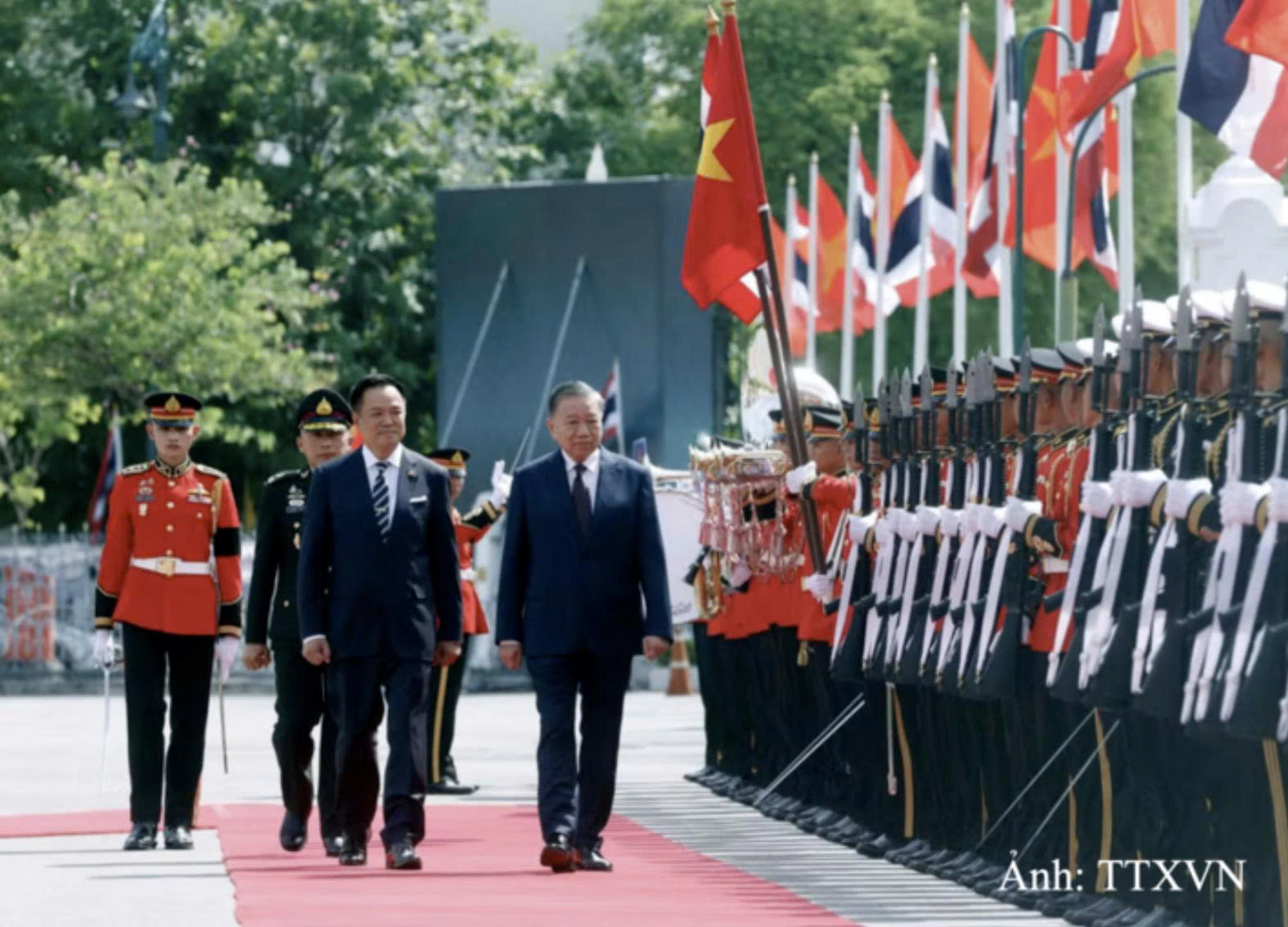
Building on 50 years of diplomatic relations, Viet Nam and Thailand have continued to nurture friendship, strengthen mutual trust, expand cooperation and work toward new milestones in bilateral ties.
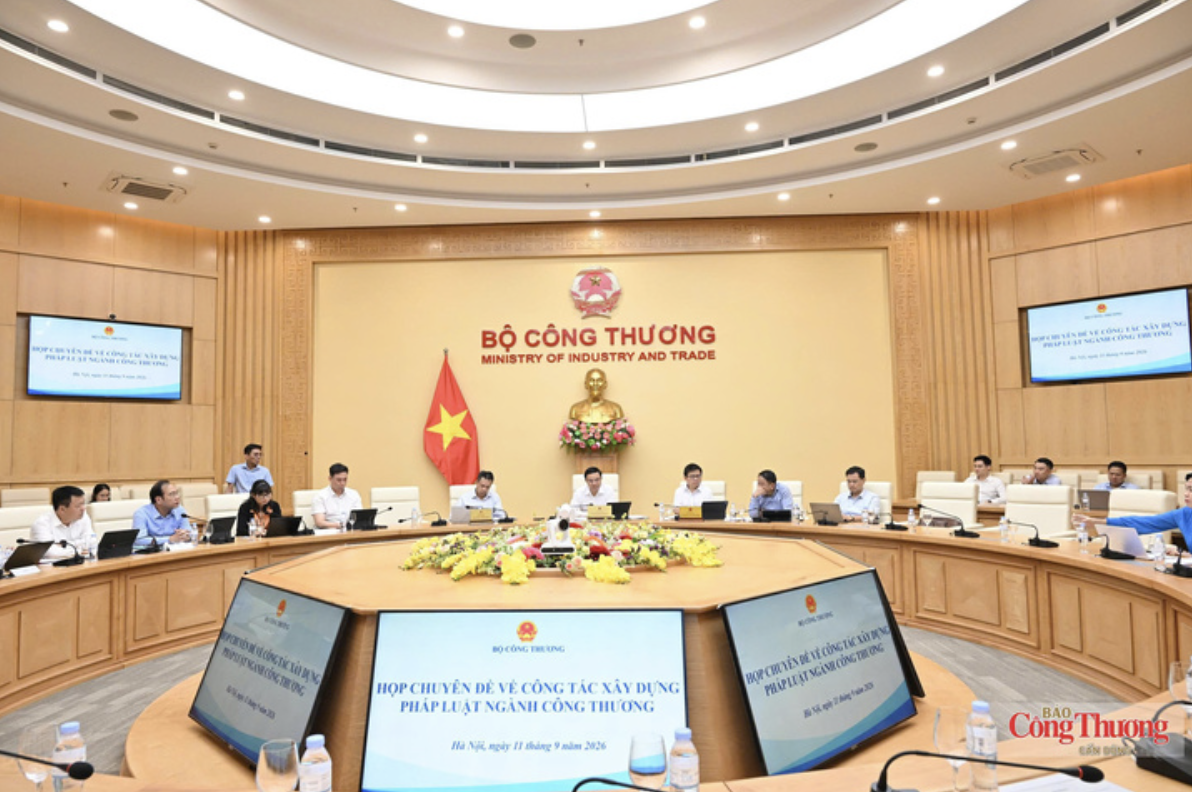
The Ministry of Industry and Trade completed all nine key Q3 legislative tasks and is prioritizing 56 remaining tasks to ensure timely, consistent and effective legal reform.
Vietnamese businesses are stepping up trade connections and seeking partners in Türkiye and Spain, opening up new opportunities to boost exports and gain access to European markets.
Access to advanced port technologies and stronger business connectivity are creating new opportunities for logistics cooperation between Viet Nam and China.
Building on 50 years of diplomatic relations, Viet Nam and Thailand have continued to nurture friendship, strengthen mutual trust, expand cooperation and work toward new milestones in bilateral ties.
The Ministry of Industry and Trade completed all nine key Q3 legislative tasks and is prioritizing 56 remaining tasks to ensure timely, consistent and effective legal reform.
Vietnamese businesses are stepping up trade connections and seeking partners in Türkiye and Spain, opening up new opportunities to boost exports and gain access to European markets.
Access to advanced port technologies and stronger business connectivity are creating new opportunities for logistics cooperation between Viet Nam and China.