|
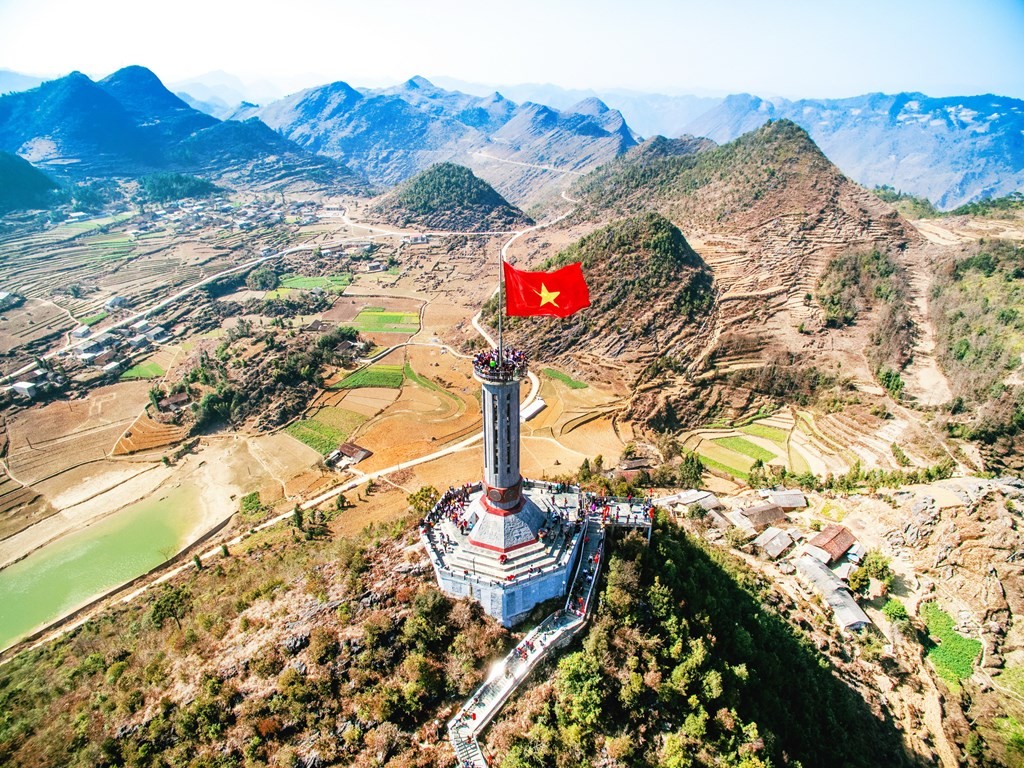
| Lung Cu Flag Tower - photo: Thao Le |
Attractive destination
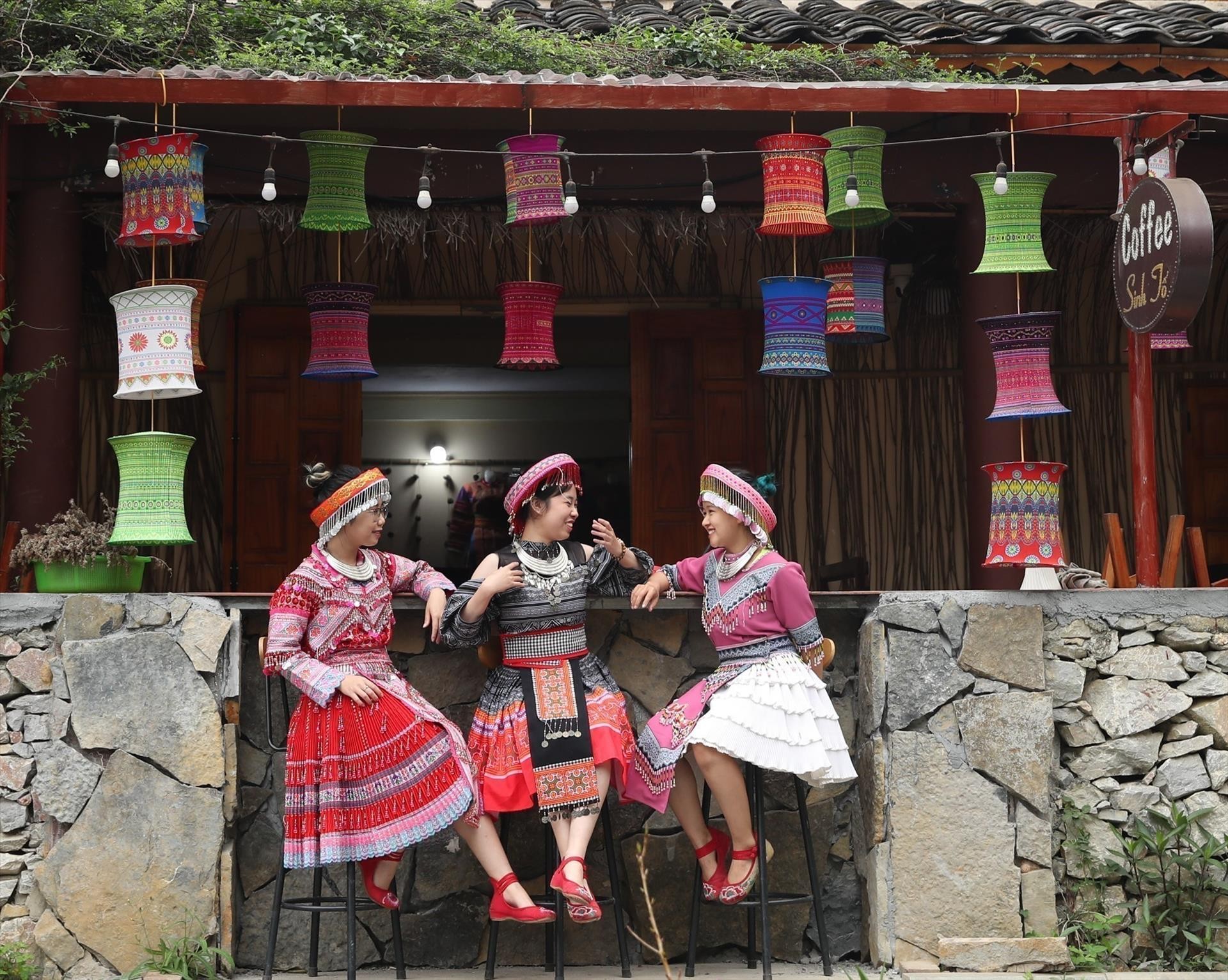
Ha Giang Province has the great potential for tourism development thanks to its natural resources and unique cultural identities of 19 ethnic groups. Ha Giang has many notable attractions that leave a lasting impression on visitors, such as the Rocky Plateau connected to landmarks like Lung Cu Flag Tower, the H’mong King’s Palace, Ma Pi Leng Pass, Tu San Alley, Dong Van Old Quarter, and more. Additionally, Ha Giang is known for its distinctive products, including mint honey, oranges, valuable medicinal herbs, and ancient Shan Tuyet tea trees in Tay Con Linh.
In 2023, Ha Giang welcomed more than three million tourists, including 282,000 foreign visitors from 205 countries and territories worldwide, and over 2.7 million domestic visitors, up 33 percent from 2022.
Last year, Ha Giang was the most searched domestic destination by Vietnamese travelers on Google, becoming one of the top emerging tourist destinations in Asia. It was also voted as one of the 10 most beautiful destinations in Vietnam and ranked 25th out of 52 excellent tourist destinations worldwide. Many tourist attractions and accommodations in Ha Giang have achieved the ASEAN brand.
At a recent workshop on brand positioning and development of Ha Giang tourism, Vo Tri Thanh, Director of the Institute for Brand and Competitiveness Strategy (BCSI), said touring Ha Giang is an emotional journey that appeals to both domestic and foreign visitors, and tourism has brought about significant socioeconomic transformations in Ha Giang, as well as increased the attractiveness of the entire Northeast-Northwestern region.
Ha Giang was just a “zero” in terms of tourism over 20 years ago, but has nowadays become an attractive destination for visitors, said Chairman of the Vietnam Tourism Association, Vu The Binh.
Tourism currently accounts for 8-9 percent of Ha Giang’s gross regional domestic product (GRDP) and the province should turn tourism into a spearhead economic sector with a 15-20 percent contribution to its GRDP in the near future, Binh said.
Cultural conservation
Vice Chairman of the Provincial People’s Committee Tran Duc Quy stated that Ha Giang Province will turn tourism into a key economic sector in 2025, attract more than three million and five million visitors in 2025 and 2030, respectively, and make tourism contribute 14 percent plus to the province’s GRDP and provide more than 20,000 direct jobs.
|
| Ha Giang is renowned for its unique cultural identities - photo: VNA |
A 2021-2030 plan for Ha Giang, with a vision to 2050, has been approved by the Prime Minister, while the province is developing infrastructure, improving management and cultural conservation, and stimulating tourism promotion, Quy said.
Vietnam Tourism Association Chairman Vu The Binh said the travel trends of international visitors have changed, so Ha Giang needs to focus on green transformation and preserve its cultural and ecological identities for sustainable tourism development, apart from digital transformation.
Chairman of the Vietnam Society of Travel Agents (VISTA) Cao Tri Dung said Ha Giang should pursue a friendly and hospitable destination with special cultural and ethnic identities, and promote it as a new growth pole of Vietnam’s tourism.
Deputy Minister of Culture, Sports and Tourism Ta Quang Dong assessed that with its magnificent natural landscapes, geological heritage sites, historical relics and diverse, rich cultures, in recent years, Ha Giang province has strengthened its connection with domestic and foreign localities to promote tourism development pertaining to cultural and ethnic identity conservation and promotion. The province needs to prepare practical tourism development plans and facilitate tourism businesses’ development in accordance with the new trends and situation, he added.