Rules of origin are becoming increasingly important for Vietnamese goods to benefit from free trade agreement (FTA) preferences. However, the main bottlenecks lie not only in C/O issuance procedures but also in businesses’ ability to control their supply chains.
Origin verification must start at the production stage
Viet Nam’s expanding network of free trade agreements (FTAs) is creating greater opportunities for the country’s goods to access major international markets. However, preferential tariffs are not automatically granted. To benefit from trade commitments, businesses must demonstrate that their goods meet the relevant rules of origin. As a result, the Certificate of Origin (C/O) is no longer merely an export document but is also directly linked to businesses’ production organization and management capabilities.
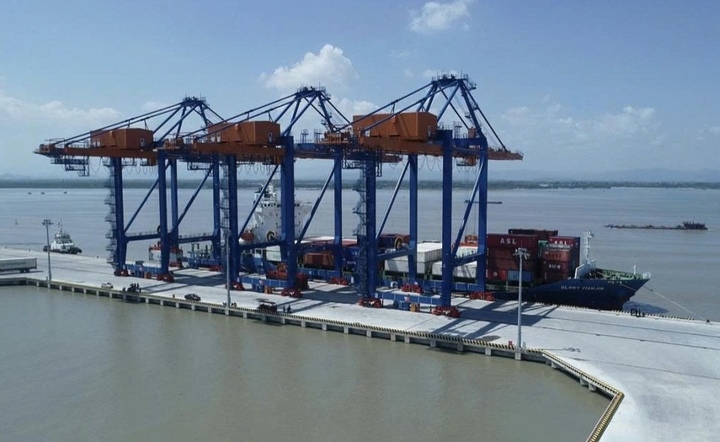
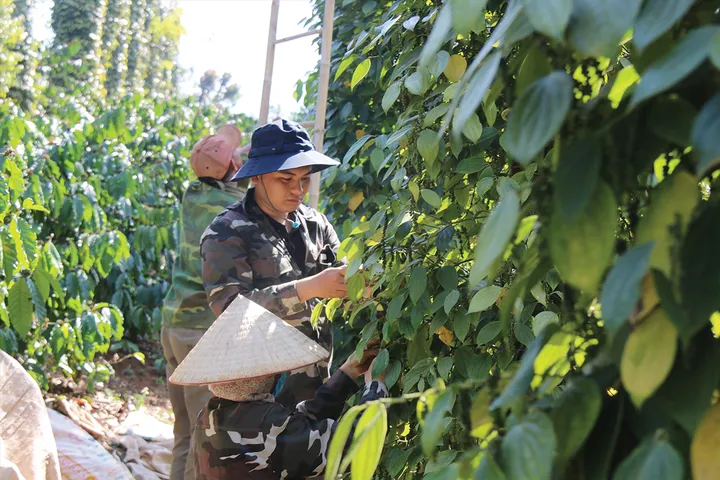
Bottlenecks lie not only in C/O issuance procedures but also in businesses’ capacity to control their supply chains. Photo: Can Dung
In practice, rules of origin vary across FTAs. Some agreements impose strict requirements on the origin of raw materials, while others apply criteria based on changes in tariff classification or regional value content. Therefore, even for the same product, businesses may have to meet different origin requirements depending on the export market.
In an interview with Newspaper of Industry and Trade, Associate Professor and PhD. Dinh Trong Thinh said that a C/O is not simply a document used for export activities. It also serves as a basis for competent authorities in importing countries to consider granting preferential tariffs to goods.
“I believe that, during the integration process, businesses need to pay particular attention to clarifying the origin of their goods from the input stage. When raw material sources, production processes and relevant documents are strictly managed, businesses will be better positioned to demonstrate origin, benefit from FTA preferences and expand their export markets,” he emphasized.
According to Associate Professor Dinh Trong Thinh, origin verification should become an integral part of production organization and business management. Companies need to control their sources of raw materials, understand the origin of each input, monitor production, processing and manufacturing activities, and maintain complete documentation. These are essential grounds for demonstrating compliance with rules of origin whenever requested by competent authorities or import partners.
This requirement has become even more important with the introduction of self-certification of origin mechanisms under certain FTAs. In such cases, businesses are responsible not only for declaring information but also for ensuring the accuracy of their certifications. Failure to properly control raw material sources and production records could result in preferential tariff treatment being denied, additional explanations being required, or businesses facing origin verification and inspection procedures.
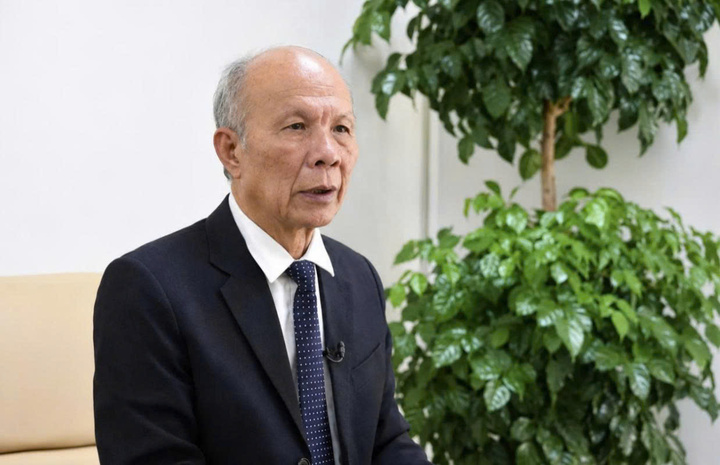
Economic expert Associate Professor and PhD. Dinh Trong Thinh. Photo: Ngoc Hoa
From an expert perspective, Associate Professor Dinh Trong Thinh also warned that origin fraud and counterfeit labeling could undermine the reputation of goods from Viet Nam. He said: “If Vietnamese origin is misused to bring goods that do not meet origin requirements into international markets, the consequences will extend beyond an individual business and could affect Viet Nam’s exports and the reputation of its goods.”
Therefore, the issue of C/O is not simply whether a business can obtain a certificate, but, more importantly, whether it has the capacity to demonstrate that its goods genuinely comply with the applicable rules of origin.
Data gaps and supply chain management challenges
One of the major challenges in origin verification today lies in the ability to control information throughout the supply chain. In many industries, particularly agriculture, fisheries and products made from materials sourced from multiple suppliers, tracing the full origin of inputs is not always straightforward.
From a logistics perspective, Tran Chi Dung, Standing Member of the Executive Committee of the Viet Nam Logistics Business Association, said logistics service providers and import-export businesses are facing growing pressure to adopt green logistics, accelerate digital transformation, improve traceability and optimize supply chains.
Meeting on addressing difficulties in C/O issuance on August 17, 2026. Photo: Phuong Lan
Highlighting the role of data in supply chain management, Dung stressed: “Without data, it is extremely difficult. You cannot make decisions without having the figures.”
According to Dung, even domestic supply chains, particularly those involving agricultural products, still face gaps in information about growing areas, sources of goods and product origin. If information is not connected from raw material production areas through to distribution, businesses will encounter difficulties in identifying where goods come from.
This issue has direct implications for origin verification. For example, in the agricultural sector, if information on growing areas, harvesting, purchasing and preliminary processing is not fully recorded, businesses will struggle to prove product origin. In industries that rely heavily on imported materials and components, such as textiles and garments, footwear and electronics, managing supplier information, material documentation and production records is equally essential.
These challenges show that traceability cannot be carried out only at the final stage, when goods are ready for export. Data management must begin at the start of the supply chain, involving raw material suppliers, manufacturers, logistics providers and other relevant stakeholders.
Digital transformation, therefore, is not simply about investing in software or developing internal management systems. More importantly, data must be collected, updated and interconnected sufficiently to accurately reflect product origins, production processes and distribution. Standardized information will not only make it easier for businesses to demonstrate origin but also reduce risks when import partners or competent authorities conduct verification.
Another challenge is the disparity in businesses’ capacity to meet rules of origin. Large companies with extensive export experience have generally established specialized departments and relatively comprehensive documentation management systems. Meanwhile, small and medium-sized enterprises and cooperatives often face limitations in human resources, FTA knowledge and investment in technology.
As a result, some businesses have secured orders and gained access to export markets but have yet to fully capitalize on tariff preferences because they lack a clear understanding of rules of origin or are unable to prepare adequate supporting documents.
Strengthening management and improving compliance capacity
Alongside businesses’ own efforts, the role of state management agencies in providing guidance, organizing C/O issuance and controlling the origin of goods is also crucial.
In recent years, the Ministry of Industry and Trade (MoIT) has decentralized C/O issuance responsibilities to local authorities while continuing to improve procedures, provide professional guidance and support issuing bodies in their implementation. Decentralization brings administrative procedures closer to businesses, but also requires consistency in professional standards, expertise and document processing capacity across localities.
At a meeting on addressing difficulties in C/O issuance held on August 17, 2026, Nguyen Anh Son, Director General of the Agency of Foreign Trade under the Ministry of Industry and Trade, said the Ministry would continue coordinating with relevant agencies to review emerging issues, resolve difficulties in receiving and processing applications, and strengthen professional guidance for local C/O issuing authorities.
These efforts are necessary to ensure smooth C/O issuance, facilitate business operations and maintain strict control over rules of origin.
For businesses, regularly updating their knowledge of the regulations under each FTA and in each export market should be a priority. Rather than looking into procedures only when orders arise, companies need to incorporate origin criteria into their raw material procurement plans, supplier selection and production organization from the outset.
They should also strengthen coordination among manufacturers, raw material suppliers and logistics providers to ensure that product information is properly recorded, interconnected and verifiable. This will provide a foundation for preventing origin fraud, enhancing transparency and protecting the reputation of goods from Viet Nam.
As international markets place increasing emphasis on product origin, transparency and manufacturers’ accountability, the ability to demonstrate origin will become a decisive factor in business competitiveness. Capitalizing on FTA preferences depends not merely on obtaining a C/O, but also on the management capacity underpinning each certificate.
The EVFTA offers Vietnamese footwear tariff advantages in the EU market. To capitalize on these opportunities sustainably, businesses need to secure material supplies, strengthen production capacity and meet green requirements.
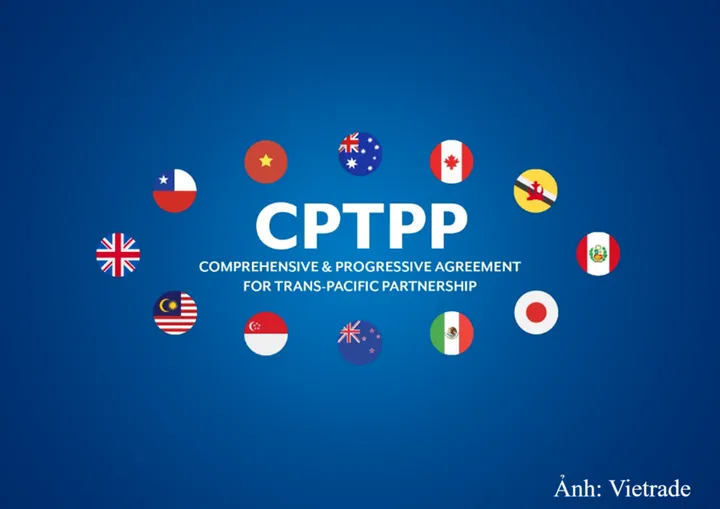
Born from the 12-member TPP after the US withdrawal, the CPTPP has gradually expanded, with the accession of the UK bringing its membership to 12 economies.
Tariff preferences under free trade agreements (FTAs) are creating new opportunities for Vietnamese pepper exports. However, businesses need to proactively meet rules of origin requirements.
Rising global rice prices, stronger import demand from South Korea and Viet Nam's successful bid to supply 35,000 tons are providing positive signals for rice exports.
The EVFTA offers Vietnamese footwear tariff advantages in the EU market. To capitalize on these opportunities sustainably, businesses need to secure material supplies, strengthen production capacity and meet green requirements.
Tariff preferences under free trade agreements (FTAs) are creating new opportunities for Vietnamese pepper exports. However, businesses need to proactively meet rules of origin requirements.
Rising global rice prices, stronger import demand from South Korea and Viet Nam's successful bid to supply 35,000 tons are providing positive signals for rice exports.
Vietnamese and Southwestern Chinese businesses met in Kunming to explore cooperation, as the two sides aim to raise Viet Nam - Yunnan trade to USD 5 billion.