BRICS should play a greater role in promoting dialogue and cooperation, seeking solutions to global challenges, and advancing reforms of the multilateral system, BRICS should play a greater role in promoting dialogue and cooperation, seeking solutions to global challenges, and advancing reforms of the multilateral system, so that it more comprehensively satisfies the interests of developing countries.
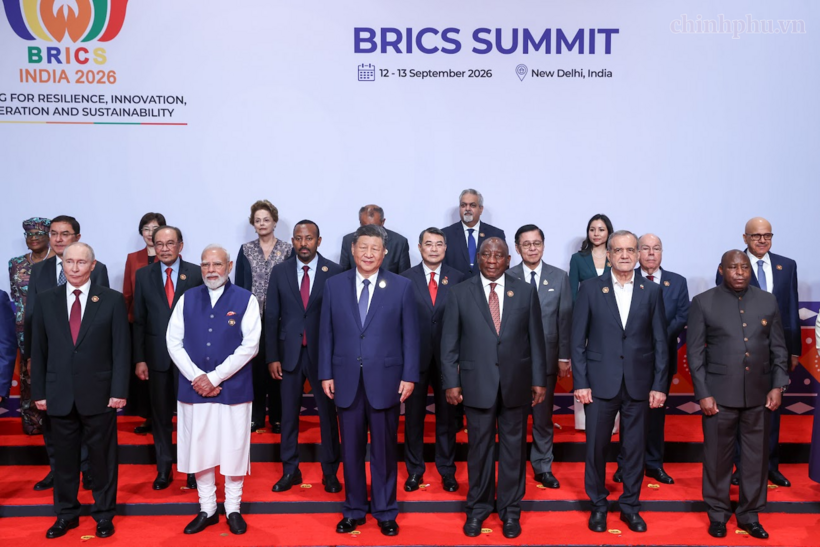
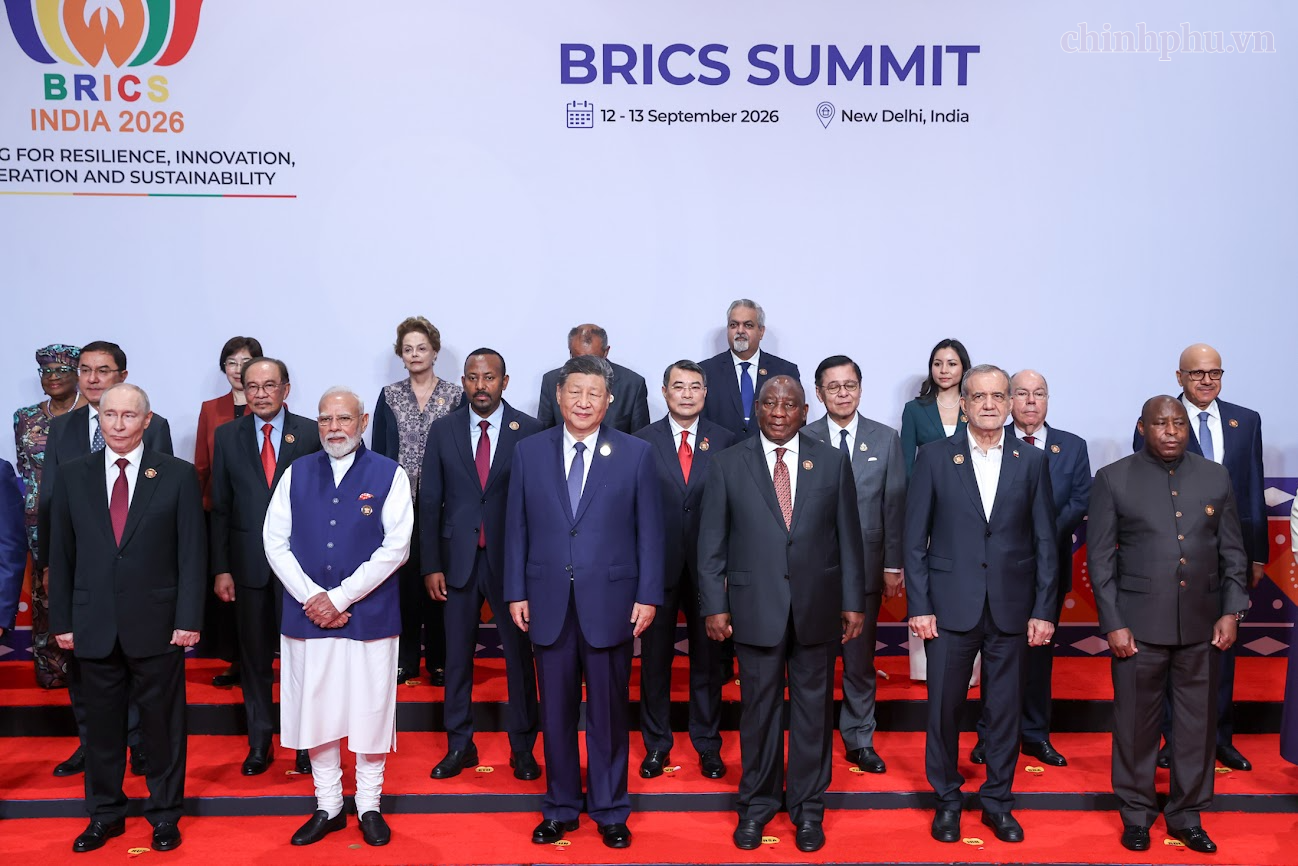
Leaders to the 18th BRICS Summit in New Delhi, India. Photo: VGP
Vietnamese Prime Minister Le Minh Hung on Sunday participated in the 18th BRICS Summit in New Delhi, India.
The Summit, themed “Building for Resilience, Innovation, Cooperation and Sustainability,” brought together Heads of State and Government from BRICS member countries and partner countries as well as leaders of several regional and international organizations.
Addressing the Summit, Prime Minister Le stated that this year's Summit marks two decades of BRICS' continuous rise in empowering the role and voice of developing economies in global political and economic affairs.
During these two decades of BRICS development, the world has undergone profound shifts in the balance of power, growth models, and methods of global governance, said Le.
He went on to say that Viet Nam supports, and calls on BRICS to work more closely with regional, inter-regional, and global multilateral mechanisms in order contribute to peace, stability, and cooperation, and create fair and sustainable development opportunities for all nations.
The Vietnamese Prime Minister expressed his hope that BRICS will play a greater role in promoting dialogue and cooperation, building and strengthening confidence, seeking solutions to global challenges, and advancing reforms of the multilateral system, so that it more comprehensively satisfies the interests of developing countries.
Appreciating the 2026 BRICS' priorities of "Resilience, Innovation, Cooperation and Sustainability", Prime Minister Le called on BRICS to shift from responding to changes to proactively strengthening the resilience and self-reliance of economies.
He suggested that BRICS would strengthen the sharing of experience in policy-making, risk management, and strategic forecasting.
Le also sought BRICS' support for developing countries in enhancing productivity, strengthening endogenous capacity, and fostering adaptability to economic and financial shocks, natural disasters, epidemics, and cross-border challenges.
BRICS could strengthen coordination to ensure uninterrupted flows of trade, investment, finance and supply chains, and make the most of its potential and advantages to expand the space for South-South cooperation; make better use of existing financial institutions, and mobilize long-term resources at affordable costs. This will enable developing countries' more equitable access to financing for digital transformation and green transition.
Le proposed that BRICS strongly promote joint research activities, human resource development, and technology transfer, particularly in artificial intelligence, digital technologies, smart agriculture, and clean energy.
Mechanisms such as the iBRICS Network and the BRICS Science, Technology and Innovation (STI) Framework Program should be expanded, with a view to sharing research infrastructure, providing skill training and supporting the commercialization of technology products, state Prime Minister Le.
Viet Nam, as the Prime Minister said, is entering a new phase of development, with the perspective of placing people at the center, taking institutional reform and modern governance as the driving force, and science, technology, and innovation as the foundation; while harmoniously combining economic growth with social progress and environmental protection.
He took the occasion to assure that Viet Nam wishes to work closely with BRICS members to deliver concrete cooperation programs and bring about practical benefits to parties concerned.
Viet Nam stands ready to work together with BRICS in the spirit of responsibility, goodwill and substantive cooperation to build a future of peace, prosperity, sustainable and inclusive development for all countries and people, affirmed Le.
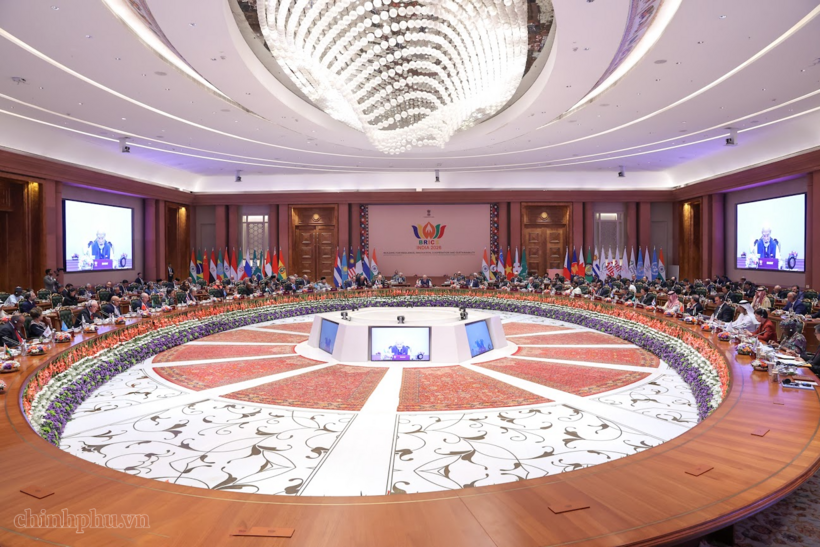
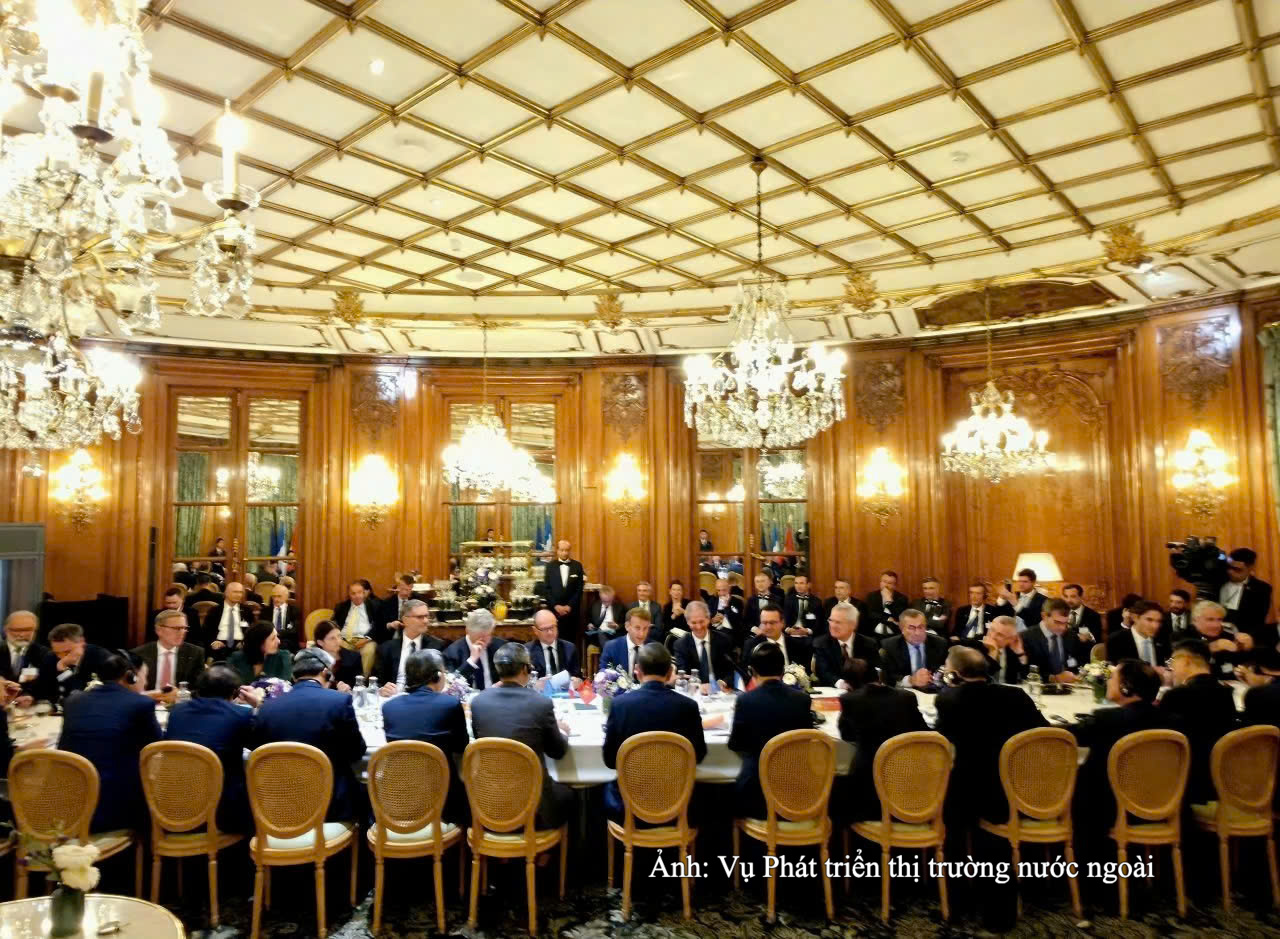
The overview of the 18th BRICS Summit in India's New Delhi, September 13, 2026. Photo: VGP
BRIC was formalized at the first meeting of BRIC Foreign Ministers on the sidelines of the United Nations General Assembly (UNGA) in New York in 2006. The inaugural BRIC Summit was convened in Yekaterinburg, Russia, in 2009.
It was agreed to expand BRIC into BRICS with the inclusion of South Africa at the BRIC Foreign Ministers’ meeting in New York in 2010. Accordingly, South Africa attended the 3rd BRICS Summit in Sanya in 2011.
Egypt, Ethiopia, Iran, Saudi Arabia and UAE became full member of BRICS from January 2024 and Indonesia in January 2025.
Belarus, Bolivia, Kazakhstan, Cuba, Malaysia, Nigeria, Thailand, Uganda, Uzbekistan and Viet Nam joined BRICS as Partner Countries in 2025.
BRICS brings together eleven major emerging markets and developing countries of the world: Brazil, China, Egypt, Ethiopia, India, Indonesia, Iran, Russia, Saudi Arabia, South Africa and United Arab Emirates. It serves as a useful platform for consultation and cooperation on contemporary issues having global as well as regional significance, and issues of global political and economic governance.
BRICS should play a greater role in promoting dialogue and cooperation, seeking solutions to global challenges, and advancing reforms of the multilateral system, BRICS should play a greater role in promoting dialogue and cooperation, seeking solutions to global challenges, and advancing reforms of the multilateral system, so that it more comprehensively satisfies the interests of developing countries.
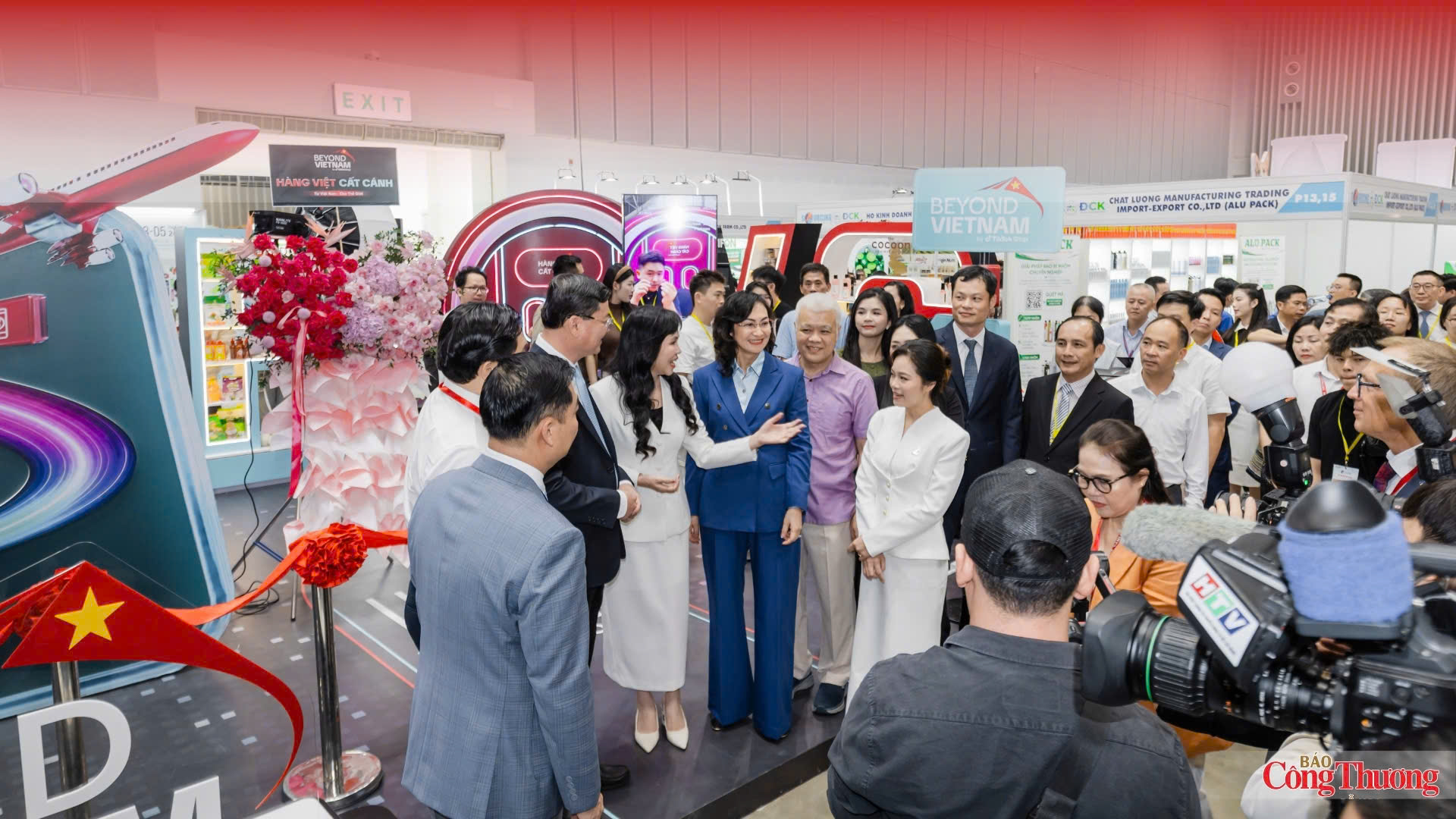
E-commerce is opening new pathways for Vietnamese products to reach global consumers, with technology helping businesses build brands and expand beyond traditional export channels.
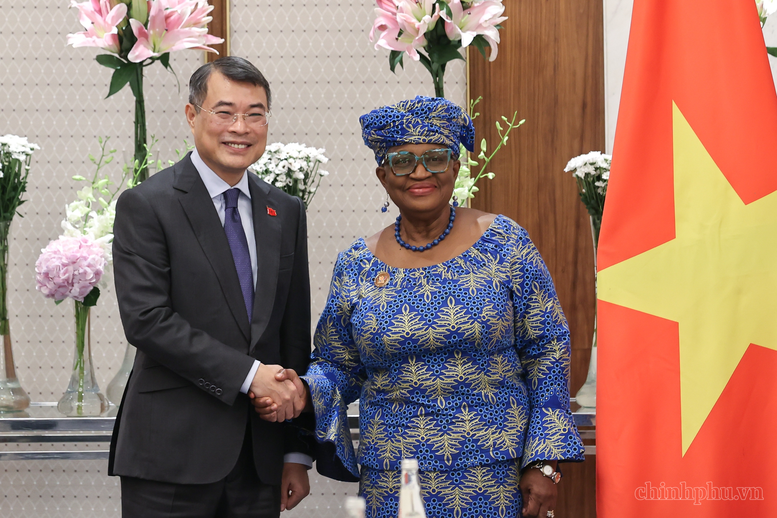
Prime Minister Le Minh Hung had a meeting with Director-General of the World Trade Organization (WTO) Ngozi Okonjo-Iweala on the sidelines of the 18th BRICS Summit in New Delhi, India, on September 12.
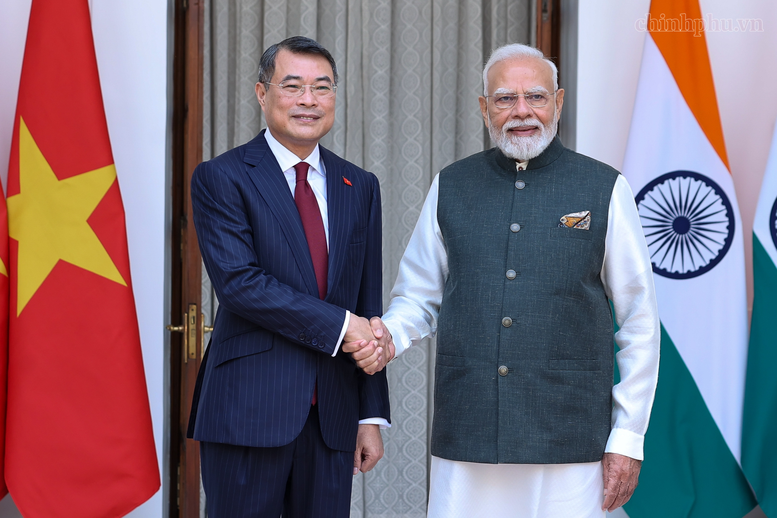
Viet Nam is an important pillar of India’s Act East Policy, reiterated Prime Minister Narendra Modi during his summit meeting with his Vietnamese counterpart Le Minh Hung in New Delhi, on September 12.
Viet Nam and France will expand room for cooperation in the areas of economy, trade, investment, industry and technology within the framework of the Comprehensive Strategic Partnership.
E-commerce is opening new pathways for Vietnamese products to reach global consumers, with technology helping businesses build brands and expand beyond traditional export channels.
Prime Minister Le Minh Hung had a meeting with Director-General of the World Trade Organization (WTO) Ngozi Okonjo-Iweala on the sidelines of the 18th BRICS Summit in New Delhi, India, on September 12.
Viet Nam is an important pillar of India’s Act East Policy, reiterated Prime Minister Narendra Modi during his summit meeting with his Vietnamese counterpart Le Minh Hung in New Delhi, on September 12.
Viet Nam and France will expand room for cooperation in the areas of economy, trade, investment, industry and technology within the framework of the Comprehensive Strategic Partnership.
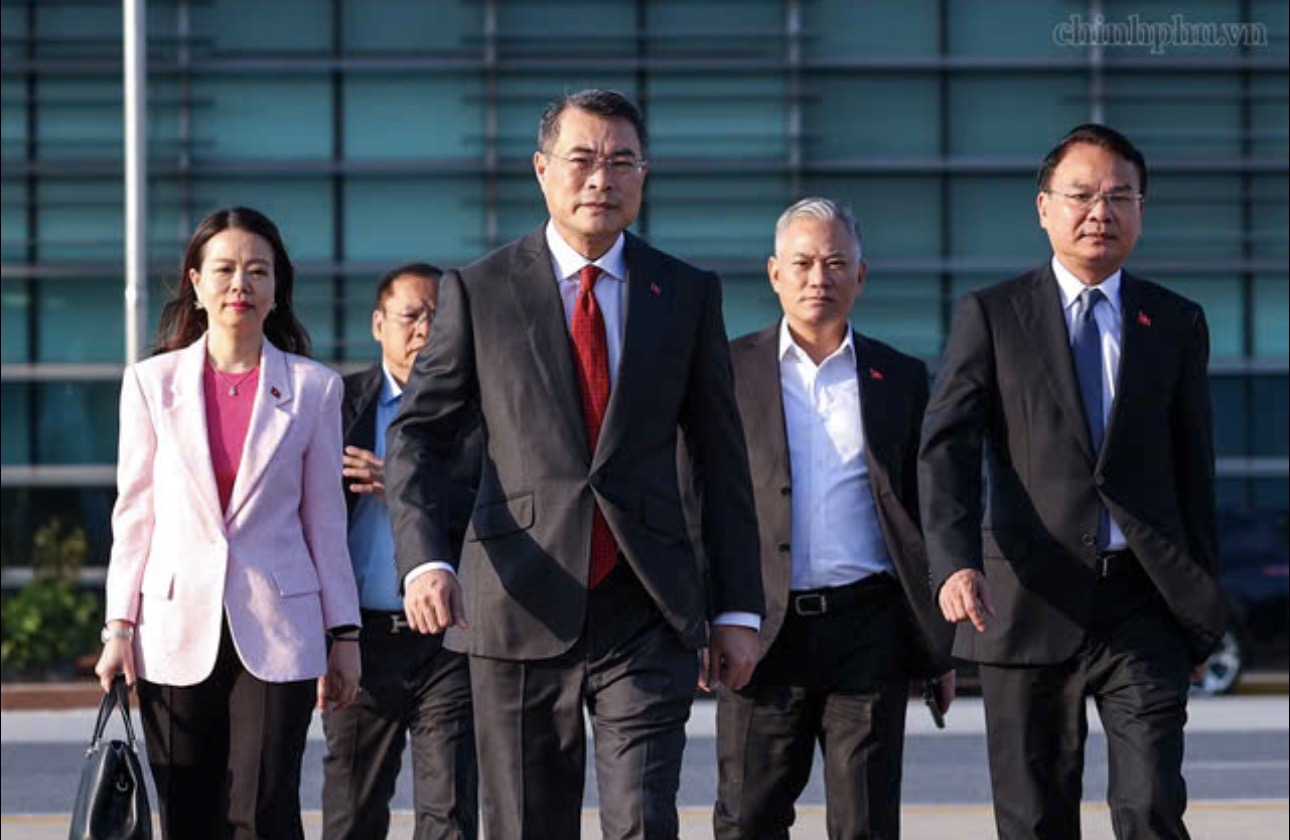
Prime Minister Le Minh Hung and his entourage left Ha Noi on Saturday morning for India to attend the 18th BRICS Summit at the invitation of Indian Prime Minister Narendra Modi