Vietnam and China pushed stronger cooperation in education, science and innovation, with a focus on AI, semiconductors and youth exchange as key future drivers.
Boosting Vietnam - China education and innovation ties
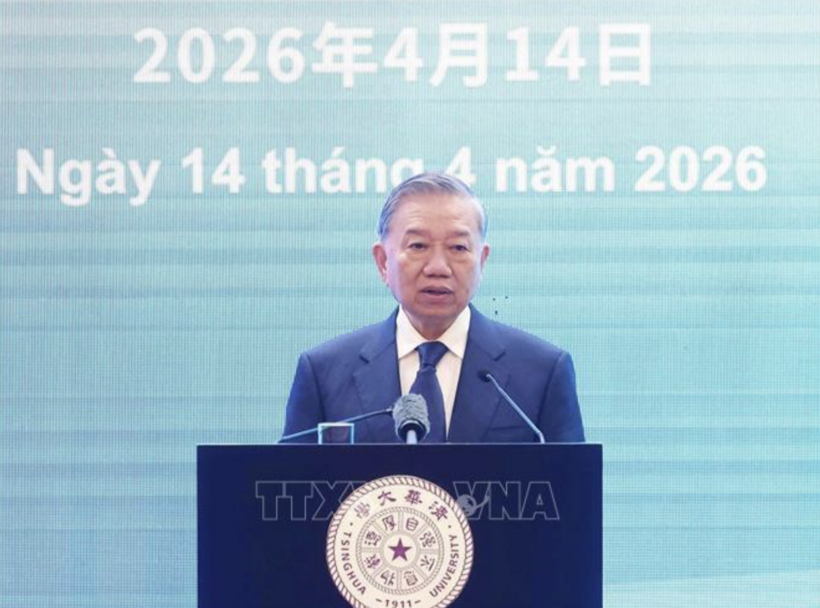
On the afternoon of April 14, in Beijing, China, General Secretary of the Communist Party of Vietnam and President of Vietnam To Lam visited and delivered a policy speech at Tsinghua University.
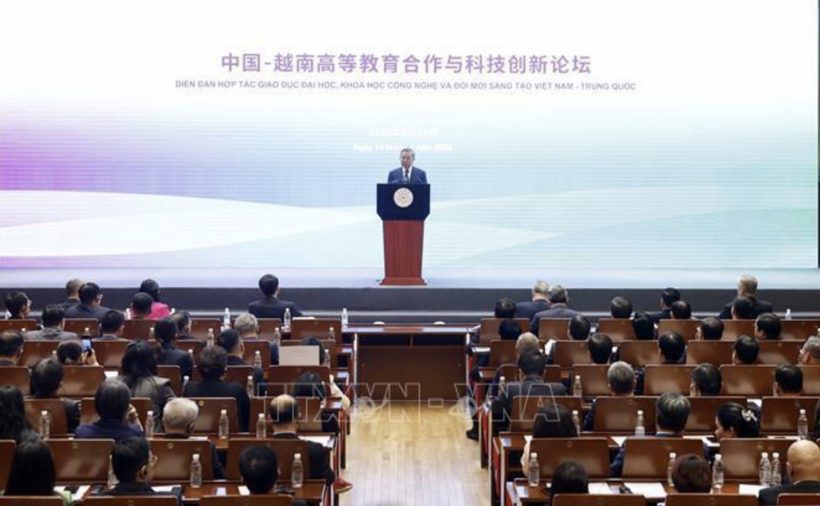
As part of his state visit to China from April 14 - 17, General Secretary and President To Lam, accompanied by his spouse and a high-level Vietnamese delegation, attended the Vietnam - China Forum on Higher Education Cooperation, Science, Technology and Innovation. The forum was jointly organized by China’s Ministry of Education and Vietnam’s Ministry of Education and Training. During the event, he delivered a policy address at Tsinghua University.
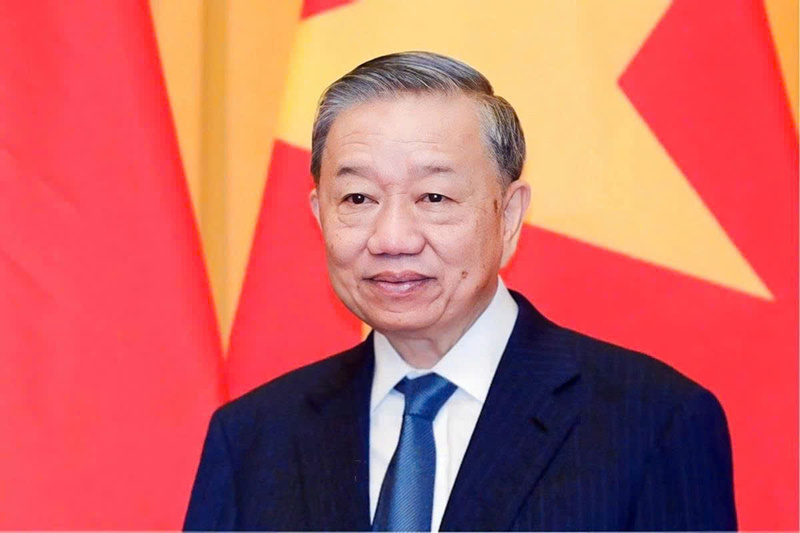
General Secretary and President To Lam delivers a policy speech at Tsinghua University. Photo: VNA
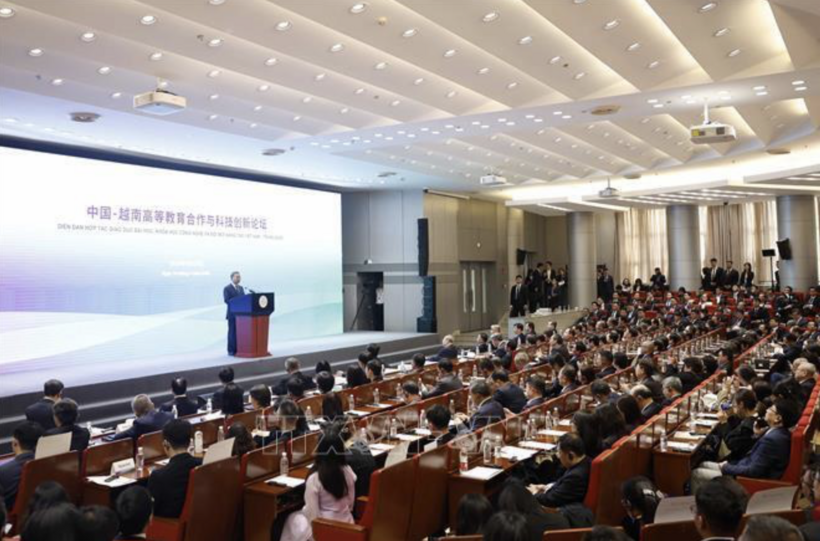
Also attending were members of the Vietnamese high-level delegation; Yin Li, Member of the Political Bureau and Secretary of the Beijing Municipal Party Committee; leaders from the Ministry of Education of China and Vietnam’s Ministry of Education and Training; along with numerous professors, lecturers, and students of Tsinghua University.
Addressing faculty members and students, General Secretary emphasized that Tsinghua University has educated many great friends of the Vietnamese people, including outstanding leaders of China such as General Secretary and President Xi Jinping, along with many other Party and State leaders of China.
He underscored that Vietnam and China are neighboring countries sharing many cultural similarities and long-standing traditions. Geography has bound the two nations together through shared mountains and rivers, while history has connected them through thousands of years of exchanges.
The peoples of both countries have steadfastly nurtured this relationship with sincerity and a shared aspiration for peace, stability, and development. The Party, State, and people of Vietnam consistently regard the development of relations with China as an objective requirement, a strategic choice, and a top priority in Vietnam’s foreign policy of independence, self-reliance, multilateralization, and diversification. This consistent policy reflects the fundamental and long-term interests of both countries, aligns with the aspirations of their peoples, and contributes significantly to regional and global peace, stability, cooperation, and development.
General Secretary and President To Lam delivers a policy speech at Tsinghua University. Photo: VNA
He expressed his satisfaction with the positive progress in cooperation between Vietnamese educational and research institutions and Tsinghua University. Leaders on both sides have identified priority areas such as artificial intelligence, semiconductors, science and technology, and high-quality human resource training. These directions, he noted, are both timely and essential, and should be further expanded in the future.
Currently, approximately 25,000 Vietnamese students are studying in China, reflecting the growing depth of educational exchange between the two countries. He expressed confidence that Vietnamese students in China, including those at Tsinghua, serve as bridges of friendship, cultural ambassadors, and representatives of Vietnam’s spirit of learning, openness, and aspiration for advancement. Likewise, Chinese students studying and conducting research in Vietnam contribute to strengthening mutual understanding between the two peoples.
General Secretary and President To Lam delivers a policy speech at Tsinghua University. Photo: VNA
Looking ahead, he stressed the need to further consolidate the political and social foundations of Vietnam - China relations. For bilateral ties to develop in a stable, healthy, and sustainable manner, they must be built on political trust, mutual respect, people-to-people understanding, and the shared determination of successive generations of leaders of both Parties and States. Enduring friendship, he noted, must be passed down across generations and nurtured among the people, especially the youth.
In this regard, alongside high-level exchanges and cooperation among ministries, sectors, and localities, greater attention should be paid to people-to-people exchanges, including youth, academic, cultural, educational, and tourism exchanges. This would help ensure that every citizen, particularly the younger generation, feels a sense of responsibility in preserving and enriching Vietnam - China friendship.
He called for stronger, more substantive cooperation, with strategic connectivity as the focus, tangible outcomes as the measure, and the interests of both peoples as the ultimate goal. Science, technology, innovation, and digital transformation, he said, should become new highlights and pillars of bilateral relations in the new era.
Vietnam is entering a new development phase, in which science, technology, innovation, and digital transformation are identified as key drivers for achieving strategic goals toward 2030 and 2045. He affirmed that Vietnam places particular importance on cooperation with China in complementary areas such as artificial intelligence, big data, cloud computing, semiconductors, automation, robotics, green technology, biotechnology, new materials, clean energy, and other strategic technology sectors.
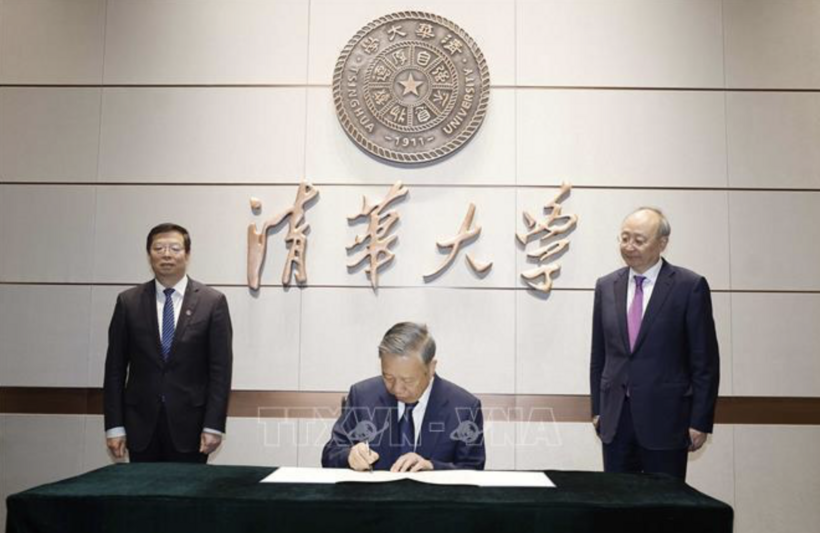
General Secretary and President To Lam signs the guestbook at Tsinghua University. Photo: VNA
He expressed hope that Vietnam - China cooperation will not only grow stronger in trade and investment, but also in knowledge, technology, innovation, and future-building capacity.
Youth as a bridge for bilateral friendship
Within this vision, education and training, along with the development of high-quality human resources, must be prioritized above all. To advance in the 21st century, Vietnam needs a new generation equipped with strong scientific foundations, the ability to master modern technologies, innovative thinking, and the capacity for global integration.
Vietnam hopes that more of its students, researchers, and young scientists will have opportunities to study and conduct research at leading institutions in China, including Tsinghua University. He also expressed the desire for Tsinghua to further expand cooperation with Vietnamese universities and research institutes through student and academic exchanges, joint training programs, collaborative research, co-supervised programs, and the establishment of joint research groups and laboratories in key fields.
He further emphasized the importance of deepening youth connectivity between the two countries, enabling young people to become both inheritors of friendship and pioneers in shaping the future. He encouraged Vietnamese and Chinese youth not only to learn from each other but also to collaborate in innovation, entrepreneurship, and addressing major development challenges, from education, healthcare, environment, and energy to smart cities, green agriculture, and the digital economy.
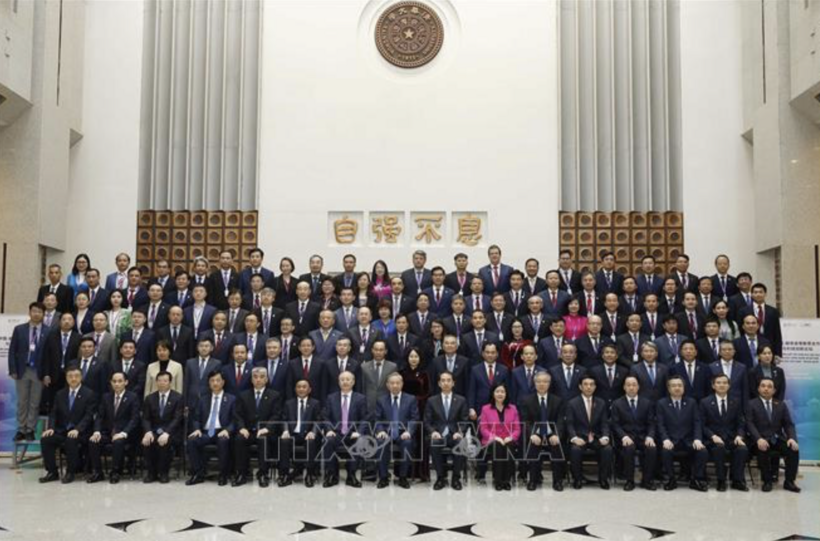
General Secretary and President To Lam and delegates from both countries pose for a group photo. Photo: VNA
Alongside expanding cooperation, both sides should continue to maintain a peaceful and stable environment, enhance strategic coordination, and properly manage existing differences.
Building on the legacy of friendship carefully cultivated by previous generations, with trust as the foundation, substantive cooperation as the driving force, science and innovation as breakthroughs, and youth as the bridge to the future, To Lam expressed confidence that Vietnam - China relations will continue to develop in a positive, stable, and sustainable manner, bringing tangible benefits to both peoples and contributing to peace, cooperation, and development in the region and the world.
On this occasion, General Secretary and President To Lam signed the university’s guestbook, expressing his admiration for the dedication of faculty members and the academic spirit of students that have created a high-quality educational environment. He also praised the Tsinghua spirit of “self-discipline and social commitment,” noting it as a shared noble value between the peoples of Vietnam and China.
Party General Secretary, State President To Lam, his spouse and a high-ranking Vietnamese delegation will pay a state visit to Singapore from May 29-31, 2026.
Amid a sharp decline in export rice prices, Vietnam’s Ministry of Industry and Trade is rolling out a series of coordinated measures aimed at expanding markets and enhancing the value of Vietnamese rice.
Vietnam and Malaysia are seeking deeper energy cooperation and stronger regional connectivity as ASEAN accelerates energy transition efforts and cross-border power integration amid global market volatility.
The Vietnam - Thailand relations continue to deepen, unlocking new opportunities in trade, investment, green energy, high technology and regional supply chains.
Party General Secretary, State President To Lam, his spouse and a high-ranking Vietnamese delegation will pay a state visit to Singapore from May 29-31, 2026.
Vietnam and Malaysia are seeking deeper energy cooperation and stronger regional connectivity as ASEAN accelerates energy transition efforts and cross-border power integration amid global market volatility.
The Vietnam - Thailand relations continue to deepen, unlocking new opportunities in trade, investment, green energy, high technology and regional supply chains.
Labeling regulations across RCEP markets are becoming increasingly diverse and fragmented, requiring businesses to proactively stay updated in order to meet technical requirements and minimize trade risks.