Fifty years after establishing diplomatic relations, economic cooperation between Vietnam and the Philippines has become increasingly substantive, creating new opportunities for trade, investment and business connectivity.
Economic cooperation continues to expand in scale and effectiveness
Over the past five decades, economic and trade cooperation has become one of the key pillars of Vietnam-Philippines relations. Alongside the steady development of political ties and growing mutual trust between the two countries' leaders, economic cooperation has expanded significantly in scale, depth and effectiveness.
This progress is clearly reflected in bilateral trade figures. Two-way trade maintained an average annual growth rate of more than 10 percent during the 2015-2025 period, rising from USD 2.92 billion to USD 7.8 billion. In the first five months of 2026 alone, bilateral trade reached USD 3.74 billion. Vietnam's exports to the Philippines totaled USD 2.7 billion, up 8.3 percent year-on-year, while imports from the Philippines stood at USD 1.05 billion, up 0.6 percent. Vietnam recorded a trade surplus of USD 1.64 billion, an increase of 13.9 percent from the same period last year. The figures indicate that Vietnam's exports to the Philippine market continue to maintain strong growth momentum.
The Philippines is currently one of Vietnam's key markets within ASEAN, particularly in agriculture and food products. At the same time, the trade structure between the two countries has become increasingly diversified and complementary, helping strengthen economic linkages.
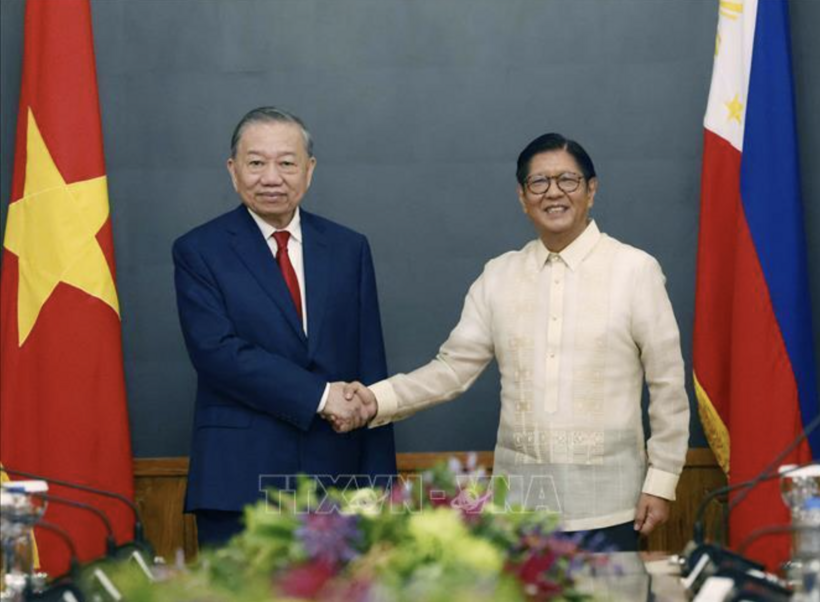
Building on decades of cooperation, during the State visit to the Philippines by General Secretary and State President To Lam from May 31 to June 1, 2026, the two countries issued a Joint Statement upgrading bilateral ties to an Enhanced Strategic Partnership. This historic milestone made Vietnam the only ASEAN member to establish an Enhanced Strategic Partnership with the Philippines.
General Secretary and State President To Lam and Philippine President Ferdinand Romualdez Marcos Jr. pose for a group photo ahead of their talks on June 1, 2026. Photo: Thong Nhat/VNA.
Under the new framework, both sides agreed on broad orientations aimed at creating breakthroughs in economic cooperation, delivering tangible benefits to their people and supporting national development. They also pledged to work toward raising bilateral trade to more than USD 10 billion in a balanced manner by expanding two-way trade opportunities, improving market access and reducing trade and investment barriers.
From the perspective of supporting Vietnamese businesses in the Philippine market, Le Phu Cuong, Vietnam's Trade Counsellor in the Philippines, said bilateral economic and trade relations have made remarkable progress over the past 50 years, particularly since the two countries upgraded ties to a Strategic Partnership in 2015.
According to Trade Counsellor Le Phu Cuong, three key highlights have characterized bilateral economic cooperation: impressive trade growth, increasingly complementary trade structures, and stronger engagement between the two countries' business communities. Vietnam is not only the leading supplier of agricultural products, especially rice, accounting for more than 80 percent of the Philippines' rice imports, but has also significantly expanded exports of industrial products, including construction materials, cement, steel, electronic components and consumer goods. In return, Vietnam imports a wide range of production inputs from the Philippines, particularly electronics and components.
"Strategic trust has been strengthened through high-level visits and meetings of the Joint Committee on Trade Cooperation (JCTC), creating a more favorable legal framework, facilitating two-way investment flows and making bilateral trade increasingly dynamic," Le Phu Cuong said.
Opening new avenues for cooperation
Building on the solid foundation established over many years, Vietnam–Philippines economic relations are entering a new phase marked by broader cooperation and deeper economic integration. Beyond traditional sectors, a number of emerging industries are expected to become new growth drivers for bilateral trade and investment.
Drawing on developments in the Philippine market, Le Phu Cuong identified three sectors with strong potential to drive future economic cooperation: the digital economy and e-commerce, renewable energy and the green economy, and fisheries together with value-added food processing. He noted that the digital economy and e-commerce are expected to become new growth engines as both Vietnam and the Philippines have young populations and are undergoing rapid digital transformation.
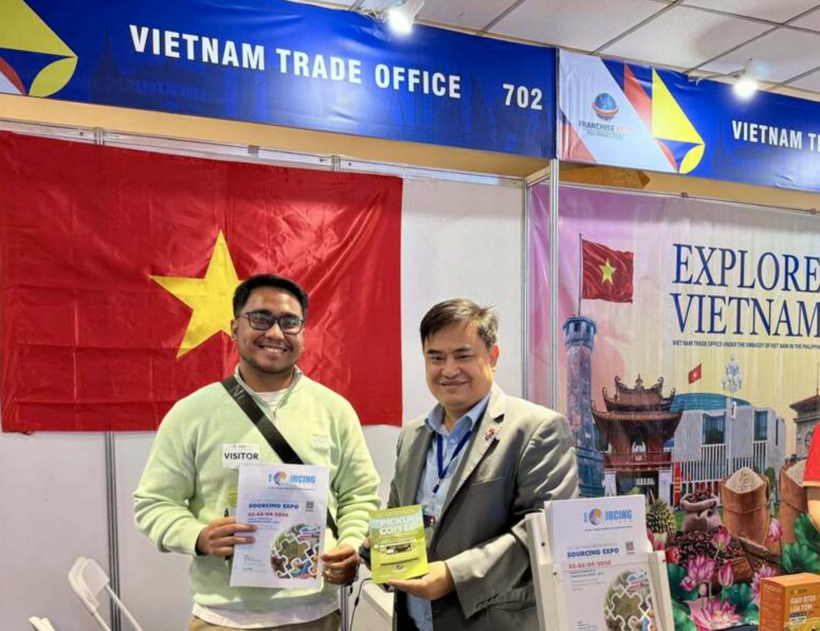
Le Phu Cuong (right), Vietnam's Trade Counsellor in the Philippines, attends a trade promotion event. Photo: Courtesy of the interviewee.
"Both Vietnam and the Philippines have young populations and are experiencing exceptionally rapid digitalization. Cooperation in technology solutions, last-mile logistics platforms and cross-border payment systems offers fertile ground for technology companies from both countries," he said.
Renewable energy and the green economy are also seen as promising areas as demand for energy transition continues to rise across the region. The Philippines is stepping up efforts to attract investment in solar and wind power to reduce its dependence on fossil fuels. With its experience in developing renewable energy, Vietnam is well positioned to cooperate through technology sharing or joint investment projects in the Philippines.
In agriculture, cooperation is also moving beyond traditional products. Rising demand for value-added processed food in major urban centers such as Metro Manila, Cebu and Davao is creating new opportunities for Vietnamese businesses to expand their presence. Le Phu Cuong also highlighted the Halal food segment as a particularly promising market in the years ahead.
The Vietnam Trade Office in the Philippines will continue to proactively monitor changes in Philippine tax policies, technical barriers and consumer trends to provide Vietnamese enterprises with timely market information, forecasts and early warnings.
At the same time, trade promotion activities will continue to be made more practical and market-oriented. In addition to maintaining Vietnam pavilions at major trade fairs, the Trade Office is strengthening both in-person and online business matching, bringing Philippine business delegations to Vietnam to source products while supporting Vietnamese companies in reaching potential partners.
To help businesses expand with confidence, the Trade Office also actively verifies the credibility of Philippine importers and coordinates efforts to resolve disputes and contractual issues that may arise during commercial transactions.
Le Phu Cuong advised Vietnamese enterprises seeking to better tap the Philippine market to carefully study differences in consumer demand and distribution systems across regions, while focusing on building credibility, maintaining consistent product quality, investing in branding, packaging and labeling, and registering intellectual property rights to enhance the value of Vietnamese products.
The proactive efforts of businesses, together with the support of Vietnam's Trade Office network, will be crucial in translating the two countries' cooperation potential into concrete investment projects, commercial contracts and stronger production and business linkages. This will also provide the foundation for achieving the cooperation goals agreed upon by the two countries' leaders under the Enhanced Strategic Partnership.
The upgrade to an Enhanced Strategic Partnership provides a favorable framework for Vietnam and the Philippines to further expand economic, trade and investment cooperation. It also creates a solid basis for strengthening business connectivity, unlocking untapped cooperation potential and working toward the shared goal of raising bilateral trade beyond USD 10 billion.
Fifty years after establishing diplomatic relations, economic cooperation between Vietnam and the Philippines has become increasingly substantive, creating new opportunities for trade, investment and business connectivity.
Vinh Long is strengthening e-commerce governance through training programmes to support implementation of the 2025 E-Commerce Law, accelerate digital transformation.
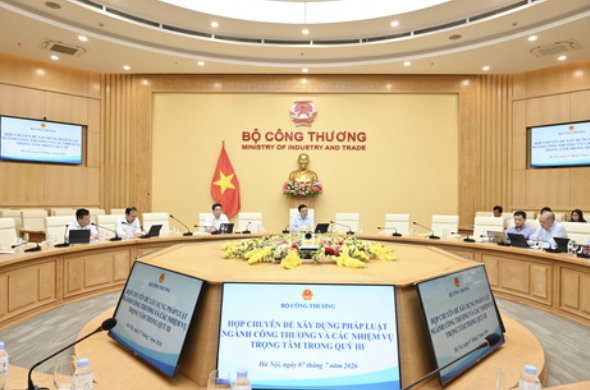
The Ministry of Industry and Trade is accelerating key legislative work and preparing a legal reform strategy through 2030 to strengthen institutional capacity.
The Ministry of Industry and Trade is accelerating key legislative work and preparing a legal reform strategy through 2030 to strengthen institutional capacity.
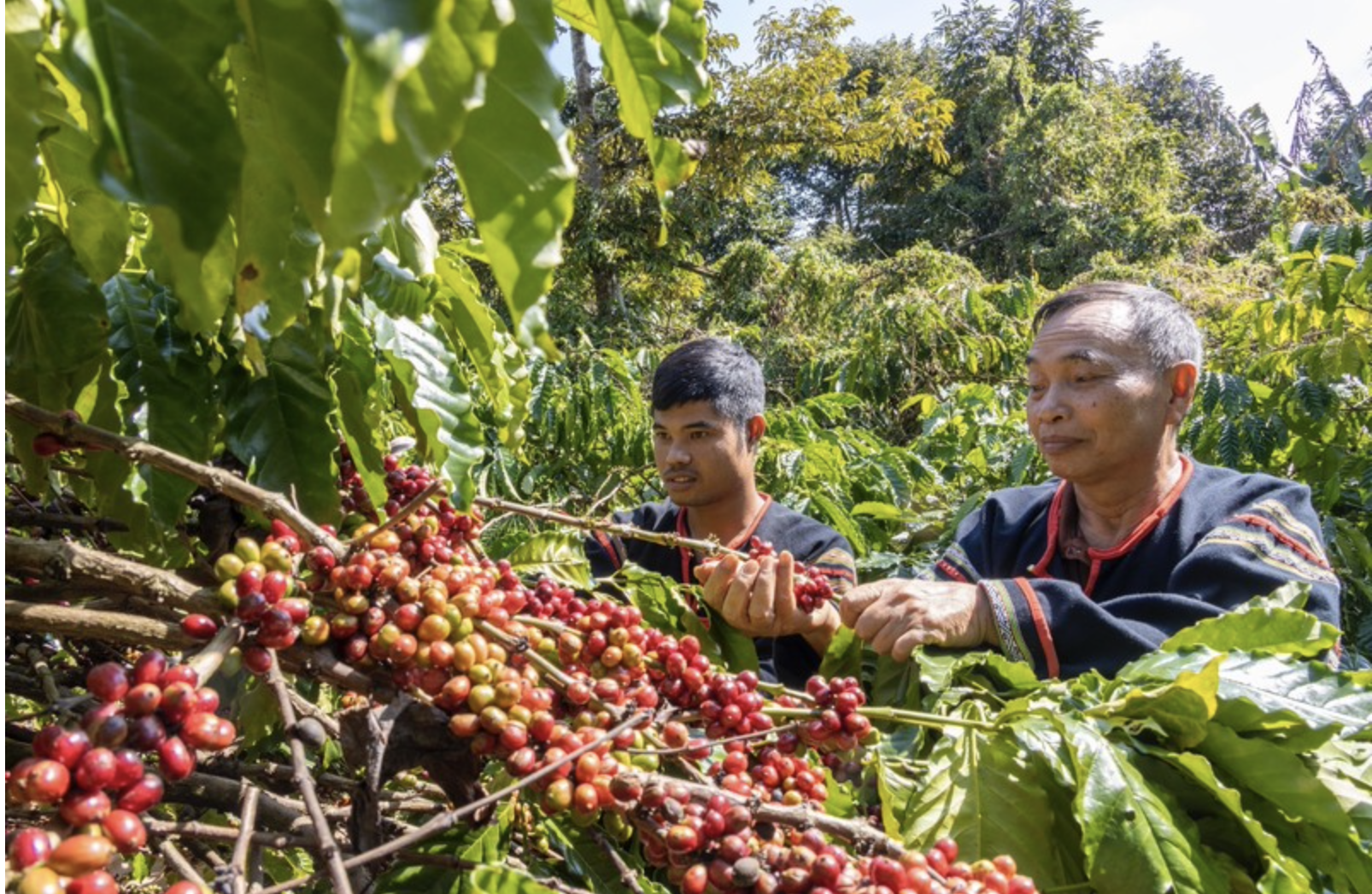
Improving supply chain quality, expanding food processing, and increasing product value will be key to helping Vietnamese agricultural products expand their market share in the U.S.
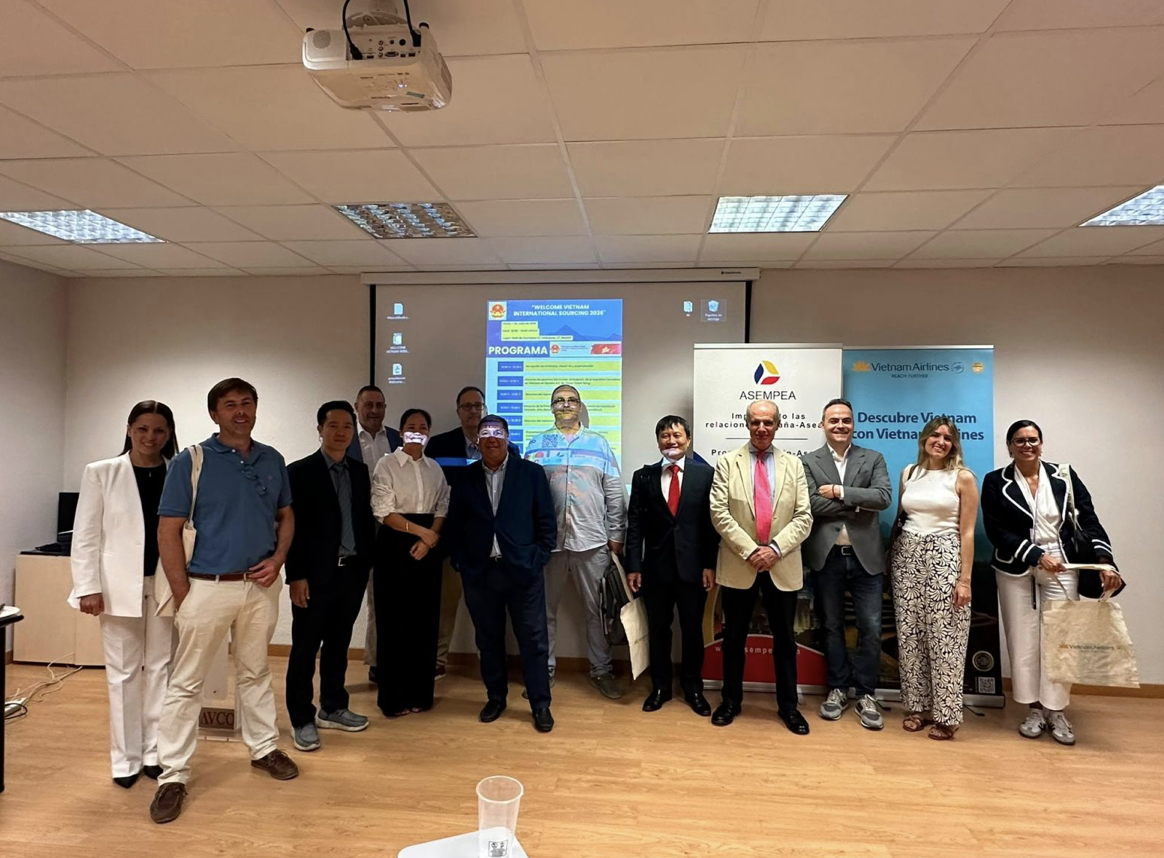
The Vietnam Trade Office in Spain introduced VIS 2026 while highlighting new opportunities for trade, investment and business partnerships between Vietnam and Spain.
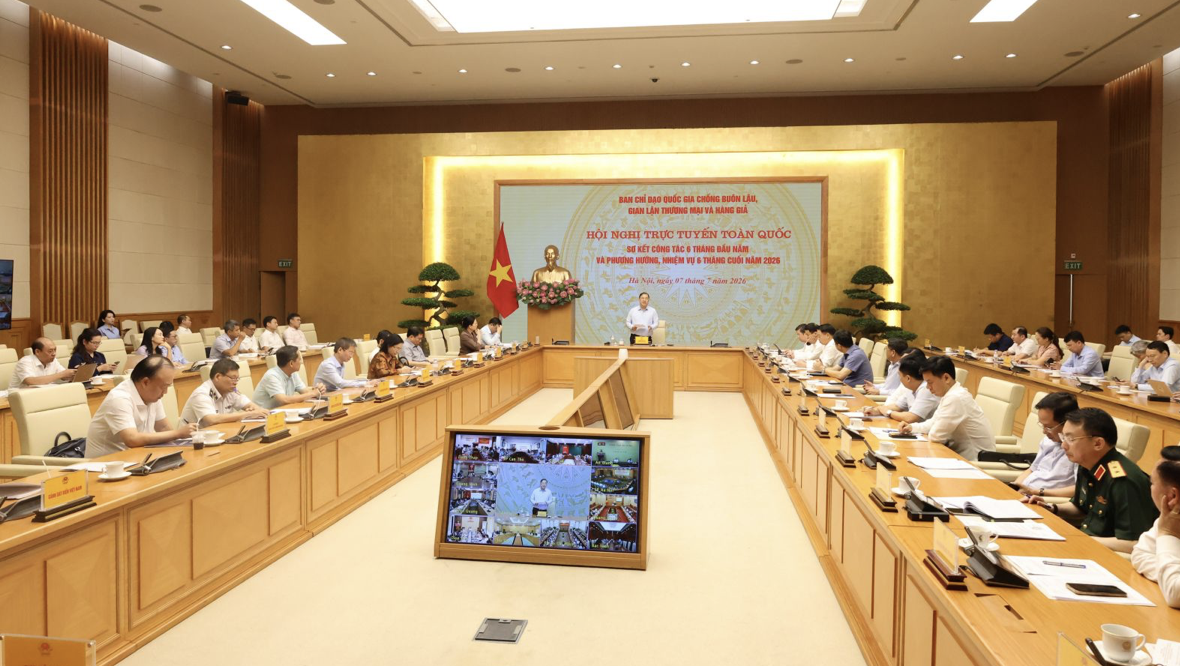
Ministry of Industry and Trade removed more than 9,000 infringing products and blocked over 2,000 online stores in a nationwide crackdown on counterfeit goods.
Vietnam's domestic market remained resilient in the first half of 2026 despite global turbulence, with inflation under control and retail sales continuing to grow.