Entering 2026, Vietnam’s seafood sector is redefining growth through innovation, green standards and transparency, turning pressure from global markets into momentum
Adapting and innovating to break through the “transparency game”
As 2026 marks the opening year of the 2026–2030 Five-Year Development Plan, Vietnam’s fisheries sector is facing both significant opportunities and unprecedented pressure. Global trade continues to fragment, while green, responsible and transparent standards have become a mandatory “passport” for market access. At the same time, competition over pricing, raw materials and supply chains is intensifying.Against this backdrop, Vietnam’s seafood exports can no longer grow along traditional lines, but must be repositioned through adaptability and comprehensive innovation.
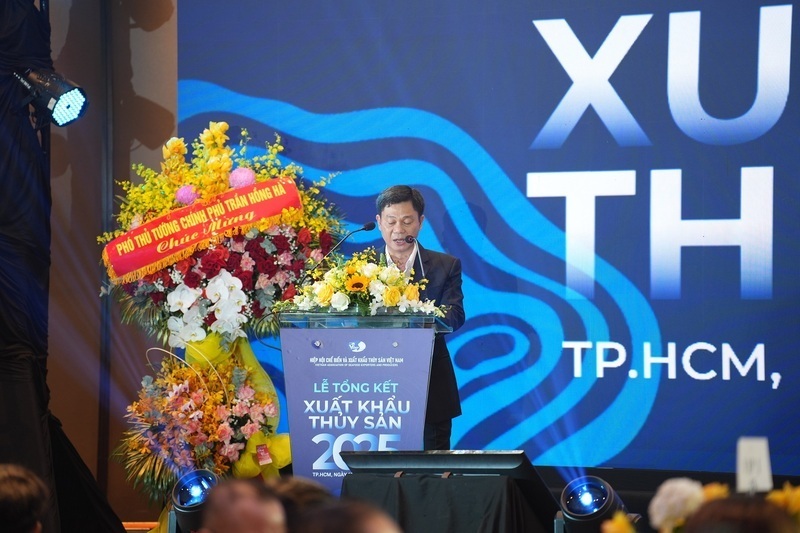
Do Ngoc Tai, Chairman of the Vietnam Association of Seafood Exporters and Producers (VASEP).
At the 2025 Seafood Export Review Conference, Do Ngoc Tai, Chairman of the Vietnam Association of Seafood Exporters and Producers (VASEP), set out the overarching spirit for the sector in 2026: “Proactive adaptation - Innovation - Sustainable development.” This, he stressed, is not merely a slogan but a guiding principle for Vietnam’s seafood business community as it responds to increasingly stringent international market requirements.
According to the VASEP Chairman, three major priorities have been clearly identified. First is market expansion and competitiveness enhancement, through stronger trade promotion, market communication, technical-barrier support, supply-chain connectivity and timely updates on new regulations. As many markets tighten controls related to environmental protection, labor standards and traceability, the ability to stay “one step ahead” on information and compliance will determine the resilience of exports.
In parallel, VASEP has identified the shift toward green, transparent and responsible development as a mandatory requirement rather than an option. Digital transformation in supply-chain management, transparency in raw material sourcing, and compliance with international environmental and social standards are increasingly becoming core competitive advantages, rather than mere compliance costs.
Notably, the Association continues to work closely with the Government and local authorities to stabilize fishermen’s livelihoods, reduce pressure on marine exploitation, and promote responsible aquaculture and marine fishing. This is seen as a critical factor in ensuring the sector’s long-term development foundation, amid growing stress on marine resources.
A “green trajectory” for exports: from lifting the IUU yellow card to opening new markets
If businesses are at the center of innovation, then the policy framework and international integration serve as decisive pillars for seafood exports in 2026. Phung Duc Tien, Deputy Minister of Agriculture and Environment, emphasized that the issue of the IUU yellow card has never been addressed with such urgency. Under the direct guidance of the Prime Minister, the entire political system is now acting decisively to remove this warning.
Three key groups of solutions are being implemented in a coordinated manner: tighter management of fishing fleets through vessel monitoring systems (VMS); full digitalization of seafood traceability data; and strict enforcement against illegal fishing in foreign waters. According to the Deputy Minister, these measures are not only aimed at removing trade barriers, but also represent a fundamental shift toward building a transparent and responsible fisheries sector, steering Vietnam’s seafood industry back onto a “green trajectory.”
Importantly, the Ministry of Agriculture and Environment has called on enterprises to engage in substantive partnership, proactively reviewing and streamlining their entire supply chains. Deeper integration means accepting the “rules of transparency,” with no grey areas and no exceptions. This is the foundation for realizing the goal of USD 14-16 billion in seafood exports by 2030, reinforcing seafood as a key pillar of the national economy.
From the perspective of foreign affairs and market expansion, Nguyen Minh Hang, Deputy Minister of Foreign Affairs, outlined three breakthrough strategic directions for the 2026 period. The first is diversifying export markets consolidating traditional markets while accelerating penetration into high-potential regions such as the Middle East, Africa, South America and Halal markets, where demand is strong but Vietnamese enterprises remain underrepresented.
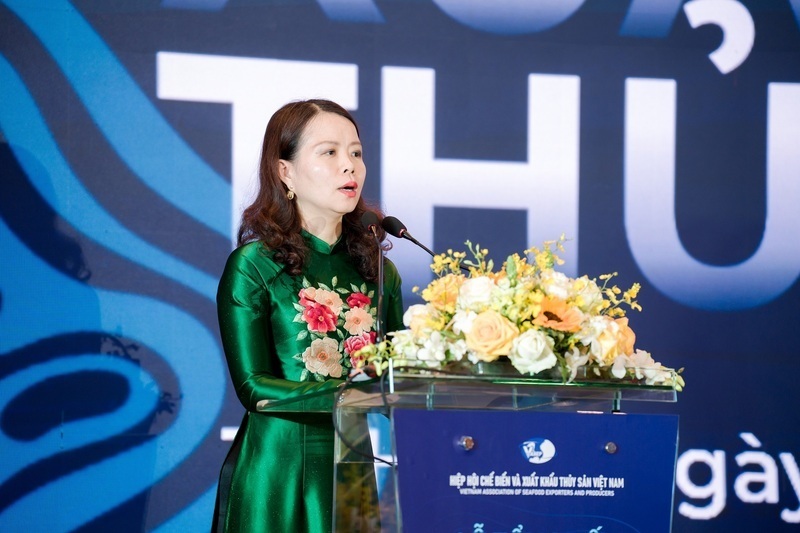
Nguyen Minh Hang, Deputy Minister of Foreign Affairs.
Second, investment and on-site production in partner markets are viewed as a new strategic step. Leveraging local raw materials, reducing logistics costs and exporting directly within consumer markets can significantly enhance the competitiveness of Vietnamese seafood enterprises, particularly amid ongoing global cost volatility.
Finally, the effective use of export promotion funds under the National Assembly’s new resolution on international integration is expected to provide additional resources for businesses especially in branding, market expansion and meeting high standards supporting sustainable export growth in the years ahead.
The FTA Vietnam - EFTA creates new opportunities for Vietnamese businesses while encouraging stronger competitiveness, compliance and sustainable development.
Ministry of Industry and Trade removed more than 9,000 infringing products and blocked over 2,000 online stores in a nationwide crackdown on counterfeit goods.
Sustainable production and consumption are becoming business imperatives as companies invest in greener technologies, circular design and digital transformation.
Vietnam's domestic market remained resilient in the first half of 2026 despite global turbulence, with inflation under control and retail sales continuing to grow.
From 29 June, Vietnam’s domestic carbon market officially entered its pilot phase, marking a transition from emissions management through administrative command-and-control measures to a market-based mechanism.
The FTA Vietnam - EFTA creates new opportunities for Vietnamese businesses while encouraging stronger competitiveness, compliance and sustainable development.
In an interview with the press regarding the Free Trade Agreement (FTA) between Vietnam and the European Free Trade Association (EFTA), Deputy Minister of Industry and Trade Nguyen Sinh Nhat Tan emphasized that the agreement will lay the foundation for economic relations between Vietnam and EFTA to enter a new stage of development.
At a second-quarter 2026 conference, the MoIT urged Vietnam's Trade Offices abroad to strengthen intelligence and help exporters adapt to changes and expand exports.
Vietnam and Israel discuss strengthening VIFTA implementation to expand trade, investment and cooperation, aiming to boost bilateral economic ties and market access.
More than 100 businesses attend the Vietnam-Japan Investment and Trade Cooperation Conference in Osaka to strengthen investment, trade and supply chain connectivity.