Vietnam’s coffee and fruit exports hit record levels in 2025, driven by rising global demand, stable prices and expanded market access under new protocols.
Vietnam’s agricultural sector posted a strong leap in 2025, with coffee and fruit exports both reaching record levels over the first 11 months, laying the foundation for a new cycle of investment, processing and export standardization. The uptrend is driven by rising global demand, high export prices and a series of policy measures, including new export protocols with China, which are pushing businesses to shift from competing on volume to competing on quality and standards.
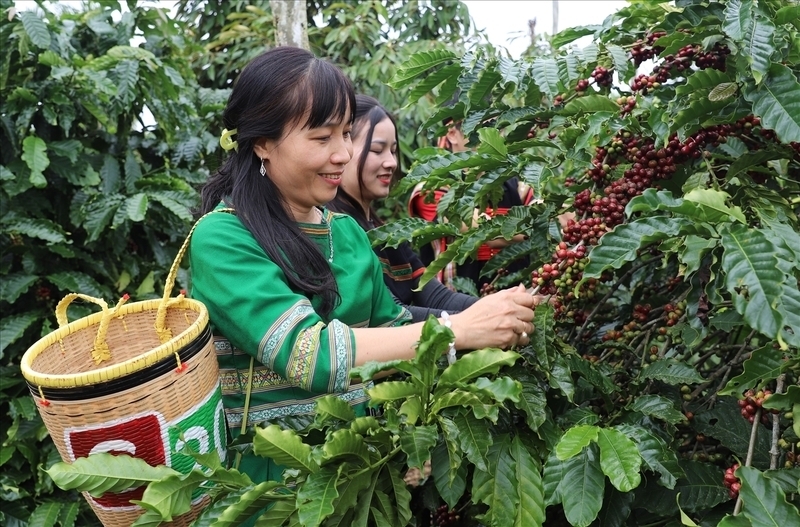
Coffee sets new records as markets expand
According to the Ministry of Agriculture and Environment, Vietnam exported 1.4 million tonnes of coffee worth USD 7.88 billion in the first 11 months of 2025, the highest level ever recorded. Export volume rose 14.1%, while value surged 59.7%, thanks to an average export price of USD 5,667.6 per tonne, nearly 40% higher year-on-year.
Germany, Italy, and Spain accounted for nearly 30% of total export value. Shipments to Germany jumped 95%, Italy 57.1% and Spain 48.8%. A standout performer was Mexico, where exports increased 26-fold, reflecting the success of Vietnamese firms in tapping into new consumption channels.
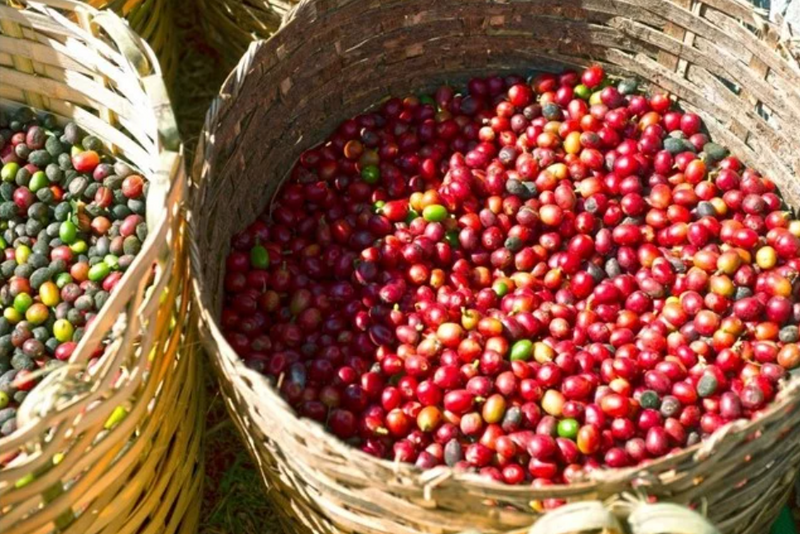
In the first 11 months of 2025, Vietnam exported 1.4 million tonnes of coffee worth USD 7.88 billion, the highest level on record.
Domestically, farm-gate prices softened entering the harvest season: in early December, prices in the Central Highlands hovered between VND 102.800 and 103.600 per kg, down about VND 15.000 from the previous month. On global exchanges, both Robusta and Arabica declined as supplies from Vietnam and Brazil rose and Brazil’s real weakened. Still, VICOFA experts said prices are unlikely to fall sharply, as farmers continue to hold back stocks after two profitable seasons; Robusta is expected to remain above USD 4.000 per tonne.
Despite market and weather risks, both large and small companies accelerated investment this year. HAGL Group announced Arabica as its strategic crop, with 2.000 hectares already planted and plans to expand to 10.000 hectares across Vietnam and Laos by 2027, focusing 70% on Arabica. Other firms are ramping up deep processing roasted, instant and specialty coffee although green beans still account for 91% of export volume, showing significant room to boost value addition.
Fruits and vegetables exceed USD 7.9 billion, driven by durian and coconut
Fruit and vegetable exports remained a key pillar, reaching USD 7.91 billion in the first 11 months of 2025, up 19.5% year-on-year. China dominated with 64.1% of total value, while the US and the Republic of Korea accounted for 6.4% and 3.7% respectively. Exports to the US surged 58.3%; Malaysia recorded a sharp 77.5% increase.
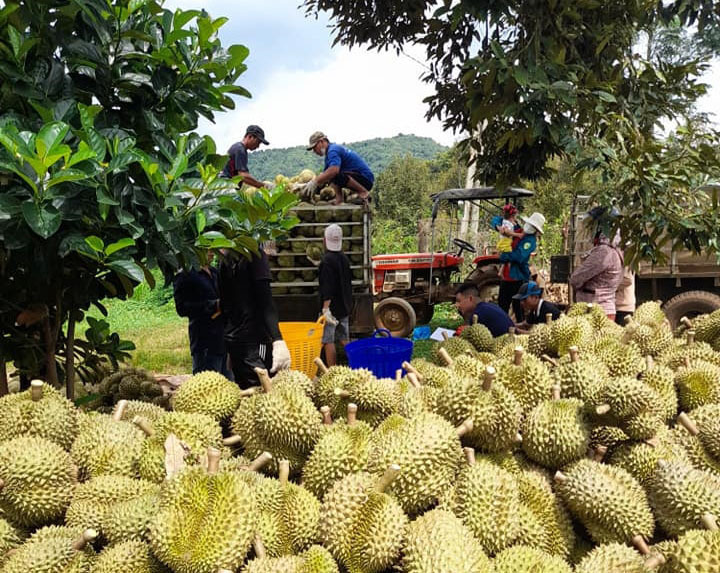
Durian continued to lead the sector with an estimated USD 3.7 billion over 11 months. The Vietnam Fruit and Vegetable Association expects durian exports to reach USD 4 billion for the full year. Coconut is emerging as a new growth engine, with export value projected at USD 1.1 - 1.15 billion, driven largely by fresh coconuts.
In the first 10 months, durian exports reached nearly USD 3.34 billion, up 10.4%, officially surpassing the USD 3.2 billion recorded for all of 2024.
A major boost came from the new export protocol for fresh jackfruit to China, signed on November 27, 2025 opening a formal channel for a crop grown on large acreage but long dependent on informal border trade. The protocol requires coded growing areas and packing facilities, adherence to GAP, pesticide supervision and strict logistics procedures, marking a turning point that reduces policy risk and enhances long-term value.
According to the Crop Production and Plant Protection Department, Vietnam currently has 9.334 coded growing areas and 1.752 coded packing facilities. In November alone, authorities issued 48 new growing-area codes and revoked non-compliant ones, evidence that standardization efforts are accelerating.
Experts emphasize that to avoid overreliance on seasonal advantages or short-term price swings, businesses must lead the value chain. This includes continuous market analysis, long-term contracts with farmers, investment in varieties, technical support and sustainable purchasing commitments.
Record coffee and fruit exports in the first 11 months of 2025 open major opportunities for Vietnam’s agricultural sector. Yet challenges remain: volatile global prices, weather risks and increasingly strict environmental and traceability standards. Delays in implementing certain international regulations offer only a temporary “window,” not an excuse to slow reform.
Long-term success depends on transforming the value chain, from expanding acreage to boosting processing capacity; from exporting raw materials to high-value products; and from seasonal shipments to consistent, strategic market development. If businesses and farmers genuinely work hand-in-hand, Vietnam’s farm exports can continue to grow both in volume and in value in the years ahead.
Vietnam’s Ministry of Industry and Trade urges businesses to diversify markets and strengthen risk management amid escalating US, Israel, Iran tensions.
The success of the upcoming election will lay the groundwork for building a truly reformed, professional, and action-oriented 16th National Assembly capable of steering the country’s institutional reform agenda.
As transport costs make up a significant share of travel budgets, investing in spacious, stable vehicles is becoming essential for turning every journey into a comfortable and premium experience.
Prime Minister Pham Minh Chinh called for more effective use of the Vietnam - EAEU free trade pact to boost trade, investment, logistics and regional connectivity.
The revised Investment Law 2025 reduces conditional sectors and eases procedures, creating stronger momentum to attract and retain foreign capital in Vietnam.
Rising tensions in the Middle East may drive up oil prices and freight costs, disrupting Vietnam’s import-export and supply chains the Import-Export Department warns
Vietnam surpassed all 2025 socio-economic targets, with GDP growth over 8%, strong FDI inflows and record trade turnover, laying groundwork for double-digit growth.
Despite short-term fluctuations, exports to the UAE remain above USD 5 billion, reflecting a stable foothold as CEPA paves the way for deeper cooperation.