Record export results in 2025 reflect a shift in mindset, higher quality standards and growing global recognition of Vietnamese agricultural products.
Vietnam’s agri-forestry-fishery exports seize new opportunities
Vietnam’s agri-forestry-fishery exports in 2025 can truly be described as “in full bloom.” Following the direction of the Government and the Prime Minister, ministries and agencies such as the Ministry of Industry and Trade and the Ministry of Agriculture and Environment proactively rolled out a wide range of solutions to address trade barriers, food safety issues and market expansion.
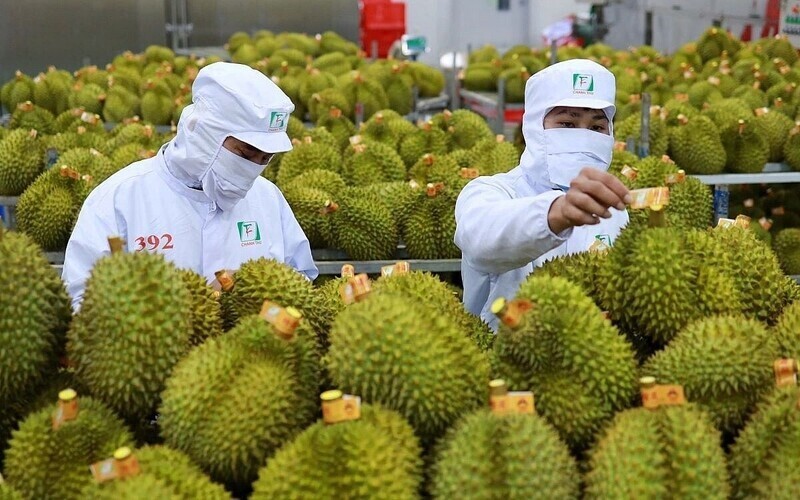
Vietnam’s agri-forestry-fishery exports hit a new record in 2025.
Trade promotion delegations were dispatched to key markets; numerous official letters and cooperation agreements were signed; and thousands of new planting area codes and packing facilities were approved effectively granting Vietnamese agricultural products a “passport” to enter global markets.
As a result, export turnover of agri-forestry-fishery products is estimated at USD 70.09 billion, up 12% year-on-year and well above the initial expectation of USD 65 billion, marking a new milestone for the sector. Of this total, agricultural products reached USD 37.25 billion (+13.7%), seafood USD 11.32 billion (+12.7%), forestry products USD 18.5 billion (+6.6%), livestock products USD 628 million (+17.4%), production inputs USD 2.38 billion (+27.1%), and salt USD 12.1 million (+84.9%). Vietnam maintained 10 export groups exceeding USD 1 billion, with three surpassing USD 8 billion: wood products at USD 11.6 billion, and coffee and fruits and vegetables both at USD 8.6 billion.
Agricultural expert Hoang Trong Thuy noted that these figures did not emerge overnight. They reflect a long period of preparation, market opening, quality upgrading, trade promotion and the removal of technical barriers. More importantly, they mark a shift from a mindset of merely “selling what we have” to one of “building markets and creating demand.” Vietnamese agricultural products are entering a new phase in which quality is no longer just a requirement, but a matter of survival.
Not just exporting more, but exporting smarter
Behind the impressive export figures lies a broader question: how can Vietnamese goods be not only abundant, but truly valuable branded, standardized and sustainably competitive on the global stage?
According to Luong Van Tu, Chairman of VICETA, former Chairman of the Vietnam Coffee and Cocoa Association and former head of Vietnam’s WTO negotiation delegation, the World Trade Organization has played a particularly significant role for Vietnam’s agricultural sector. It has not only opened markets, but also exerted pressure to upgrade quality standards. “Strong production capacity does not automatically translate into competitiveness. Products must meet international standards to survive in the market,” he emphasized.
In reality, Vietnam enjoys substantial natural advantages in agriculture. Coffee and pepper once led global markets; cashew nuts still hold the world’s top export position; while fruits, rice and seafood have surged strongly. A Nobel laureate visiting Vietnam once remarked that “Vietnam can become the world’s kitchen.” This was not merely praise, but a vision of Vietnam as a global supplier of high-quality food.
To become that “world’s kitchen,” however, Vietnamese products must be tasty, safe, stable and consistent. Coffee offers a telling example. When Vietnamese coffee was first traded on international exchanges, defective beans accounted for as much as 70%. After years of improvements in harvesting, processing and storage, Vietnamese coffee today is rarely rejected for quality defects. Higher quality has translated into higher value. Moving from raw exports to roasted, instant and specialty coffee, each step of deeper processing has multiplied value two-, three- or even fourfold.
The same logic applies to rice, cashew nuts, pepper and fruits. Selling raw materials yields low margins; selling finished, branded products generates far greater returns. Exporting large volumes is no longer enough; what Vietnam needs is high-value exports.
Standardization, branding and product storytelling
Another challenge that needs to be addressed is the fragmented system of standards. In some cases, a single product is subject to three different standards, enterprise-level, provincial and national creating obstacles for exporters. The absence of a unified standard limits access to high-end markets. To expand globally, Vietnam needs a clear, internationally aligned standards framework that builds confidence among importers and consumers alike.
Standardization is the foundation, but branding is what secures market positioning. Packaging, design, product stories and consumer experience all contribute emotional value. In the past, people often chose foreign products as gifts abroad; today, Vietnamese footwear, apparel, handicrafts and beverages are increasingly favored. This shift signals meaningful progress in the perception of Vietnamese goods.
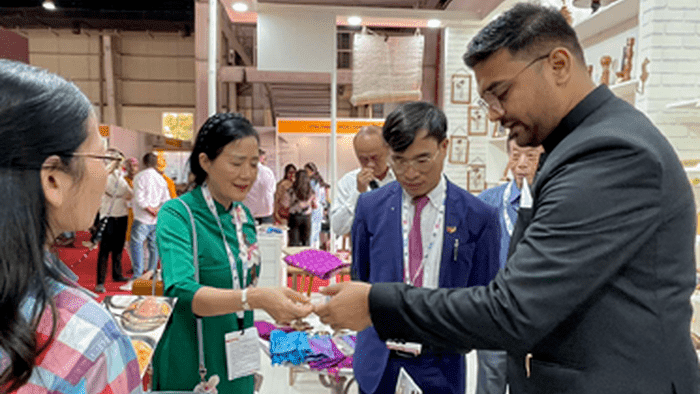
Yet communication and promotion for agricultural products remain inadequate. Good products need compelling stories. Vietnamese Goods Weeks, coffee festivals and fruit fairs are not merely showcases, they are opportunities to persuade consumers through cultural narratives, nutritional value and the journey behind each product. Vietnamese goods can be good, but they must also be well told, inspiring consumers to buy, use and recommend them.
For 2026, Prime Minister Pham Minh Chinh assigned the agriculture and environment sector a central task: diversifying markets, products and supply chains; expanding branding; promoting deep processing; and developing the domestic market alongside international ones. This is not just guidance, it is a survival pathway for Vietnamese agriculture in an era defined by quality-based competition.
Overall, Vietnam’s agri-forestry-fishery exports are widely seen as standing before a golden opportunity. Markets are opening, global demand remains strong, and Vietnamese brands are gaining recognition. Yet opportunity only turns into sustainable success if Vietnam remains committed to three pillars: when products meet international standards, markets are no longer barriers; when brands are built, value not low prices drives sales; and when product stories are told well, consumers become voluntary ambassadors for Vietnamese goods.
As Vietnamese agricultural products enter global markets with confidence and initiative, there is every reason to expect a future in which Vietnam is not merely a production hub, but a global supplier of premium food value.
2025 was a year of success. 2026 will be a year of resilience. And if Vietnam stays the course, the future will be a year of strengthened national standing on the world agricultural map.
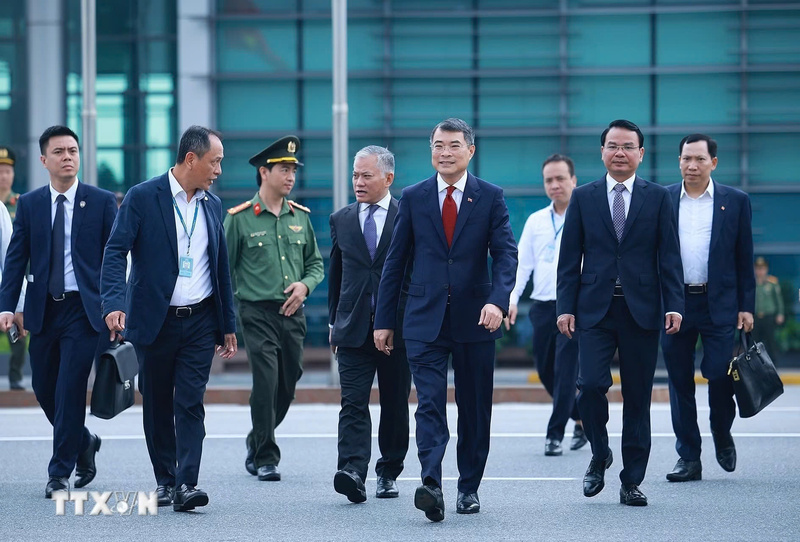
Prime Minister Le Minh Hung attends the 48th ASEAN Summit in Cebu, reaffirming Vietnam’s strong commitment to ASEAN cooperation and regional resilience.
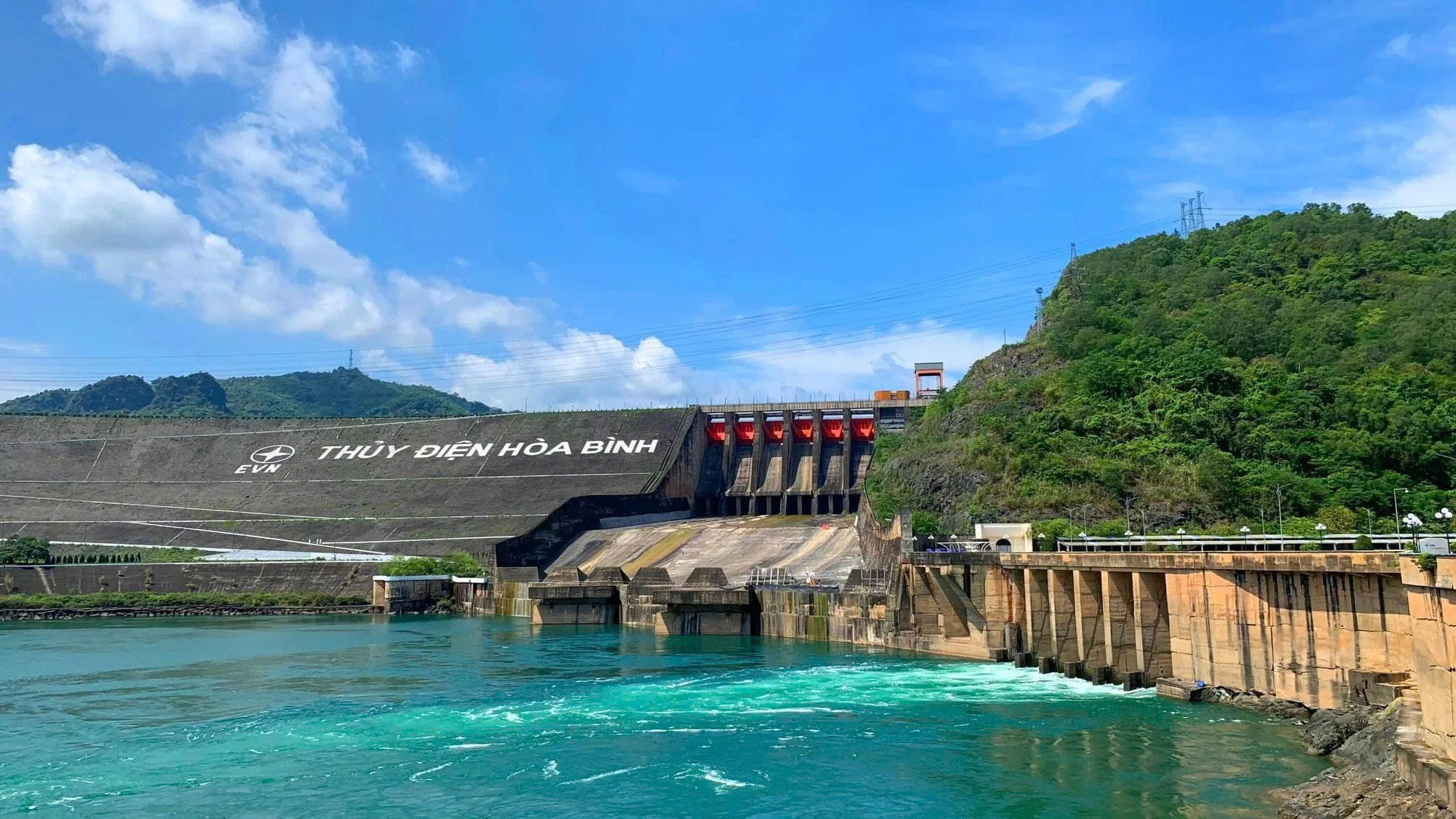
The Ministry of Industry and Trade is seeking feedback on a draft decree on power works protection and hydropower safety, set to replace Decree No. 62/2025/ND-CP.
The State visit by Vietnam’s top leader to Sri Lanka on May 7 - 8 underscores deepening bilateral ties, paving the way for expanded cooperation in trade and investment, and stronger engagement with South Asia.
On the afternoon of May 4, Prime Minister Le Minh Hung chaired the Government’s regular meeting for April 2026, the first such session of the 16th-term Government.
More than 300 companies are set to participate in business matching activities at the International Electronics and Smart Appliances Expo Vietnam (IEAE 2026), scheduled to take place from May 28 to 30 in Ho Chi Minh City.
Vietnam has issued a plan to implement the Law on E-commerce, defining tasks, timelines and coordination to ensure effective enforcement from July 1, 2026.
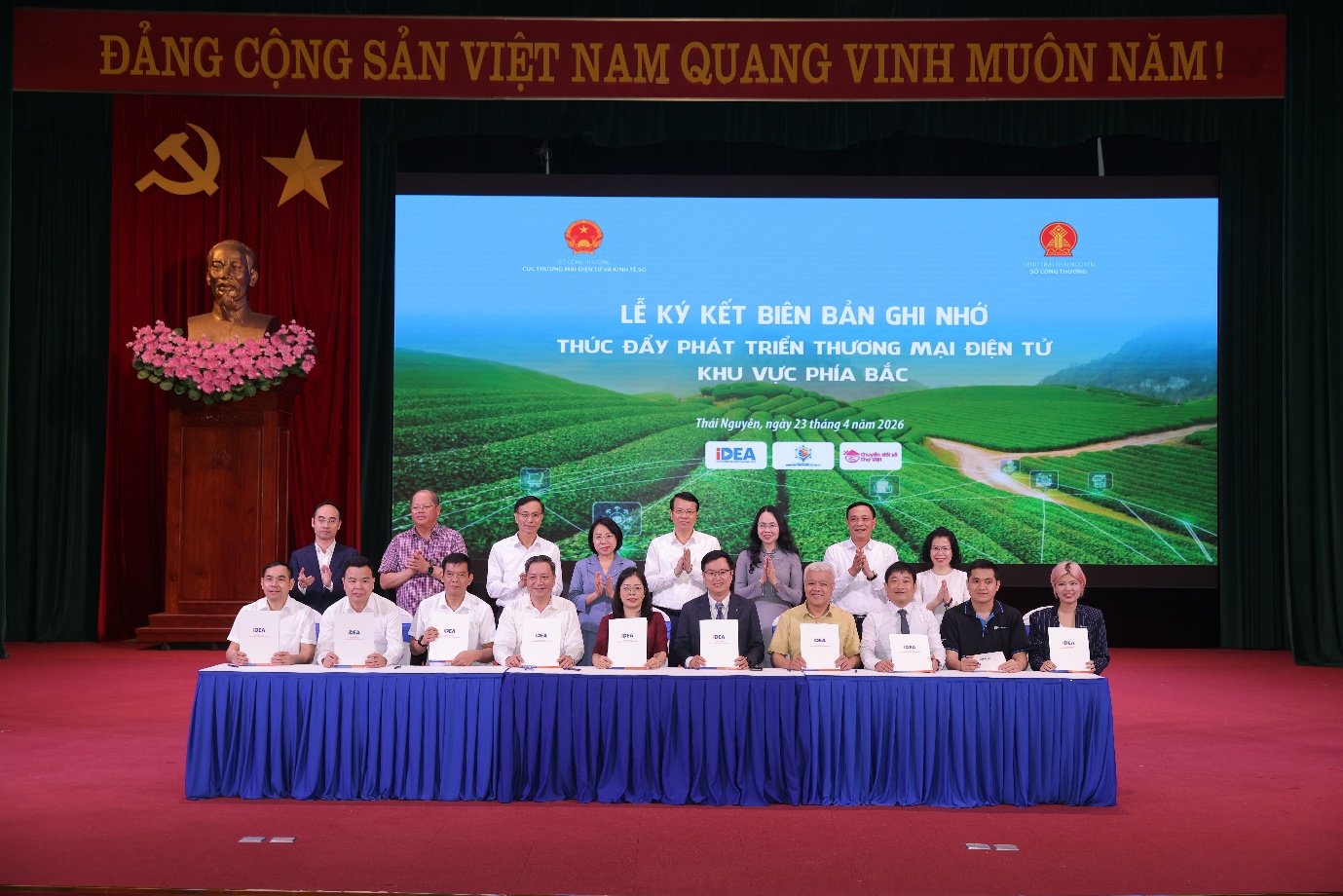
The programme in Thai Nguyen promotes e-commerce in northern Vietnam, linking localities with digital firms to expand markets and boost Vietnamese goods.