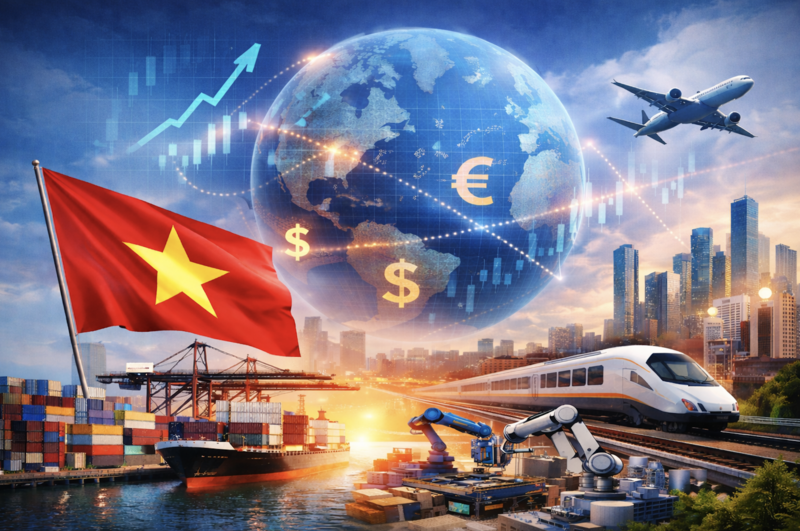
Global monetary easing, supply chain restructuring and stable energy prices are opening new opportunities for Vietnam’s industry and trade in 2026.
Vietnam amid global economic shifts
A report by the Institute for Strategic and Industrial Policy Research shows that as 2026 begins, the global economy continues to undergo adjustments, with intertwined risks and supportive factors for developing economies, including Vietnam.
A notable trend is the global monetary easing cycle, as the US Federal Reserve (Fed) continues cutting interest rates and the US dollar weakens, creating a less strained international financial environment compared with previous periods.
Global developments create positive momentum for Vietnam’s industry and trade.
In this context, exchange rate pressures on Vietnam have eased, while the cost of importing raw materials and production equipment has moderated. This provides favorable conditions for industrial enterprises particularly those heavily dependent on imported inputs such as manufacturing, textiles and garments, and electronics to improve profit margins and maintain stable production.
At the same time, lower global interest rates are helping businesses access capital at more reasonable costs, creating room for investment in technological upgrades and capacity expansion.
Alongside monetary and financial factors, adjustments in trade and investment policies by major economies are accelerating the restructuring of global supply chains toward more diversified and multi-centered models.
The US adjustment of tariff policies toward the Republic of Korea, linked to large-scale investment commitments, is encouraging Korean technology conglomerates to expand production overseas. Vietnam, as a long-standing key investment partner of Korea, is well positioned to deepen its participation in regional and global value chains, particularly in electronics, components, batteries, chips and display technologies.
Meanwhile, developments in the international energy market are also providing supportive signals for industrial production. OPEC+ maintaining output levels into early 2026, combined with forecasts of stable or slightly lower oil prices in the short term, is helping ease input cost pressures for industry and logistics. This is particularly significant as inflation control and production cost stability remain key priorities for Vietnam’s economy.
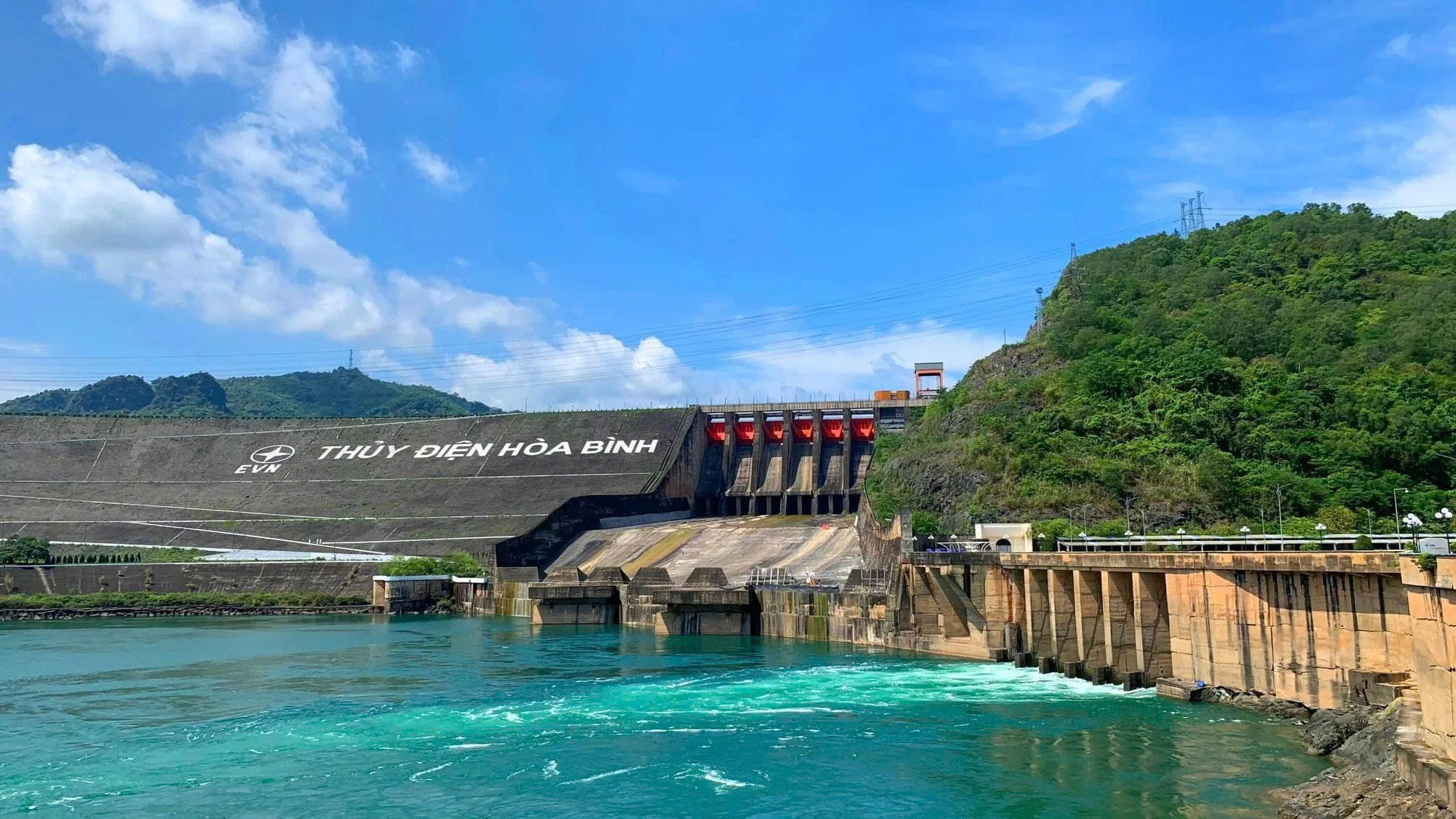
Domestically, the Government’s approval of a list of key energy projects under Decision No. 2634/QD-TTg is viewed as a critical pillar for medium- and long-term industrial development. Projects involving LNG-fired power, pumped-storage hydropower, offshore wind and nuclear energy not only help ensure energy security, but also provide a stable foundation for electricity-intensive industries, while supporting the transition toward a greener and more sustainable growth model.
In parallel, the Ministry of Industry and Trade’s Digital Transformation Strategy for the 2025-2030 period, with a focus on big data and digital technologies, is expected to generate new momentum for productivity gains, supply chain optimization and enhanced business resilience amid external shocks. Over the longer term, this will form an essential foundation for Vietnam’s industry to increase technological content and value added in its products.
Room for economic growth in the new phase
In the trade sector, the report notes that international factors in the short term are generally creating a relatively favorable environment for Vietnam’s export-import activities, although protectionist trends and trade monitoring persist.
Fed rate cuts and a weaker US dollar not only help stabilize the exchange rate, but also improve the price competitiveness of Vietnamese goods in key markets such as the US and the EU.
International transport and logistics costs are trending downward as Brent and WTI crude prices ease, enabling exporters to reduce costs and expand shipping routes. This is an important factor in sustaining trade growth at a time when global demand has yet to recover strongly.
Notably, policy moves by the EU including the early release of technical guidance on CBAM and EUDR, along with the maintenance of Vietnam’s low-risk assessment are seen as positive signals. These developments give domestic enterprises more time to prepare, gradually improve emissions measurement and traceability systems, and reduce the risk of short-term export disruptions, particularly for agricultural, forestry, seafood and processing industries.
In regional markets, Mexico’s adjustment of tariff policies on goods from non-FTA countries presents both opportunities and higher compliance requirements regarding rules of origin. Within the CPTPP framework, Vietnam has opportunities to expand its presence in this market, but must also enhance supply chain transparency to avoid risks related to origin fraud and tax evasion.
At home, stimulus programs such as Vietnam Grand Sale 2025 continue to play a role in boosting domestic consumption, helping manufacturing and trading enterprises improve cash flow, reduce inventories and sustain employment. At the same time, the Government’s firm direction on combating illegal, unreported and unregulated (IUU) fishing, while posing short-term adjustment challenges, is expected to strengthen the credibility and sustainability of Vietnam’s seafood exports in the long run.
Based on these analyses, the report emphasizes that 2026 will be a period in which Vietnamese enterprises need to proactively adapt and capitalize on favorable conditions in terms of costs, infrastructure and policies to restructure production and trade toward greater sustainability. Trading companies should invest in digital transformation, data analytics, digital supply chain management, automated warehousing and financial technologies to reduce costs and accelerate order processing. Manufacturing firms need to move toward higher standards, including core technologies, product design and process innovation, to enhance value added.
In an increasingly volatile trade environment, businesses are advised to closely monitor developments in the US-China market, prepare risk scenarios-such as logistics disruptions, exchange rate volatility and tariff changes and build contingency funds, sign long-term contracts with logistics partners, and insure goods against risks.
Prime Minister Le Minh Hung attends the 48th ASEAN Summit in Cebu, reaffirming Vietnam’s strong commitment to ASEAN cooperation and regional resilience.
The Ministry of Industry and Trade is seeking feedback on a draft decree on power works protection and hydropower safety, set to replace Decree No. 62/2025/ND-CP.
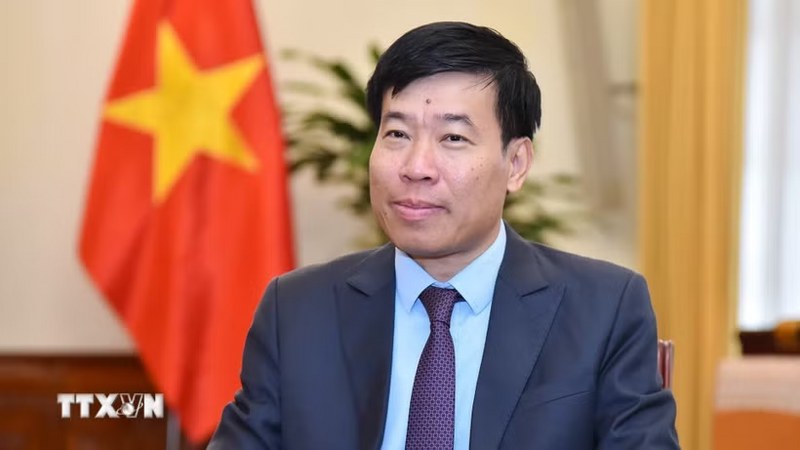
The State visit by Vietnam’s top leader to Sri Lanka on May 7 - 8 underscores deepening bilateral ties, paving the way for expanded cooperation in trade and investment, and stronger engagement with South Asia.
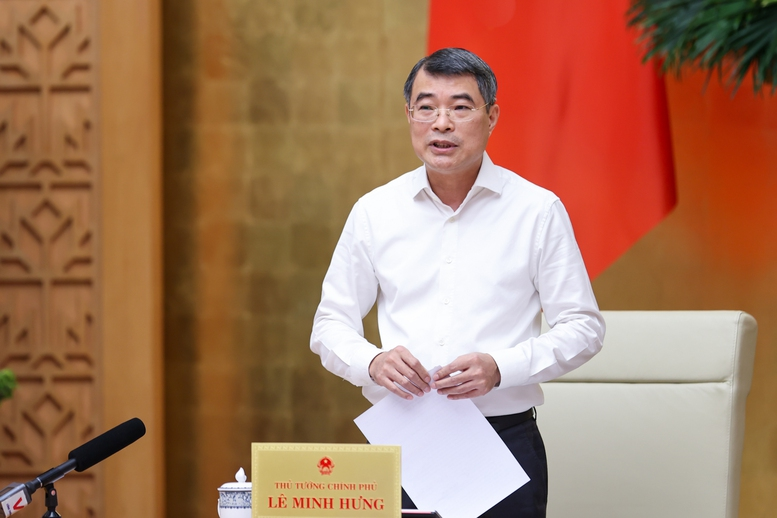
On the afternoon of May 4, Prime Minister Le Minh Hung chaired the Government’s regular meeting for April 2026, the first such session of the 16th-term Government.
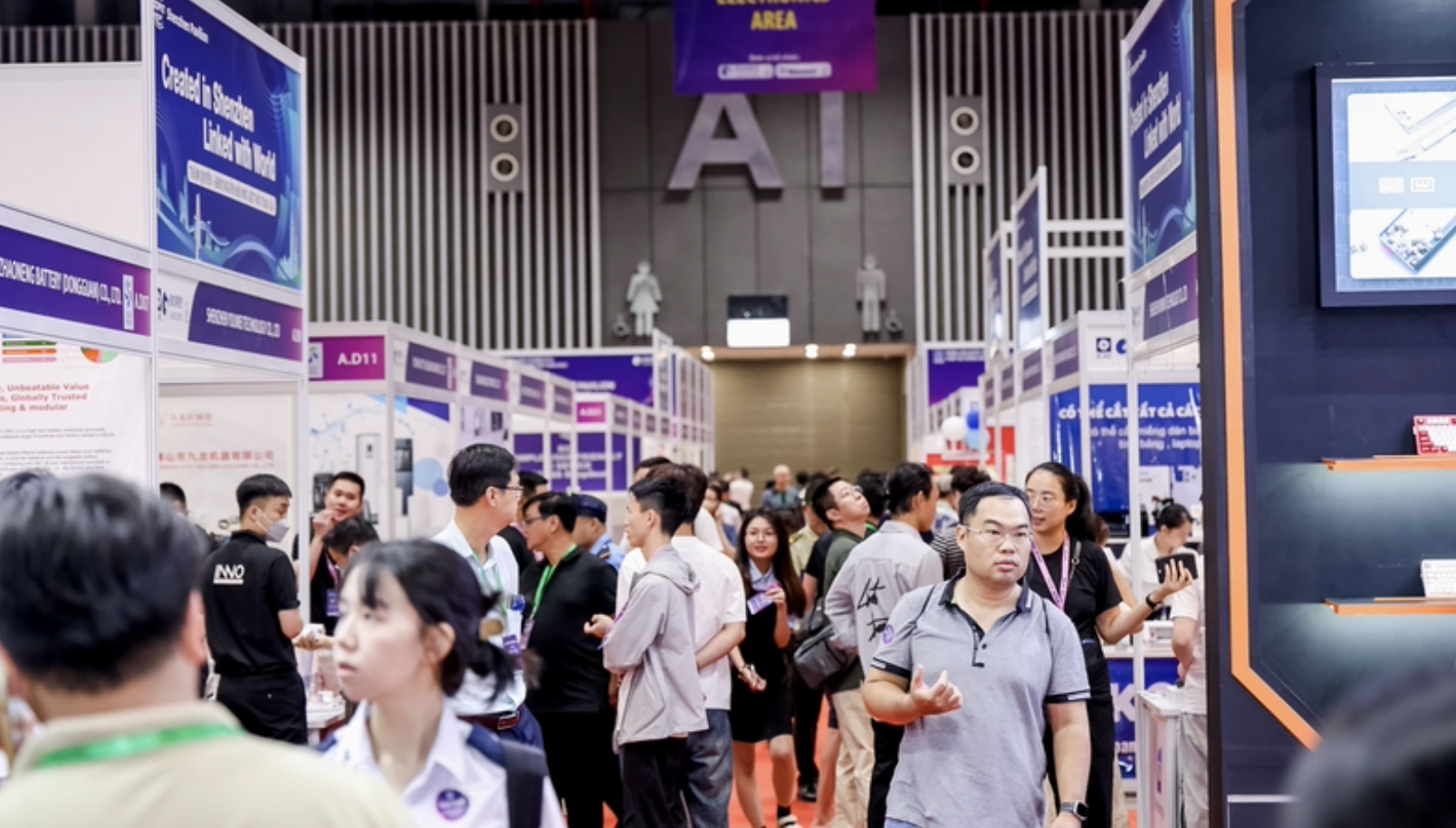
More than 300 companies are set to participate in business matching activities at the International Electronics and Smart Appliances Expo Vietnam (IEAE 2026), scheduled to take place from May 28 to 30 in Ho Chi Minh City.
Vietnam has issued a plan to implement the Law on E-commerce, defining tasks, timelines and coordination to ensure effective enforcement from July 1, 2026.
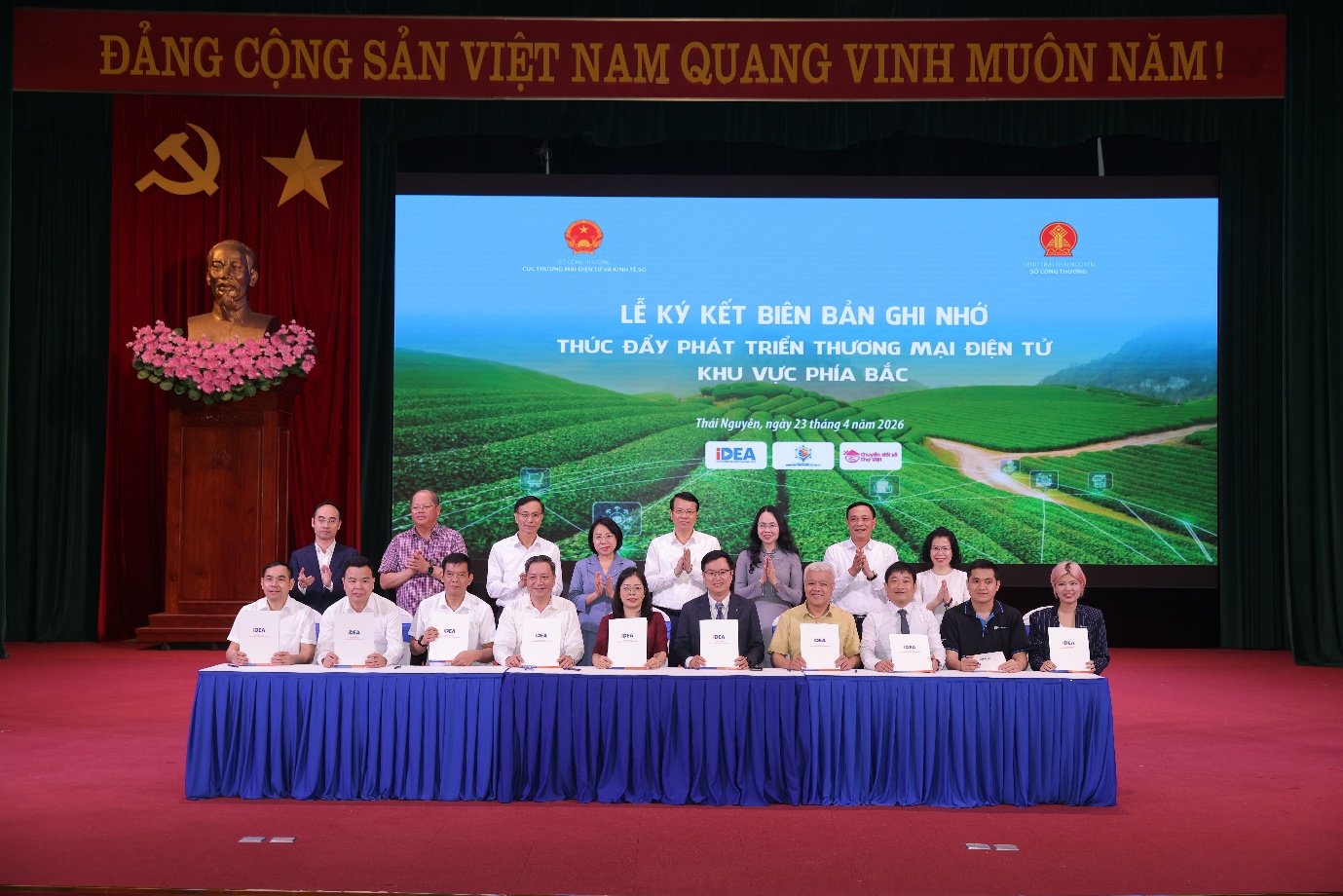
The programme in Thai Nguyen promotes e-commerce in northern Vietnam, linking localities with digital firms to expand markets and boost Vietnamese goods.