2026 marks the beginning of a new development phase, a pivotal year shaping the country’s development model and long-term growth trajectory.
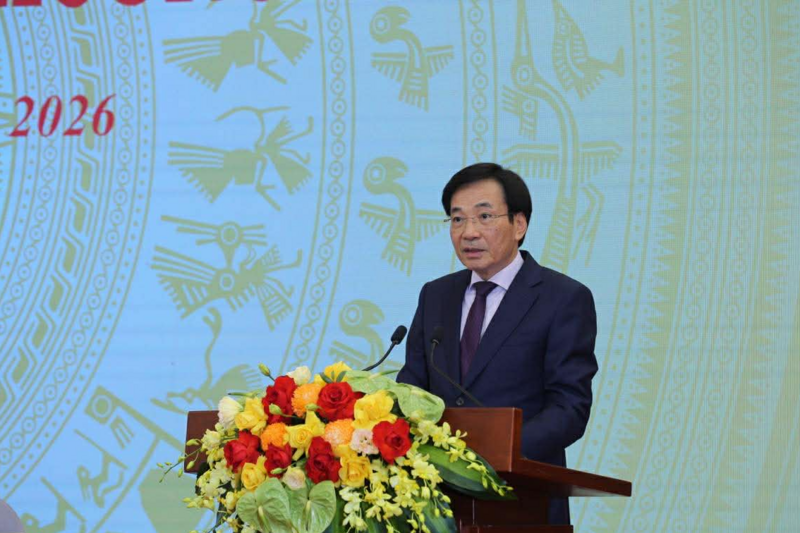
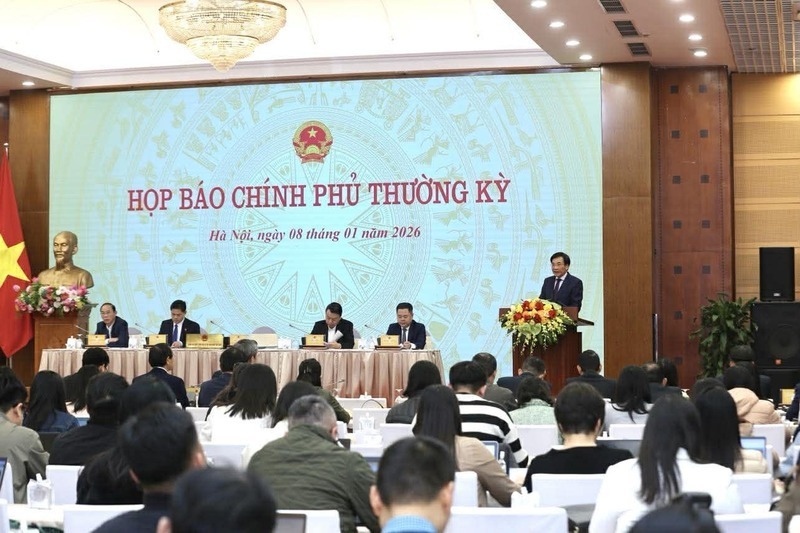
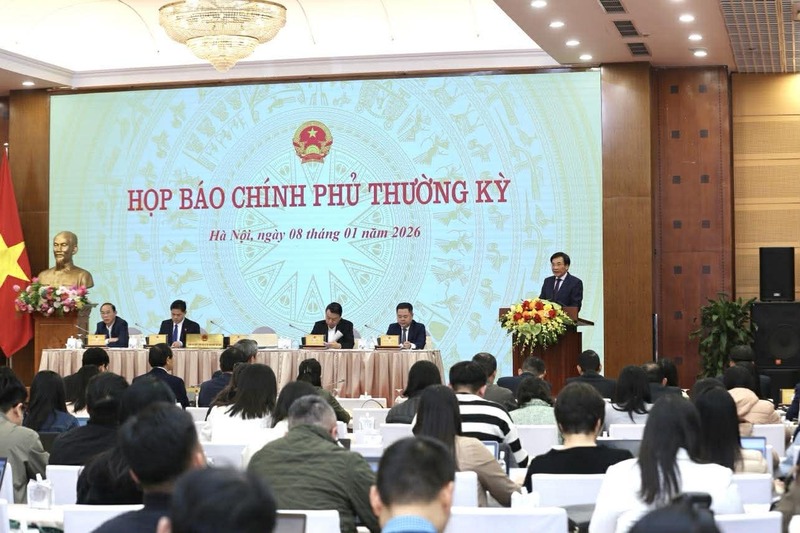
On the afternoon of January 8 in Hanoi, the Government Office held its regular press conference for December 2025 to provide updates on socio-economic developments in December, the full year 2025, and the 2021 - 2025 period. Minister, Head of the Government Office Tran Van Son, the Government spokesperson, chaired the conference.
Achieving all targets, laying the foundation for 2026 breakthroughs
Opening the press conference, Minister, Head of the Government Office Tran Van Son stated that earlier that morning, the Government organized a nationwide online conference reviewing the work of 2025 and implementing the tasks for 2026 for both the Government and local authorities.
Minister, Head of the Government Office Tran Van Son, the Government spokesperson, chairs the December regular Government press conference. Photo: VGP
The conference was attended by Party and State leaders, including Party General Secretary To Lam, State President Luong Cuong, National Assembly Chairman Tran Thanh Man, Standing Secretary of the Party Central Committee Tran Cam Tu, Prime Minister Pham Minh Chinh, and leaders of central ministries and local authorities.
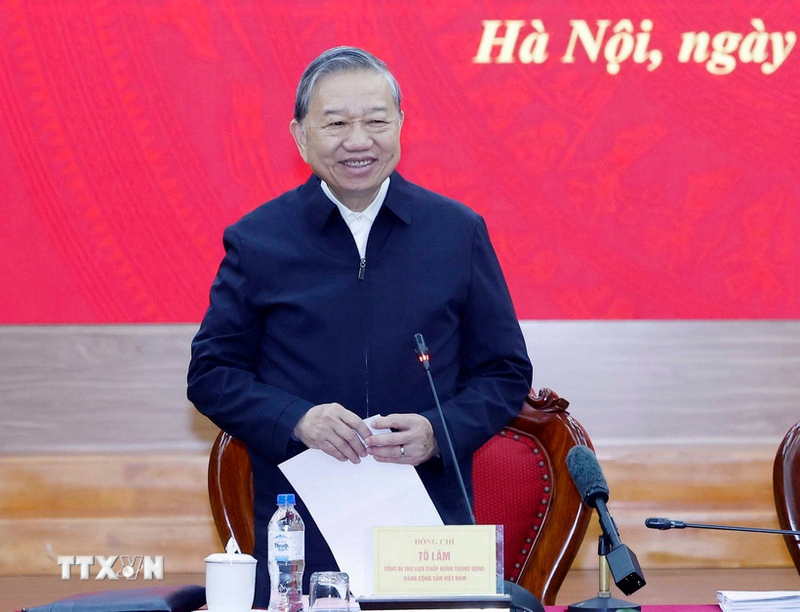
During the event, representatives from multiple ministries and localities delivered reports. Party General Secretary To Lam delivered a comprehensive and strategic speech, providing guidance for government management and leadership at all levels throughout 2026 and beyond.
The conference reached a consensus that 2025 and the 2021 - 2025 period unfolded amid a global context of uncertainty, with challenges outweighing opportunities. Nevertheless, under the leadership of the Party Central Committee, directly the Politburo and the Secretariat, headed by the General Secretary, alongside the support of the National Assembly, the engagement of the entire political system, people, business community, and international friends, the Government and the Prime Minister implemented decisive, flexible, and effective management with the motto: “Discipline and responsibility; proactive and timely; streamlined and efficient; accelerate breakthroughs.”
As a result, all 15 major targets for 2025 were exceeded, and 22 of 26 socio-economic targets for 2021 - 2025 were met or surpassed. The macro-economy remained stable; average inflation for the period was below 3.6%; public debt and budget deficit stayed within safe limits.
GDP growth in 2025 reached 8.02%, with a five-year average of 6.3%; the economy’s size exceeded USD 510 billion, GDP per capita surpassed USD 5,000, and Vietnam maintained a trade surplus for the tenth consecutive year.
Strategic breakthroughs in institutions, infrastructure, and human resources were implemented in a coordinated manner; administrative reform, decentralization, and local government restructuring were accelerated. Strategic infrastructure, digital infrastructure, and social infrastructure received synchronized investment; digital transformation and administrative reform achieved clear results.
The cultural, social, and environmental sectors saw positive changes; the Human Development Index continued to improve, and the happiness index rose by 37 ranks compared to 2020. Social welfare was ensured, with spending accounting for around 17% of total state budget; goals for eliminating temporary and dilapidated housing were met early; the multidimensional poverty rate fell to 1.3%.
Science, technology, innovation, and digital transformation gradually became new pillars of development. The Global Innovation Index 2025 ranked Vietnam 44th out of 139 countries; Project 06 fundamentally improved public service delivery, saving about VND 3,000 billion in social costs annually.
National defense and security were firmly strengthened; social order and safety were ensured, with crime in the social order sector falling by over 24% in 2025. Foreign affairs and international integration remained highlights, contributing to a peaceful environment and expanding development space; in 2025 alone, about 350 international cooperation agreements and commitments were signed.
Party building, anti-corruption, and anti-waste efforts were further intensified. Nearly 1,200 projects worth approximately VND 675,000 billion were resolved; nearly 3,000 pending projects were reviewed and addressed.
The Government also led and coordinated the formulation of major central policies, including special mechanisms and strategic infrastructure projects such as the North - South high-speed railway, China - Vietnam railway connections, and urban railways in Hanoi and Ho Chi Minh City.
2026 to define development model and long-term growth trajectory
According to Minister, Head of the Government Office Tran Van Son, Party General Secretary To Lam emphasized at the conference that 2026 is the first year of a new development phase, aligned with the implementation of the 14th Party Congress Resolution and the socio-economic development plan for 2026 - 2030; it is particularly significant in shaping Vietnam’s development model and long-term growth trajectory.
The December regular Government press conference takes place on the afternoon of January 8 in Hanoi. Photo: VGP.
The conference reached high consensus on seven key tasks and solutions identified by the Party General Secretary for the coming period.
First, focus on removing institutional bottlenecks to unlock constrained resources. Shift fundamentally from a “management” mindset to a “development-enabling” approach. Ensure macroeconomic stability, control inflation, and safeguard major economic balances. Strongly improve the investment and business environment; expand decentralization, reduce compliance time and costs for citizens and businesses.
Second, fundamentally transform the growth model based on productivity and innovation. Place human capital quality, science and technology, and innovation at the heart of development strategy. Restructure the economy toward green, digital, and circular approaches. Prioritize foundational and key industries, harness new growth spaces, and selectively attract FDI. Accelerate the development of a national database that is accurate, sufficient, clean, and dynamic; promote digital government, digital economy, and digital society. Simultaneously, create an even more favorable environment for the private sector to thrive.
Third, build a modern, synchronized strategic infrastructure system to strengthen national competitiveness. Focus resources on breakthrough strategic projects, particularly national transport corridors, railways, airports, seaports, energy, and digital infrastructure. Innovate public investment deployment to guide development, leverage private resources, and aim to reduce ICOR to 4 in the coming period.
Fourth, enhance the capacity of the government apparatus under strong decentralization. Develop high-quality human resources and raise skill levels nationwide. Continue streamlining the administrative apparatus for efficiency, effectiveness, and performance. Rectify work practices and resolve bottlenecks in the operation of two-level local government, focusing on improving the capacity of officials, especially at the grassroots level.
Fifth, implement an education and training strategy closely aligned with labor market needs and high-tech, key industries. Enhance labor productivity, promote workforce restructuring, make English a second language in schools, and provide breakthrough mechanisms to develop national universities, excellent higher education institutions, and strategic technology research programs.
Sixth, ensure comprehensive, synchronized development across culture, society, and living standards, while guaranteeing social welfare. Preserve, restore, and promote national cultural values; develop cultural industries as a new economic spearhead. Implement breakthrough solutions to protect and enhance public health. Aim to complete over 110,000 social housing units in 2026 and reach the 1 million target by 2028 ahead of schedule; complete 248 inter-level schools in border communes.
Proactively adapt to climate change, prevent disasters, and strengthen resource management and environmental protection. Enhance disaster forecasting, warning, and response capacity. Accelerate the development of a national land and real estate database to manage resources effectively and develop a transparent market. Address environmental pollution systematically, particularly in major urban centers.
Seventh, firmly consolidate national defense and security, maintain social order and safety, and pursue an independent, autonomous, multilateral, and diversified foreign policy. Continue building a strong people’s defense; develop a self-reliant, dual-use, modern defense and security industry. Ensure absolute security for major political events, including the 14th Party Congress, the 16th National Assembly elections, and provincial People’s Council elections for 2026 - 2031. Promote economic and technology diplomacy, closely linking defense and security with economic development, and prepare thoroughly to successfully host the 2027 APEC Summit.
The December 2025 Government press conference highlighted the breakthrough achievements of the past five years, laying the foundation for accelerating a productivity- and digital-driven growth model in the coming period.
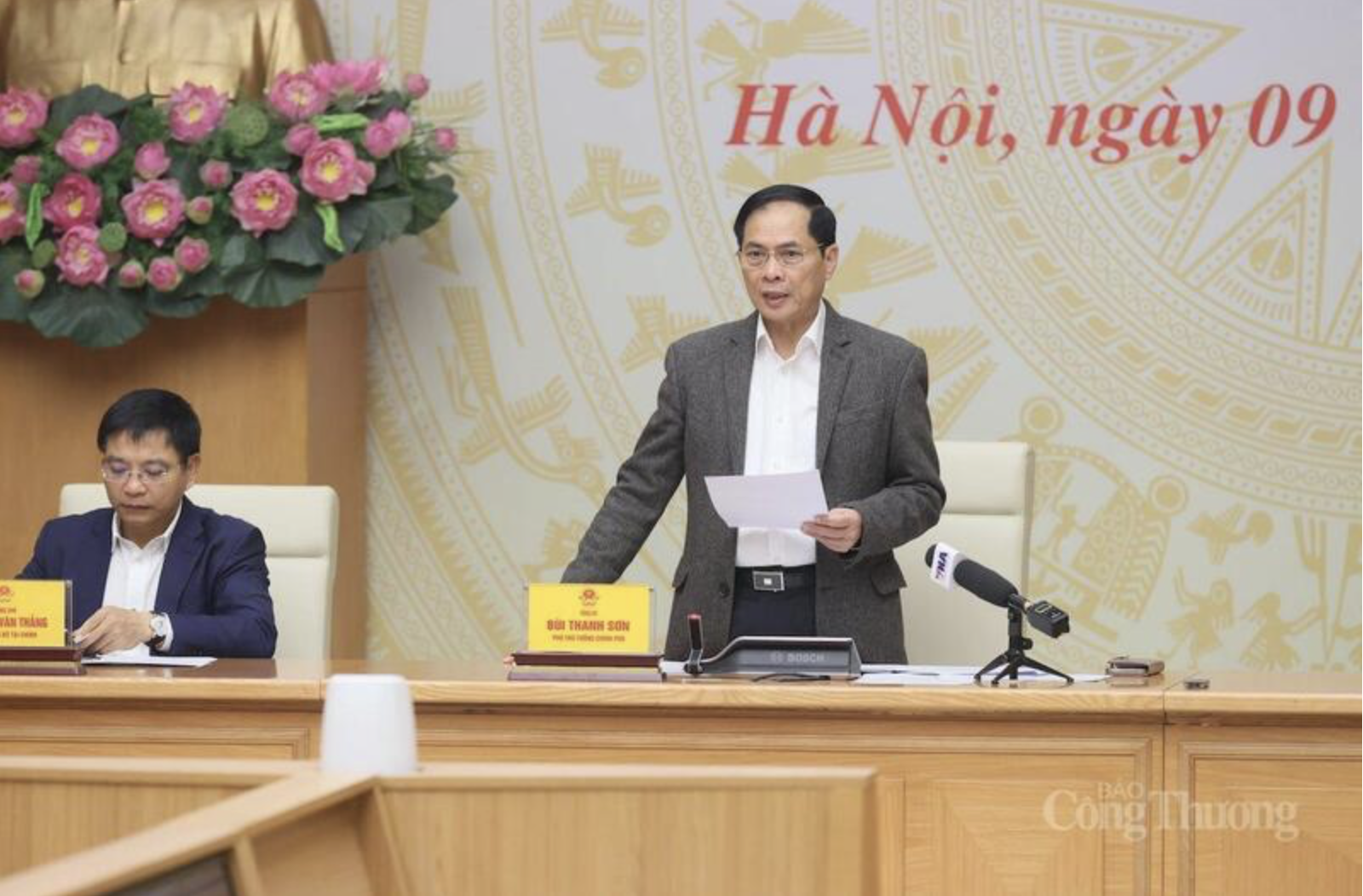
Deputy Prime Minister Bui Thanh Son stressed tougher enforcement and stronger coordination to curb smuggling, trade fraud and counterfeit goods nationwide.
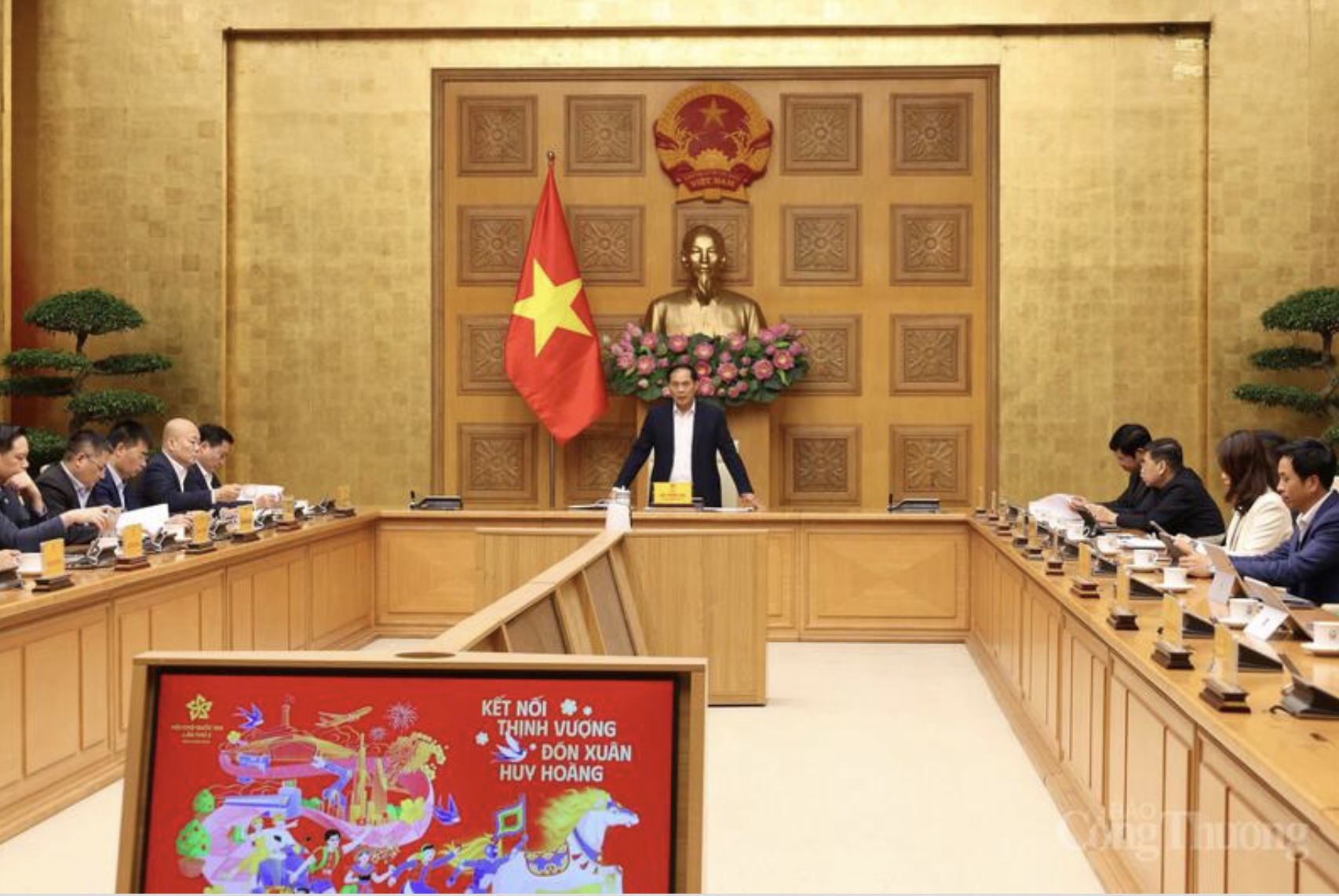
On January 8, at the Government Headquarters, Deputy Prime Minister Bui Thanh Son chaired a meeting on the proposal to organize the National Spring Fair 2026.
This assessment was made by Associate Professor Dr. Nguyen Thuong Lang, who evaluated the Ministry of Industry and Trade’s role in driving Vietnam’s GDP growth.
Deputy Prime Minister Bui Thanh Son stressed tougher enforcement and stronger coordination to curb smuggling, trade fraud and counterfeit goods nationwide.
On January 8, at the Government Headquarters, Deputy Prime Minister Bui Thanh Son chaired a meeting on the proposal to organize the National Spring Fair 2026.
At a session with the Central Policy and Strategy Commission, Party General Secretary To Lam urged a shift to a science and technology-based development model.
At a year-end review conference, Deputy Minister Phan Thi Thang called for stronger coordination and policy action to boost export markets and sustain trade growth.