Singapore’s seafood imports reached SGD 1.2 billion in 2025, up 4.2 percent year on year, with Vietnam securing its position as the third-largest supplier.
Seafood imports into Singapore surge sharply
According to the Vietnam Trade Office in Singapore, statistics from Singapore’s corporate regulatory authority show that in 2025, the country’s total seafood imports from global markets reached SGD 1.2 billion, up 4.2 percent year on year.
In terms of major product demand, the Singapore market continued to record relatively balanced import demand across four key groups:fresh or chilled fish excluding fillets and fish meat (HS 0302); frozen fish excluding fillets and fish meat (HS 0303); fish fillets and other fish meat, fresh, chilled or frozen (HS 0304); and crustaceans, whether or not processed (HS 0306).Each group posted annual import values of over SGD 200 million in 2025, equivalent to around SGD 17–25 million per month.
Among these, crustaceans, whether or not processed (HS 0306), recorded the highest import value at SGD 292.8 million for the full year (around SGD 25.4 million per month), accounting for 24 percent of Singapore’s total seafood import value. By the end of 2025, all four major groups recorded positive growth, averaging 5.6 percent compared with 2024.
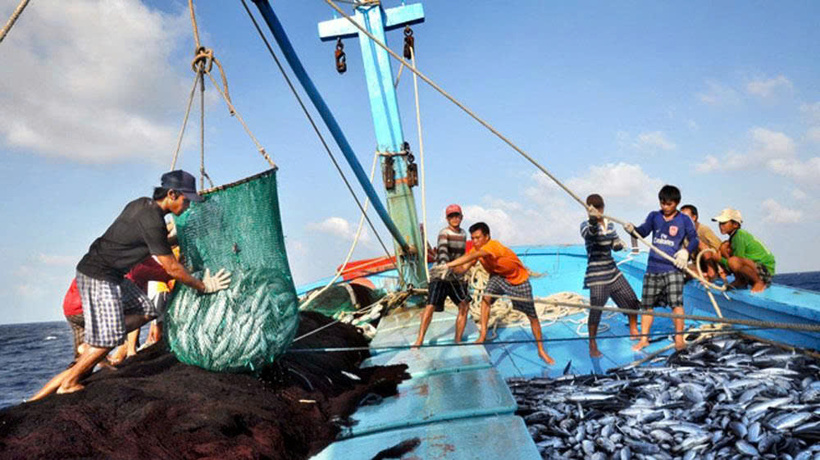
In 2025, Vietnam ranked as Singapore’s third-largest seafood supplier with import value reaching SGD 125.5 million. Photo: Illustration
Beyond the four main groups, Singapore also imported other seafood categories such as live fish (HS 0301); processed fish (HS 0305); molluscs, whether or not processed (HS 0307); and other aquatic invertebrates excluding crustaceans and molluscs (HS 0308).
Among these, molluscs (HS 0307) posted the highest annual import value at over SGD 139.5 million, while aquatic invertebrates excluding crustaceans and molluscs (HS 0308) recorded the lowest value at SGD 25.5 million. This latter group continued to witness a sharp contraction in demand, with import value down nearly 20 percent year on year in 2025, following a 21 percent decline in 2024 compared with 2023.
Vietnam ranks third among seafood suppliers to Singapore
In terms of partners, throughout 2025, Malaysia and Indonesia remained Singapore’s largest and second-largest seafood suppliers, with import values of SGD 159.5 million and SGD 139.1 million, respectively. These accounted for 13.1 percent and 11.4 percent of Singapore’s total seafood import market share. Imports from both countries focused mainly on crustaceans (HS 0306) and fresh or chilled fish excluding fillets (HS 0302).
For the full year 2025, Vietnam successfully maintained its position as Singapore’s third-largest seafood supplier, with import value reaching SGD 125.5 million, accounting for 10.3 percent of market share. Vietnam’s key export groups were fish fillets and other fish meat, fresh, chilled or frozen (HS 0304), and crustaceans, whether or not processed (HS 0306).
Vietnamese seafood exports to Singapore continue to face close competition from suppliers such as Norway, Japan and China. Norway remains the leading supplier of fresh or chilled fish excluding fillets (HS 0302), holding 42.5 percent of Singapore’s import market share for this group.China overtook Norway in the third quarter of 2025 to become Singapore’s fourth-largest seafood supplier, just behind Vietnam, maintaining strengths in crustaceans (HS 0306) and molluscs (HS 0307) and competing directly with Vietnamese products. Japan has also surpassed Norway to rank fifth, with advantages in frozen fish excluding fillets (HS 0303) and molluscs (HS 0307).
Overall in 2025, Singapore’s seafood imports (HS03) from Vietnam reached SGD 125.5 million, up 10.7 percent year on year, accounting for 10.3 percent of total seafood imports. Vietnam retained its position as the third-largest seafood supplier to Singapore, after Malaysia and Indonesia.
Fish fillets and other fish meat, fresh, chilled or frozen (HS 0304), remained Vietnam’s largest export group to Singapore, with import value reaching SGD 63 million in 2025, up 4.8 percent year on year and accounting for 29.7 percent of market share. This is also the segment in which Vietnamese products continue to hold a dominant position in the Singapore market.
Besides HS 0304, Vietnam recorded significant import values in only two other groups: crustaceans (HS 0306) and molluscs (HS 0307), at SGD 28.6 million and SGD 15.8 million, respectively, accounting for 9.8 percent and 11.4 percent of market share. Both groups posted strong growth in 2025, at 25.4 percent and 35.8 percent.
The Vietnam Trade Office in Singapore noted that, with Singapore’s seafood import market expected to remain stable in size, Vietnam is likely to continue maintaining a strong position in fish fillets and fish meat (HS 0304). However, in other categories particularly crustaceans (HS 0306) and molluscs (HS 0307) Vietnamese seafood will continue to face competition not only from Malaysia and Indonesia but also from China, Japan and Norway.
In recent years, Vietnamese seafood has made notable strides in the Singapore market. In 2024, Vietnam surpassed Japan for the first time to consistently rank as the fifth-largest seafood supplier to Singapore throughout the year. In the first quarter of 2025, Vietnam further overtook China to become the fourth-largest supplier. With strong export performance in 2025, Vietnam successfully defended its position as the third-largest seafood supplier, behind only Malaysia and Indonesia. This marked a significant leap from Top 6 to Top 3, reflecting effective market promotion and penetration efforts.
The Vietnam Trade Office in Singapore cautioned that, despite reaching the Top 3 position, the gap in export value with competitors such as China and Norway remains relatively narrow. Vietnamese enterprises therefore need to further intensify market promotion, continue technological innovation, adopt advanced machinery and equipment to ensure output and quality, meet increasingly stringent market requirements, and enhance international competitiveness.
For state management agencies, the Trade Office recommended further strengthening trade-promotion support policies, particularly assistance for small and medium-sized enterprises in digital transformation, information technology adoption and e-commerce development, as well as support for participation in international trade fairs and exhibitions to enhance the presence of Vietnamese goods, promote product, corporate and national brands in overseas markets.
The FTA Vietnam - EFTA creates new opportunities for Vietnamese businesses while encouraging stronger competitiveness, compliance and sustainable development.
Ministry of Industry and Trade removed more than 9,000 infringing products and blocked over 2,000 online stores in a nationwide crackdown on counterfeit goods.
Sustainable production and consumption are becoming business imperatives as companies invest in greener technologies, circular design and digital transformation.
Vietnam's domestic market remained resilient in the first half of 2026 despite global turbulence, with inflation under control and retail sales continuing to grow.
From 29 June, Vietnam’s domestic carbon market officially entered its pilot phase, marking a transition from emissions management through administrative command-and-control measures to a market-based mechanism.
The FTA Vietnam - EFTA creates new opportunities for Vietnamese businesses while encouraging stronger competitiveness, compliance and sustainable development.
In an interview with the press regarding the Free Trade Agreement (FTA) between Vietnam and the European Free Trade Association (EFTA), Deputy Minister of Industry and Trade Nguyen Sinh Nhat Tan emphasized that the agreement will lay the foundation for economic relations between Vietnam and EFTA to enter a new stage of development.
At a second-quarter 2026 conference, the MoIT urged Vietnam's Trade Offices abroad to strengthen intelligence and help exporters adapt to changes and expand exports.
Vietnam and Israel discuss strengthening VIFTA implementation to expand trade, investment and cooperation, aiming to boost bilateral economic ties and market access.
More than 100 businesses attend the Vietnam-Japan Investment and Trade Cooperation Conference in Osaka to strengthen investment, trade and supply chain connectivity.