Prime Minister Pham Minh Chinh ordered relevant agencies to urgently finalize technical standards to accelerate key railway projects.
On the afternoon of December 23, in Hanoi, Prime Minister Pham Minh Chinh presided over a meeting of permanent Government members to address issues concerning the finalization of standards, regulations, and technology. The session focused on resolving bottlenecks and accelerating the progress of the North-South high-speed railway project as well as standard-gauge railway lines connecting to China.
Finalizing standards to advance the North-South high-speed railway
In his concluding remarks, Prime Minister Pham Minh Chinh emphasized that the Government and relevant ministries have achieved significant milestones to date. Efforts have focused on fundamentally perfecting the institutional framework, comprising various laws, decrees, and resolutions issued by the National Assembly and the Government. The Prime Minister noted the vigorous implementation of the Lao Cai - Hanoi - Hai Phong railway project, alongside the commencement of construction on projects linked to the Lang Son - Hanoi and Mong Cai - Hai Phong lines, as well as the initiation of the North-South high-speed railway project. Additionally, the Ministry of Construction has actively executed related tasks, while the Ministry of Science and Technology has promulgated dozens of technical standards and regulations specifically for the construction of the North-South route.
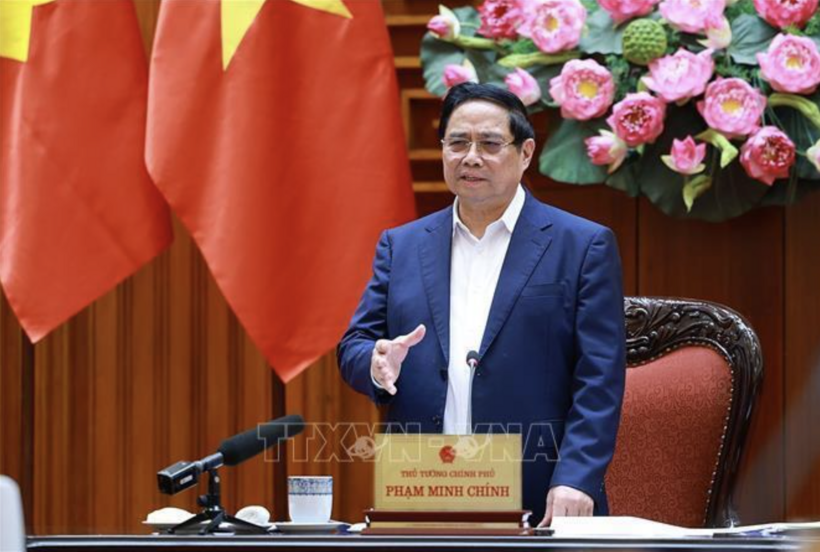
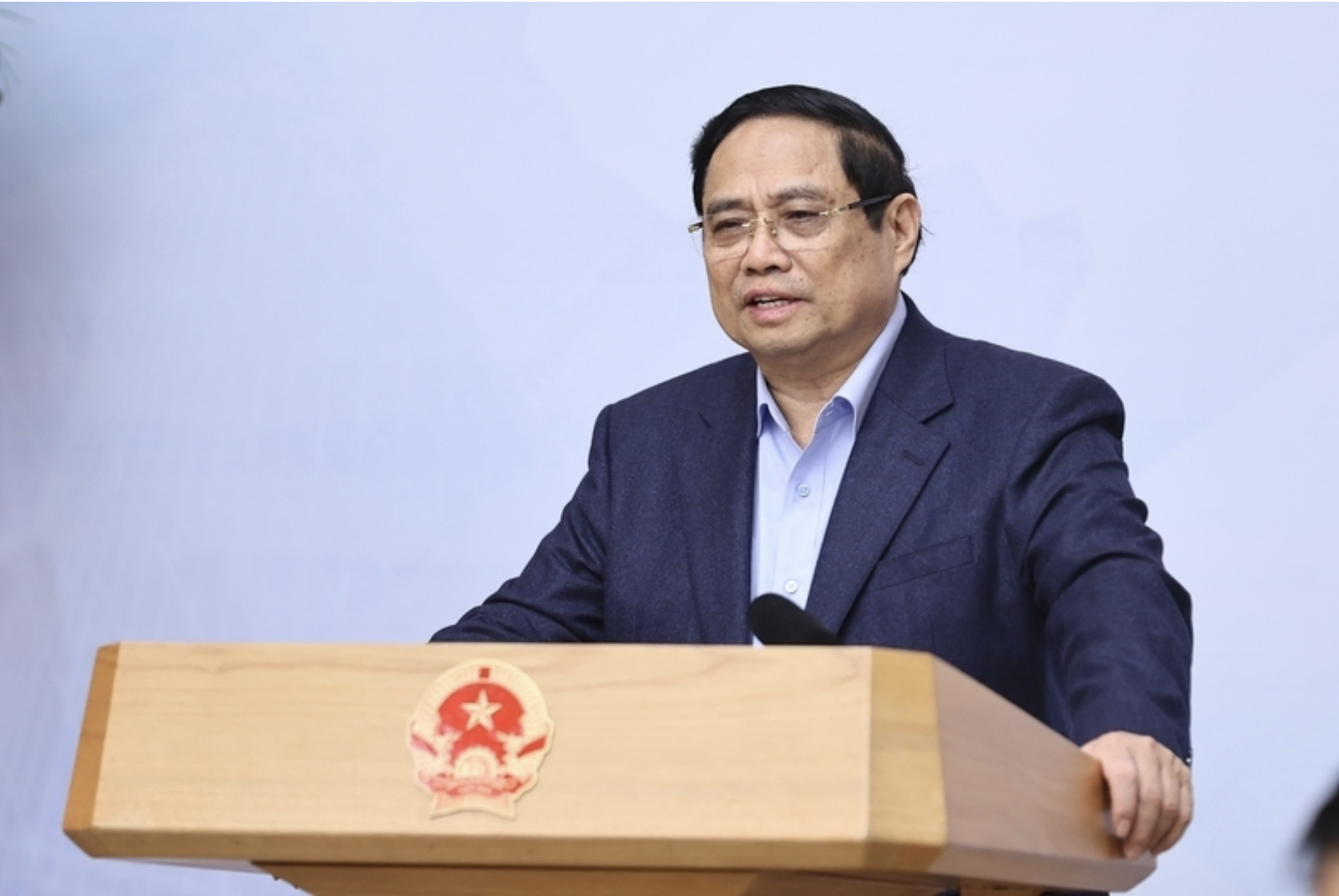
Prime Minister Pham Minh Chinh delivers concluding remarks at the meeting. Photo: VNA
Prime Minister Pham Minh Chinh stated that in the absence of prior experience, the direct adoption of foreign technical standards and regulations for domestic projects is a common approach, with the localization of these standards occurring gradually throughout the implementation process. He noted that international experience demonstrates that the selection of appropriate technology for high-speed and general railway projects is contingent upon a multitude of factors, including economics, politics, diplomacy, national defense and security, as well as the potential for technology transfer and operational requirements.
Prime Minister Pham Minh Chinh directed the Ministry of Science and Technology and the Ministry of Construction to review regulations and standards, drawing upon both international and domestic experience, to select technology for the North-South high-speed railway project that meets the requisite criteria, a task he emphasized must be expedited. Based on this foundation, the agencies are tasked with formulating standards and procedures for selecting investment models whether public investment, public-private partnerships, or private investment ensuring an optimal balance of interests among all stakeholders while strictly preventing group interests, misconduct, and corruption. Once these frameworks are in place, the selection process must be conducted publicly, accompanied by feasible policy proposals and a transparent, comprehensive impact assessment. The Prime Minister affirmed that the chosen investment model must yield the greatest benefit for the State, the public, and businesses, while satisfying the development requirements of the railway sector.
Accelerating progress on key railway projects
Regarding the Lao Cai - Hanoi - Hai Phong railway line, Prime Minister Pham Minh Chinh noted that Chinese counterparts have assessed Vietnam’s implementation pace as being 1.5 to 2 years faster than similar collaborative projects undertaken by China in other ASEAN nations. Concerning Component Project 1, which has already commenced construction with an investment exceeding VND 2 trillion, the Prime Minister instructed the Ministry of Construction to focus on ensuring execution meets or surpasses the established timeline. He further directed that the preparation of the pre-feasibility study be accelerated for completion no later than March 2026, to be followed by the finalization of the railway connection agreement between Vietnam and China.
Addressing project funding, the Government has made an immediate allocation of VND 16 trillion, noting a capacity to disburse approximately VND 40 to 50 trillion annually. This capital is to be sourced from public investment savings, surplus revenue, expenditure reductions, and medium-term investment funds. On the issue of human resources, Prime Minister Pham Minh Chinh instructed the development of a comprehensive roadmap outlining personnel requirements from the present through the end of 2026, with an immediate focus on quantifying needs for the first half of the year; the Ministry of Construction was directed to coordinate with the Ministry of Education and Training to execute this task. Regarding the localization roadmap, the Prime Minister emphasized that priority should be given to railway lines connecting with China, calling for the maximization of domestic production for locomotives, rolling stock, control systems, rails, and substructure infrastructure. He stressed that achieving this objective requires close collaboration with consulting units to establish a feasible implementation roadmap.
Prime Minister Pham Minh Chinh emphasized that the development of the railway industry must be grounded in a spirit that goes beyond merely serving Vietnam, aiming instead to supply regional countries with growing demand and integrate into the railway ecosystems of developed nations, while ensuring clear project management methodologies. Addressing the North-South high-speed railway project, the Prime Minister directed the Ministry of Construction to urgently complete the selection of survey consultants in accordance with regulations, with a deadline set for January 2026. He further instructed that the investment model be selected from three specific options based on established standards and criteria to ensure the maximum benefit for the country, insisting that the process be conducted publicly and transparently.
Regarding consultation on this matter, ministries and sectors must respond decisively and expeditiously when solicited by the Ministry of Construction. The Ministry is tasked with coordinating with relevant agencies to urgently assess the impact of various investment methods, rapidly deploy and guide localities in site clearance operations, and develop specific mechanisms and policies for each investment model to be submitted to the Government by January 2026. Furthermore, the Ministry must continue refining the set of technological standards and regulations, which will serve as the basis for selecting investment models and investors. Concerning railway projects connecting to China, Prime Minister Pham Minh Chinh requested the Ministry of Construction to accelerate planning progress and assigned Quang Ninh province to act as the project investor.
On the topic of urban railway networks in Hanoi and Ho Chi Minh City, Prime Minister Pham Minh Chinh urged both cities to leverage their experience with operational lines to select technologies featuring unified, interoperable standards suitable for shared use. He emphasized the need for progressive localization across various groups, routes, and technological stages, ensuring a universal, advanced, and durable modern system that facilitates technology transfer and fosters supply chains for participating enterprises. Additionally, the Prime Minister assigned Vietnam Railways the task of establishing a railway industrial zone.
The 13th Party Congress laid a resilient economic foundation, creating momentum and ambition for stronger growth, reform and breakthroughs in the 14th Congress term.
In 2025, numerous power projects were completed, contributing to national energy security and ensuring a stable electricity supply for socio-economic development.
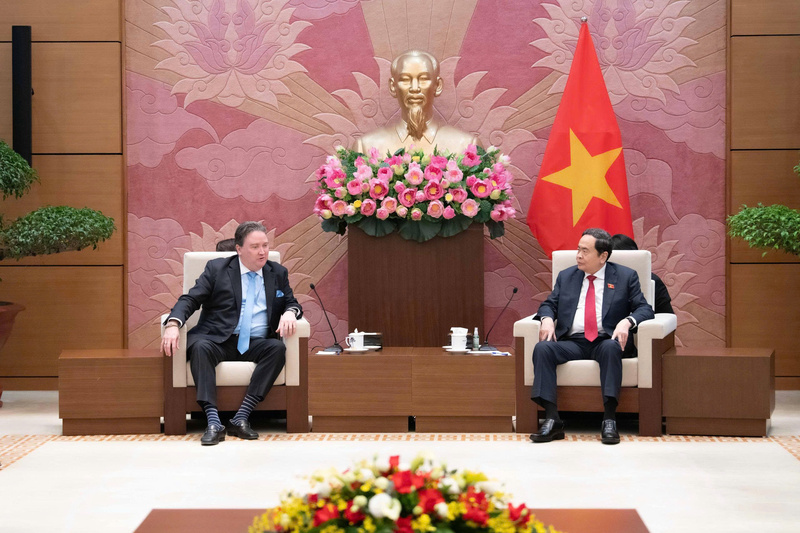
The Vietnam’s National Assembly pledged closer coordination with the US Congress to ensure cooperation mechanisms are implemented effectively and sustainably.
The Prime Minister stressed stronger economic integration as a key driver for developing strategic sectors from science, technology to defense, security and culture.
EU businesses remain upbeat on Vietnam as EuroCham’s Business Confidence Index hits a seven-year high pointing to stronger business and investment prospects in 2026.
The 13th Party Congress laid a resilient economic foundation, creating momentum and ambition for stronger growth, reform and breakthroughs in the 14th Congress term.
In 2025, numerous power projects were completed, contributing to national energy security and ensuring a stable electricity supply for socio-economic development.
The Vietnam’s National Assembly pledged closer coordination with the US Congress to ensure cooperation mechanisms are implemented effectively and sustainably.
The Prime Minister stressed stronger economic integration as a key driver for developing strategic sectors from science, technology to defense, security and culture.
On January 12 in Hanoi, the Vietnam Institute of Strategy and Policy for Industry and Trade organized a conference to review its 2025 work and deploy tasks for 2026.