In 2025, numerous power projects were completed, contributing to national energy security and ensuring a stable electricity supply for socio-economic development.
Completion and groundbreaking of key projects
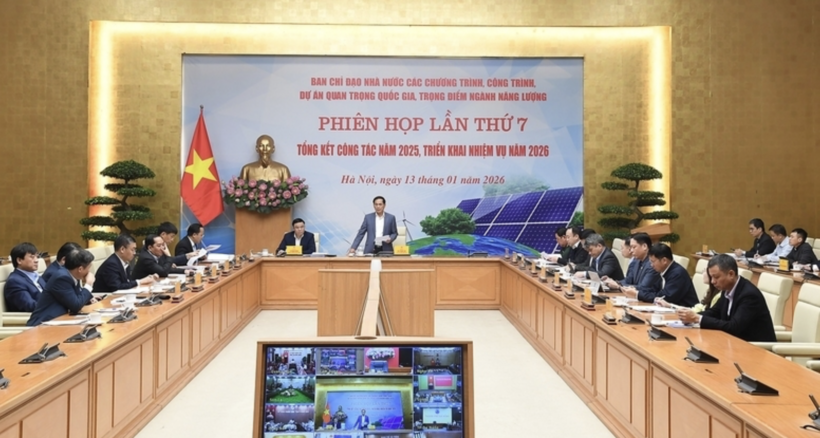
On January 13, Deputy Prime Minister Bui Thanh Son chaired a meeting to review the 2025 work results and set directions and tasks for 2026 of the State Steering Committee for nationally important and key energy programs, projects and works.
Attending the meeting were Acting Minister of Industry and Trade Le Manh Hung, leaders of ministries, sectors, state-owned groups that are members of the Steering Committee, and leaders of several relevant localities, participating both in person and online.
Deputy Prime Minister Bui Thanh Son chairs the meeting. Photo: VGP
According to the Ministry of Industry and Trade, the standing body of the Steering Committee, in 2025 eight power grid projects and three power plants were completed and put into operation. The completed grid projects include the 500kV Monsoon - Thanh My transmission line section within Vietnam’s territory; the 220kV Huoi Quang - Nghia Lo transmission line; the 500kV Vinh Yen substation and its connection lines; the 500kV Lao Cai substation; the 500kV Lao Cai - Vinh Yen transmission line; the 500kV Nhon Trach 4 power plant transmission line with a branch to Phu My - Nha Be; the 220kV Nhon Trach 3 power plant transmission line with a branch to My Xuan - Cat Lai; and the project supplying electricity from the national grid to Con Dao special zone, Ho Chi Minh City.
Three major power plants were inaugurated and began generating electricity during the year, including the Hoa Binh Hydropower Plant Expansion, Nhon Trach 3 Thermal Power Plant and Nhon Trach 4 Thermal Power Plant. In addition, construction commenced on the Tri An Hydropower Plant Expansion and Phase 2 of the Bac Ai Pumped-Storage Hydropower Plant.
Preparatory work is underway to break ground on the Quang Trach II LNG project in the first quarter of 2026 and the Quang Trach III LNG project in the fourth quarter of 2026. Several projects facing prolonged difficulties and bottlenecks continue to be implemented, such as the Long Phu 1 Thermal Power Plant and O Mon IV Thermal Power Plant.
In the gas-power sector, key project chains have recorded positive results, notably the Lo B - O Mon gas-power chain and the project to upgrade and expand the Dung Quat Refinery.
Regarding the power grid, in 2025, EVN and its units commenced construction on 215 projects and completed the energization of 260 projects, adding approximately 27,000MVA of capacity and 3,900km of transmission lines at voltage levels from 110kV to 500kV.
More decisive action required
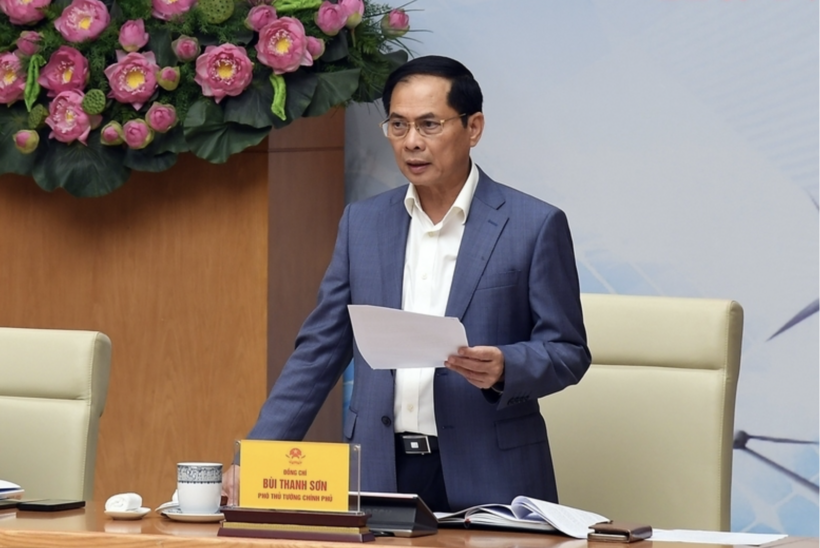
At the meeting, Deputy Prime Minister Bui Thanh Son, Head of the Steering Committee, acknowledged and highly appreciated the efforts of ministries, sectors, localities, and the EVN and PVN groups in implementing assigned tasks, thereby making an important contribution to ensuring national energy security and providing a stable electricity supply for socio-economic development in 2025.
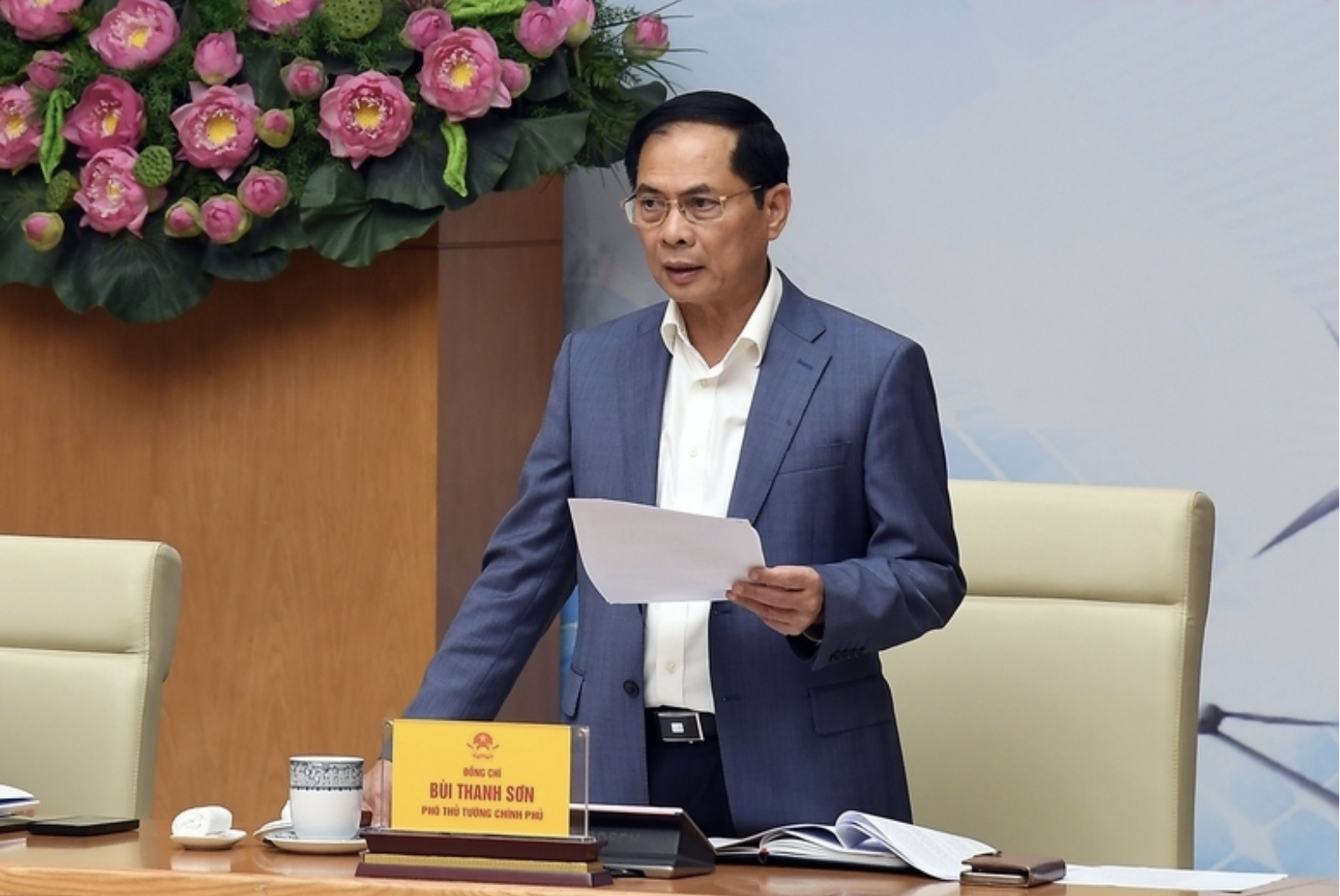
The Deputy Prime Minister stresses that ensuring national energy security in the new period is a strategic, long-term task of critical importance to the country’s rapid and sustainable development. Photo: VGP
However, the Deputy Prime Minister also pointed out that many projects remain behind schedule, from groundbreaking to implementation. Some localities have not proactively resolved bottlenecks within their authority, particularly in land clearance. The selection of investors, capital arrangement and contract negotiations for many gas-fired power projects have been slow, posing risks of directly affecting the goal of ensuring national energy security and the investment environment.
The Deputy Prime Minister emphasized that ensuring national energy security in the new period is a strategic, long-term task of special importance to the country’s rapid and sustainable development.
To address shortcomings in 2026, he requested members of the Steering Committee to continue improving operational efficiency, clearly assigning responsibilities in terms of personnel, tasks, timelines and accountability, and to strictly implement the conclusions of the Head of the Steering Committee.
The Deputy Prime Minister assigned the Ministry of Industry and Trade to review and compile a list of all energy projects, including primary energy projects as well as projects invested in by the private sector and foreign enterprises, in order to urge implementation in line with planning. The ministry was also tasked with urgently finalizing the draft directive of the Prime Minister on tasks and solutions to ensure sufficient electricity supply for production, business activities and household consumption in 2026 and the 2027-2030 period.
Localities were instructed to proactively coordinate in addressing bottlenecks, identify land-use needs for energy projects and incorporate them into land-use plans through 2030, while accelerating the selection of investors and contractors for generation and grid projects that have yet to identify project owners.
The Deputy Prime Minister required local Party committees and authorities to heighten their sense of responsibility in compensation and land clearance, regarding this as a key political task associated with the accountability of heads of agencies. EVN and PVN were urged to focus on completing and putting into operation, on schedule, the nationally important key projects assigned to them.
Reiterating that ensuring national energy security is a strategic, long-term mission, the Deputy Prime Minister stressed that in 2026, ministries, sectors, localities and investors must act more decisively, with greater discipline and effectiveness, and regard the implementation results of key energy projects as an important benchmark for assessing the fulfillment of political tasks by each agency and unit.
The 13th Party Congress laid a resilient economic foundation, creating momentum and ambition for stronger growth, reform and breakthroughs in the 14th Congress term.
In 2025, numerous power projects were completed, contributing to national energy security and ensuring a stable electricity supply for socio-economic development.
The Vietnam’s National Assembly pledged closer coordination with the US Congress to ensure cooperation mechanisms are implemented effectively and sustainably.
The Prime Minister stressed stronger economic integration as a key driver for developing strategic sectors from science, technology to defense, security and culture.
EU businesses remain upbeat on Vietnam as EuroCham’s Business Confidence Index hits a seven-year high pointing to stronger business and investment prospects in 2026.
The 13th Party Congress laid a resilient economic foundation, creating momentum and ambition for stronger growth, reform and breakthroughs in the 14th Congress term.
In 2025, numerous power projects were completed, contributing to national energy security and ensuring a stable electricity supply for socio-economic development.
The Vietnam’s National Assembly pledged closer coordination with the US Congress to ensure cooperation mechanisms are implemented effectively and sustainably.
The Prime Minister stressed stronger economic integration as a key driver for developing strategic sectors from science, technology to defense, security and culture.
On January 12 in Hanoi, the Vietnam Institute of Strategy and Policy for Industry and Trade organized a conference to review its 2025 work and deploy tasks for 2026.