Prime Minister Le Minh Hung attended the launch of five urban railway lines and three rental housing projects in Hanoi with investment exceeding VND 1.3 quadrillion.
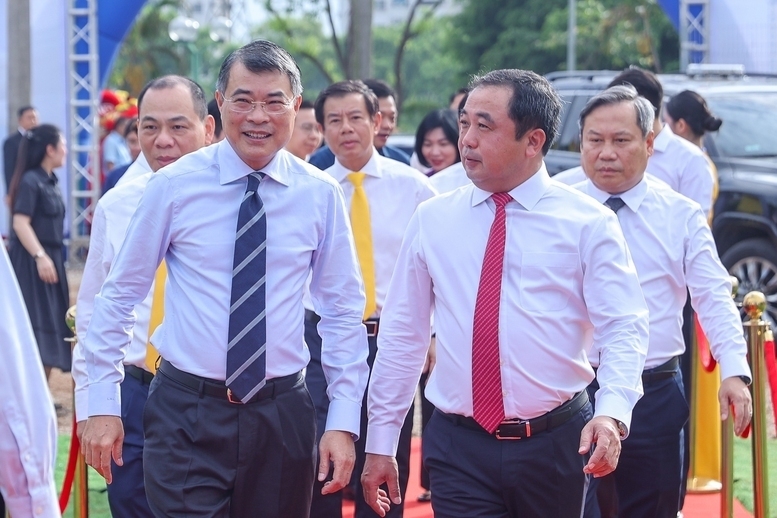
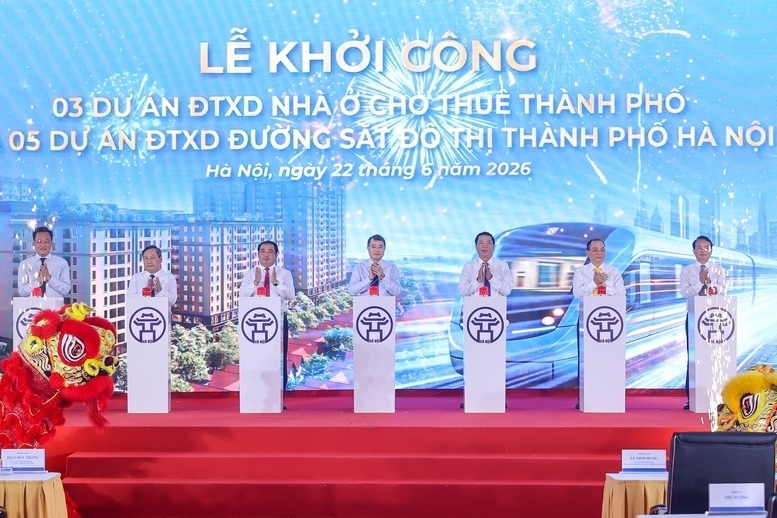
On the morning of June 22, in Hanoi, Prime Minister Le Minh Hung attended the groundbreaking ceremony for five urban railway lines and three rental housing projects across the capital.
Prime Minister Le Minh Hung attends the groundbreaking ceremony for five urban railway lines and three rental housing projects in Hanoi. Photo: VGP
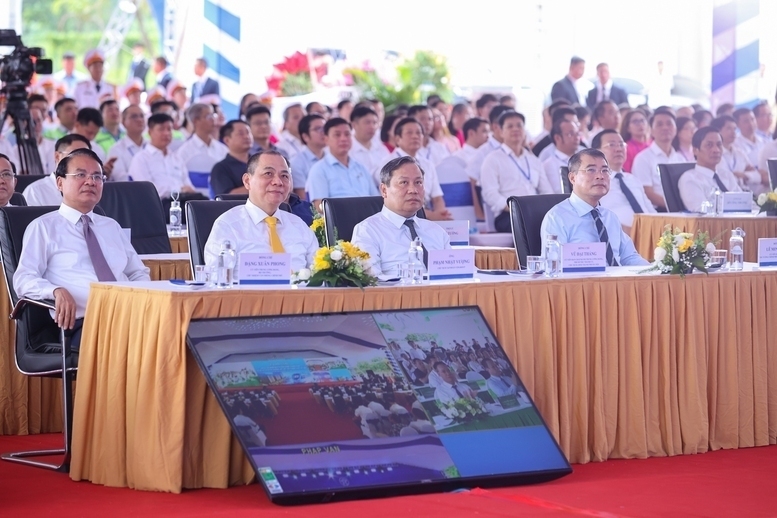
The event, organised by the Hanoi People's Committee, was attended by Politburo member and Secretary of the Hanoi Party Committee Tran Duc Thang; Party Central Committee members including Minister and Chairman of the Government Office Dang Xuan Phong, Minister of Construction Tran Hong Minh, Auditor General Nguyen Huu Nghia, Deputy Secretary of the Hanoi Party Committee and Chairman of the Hanoi People's Committee Vu Dai Thang; along with leaders of central ministries, agencies and Hanoi authorities.
This is the largest-ever series of infrastructure and social welfare projects undertaken in the capital, marking an important transition from the stage of developing mechanisms and policies to implementation, turning major development orientations of the Party and State for Hanoi into reality.
In recent years, the Politburo issued Resolution No. 02-NQ/TW on the development of Hanoi; the National Assembly adopted the 2026 Law on the Capital, Resolution No. 188/2025/QH15 on piloting special and breakthrough mechanisms and policies for the development of urban railway networks in Hanoi and Ho Chi Minh City, and Resolution No. 258/2025/QH15 on special mechanisms and policies for the development of Hanoi.
On May 13, 2026, the Hanoi People's Committee issued Decision No. 2512/QD-UBND approving the Hanoi Master Plan, under which the development of a modern public transport system centred on urban railways as the strategic backbone, together with housing infrastructure development, was identified as a key pillar for sustainable growth and improved quality of life.
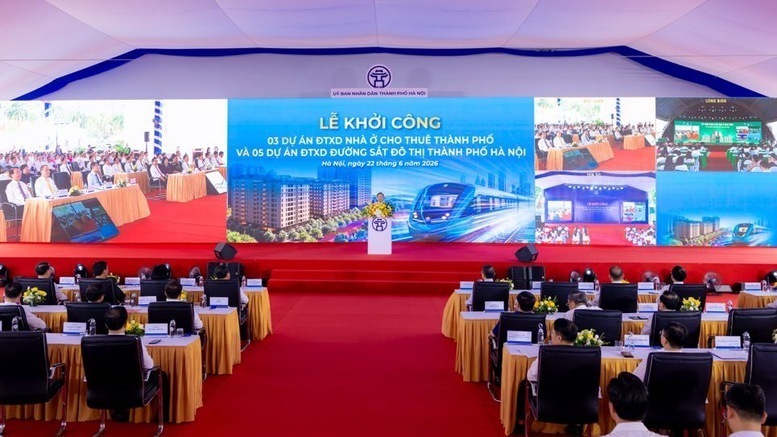
Prime Minister Le Minh Hung attends the groundbreaking ceremony for five urban railway lines and three rental housing projects in Hanoi. Photo: VGP
Five railway projects worth more than VND 1.3 quadrillion
The simultaneous launch of five urban railway lines, with a combined length of approximately 303.5 kilometres and a preliminary total investment of around VND 1,315,256 billion, marks a particularly significant milestone. It represents the largest transport infrastructure investment programme ever undertaken by Hanoi and one of the largest urban infrastructure programmes in the country, signalling a shift from developing individual lines to gradually establishing a synchronised and modern urban railway network.
Prime Minister Le Minh Hung and delegates attend the groundbreaking ceremony for five urban railway lines and three rental housing projects in Hanoi. Photo: VGP
The five railway lines include:
Line No. 1: Thuong Tin - Tam Hung - Thuong Phuc - Dan Hoa - Railway Industrial Park - Ngoc Hoi - Hanoi Railway Station - Yen Vien - Thu Lam Multi-purpose Urban Area - Noi Bai International Airport.
Line No. 2: Noi Bai International Airport - Tran Hung Dao - Thuong Dinh - Thuong Tin - Tam Hung - Thuong Phuc - Dan Hoa.
Line No. 8: Hoa Lac - Son Dong - Mai Dich - Ring Road 3 - Linh Nam - Duong Xa.
Line No. 10: Dong Anh - Vo Chi Cong - Ring Road 3 - Ring Road 2.5 - Times City - Dong Anh.
Line No. 14: Thang Long Bridge - Hong Ha - Gia Lam.
The five newly launched railway lines are part of Hanoi’s master plan to develop 18 urban railway routes with a total length of approximately 979 kilometres. The Hanoi Metropolitan Railway Management Board has been assigned as the investor, while the EPC contractor role has been entrusted to a consortium comprising Vinhomes JSC and VinSpeed High-Speed Railway Investment and Development JSC, both under Vingroup, based on their outstanding capabilities and partnerships with leading global companies.
A ceremony marks the simultaneous groundbreaking of five urban railway lines and three rental housing projects in Hanoi. Photo: VGP
The projects are expected to be completed by 2030 and connected with Metro Lines No. 3 and No. 5, which are currently under construction, gradually forming an integrated public transport network across the city.
Beyond addressing transport challenges, the urban railway system is expected to serve as a strategic backbone for restructuring Hanoi's development space, promoting transit-oriented development (TOD), expanding urban development along the north-south and east-west corridors, and connecting Noi Bai International Airport and Hanoi Railway Station with emerging growth poles such as Hoa Lac, Thu Lam, Co Loa and Gia Lam, as well as neighbouring localities within the Capital Region. The network is expected to enhance regional connectivity, strengthen competitiveness and create new growth momentum for Hanoi for decades to come.
Pioneering the development of rental housing
Implementing Notice No. 64-TB/VPTW dated May 22, 2026, issued by the Party Central Committee Office conveying the conclusions of Party General Secretary and State President To Lam, and Notice No. 262/TB-VPCP dated May 26, 2026, issued by the Government Office conveying the conclusions of the Prime Minister, the Hanoi People's Council adopted a resolution on mechanisms and policies for housing investment, development and support in the city, laying the foundation for Hanoi to take the lead in developing rental housing.
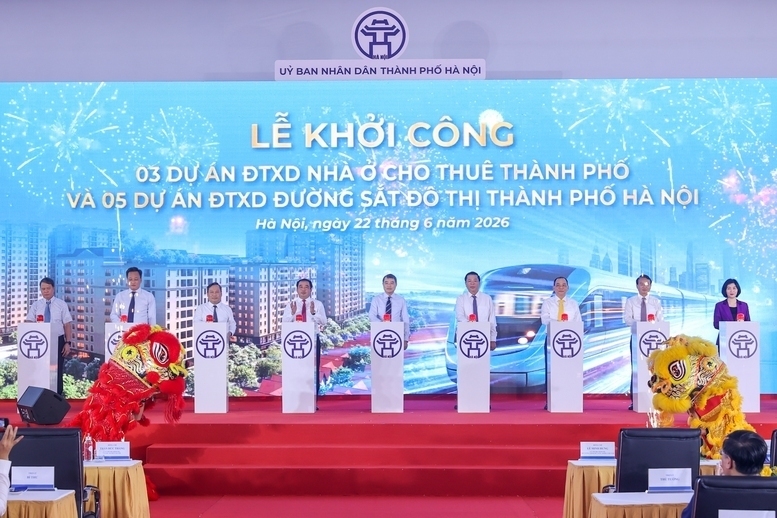
Prime Minister Le Minh Hung and delegates perform the launch ceremony for five urban railway lines and three rental housing projects in Hanoi. Photo: VGP
According to Prime Minister Le Minh Hung, rental housing must be identified as a strategic and long-term housing segment serving a broad range of residents, particularly workers, labourers, students, public servants and members of the armed forces who have substantial demand for affordable rental accommodation.
The Prime Minister instructed Hanoi to take the lead by urgently reviewing all planning schemes, land resources and underutilised public housing assets in order to develop rental housing models, and report the results to the Government by the end of June 2026. He emphasised that successful implementation of Hanoi's pilot mechanisms could serve as a model for nationwide expansion.
On this occasion, Hanoi launched three rental housing projects. The city has decided to use public investment capital sourced from monetary contributions to social housing obligations by commercial housing projects to implement two rental housing projects.
The first project is located in the Phap Van - Tu Hiep housing area in Yen So Ward, comprising 1,176 apartments with a total investment of approximately VND 1,396 billion. The second is located in the Old Quarter Population Relocation Housing Area in Viet Hung Ward, comprising 1,166 apartments with a total investment of approximately VND 3,563 billion.
The Phap Van - Tu Hiep project includes three buildings, A2, A3 and A4. Buildings A2 and A3 are being renovated and converted from student housing into rental apartments and are expected to be completed in 2026, while Building A4 will be newly constructed and is scheduled to be put into operation in 2027.
Meanwhile, the rental housing project in Viet Hung Ward is being built by Vinhomes and is expected to be completed between 2026 and 2028.
Prime Minister Le Minh Hung and delegates perform the launch ceremony for five urban railway lines and three rental housing projects in Hanoi. Photo: VGP
In addition, Him Lam Corporation has proactively proposed the Him Lam Long Bien mixed-use housing project, allocating more than 11 hectares of land for the development of approximately 6,000 apartments with a total investment of around VND 29,000 billion, including roughly 4,000 long-term rental units. The rental housing component is expected to be completed and put into operation by the fourth quarter of 2028.
Notably, the application of special mechanisms under the 2026 Law on the Capital, Resolution No. 188/2025/QH15 and Resolution No. 258/2025/QH15 has enabled Hanoi to simplify numerous investment procedures, separate site clearance into independent projects and significantly shorten project preparation time, ensuring groundbreaking schedules are accelerated by at least 50%.
Hanoi has identified these transport and housing projects as not only addressing immediate needs but also laying the groundwork for long-term development, contributing to the city's goal of achieving double-digit GRDP growth during the 2026–2030 period and reinforcing its role as a major growth pole and development engine of the country.
The municipal government pledged to mobilise all available resources to ensure projects are implemented on schedule, with quality, safety and investment efficiency guaranteed. It also committed to promptly addressing difficulties and obstacles, making effective use of the special mechanisms granted by the central authorities, and striving to deliver landmark projects distinguished by their progress, quality and effectiveness, contributing to the development of a "Cultured - Civilised - Modern - Happy" capital city.
Hanoi's commitment to the Government and its people
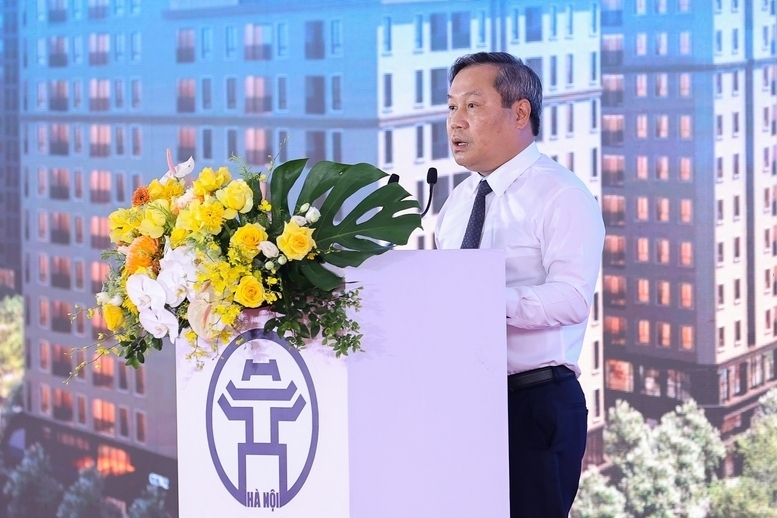
According to Chairman of the Hanoi People's Committee Vu Dai Thang, the groundbreaking ceremony marks the beginning of a new development phase featuring projects of strategic significance for decades to come. He stressed that the value of policies and guidelines can only be fully realised when translated into tangible projects, concrete products and development outcomes that people and businesses can experience in their daily lives.
Chairman of the Hanoi People's Committee Vu Dai Thang delivers remarks at the event. Photo: VGP
Vu Dai Thang stated that the goal of substantially completing the five urban railway lines by 2030 is not merely a development plan but a commitment by Hanoi to the Government, the people of the capital and the city's future development.
Regarding the three rental housing projectsa, he acknowledged and highly appreciated the support of the business community, particularly Him Lam Corporation, which proactively adjusted its investment orientation to allocate more than 11 hectares of land for the development of over 4,000 long-term rental apartments, helping the city realise a major policy with profound social significance.
These are the first projects under Hanoi's rental housing development programme, laying the foundation for the gradual formation of a new housing segment. The city aims to establish a professional, high-quality and affordable rental housing market while reducing pressure on home ownership and fostering a healthier, more sustainable real estate market aligned with international development trends.
The rental housing areas will be planned in coordination with urban railway lines, employment centres, educational institutions, healthcare facilities and public services, creating modern, civilised and convenient urban communities.
At the event, Duong Cong Minh, major shareholder of Him Lam Corporation and Chairman of Sacombank, described the occasion as a particularly important milestone for the company as it became the first investor approved to develop a social rental housing project in Hanoi.
Founded in 1994, Him Lam is one of Vietnam's pioneering real estate developers with extensive experience in the sector. Its projects span multiple fields. In Hanoi alone, the company has developed and is developing several large-scale housing projects, notably Him Lam Thuong Thanh and Him Lam Phuc Loi social housing projects, comprising more than 10,000 apartments.
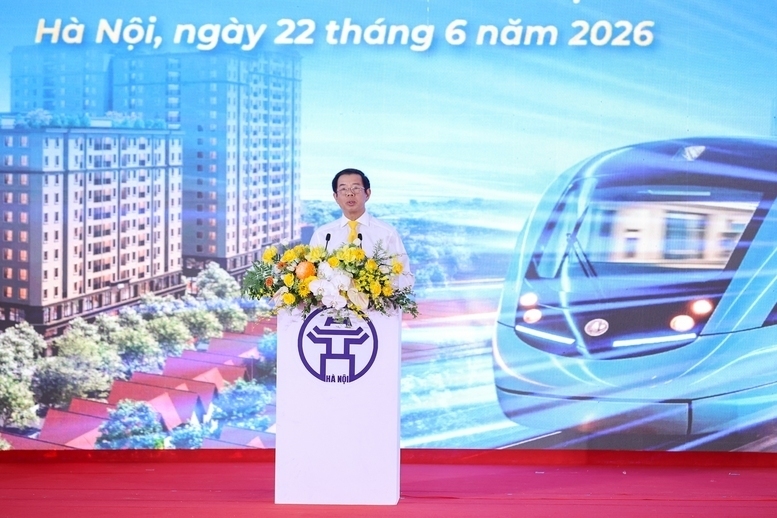
Duong Cong Minh, major shareholder of Him Lam Corporation and Chairman of Sacombank. Photo: VGP/Nhat Bac
As one of the city's key investors in addressing housing needs, Him Lam has consistently demonstrated its reputation, financial strength and development experience. The company remains ready to support Party and State policies aimed at advancing the real estate sector in general and housing development in particular, especially social and rental housing.
Duong Cong Minh noted that demand for rental housing among workers, public servants, labourers and young families remains substantial. However, the supply of professionally developed rental housing with synchronised infrastructure and amenities remains limited. Most existing options consist of small-scale, self-built rental accommodation that lacks stability and fails to meet expectations for quality, safety and long-term living standards.
He described this as a major gap in the housing market structure that requires stronger participation from capable and experienced enterprises. For the newly launched rental housing project, Him Lam committed to mobilising adequate resources to ensure rapid and synchronised implementation in line with the approved schedule, while maintaining housing quality equivalent to commercial residential projects in terms of engineering standards, construction quality, aesthetics and urban amenities, with the aim of creating a model rental housing development.
Duong Cong Minh also expressed hope for continued support from central and local authorities and proposed that policymakers further study and introduce appropriate mechanisms tailored to the rental housing segment, particularly preferential long-term financing policies for rental housing developers.
On July 24, Minister of Industry and Trade Le Manh Hung signed Decision No. 1889/QD-BCT issuing the Ministry of Industry and Trade's Action Program to implement Government Resolution No. 168/NQ-CP, dated June 27, 2026, on updating the growth scenario and key solutions for the remaining quarters of the year to achieve the 2026 growth target of at least 10% while maintaining macroeconomic stability.
A new report from Booking.com shows that Vietnamese travelers are placing increasing importance on sustainable tourism, with many seeking to reduce their environmental impact while supporting local communities.
The Vietnam Trade Office in Chile promoted Vietnamese coffee, connected businesses with importers and reinforced the country's presence in the Chilean market.
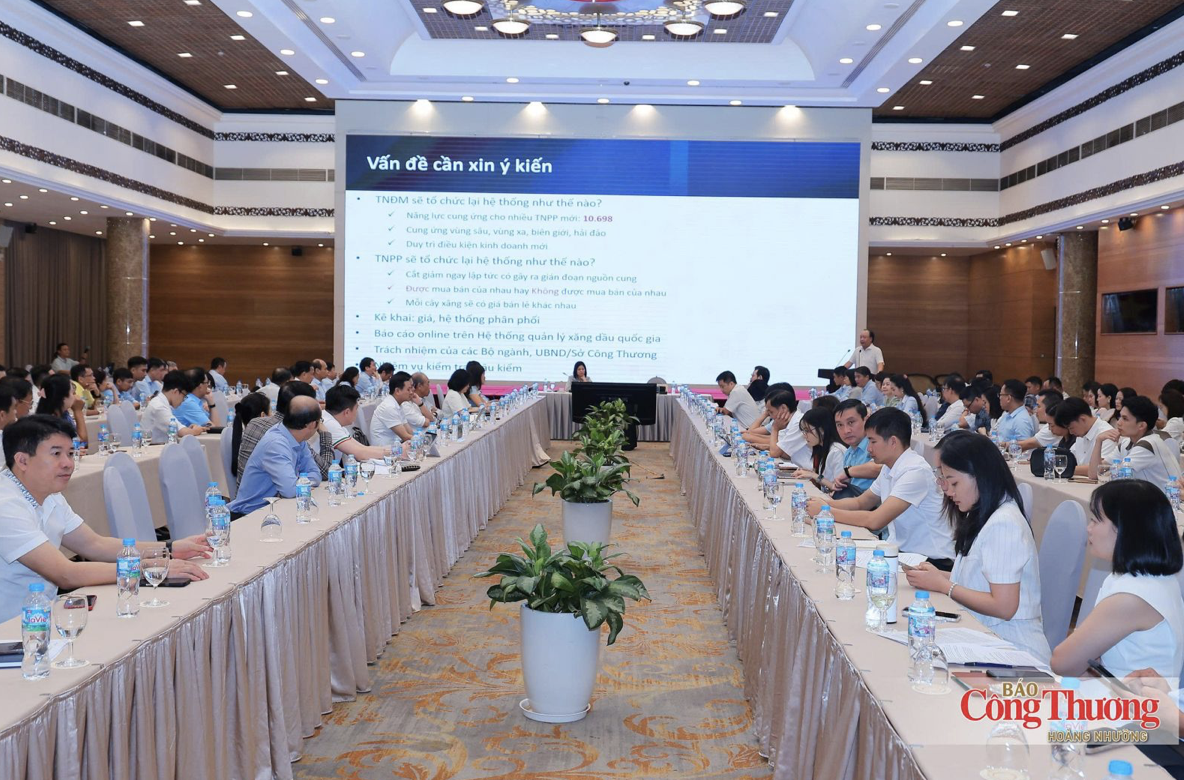
The draft decree proposes reforms to market management, pricing, distribution and supply security to improve the efficiency of Vietnam's petroleum market.
On July 24, Minister of Industry and Trade Le Manh Hung signed Decision No. 1889/QD-BCT issuing the Ministry of Industry and Trade's Action Program to implement Government Resolution No. 168/NQ-CP, dated June 27, 2026, on updating the growth scenario and key solutions for the remaining quarters of the year to achieve the 2026 growth target of at least 10% while maintaining macroeconomic stability.
The draft decree proposes reforms to market management, pricing, distribution and supply security to improve the efficiency of Vietnam's petroleum market.
The MoIT has guided localities on power planning updates under Decree No.272/2026/ND-CP, stressing correct procedures, legal grounds and closer coordination in implementation.
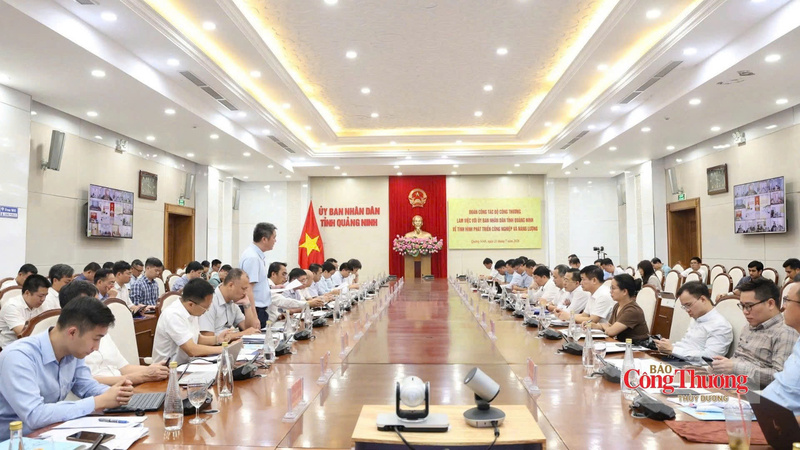
MoIT delegation led by Deputy Minister Truong Thanh Hoai worked with Quang Ninh to review the revised PDP8 and accelerate key power and industrial projects.
Vietnam and Laos exchanged experience on inspection, examination and domestic market management while reaffirming commitment to deepen bilateral cooperation and tie.