When Ho Chi Minh City discusses developing Outlet Centers, the issue is often viewed from the perspective of attracting tourists and retaining their shopping expenditure. However, this is also an opportunity for Vietnamese goods and brands to enter a new distribution channel, stand alongside international labels and reach foreign consumers directly in the domestic market.
A mechanism is needed to enable domestic brands to participate
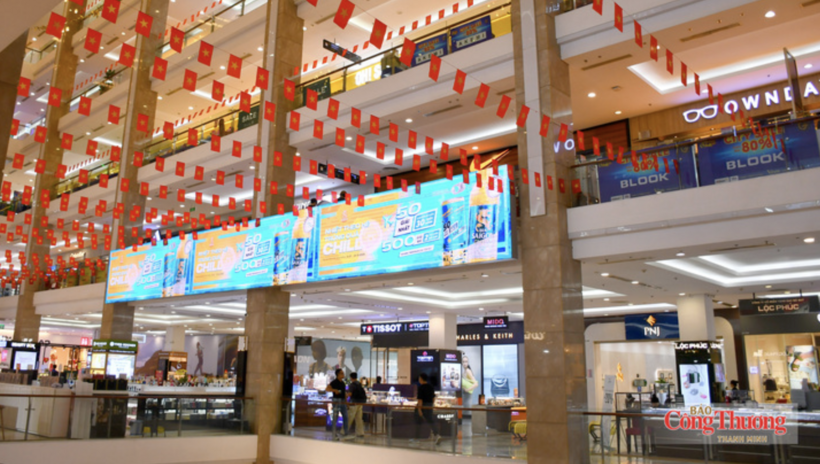
Outlet Centers are among the retail models being developed in line with the trend toward enhancing consumer experiences, diversifying consumption methods and creating destinations that integrate multiple types of services. Modern retail models are increasingly being organized around shopping, entertainment, leisure, dining, tourism and supporting services, thereby attracting visitors, extending their stays and increasing spending.
Outlet Centers represent a new direction that is well suited to Ho Chi Minh City, Vietnam’s largest and most dynamic economic hub.
On August 19, 2026, the Ho Chi Minh City Department of Industry and Trade held a consultation workshop on orientations for developing Outlet Centers in the city, bringing together representatives from ministries and agencies, associations, experts, investors and businesses. The workshop was based on three major policy documents: Resolution No. 09-NQ/TW dated May 19, 2026, on the city's development in the new era; Decision No. 1163/QD-TTg on the domestic trade development strategy; and Decision No. 2326/QD-TTg on the retail market development strategy through 2030.
Notably, the city has raised the issue of studying mechanisms to enable domestic manufacturers, branded enterprises and industry associations to participate in the Outlet Center supply chain, thereby expanding markets and enhancing the value of Vietnamese brands.
In its preliminary research report, the Ho Chi Minh City Department of Industry and Trade identified Outlet Centers not merely as a retail model but as a component of the trade-service-tourism ecosystem, with the potential to attract visitors, increase spending, develop shopping tourism, attract brands and generate spillover effects for the city's service industries.
Why are outlet centers an opportunity for Vietnamese goods?
Among the 10 major policy issues identified by the Ho Chi Minh City Department of Industry and Trade for further study, one focuses specifically on the development of Vietnamese goods and Vietnamese brands. The fact that the development of a modern retail model is being designed with Vietnamese products incorporated into the policy framework from the outset is encouraging.
One of the biggest opportunities is that Outlet Centers could become a channel for “in-country exports.” Instead of only shipping products overseas, Vietnamese businesses could sell directly to international visitors in the city, in connection with an Outlet Center–duty-free shopping–VAT refund–shopping tourism model proposed in the research dossier. A pair of shoes, a textile product or a processed food item made in Vietnam and purchased by a foreign visitor through this channel would generate revenue while also promoting the national brand.
In practice, Ho Chi Minh City and its surrounding areas are home to production capacity in many Vietnamese industries with competitive advantages, including textiles and garments, footwear and handbags, processed food, and handicrafts. The participation of these industry associations in the workshop indicates that Outlet Centers are being viewed as a link between production and distribution, rather than simply as commercial premises for lease.
From another perspective, domestic consumers would also benefit. Vietnam is a manufacturing base for many global brands, yet domestic consumers have long had to pay relatively high prices for these products or travel abroad to purchase genuine products at more competitive prices. A transparently operated Outlet system could retain part of this spending domestically while creating competitive pressure for Vietnamese brands to improve product quality and branding.
The challenge, however, is that the Outlet model does not automatically create space for Vietnamese brands. Under the model proposed by the Ho Chi Minh City Department of Industry and Trade, an upscale Outlet Center could accommodate between 100 and 200 stores, focusing on brands ranging from mid-market and premium to luxury. Within such a structure, without proactive mechanisms, Vietnamese brands, particularly small and medium-sized enterprises, could easily be left out or relegated to secondary roles.
This is accompanied by requirements for quality and transparency. Outlet Centers can maintain their credibility only by ensuring product authenticity, origin, traceability and price transparency before, during and after promotional campaigns. For Vietnamese goods, this is both a condition for participation and an opportunity: a product placed alongside international brands in a transparent environment will be judged on its actual quality rather than perceived merely as a low-priced product. Conversely, if counterfeit or unclear-origin goods are allowed to enter the system, the model will lose consumer trust, with Vietnamese brands also suffering the consequences.
The business model and institutional framework will determine the "playing field" for Vietnamese goods
Another critical factor directly affecting opportunities for Vietnamese brands is the project's financial structure.
The nature of the Outlet business is the frequent sale of discounted goods, typically at reductions of 30% to 80%, resulting in relatively thin profit margins. International experience shows that no large-scale Outlet project can survive solely on retail space revenue; instead, it needs to be developed as a mixed-use complex incorporating real estate, hotels and entertainment facilities to offset costs. This also affects the tenant mix and the ability of developers to allocate space and offer preferential policies to domestic brands.
Therefore, if Vietnamese goods are to gain a meaningful foothold, support mechanisms need to be designed from the outset rather than relying on the goodwill of investors and operators. These could include a minimum floor-area allocation for Vietnamese brands, programs connecting manufacturers with Outlet operators, or integrating Outlet Centers with trade promotion and national brand promotion activities. This is an area in which the city's industry and trade authorities can take a proactive leading role.
Behind this is also an institutional issue. Many matters relating to land, planning and pilot mechanisms fall beyond the city's authority and require inter-agency coordination and recommendations to central authorities. The speed at which these bottlenecks are addressed will determine how quickly Outlet Centers can be developed.
Outlet Centers represent a new direction that is well suited to the country's largest and most dynamic economic hub. The fact that Ho Chi Minh City has incorporated Vietnamese goods into the equation from the research stage is a positive development. However, the opportunity will become reality only if Vietnamese goods are given a clear mechanism for participation, allowed to compete in a transparent environment and supported in overcoming barriers related to supply, standards and costs. Each Outlet Center could serve as a platform for promoting Vietnamese goods to millions of domestic and international visitors, a gateway for in-country exports and a step toward helping Vietnamese brands mature.
Global Outlet developments in 2025-2026 are no longer standalone projects but have increasingly been integrated into mixed-use complexes incorporating residential and office real estate, entertainment, healthcare, shared service areas and other facilities, with floor areas ranging from 15,000 to 50,000 square meters.
These supporting areas provide revenue streams that sustain the projects, given the nature of Outlet businesses as discount retailers with very low profit margins. Planning regulations in Vietnam therefore need to accommodate such integrated models rather than restricting Outlet Centers to conventional commercial land. According to the report “Some Preliminary Findings from Research on the Development of Outlet Centers in Ho Chi Minh City and Issues Arising.”
Building on 50 years of diplomatic relations, Viet Nam and Thailand have continued to nurture friendship, strengthen mutual trust, expand cooperation and work toward new milestones in bilateral ties.
The Ministry of Industry and Trade completed all nine key Q3 legislative tasks and is prioritizing 56 remaining tasks to ensure timely, consistent and effective legal reform.
Vietnamese businesses are stepping up trade connections and seeking partners in Türkiye and Spain, opening up new opportunities to boost exports and gain access to European markets.
Access to advanced port technologies and stronger business connectivity are creating new opportunities for logistics cooperation between Viet Nam and China.
Building on 50 years of diplomatic relations, Viet Nam and Thailand have continued to nurture friendship, strengthen mutual trust, expand cooperation and work toward new milestones in bilateral ties.
The Ministry of Industry and Trade completed all nine key Q3 legislative tasks and is prioritizing 56 remaining tasks to ensure timely, consistent and effective legal reform.
Vietnamese businesses are stepping up trade connections and seeking partners in Türkiye and Spain, opening up new opportunities to boost exports and gain access to European markets.
Access to advanced port technologies and stronger business connectivity are creating new opportunities for logistics cooperation between Viet Nam and China.