The national-level Rural Industrial Exemplary Products (RISEP) title has opened new opportunities for the unburnt brick and tile products of Nasaki Co., Ltd. to reach international markets.
RISEP: A stepping stone for rural industrial products
According to statistics from the Department of Innovation, Green Transition and Industrial Promotion under the Ministry of Industry and Trade, after six editions of the national Rural Industrial Exemplary Products (RISEP) selection program, approximately 800 rural industrial products nationwide have received the prestigious recognition.
More than 80% of nationally recognized RISEP products have benefited from industrial promotion programs through machinery and equipment upgrades, technology application, technical demonstration models, and trade promotion activities.
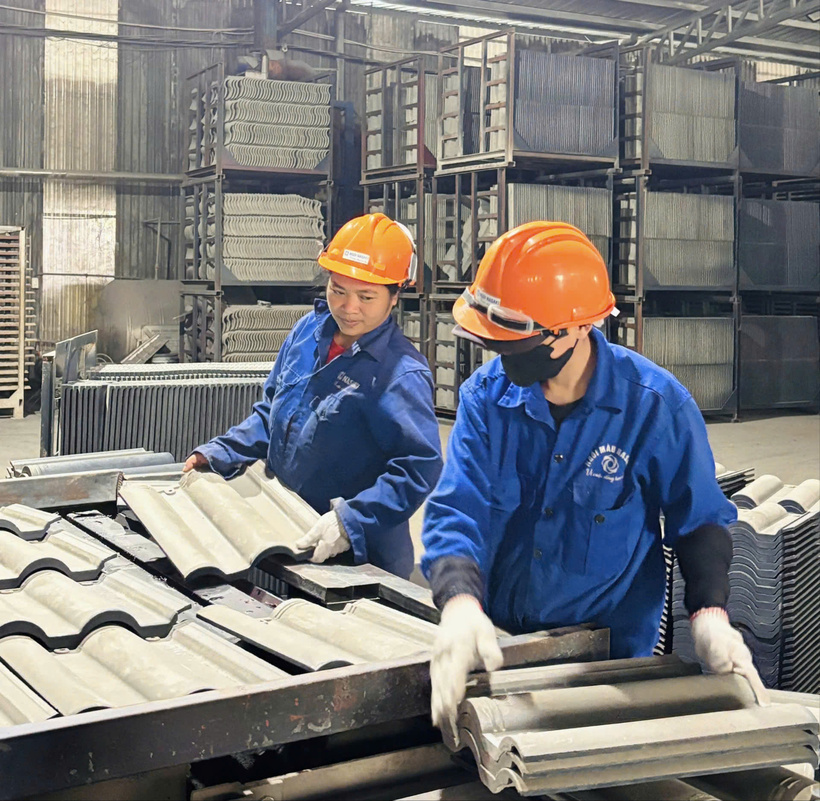
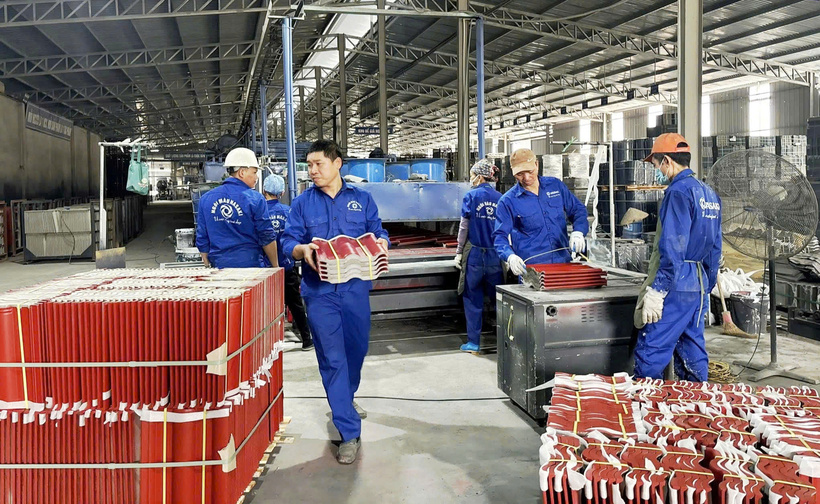
The company’s unburnt brick and tile products have been exported to international markets.
In practice, for many rural industrial enterprises, the RISEP title is not merely recognition of product quality. It also serves as an important passport for strengthening brand identity, expanding markets, enhancing consumer confidence, and building trust with business partners. Nasaki Vietnam Co., Ltd. is a prime example.
Established in early 2018, Nasaki Vietnam specializes in manufacturing smart colored bricks and tiles using advanced Japanese green technology. In its initial phase, the company invested more than VND 5 billion in a wet-press roofing tile production line with an average capacity of approximately 50,000 tiles per month.
At the time, unburnt colored roofing tiles were still relatively unfamiliar to Vietnamese consumers, particularly in the Northwestern region. Changing traditional preferences for construction materials proved challenging, while the company also faced obstacles related to investment capital, technical workforce development, and market access.
Against this backdrop, Chief Executive Officer Nguyen Thi Khuyen and her team gradually overcame these challenges. The company focused on major urban centers in the Northwestern region, targeting projects with high requirements for aesthetics and quality. At the same time, Nasaki prioritized local employment, invested in workforce training, invited specialists to enhance technical skills, and built a team of skilled and professional workers.
A notable aspect of Nasaki’s strategy is its commitment to environmentally friendly products such as unburnt bricks and tiles. These products are manufactured from materials derived from the stone powder supply process and do not require kiln firing, thereby reducing emissions and waste generation. Throughout production, the company also emphasizes resource efficiency, material recycling, energy conservation, and sustainable resource utilization.
To date, the company has developed nine lines of unburnt roofing tiles, including a Korean-style tile collection featuring intricate details manufactured in Vietnam using non-fired pressing technology. Nasaki products have been supplied to numerous large-scale projects, including developments by Vingroup and Ocean Park. The company is also one of only three manufacturers in Vietnam exporting unburnt bricks and tiles to overseas markets.
In 2023, Nasaki’s unburnt colored bricks and tiles were recognized by the Ministry of Industry and Trade as a national Rural Industrial Exemplary Product. The recognition affirmed the company’s innovation and creativity while providing additional momentum for further quality enhancement and market expansion.
From green manufacturing to global expansion
Following its recognition as a national RISEP product, Nasaki has gained stronger brand positioning, improved competitiveness, and greater opportunities for market expansion. The company currently sells more than one million roofing tiles annually, generates total revenue of VND 21 billion, and provides stable employment for nearly 100 local workers, with average monthly incomes exceeding VND 7 million per person.
For a rural industrial enterprise, these achievements reflect not only business efficiency but also tangible contributions to local livelihoods and economic development. From a small manufacturing facility facing significant initial challenges, Nasaki has steadily established its own development path by producing environmentally friendly products, enhancing quality standards, maintaining customer trust, and integrating business growth with environmental and social responsibility.
RISEP helps strengthen product branding and build trust among consumers and business partners.
Beyond its domestic success, Nasaki has gradually expanded into international markets. The company signed an exclusive distribution agreement for colored roofing tiles with LSG Investment Cambodia Co., Ltd. It has also successfully exported more than 4,300 flat roofing tiles to Malaysia, with a total contract value exceeding USD 6,000.
For CEO Nguyen Thi Khuyen, every export order represents more than commercial success. It is also a source of pride that products made by local workers can enter overseas markets, helping to affirm the value of Vietnamese products and the capabilities of rural industrial enterprises.
Nasaki’s experience demonstrates that national RISEP recognition is not an endpoint but rather a foundation for continuous product improvement, workforce development, retail market expansion, participation in major construction projects, and deeper integration into value chains.
According to Nguyen Thi Lam Giang, Director General of the Department of Innovation, Green Transition and Industrial Promotion, RISEP recognition provides substantial benefits for rural industrial establishments. In addition to being authorized to use the program’s logo on their products, recognized enterprises receive priority access to industrial promotion funding, trade promotion activities, and media outreach programs.
More importantly, RISEP helps establish product branding and strengthens confidence among consumers and business partners. It serves as a stepping stone for rural industrial products to participate more deeply in value chains, expand domestic market presence, and pursue export opportunities.
Experts note that one of the key strengths of the RISEP system is its rigorous multi-level evaluation process, which progresses from local to national levels and ensures transparency, objectivity, and fairness. Products are assessed based on a broad range of criteria, including production development capacity, market responsiveness, economic, technical, social and environmental performance, cultural and aesthetic value, and export potential.
As Vietnam continues to promote green growth, innovation, and digital transformation, the RISEP program is expected to remain an important extension of industrial promotion activities, contributing to the discovery, promotion, and advancement of Vietnamese rural industrial products.
To enable national industrial promotion programs to serve as an effective catalyst for rural industrial products, the Prime Minister issued Decree No. 235/2025/ND-CP in 2025, amending and supplementing several provisions of Decree No. 45/2012/ND-CP on industrial promotion. If implemented effectively, Decree No. 235 will not only support small and micro-sized enterprises but also act as a driving force for the sustainable development of rural industry, enhancing competitiveness and facilitating market expansion.
On October 13, the Agency of Foreign Trade under the Ministry of Industry and Trade (MoIT) held a conference in Dong Thap province to disseminate Government Decree No.365/2026/ND-CP dated September 23, 2026, on rice export and import business, and Circular No.65/2026/TT-BCT dated October 1, 2026, issued by the Minister of Industry and Trade, detailing certain provisions and measures for implementing Decree No.365/2026/ND-CP.
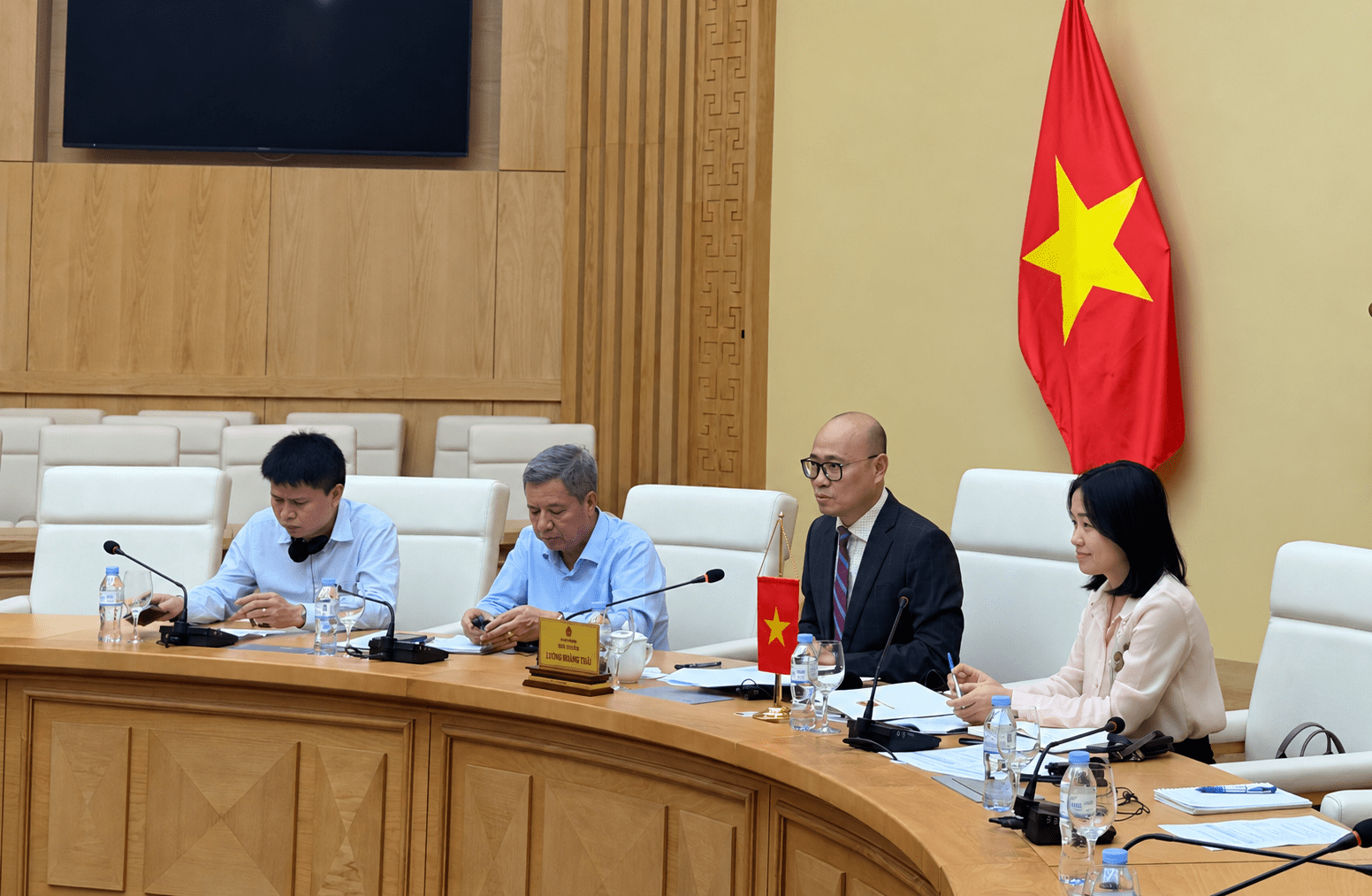
On October 13, Deputy Minister of Industry and Trade Luong Hoang Thai held a working session with MEDEF International, a French business organization, and representatives of French corporations operating in various sectors, including energy, industry, transport, construction and infrastructure development, food and beverages, and services, at the Ministry of Industry and Trade's headquarters.
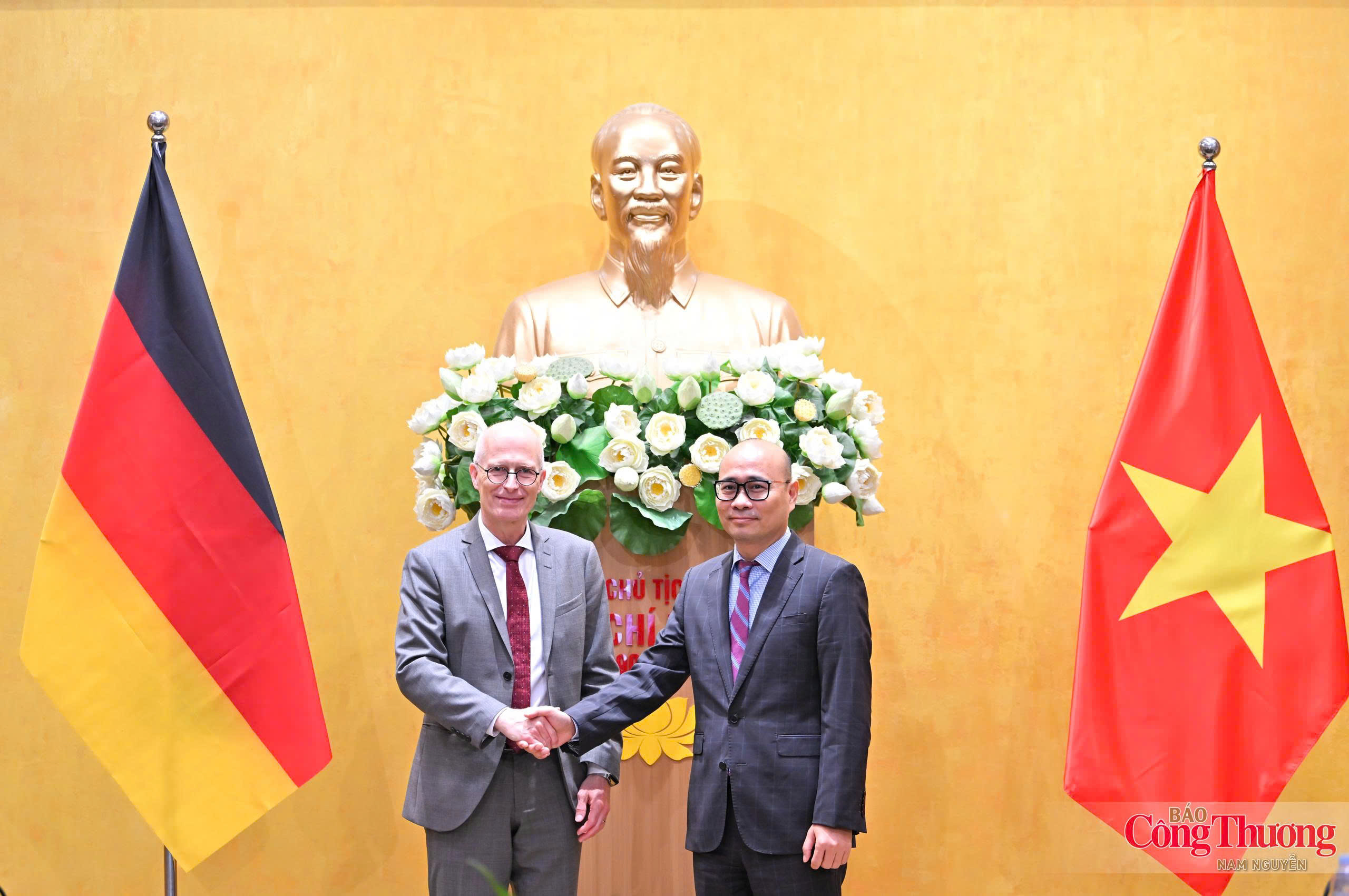
On October 14, Deputy Minister of Industry and Trade Luong Hoang Thai received and held a working session with a delegation from Hamburg, Germany, led by the city's First Mayor Peter Tschentscher at the Ministry of Industry and Trade's headquarters.
The Copyright Office is working closely with relevant agencies to develop plans for inspections and enforcement action against copyright and related rights infringements in the digital environment.
Viet Nam’s cultural industries are poised for growth as development targets become clearer, the digital content market expands and technology creates new ways.