The MoIT has released the Viet Nam National Energy Security Report 2026, which finds the country among only 13 of 177 nations to have maintained energy stability.
Energy self-reliance lays the foundation for growth
On the morning of November 10, in Hanoi, the Ministry of Industry and Trade (MoIT) held the National Energy Security Forum 2026 and released the Viet Nam National Energy Security Report 2026.
In implementation of Resolution No. 70-NQ/TW and under the direction of Prime Minister Le Minh Hung and Minister of Industry and Trade Le Manh Hung, the Newspaper of Industry and Trade presided over the National Energy Security Forum 2026, themed "Self-reliant energy - the lifeblood of double-digit growth," in coordination with the Electricity Authority of Viet Nam, the Energy - Petroleum Agency, the Agency for Domestic Market Surveillance and Development, the Department for Science, Technology and Digital Transformation, the Institute of Energy, Viet Nam Electricity (EVN), the Viet Nam National Industry - Energy Group (Petrovietnam), the Viet Nam National Coal and Mineral Industries Group (Vinacomin), the Viet Nam National Petroleum Group (Petrolimex) and the National Power System and Market Operation Company Limited (NSMO).
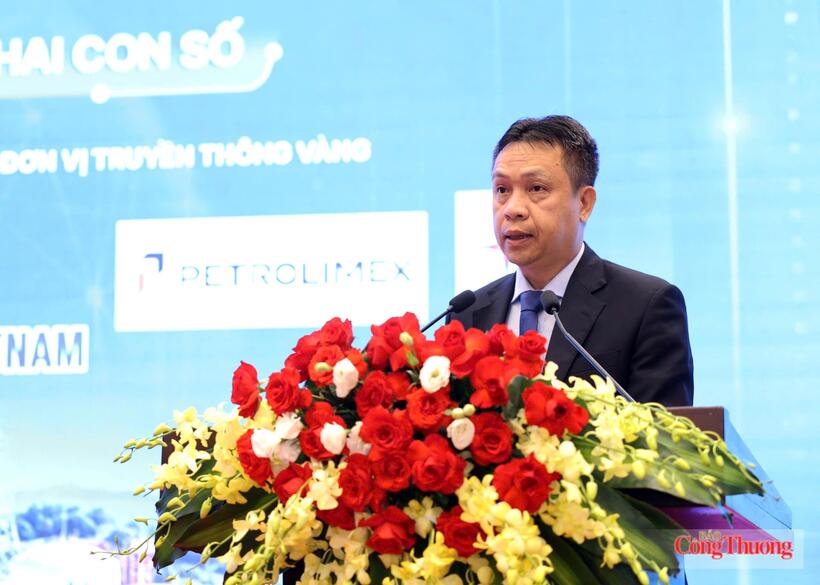
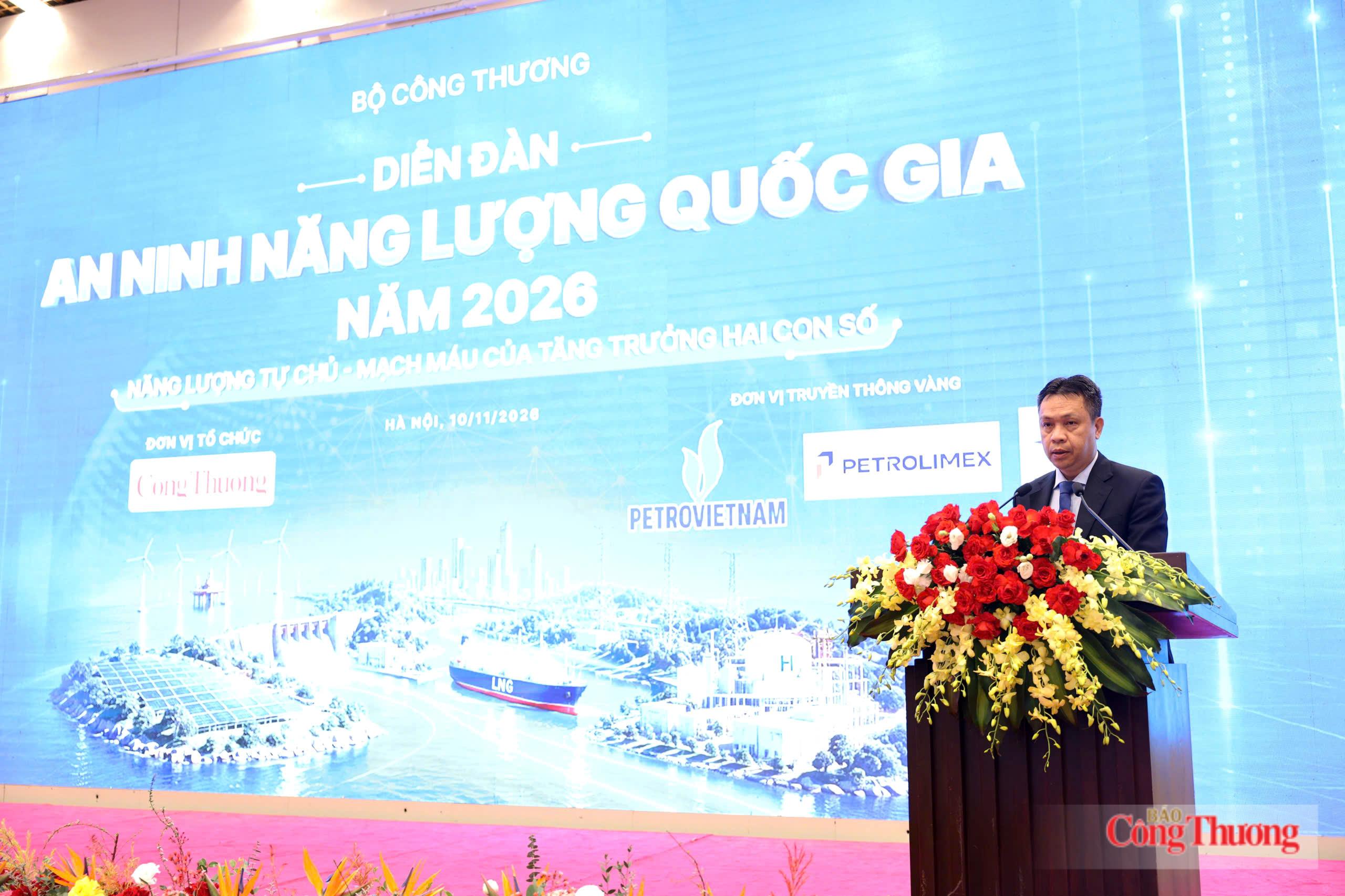
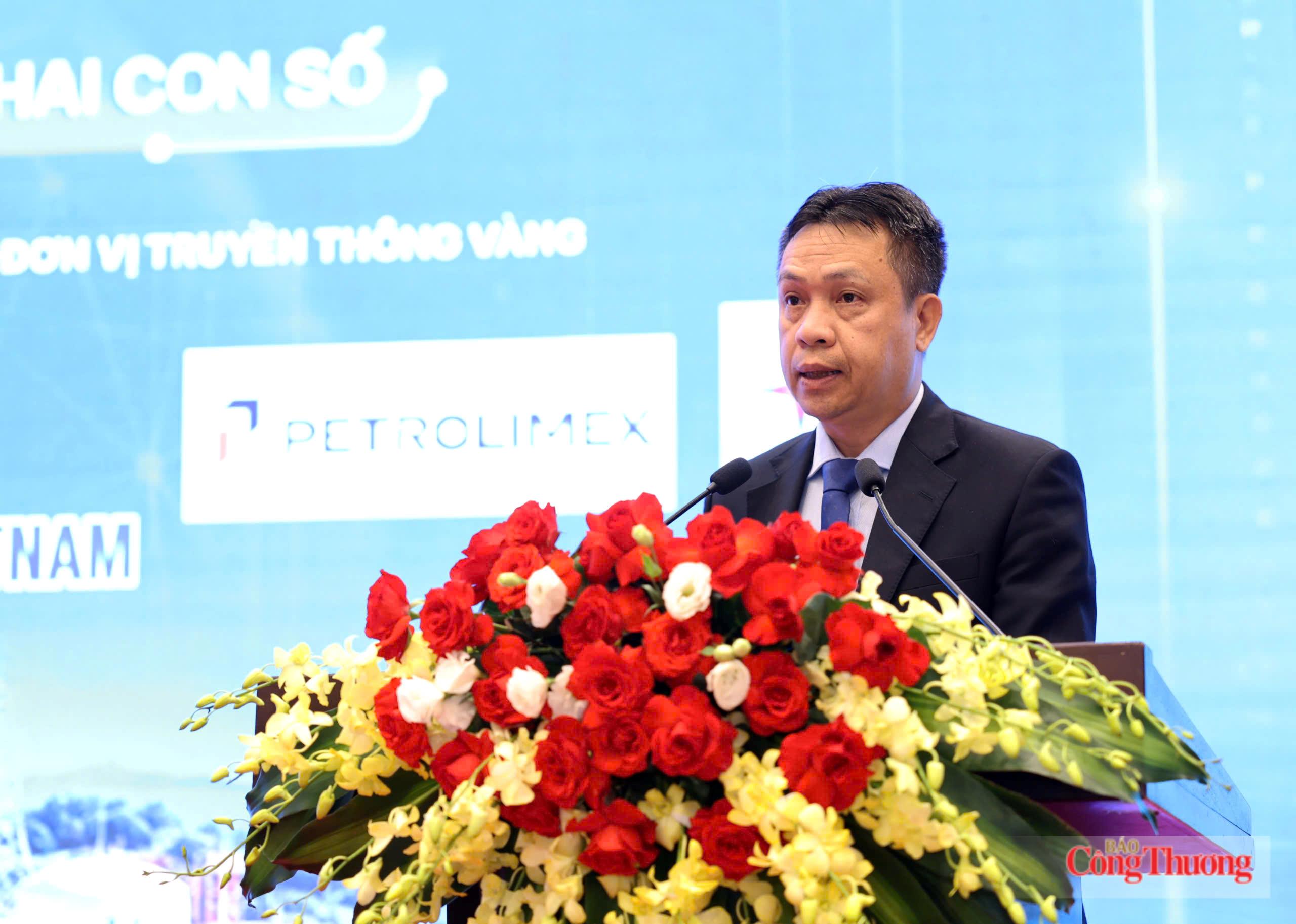
Nguyen Viet Son, Deputy Minister of Industry and Trade. Photo: Can Dung
The forum was attended by Ngo Dong Hai, member of the Party Central Committee and Deputy Head of the Party Central Committee's Commission for Propaganda and Education, and Ta Dinh Thi, Vice Chairman of the National Assembly's Committee for Science, Technology and Environment.
Deputy Minister Nguyen Viet Son chaired the forum on behalf of the MoIT. Also in attendance were representatives of central ministries and agencies, provinces and cities, units under the MoIT, energy groups, associations, research institutes, international organisations, experts and businesses.
Opening the forum, Deputy Minister Nguyen Viet Son said the event was taking place after more than a year of implementing Resolution No. 70-NQ/TW and the Government's Resolution No. 328/NQ-CP promulgating the action programme to implement Resolution No. 70-NQ/TW. Resolution No. 22-NQ/TW dated July 28, 2026, adopted at the third plenum of the 14th Party Central Committee on the National Security Strategy, further requires a decisive shift in thinking on energy security from "sufficient supply" to "safety, stability, self-reliance and sustainability."
"This is the consistent orientation for us to review results, identify shortcomings and set out solutions for the period ahead," the Deputy Minister stressed. The 14th National Party Congress set a target of average GDP growth of 10% or more per year for the 2026-2030 period. Energy must therefore go one step ahead, and energy self-reliance is the foundation of economic self-reliance. Resolution No. 70-NQ/TW sets clear quantitative targets for 2030: total primary energy supply of around 150-170 million tonnes of oil equivalent; total power generation capacity of around 183-236 GW, or higher depending on system demand; total electricity output of around 560-624 billion kWh; refineries meeting at least 70% of domestic demand for petroleum products; and petroleum reserves equivalent to around 90 days of net imports. These are political commitments of the entire sector and a direct measure of the effectiveness of its direction and management.
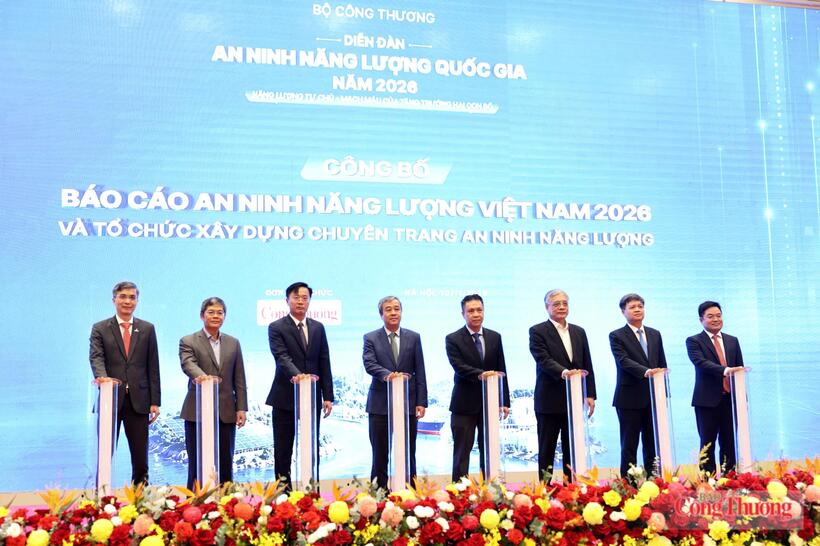
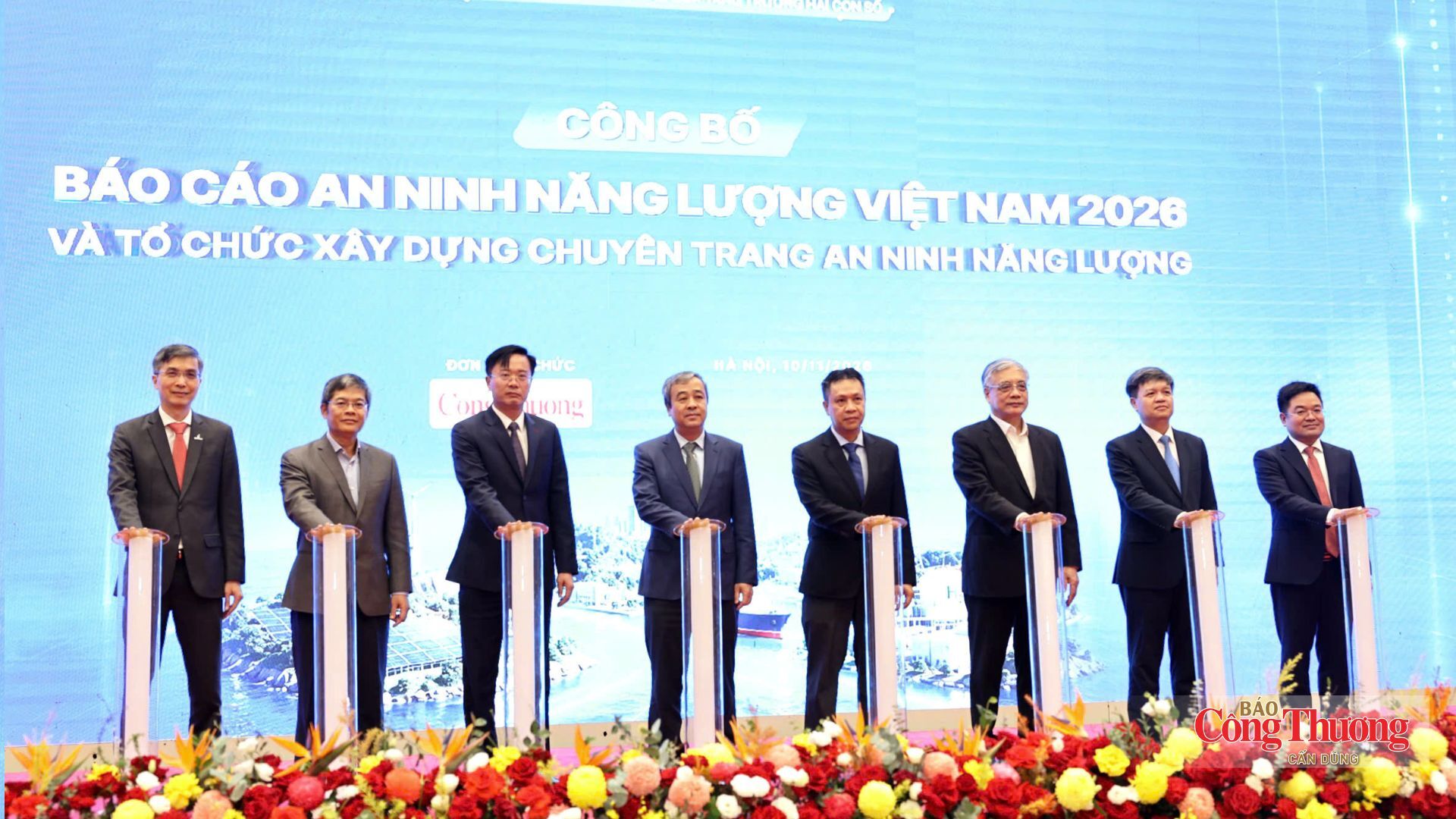
Delegates perform the ceremony to release the Viet Nam National Energy Security Report 2026. Photo: Can Dung
According to the Deputy Minister, the report released at the forum affirms that 2026 was the year in which Viet Nam's energy system suffered its biggest shock in decades. The Strait of Hormuz was blockaded for around six months, and Brent crude prices at one point reached USD 118.35 per barrel. Record heatwaves and El Niño pushed electricity load to an all-time high, while hydropower output was around 18.5 billion kWh lower than in 2025. "Of the 177 countries surveyed in the report, as of November 9, 2026, 102 countries, or 57.6%, faced energy difficulties; only 13 countries maintained stability, and Viet Nam is one of them," the Deputy Minister said.
Maintaining that position was no given. Under the leadership of the Political Bureau and the Secretariat, with the support of the National Assembly, the resolute direction of the Government and the Prime Minister, and the engagement of ministries, sectors, localities and the business community, institutional bottlenecks were gradually removed, and Viet Nam has safeguarded three important things.
First, sufficient electricity was maintained in an unprecedentedly difficult year. Peak capacity hit a record 57,537 MW on June 24, 2026; the system withstood three extreme heatwaves without rolling power cuts; electricity generation and imports in the first nine months rose by 9.4%, and are estimated at 356.2 billion kWh for the full year, up more than 10%.
Second, petroleum supply was maintained even as a strategic shipping route was blockaded. The two domestic refineries operated above their designed capacity; crude oil sources were diversified from one to more than 10 types; and Viet Nam has neither experienced shortages nor had to draw on national petroleum reserves.
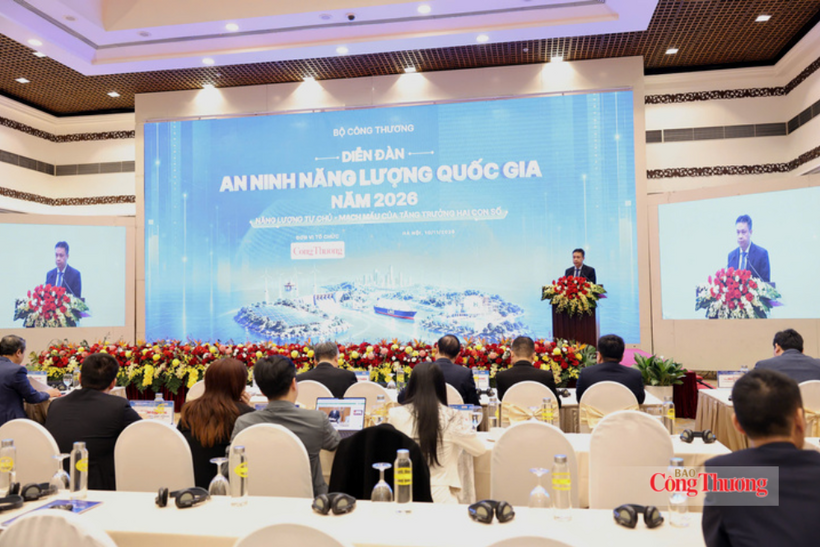
Deputy Minister Nguyen Viet Son delivers the opening speech. Photo: Can Dung
Third, energy prices were kept under control. The State allocated more than VND 64,000 billion to policies cutting taxes and fees on petroleum products and to advances for the Price Stabilisation Fund; on October 26, 2026, domestic retail petrol prices stood at only around 63% of the global average.
"However, the report also points to challenges that need to be addressed. Net energy imports rose to 43.9% of total primary energy supply in 2025. Petroleum reserves cover only around 60 days of net imports, against the target of 90 days, and there are still no national crude oil reserves. Load in the north is rising sharply, and many generation and grid projects remain held up by problems with mechanisms, site clearance and capital," Deputy Minister Son pointed out.
Unlocking resources to ensure energy security
The year 2027 will be difficult, and 2028 even more so. Electricity demand is set to rise by around 10% on top of the high base of 2026, while new baseload sources will not yet be in operation. Peak capacity in the north is forecast to rise sharply in 2027 and continue rising in 2028. At a conference on November 7, 2026, Minister of Industry and Trade Le Manh Hung required that, in all circumstances, energy in general, and electricity in particular, must be supplied in sufficient quantities for economic development and people's lives.
To ensure the forum makes a practical contribution, the Deputy Minister proposed five key topics.
First, institutions. Delegates were asked to identify specific remaining obstacles and propose solutions to shorten the time needed to process procedures and build investor confidence.
Second, ensuring sufficient electricity in 2027-2028. The forum was asked to focus on solutions for the north during the 2027 dry season, to accelerate the generation and grid projects that must enter operation in 2027, and to recommend decisions that need to be made early for 2028.
Third, fuel self-reliance and reserves. The lesson of Hormuz shows that dependence on a single source or a single shipping route is the greatest risk. "I hope experts and businesses will propose solutions to increase reserves and reduce risks relating to import sources and routes," the Deputy Minister said.
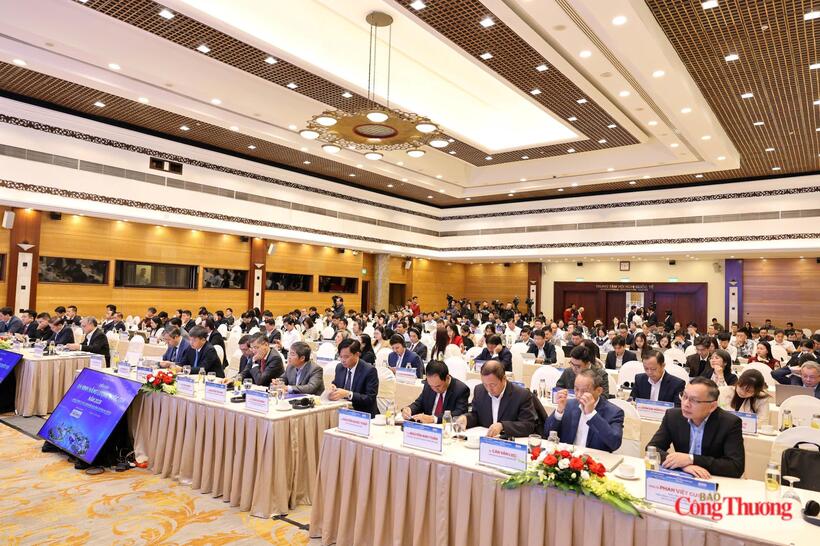
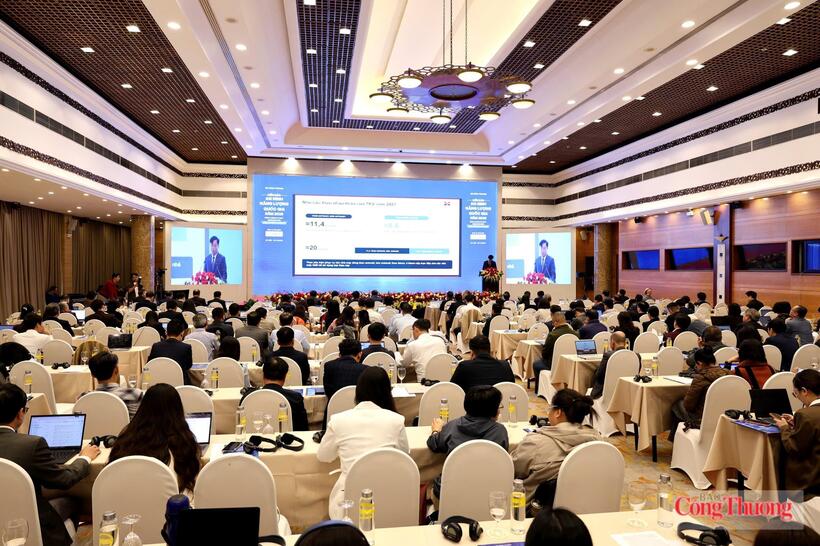
Delegates attending the event. Photo: Can Dung
Fourth, forecasting and management. The year 2026 showed the need for data-driven management. Experts were invited to share experience in improving the quality of forecasts and connecting data among suppliers, customers and regulators.
Fifth, energy transition, capital mobilisation, energy efficiency and technological self-reliance. Investors and financial institutions were invited to discuss frankly the conditions under which large energy projects can raise long-term capital, while businesses and research institutes were invited to share experience in energy efficiency and in cooperating to master technology.
An overview of the forum. Photo: Can Dung
More than a year of implementing Resolution No. 70-NQ/TW marks the first leg of a journey towards long-term goals. Today's efforts must be sustained with a sense of responsibility, coordination and determination to put these orientations into practice.
"I am confident that the forum will produce many dedicated contributions and practical initiatives and will foster new opportunities for cooperation. The MoIT values the contributions of delegates and will study and incorporate them in developing and implementing policies," Deputy Minister Nguyen Viet Son said.
The highlight of the forum was a panel discussion titled "Energy security - unlocking resources, enhancing self-reliance and creating growth momentum," which focused on supplying energy for growth in the new period; a national energy mix that meets the requirements of growth and energy transition; and international experience with policies on purchasing electricity from renewable sources to help develop a competitive electricity market.
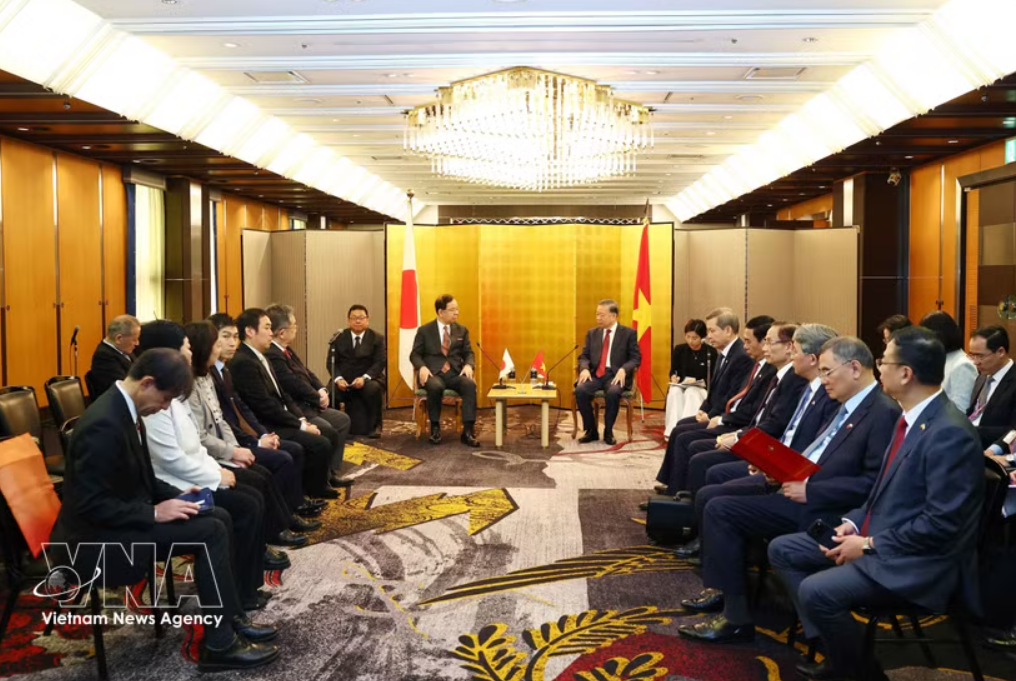
Viet Nam wants deeper ties with Japan and continued cooperation between the two Parties and countries, General Secretary of the Communist Party of Viet Nam (CPV) Central Committee and President To Lam said.
Following the National Energy Security Forum 2026, the MoIT has identified five key tasks, focusing on substantive action with clear responsibilities and timelines.
At the National Energy Security Forum 2026 in Hanoi, the MoIT released the Viet Nam Energy Security Report 2026 and began building an energy security news site.
The MoIT has released the Viet Nam National Energy Security Report 2026, which finds the country among only 13 of 177 nations to have maintained energy stability.
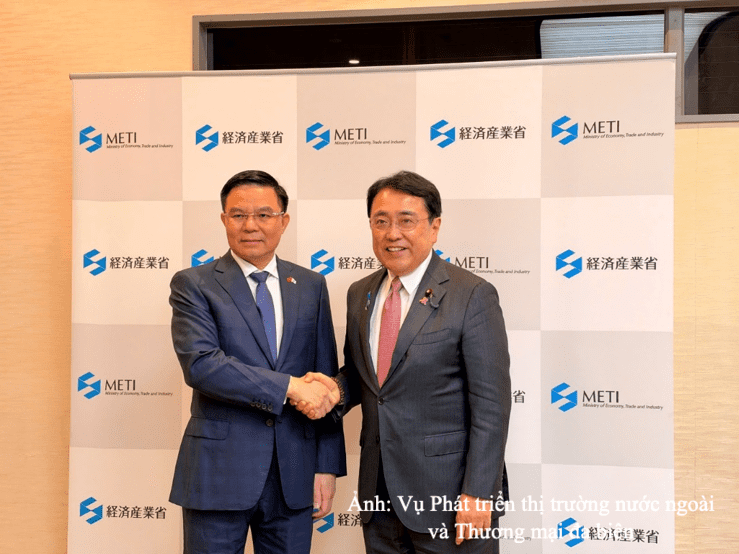
On the morning of November 9, 2026, in Tokyo, as part of the official visit to Japan by To Lam, Party General Secretary and State President, Minister of Industry and Trade Le Manh Hung and Japan's Minister of Economy, Trade and Industry Akazawa Ryosei co-chaired the 8th meeting of the Viet Nam - Japan Joint Committee on Cooperation in Industry, Trade and Energy.
Viet Nam wants deeper ties with Japan and continued cooperation between the two Parties and countries, General Secretary of the Communist Party of Viet Nam (CPV) Central Committee and President To Lam said.
At the National Energy Security Forum 2026 in Hanoi, the MoIT released the Viet Nam Energy Security Report 2026 and began building an energy security news site.
The MoIT has released the Viet Nam National Energy Security Report 2026, which finds the country among only 13 of 177 nations to have maintained energy stability.
On the morning of November 9, 2026, in Tokyo, as part of the official visit to Japan by To Lam, Party General Secretary and State President, Minister of Industry and Trade Le Manh Hung and Japan's Minister of Economy, Trade and Industry Akazawa Ryosei co-chaired the 8th meeting of the Viet Nam - Japan Joint Committee on Cooperation in Industry, Trade and Energy.
On the occasion of Viet Nam Law Day, November 9, 2026, Minister of Industry and Trade Le Manh Hung has sent a congratulatory message to all officials and civil servants working in institutional and legal development across the industry and trade sector.