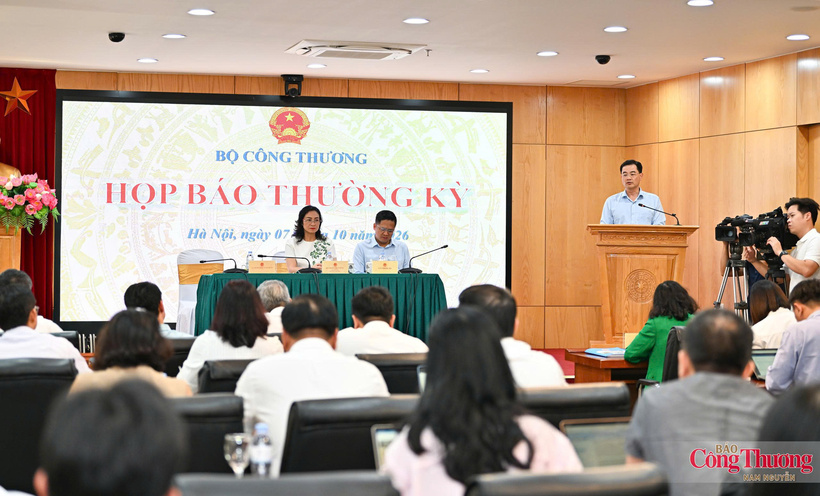
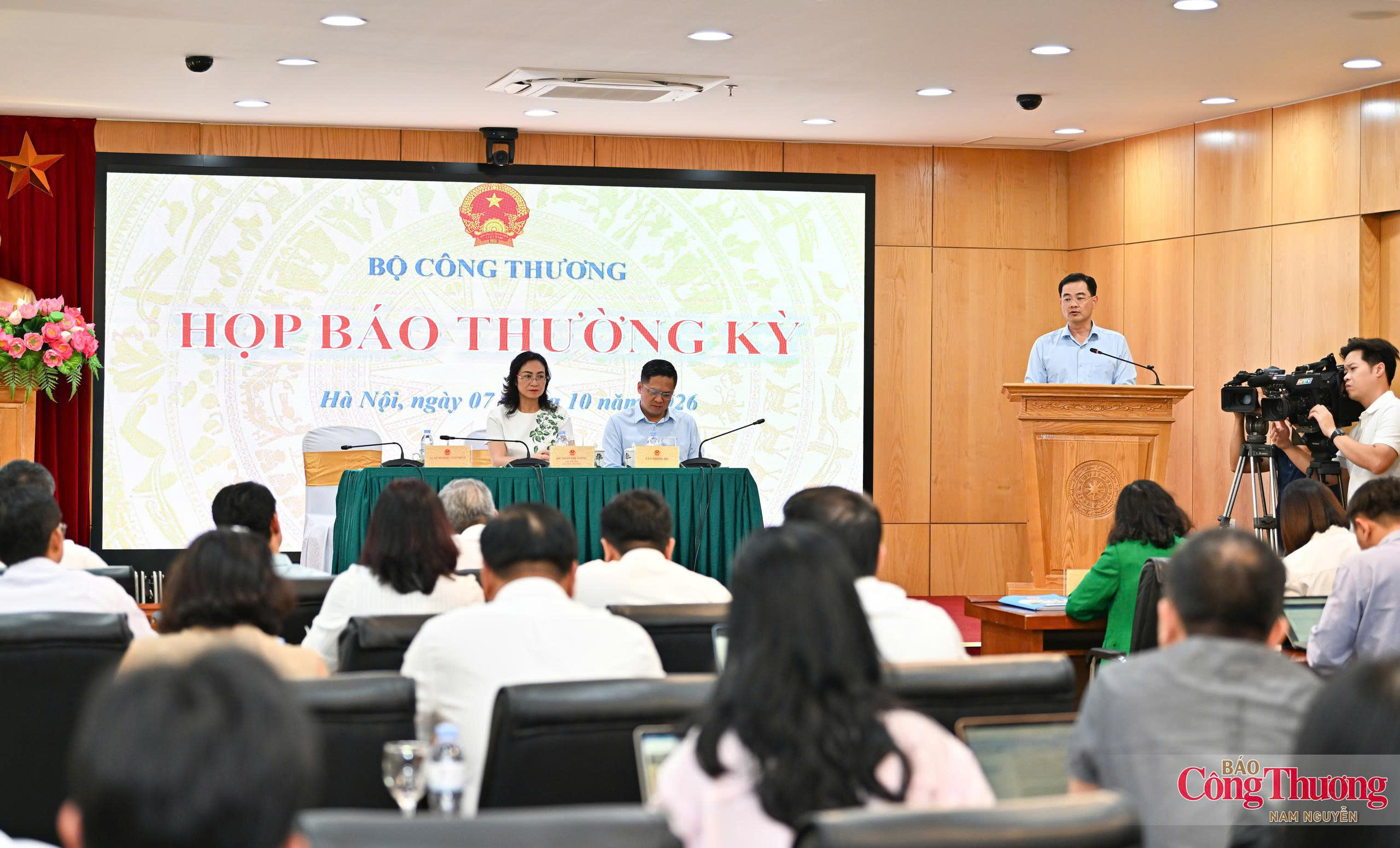
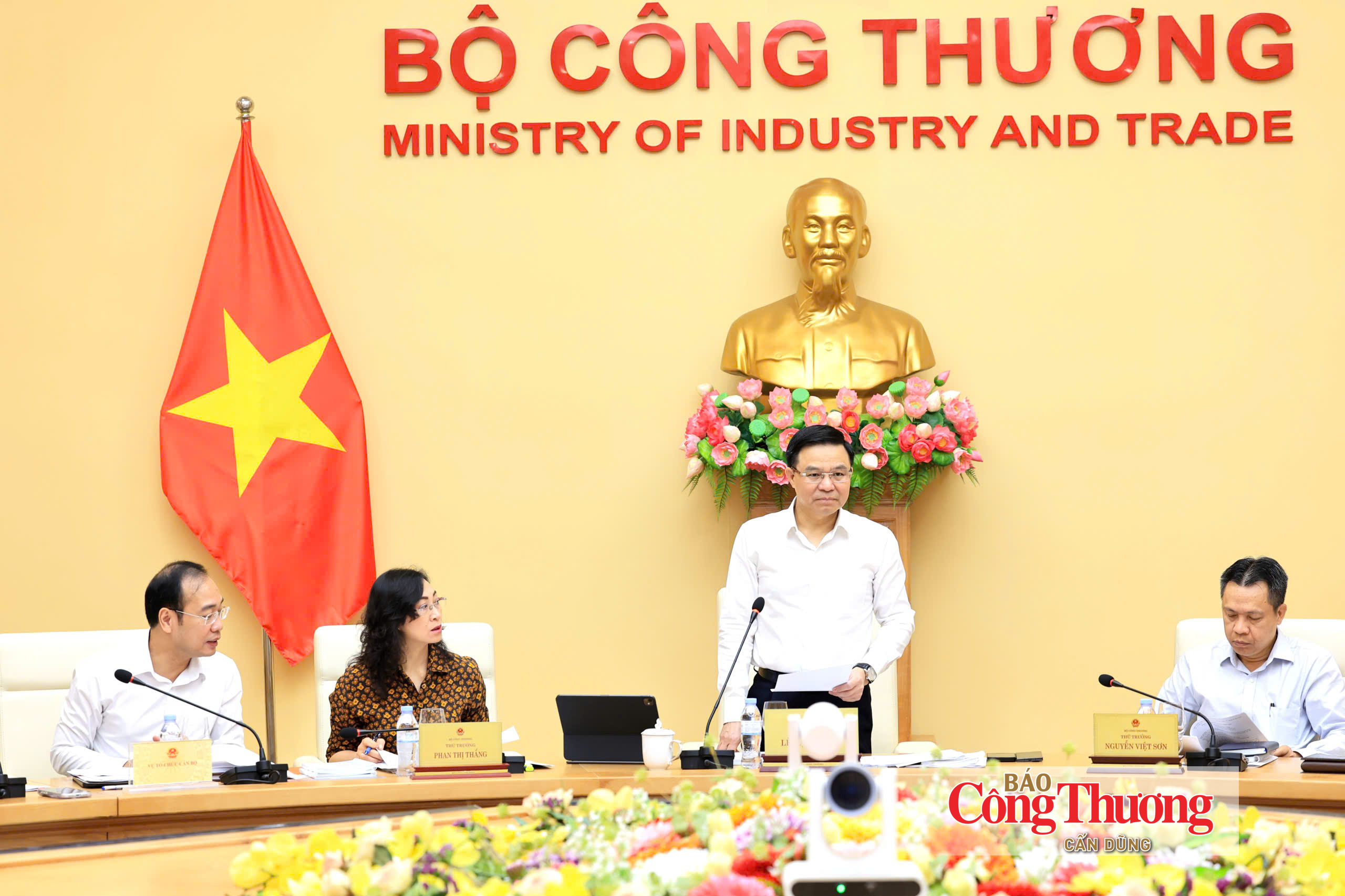
The Ministry of Industry and Trade (MoIT) held its regular press conference for the third quarter of 2026 in Ha Noi on the afternoon of October 7, chaired by Deputy Minister Phan Thi Thang.
The press conference was attended by leaders of departments, agencies and other units under the Ministry of Industry and Trade, along with reporters and journalists representing central and local media outlets.
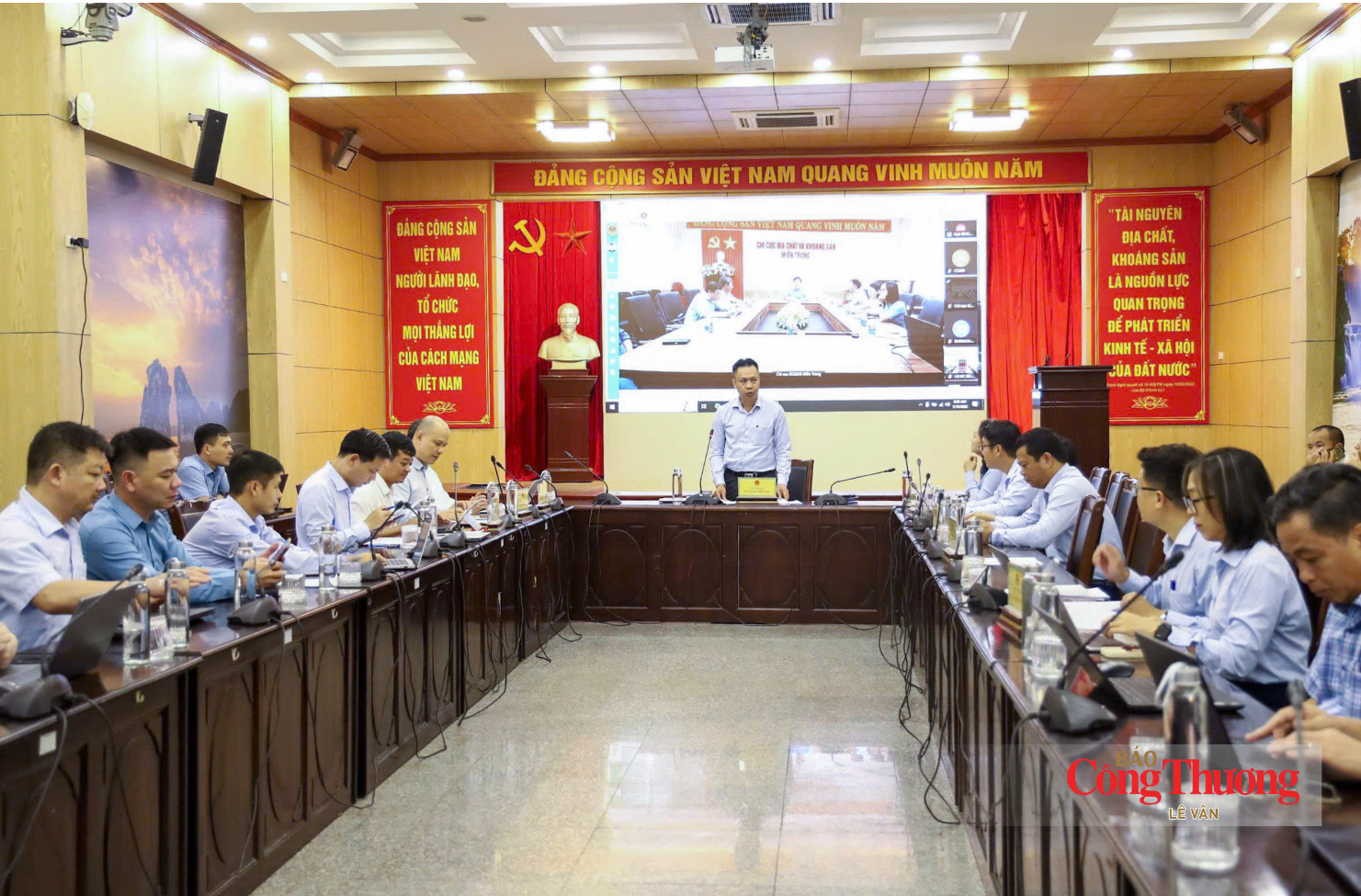
The Ministry of Industry and Trade holds regular press conference for the third quarter of 2026 on October 7.
Strong growth in industrial production, trade and energy
Presenting an overview of economic, trade and industrial developments in September and the first nine months of 2026, Bui Huy Son, Director-General of the Department of Planning and Finance under the Ministry of Industry and Trade, said the global economy had continued to experience rapid, complex and unpredictable fluctuations during the period.
Strategic competition among major powers had intensified, accompanied by growing protectionist barriers, tariffs and new requirements concerning rules of origin, green standards and carbon emissions. In particular, geopolitical conflicts in the Middle East drove oil prices sharply higher in September, pushing up fuel and logistics costs.
Domestically, the economy recorded a strong recovery, with rising demand for production inputs, investment expansion by foreign-invested enterprises and export orders driving substantial demand for electricity, raw materials, fuels and machinery. At the same time, domestic consumption, tourism and services continued to improve, supported by demand-stimulus programs.
Against this backdrop, in implementing the directives of the Government and the Prime Minister, the Ministry of Industry and Trade closely followed the resolutions and conclusions of the Party and the National Assembly, as well as the Government's Resolution No.01/NQ-CP. The industry and trade sector proactively monitored market developments, safeguarded energy security, addressed difficulties facing enterprises and promoted production and exports.
As a result, industrial production, trade and energy activities recorded positive results in September, the third quarter and the first nine months of 2026, with growth reaching its highest level in several years while macroeconomic conditions remained broadly stable. Within the industry and trade sector, production, commercial activities and energy supply generally maintained favorable momentum.
First, industrial production sustained its growth momentum. The index of industrial production (IIP) rose 16.65% year-on-year in September and 3.26% from the previous month. Over the first nine months, the index increased 12.33%, closely aligning with the nine-month growth scenario of 12.28%. Manufacturing and processing remained the principal growth driver, expanding 12.93% over the nine-month period, including a 17.12% increase in September alone.
Second, the domestic market continued to serve as a key pillar of growth. Total retail sales of goods and revenue from consumer services were estimated at VND 690.6 trillion in September, up 14.1% year-on-year and 1.7% month-on-month.
The nine-month total reached VND 5,925.7 trillion, representing a 13.4% increase, remaining within the full-year target range and exceeding the nine-month plan by 1.4%. In the third quarter, the figure was estimated at approximately VND 2,039 trillion, up 14.5%.
Third, foreign trade remained a bright spot. Export turnover rose sharply by 24.5% in the first nine months, with September alone recording a 39.1% increase, the highest growth rate since the beginning of the year.
The foreign direct investment (FDI) sector accounted for 80.6% of total export turnover and registered growth of 29.2%, while exports by domestic enterprises increased 8.1%. Growth was concentrated mainly in electronics, machinery and equipment.
On the import side, turnover rose 36.7% over the nine-month period, with machinery, equipment, fuels and raw materials used for domestic production and the processing of export goods accounting for approximately 90.5% of the total.
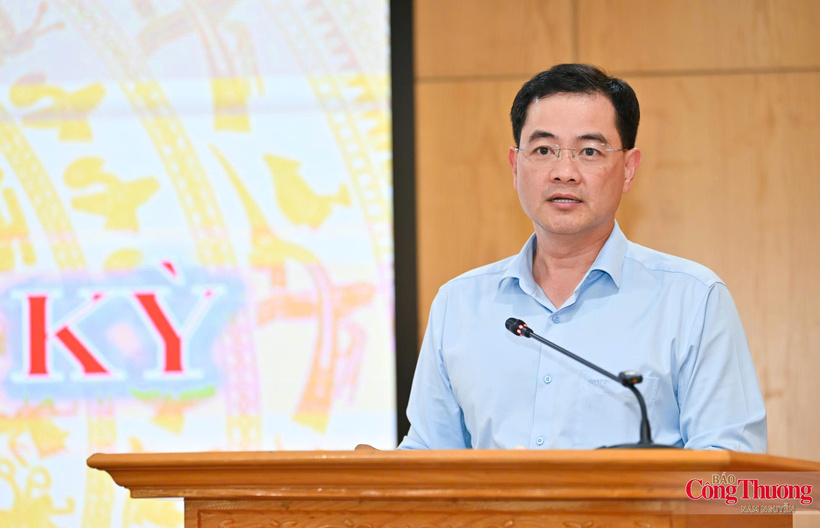
Bui Huy Son, Director of the Department of Planning and Finance under the Ministry of Industry and Trade, presents an overview of industrial production and trade performance in September and the first nine months of 2026.
Fourth, national energy security continued to be firmly maintained. The power system operated safely and stably, meeting electricity demand for production and daily life. Total electricity generation and imports reached 266.58 billion kWh in the first nine months, up 9.65% year-on-year and equivalent to approximately 76% of the annual plan. The September figure stood at 30.73 billion kWh, an increase of 11.95%.
Commercial electricity sales reached 237.19 billion kWh, up 9.66%. Of this, the industrial and construction sectors consumed 122.18 billion kWh, an increase of 8.32%, while consumption in the trade, hotel and restaurant sectors rose 13.61%.
The power generation capacity reserve margin stood at approximately 26%, exceeding the target of 21.8%. Petroleum supplies were maintained without disruption despite fluctuations in global oil prices.
Fifth, e-commerce continued to develop, with 68% of enterprises adopting e-commerce, exceeding the set target. However, the business-to-consumer (B2C) e-commerce market grew by only 19.5%, falling short of the 20 - 22% target.
The priority for the fourth quarter is therefore to shift the focus from expanding participation to improving transaction efficiency, service quality and the capacity to regulate digital platforms.
Six coordinated measures to maximize achievement of 2026 targets
Despite the positive results recorded during the first nine months, the economy as a whole and the industry and trade sector in particular face a combination of difficulties and challenges as they enter the fourth quarter.
Externally, prolonged monetary tightening, exchange rate volatility and geopolitical tensions have driven up energy and logistics costs, directly increasing production expenses, intensifying inflationary pressures and weakening purchasing power in key export markets.
These pressures are compounded by increasingly stringent technical barriers, tariffs and green standards, as well as the risk of market fluctuations in major economies such as the US and China.
Domestically, industrial production growth remains vulnerable to a slowdown due to bottlenecks involving orders, raw materials and delays in bringing additional power generation capacity online. Meanwhile, the recovery in domestic purchasing power and e-commerce has yet to gain sufficient momentum.
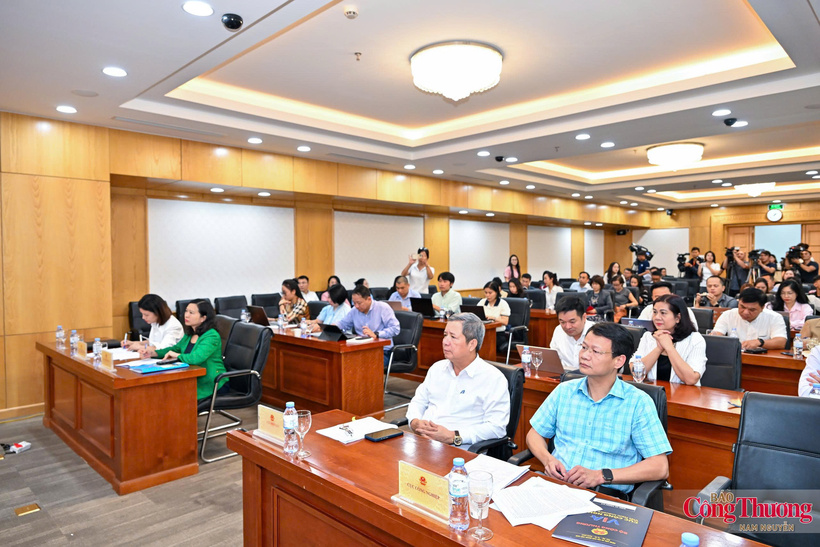
Representatives of departments, agencies and other units under the Ministry of Industry and Trade attend the regular press conference for the third quarter of 2026.
According to Director-General Bui Huy Son, these challenges underscore the urgent need for proactive monitoring, flexible adaptation and the coordinated implementation of key measures over the final three months of the year to achieve the highest possible level of fulfillment of the 2026 targets.
Accordingly, the industry and trade sector will focus on implementing six groups of measures in the remaining months of the year.
First, the ministry will concentrate on removing obstacles and accelerating the recovery of industrial production. Priority will be given to resolving bottlenecks related to orders and raw materials, providing maximum support for enterprises in the processing and manufacturing industries, and expediting the commissioning of major industrial projects capable of generating additional output within the year.
Second, the ministry will safeguard energy security by accelerating the construction and completion of key power generation and transmission projects, reviewing and updating power system operating plans under different peak-load scenarios for the final months of the year, and ensuring adequate fuel supplies for electricity generation.
It will also continuously monitor developments in global oil prices and international shipping routes, proactively diversify import sources, and coordinate the flexible use of price regulation mechanisms, taxes, fees and national reserves to stabilize the domestic market and minimize the impact of external price shocks.
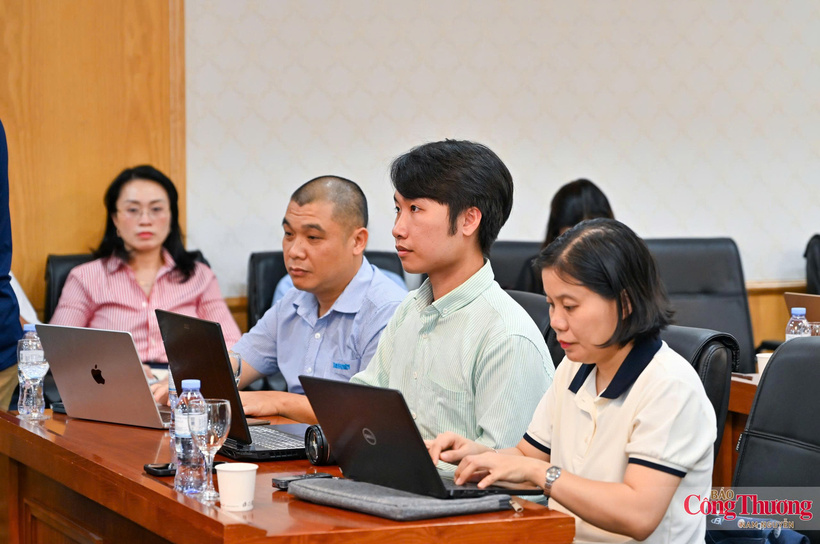
Journalists attend the press conference.
Numerous reporters and journalists attend the press conference, raising questions on key issues concerning the industry and trade sector.
Third, the ministry will promote exports, diversify markets and strengthen regulatory compliance. In the fourth quarter, it will focus on making effective use of existing free trade agreements (FTAs), expanding into new markets and enhancing early warning capabilities concerning trade remedy investigations, tariff barriers, green standards, traceability requirements and rules of origin.
At the same time, the ministry will support enterprises in improving product quality, developing brands and enhancing supply chain transparency.
It will also promote exports through official channels, expand agreements and protocols on agricultural quarantine requirements, increase investment in cold-chain logistics infrastructure, and standardize cultivation areas and packing facilities to meet the regulations of individual partner markets.
Fourth, the ministry will stimulate consumption and further develop the domestic market. Efforts will focus on implementing large-scale consumption stimulus programs, national promotional campaigns, supply-demand connectivity initiatives and the development of modern commercial infrastructure.
The ministry will also strengthen monitoring of purchasing power and retail sales performance in major consumption centers and localities recording relatively low growth, while ensuring adequate supplies of essential goods to meet demand during the year-end peak season and the Lunar New Year holiday.
Fifth, the ministry will accelerate e-commerce development in tandem with efforts to ensure a sound and well-regulated digital marketplace. To this end, it will focus on implementing coordinated measures to bring B2C e-commerce growth within the targeted range of 20 - 22%.
Greater support will be provided to small and medium-sized enterprises and household businesses in adopting digital technologies and participating in cross-border e-commerce platforms.
In addition, the ministry will strengthen regulatory oversight, verify seller information, combat counterfeit and imitation goods, protect consumer rights and interests, and enhance data connectivity and sharing among state management agencies in the digital environment.
Sixth, the ministry will continue to improve the institutional framework, reform administrative procedures, advance digital transformation, support enterprises and promptly address difficulties to enhance competitiveness.
As the press conference continues, leaders of departments, agencies and other units under the Ministry of Industry and Trade will provide information and respond to questions raised by media representatives on a wide range of issues, including import-export activities, industrial production, electricity and energy.
The Ministry of Industry and Trade (MoIT) held its regular press conference for the third quarter of 2026 in Ha Noi on the afternoon of October 7, chaired by Deputy Minister Phan Thi Thang.
Deputy Minister of Industry and Trade Luong Hoang Thai emphasized that building the national brand is a driving force for improving Viet Nam’s competitiveness and international standing.
The official visit to Laos by Prime Minister Le Minh Hung is expected to inject fresh momentum into bilateral relations, with economic, trade and investment cooperation continuing to serve as a core pillar.
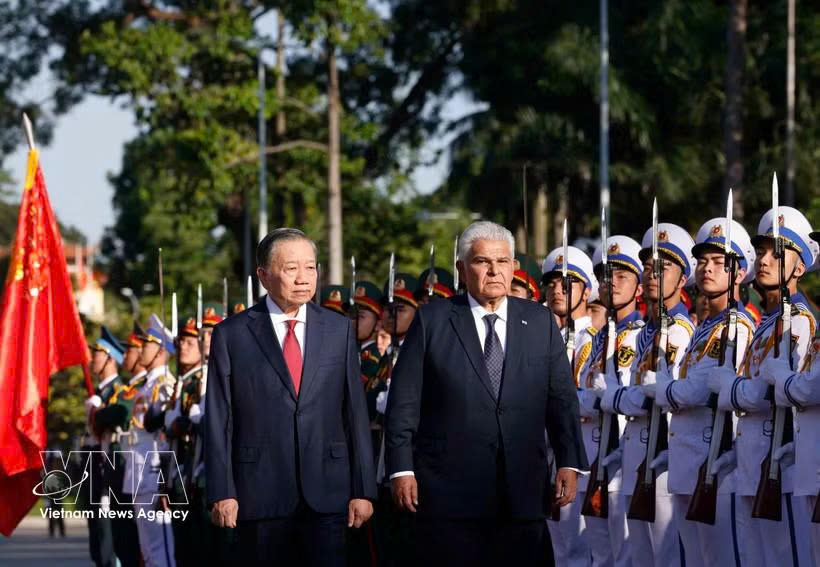
The Panamanian President’s visit is expected to contribute to further deepening and making the traditional friendship and cooperation between the two nations more substantive and effective.
On October 2, the Ministry of Industry and Trade (MoIT) held a working session between Minister of Industry and Trade Le Manh Hung and research institutes, universities and colleges under the Ministry to review their recent operations and identify solutions to better harness the potential, advantages and collective strengths of the Ministry’s education and research institutions. Minister of Industry and Trade Le Manh Hung chaired the meeting.
Deputy Minister of Industry and Trade Luong Hoang Thai emphasized that building the national brand is a driving force for improving Viet Nam’s competitiveness and international standing.
The Panamanian President’s visit is expected to contribute to further deepening and making the traditional friendship and cooperation between the two nations more substantive and effective.
On October 5 in Ha Noi, Deputy Minister of Industry and Trade Nguyen Viet Son held a working session with the Viet Nam Department of Geology and Minerals.
On the afternoon of October 4, in Quang Tri province, Minister of Industry and Trade Le Manh Hung conducted an on-site inspection and held a working session with relevant agencies and units at the Quang Trach Power Centre.
Viet Nam’s Ministry of Industry and Trade hopes that Viet Nam and Panama will continue to coordinate closely and leverage Panama’s role as a bridge for Vietnamese goods to access Latin American and Caribbean markets.