During the group discussion on the draft revised Petroleum Law, Minister of Industry and Trade Le Manh Hung responded to and clarified a wide range of issues raised by National Assembly deputies.
On August 4, as part of the first extraordinary session of the 16th National Assembly, lawmakers held group discussions on several draft laws and resolutions, including the draft revised Petroleum Law. Minister of Industry and Trade Le Manh Hung addressed numerous matters of concern to deputies.
Deputies also exchanged views on a number of issues, including the relationship between offshore energy projects and the National Marine Spatial Planning; the need to harmonise the development of the petroleum industry with the preservation of Viet Nam’s cultural heritage; and regulations governing carbon capture and storage, or CCS.
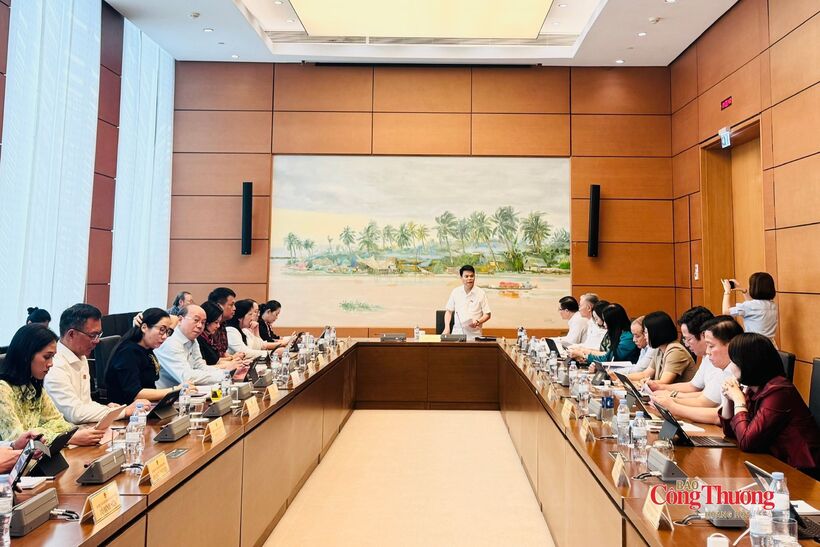
National Assembly deputies from the Hai Phong city and Quang Ngai province delegations discuss and offer opinions on the draft revised Petroleum Law at Group 11.
At Group 11, comprising National Assembly deputies from the Hai Phong city and Quang Ngai province delegations, lawmakers agreed that amending the law was necessary to meet the development requirements of the petroleum industry in the new context, while contributing to institutional improvement, ensuring energy security and aligning with the energy transition.
Driving the development of the revised Petroleum Law
At the group discussion, Minister of Industry and Trade Le Manh Hung said the drafting of the revised Petroleum Law had been carried out on the basis of major orientations of the Party, the National Assembly and the Government.
The Ministry of Industry and Trade, as the agency in charge of drafting the legislation, had developed the draft in accordance with legal requirements and largely on the basis of the 2022 Petroleum Law.
Minister Le Manh Hung emphasised that the 2022 Petroleum Law was adopted at the right time and introduced a number of progressive provisions. However, in light of practical development requirements and new growth targets, amendments had become imperative for several reasons.
First, the goal of achieving double-digit economic growth would result in a sharp increase in energy demand.
Second, the amendments were intended to implement directions from Party and State leaders on the continued simplification of administrative procedures and the strengthening of decentralisation and delegation of authority.
Third, after many years of production, numerous petroleum fields and blocks were entering a period of rapid output decline. Meanwhile, petroleum potential in deep-water and offshore areas involved more difficult and complex production conditions, requiring appropriate incentives to attract investment.
Fourth, the energy transition was also an important driver of the law’s revision. Viet Nam had joined other countries in committing to achieve net-zero emissions by 2050.
Against that backdrop, Minister Le Manh Hung said the draft revised Petroleum Law contained a number of fundamental new provisions, focusing on expanding its scope of regulation, reforming the governance model and improving incentive policies for petroleum activities.
He affirmed that the draft largely met political, legal and practical requirements. The revision of five major policy groups across 12 chapters and 62 articles was intended to accelerate petroleum activities and substantially reduce administrative procedures compared with the existing framework.
The draft also broadens its application to small fields, marginal fields and end-of-life fields, which are particularly difficult to develop under normal conditions. This is expected to facilitate an increase in petroleum output for national development and generate additional revenue for the State budget.
Clarifying issues raised by National Assembly deputies
Responding further to matters discussed by National Assembly deputies in relation to the draft revised Petroleum Law, the Minister clarified several groups of issues. Regarding the mechanism for end-of-life fields, the draft requires that other investors first be invited to participate, rather than immediately assigning such fields to Petrovietnam.
Clarifying this point, Minister Le Manh Hung said the solution had been carefully designed to create continued opportunities for other petroleum contractors to invest while making use of their resources.
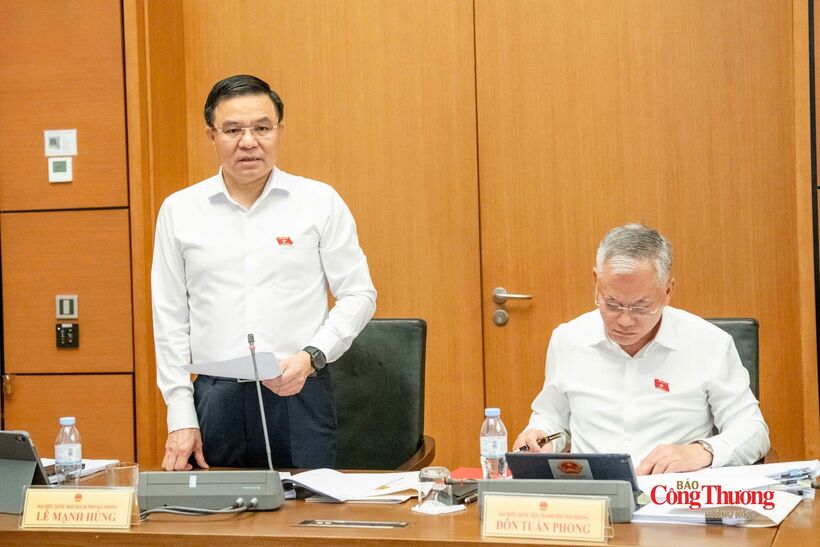
Minister of Industry and Trade Le Manh Hung responds to a range of issues at the group discussion on the draft revised Petroleum Law.
On offshore petroleum safety, some deputies said the provisions on safety zones surrounding petroleum installations remained relatively general and discretionary compared with those governing other offshore facilities.
The Minister said the draft stipulates a 500-metre safety zone measured from the outer edge of an installation in all directions, including the anchoring area of floating facilities. For the two-nautical-mile distance, the zone is measured from the outer edge of the installation, including subsea facilities. “This provision is intended to ensure the safety of offshore petroleum activities and is consistent with international practice,” the Minister said.
Regarding the participation rights of petroleum contractors and the transfer of their interests, the Minister agreed that the matter was directly related to national security. Under the draft law, Petrovietnam has the right of first refusal before a contractor transfers its rights and interests under a petroleum contract.
Petrovietnam is also entitled to participate immediately after the outline development plan, or ODP, is approved. Under this mechanism, the State retains control over the transfer process under petroleum contracts. On the mechanism for sharing petroleum-related benefits with localities, Minister Le Manh Hung said the draft clearly states that petroleum is a resource under the ownership of the entire people and is subject to unified State management. The authority to allocate and determine the use of this resource therefore rests with the State.
In addition, petroleum enterprises operating in localities currently fulfil their tax obligations in the areas where they operate. Any subsequent allocation from the State budget to serve local socioeconomic development falls within the State’s decision-making authority.
“The drafting agency will compile and report the recommendations and aspirations of localities. The Ministry of Industry and Trade and Petrovietnam both support consideration of these proposals,” the Minister said.
Regarding the preservation of cultural heritage, national treasures and antiquities, the Ministry of Industry and Trade, as the drafting agency, fully accepted the deputies’ opinions and affirmed that these matters had been carefully studied and considered during the drafting process.
On the development of offshore energy, including offshore wind power and hydrogen, the Minister said detailed provisions would be implemented in accordance with electricity legislation when the Electricity Law was developed. The Ministry of Industry and Trade was the agency responsible for drafting both laws.
Regarding the development of carbon capture and storage projects, the Minister said petroleum activities currently made a very substantial contribution to the State budget, including corporate income tax rates of 25%, 32% and 50%, in addition to natural resource tax and export tax.
Appropriate mechanisms were therefore needed to promote investment in petroleum activities, particularly CCS projects. The Minister also noted that the actual marine area occupied by petroleum installations was limited, primarily within a radius of 500 metres around an installation and within the two-nautical-mile anchoring area. Beyond these zones, other activities could continue as normal. Exempting petroleum installations from sea-surface use fees was therefore considered appropriate and consistent with international practice.
For CCS activities, the Minister emphasised that the sector should be encouraged because it could utilise depleted petroleum fields, empty geological structures and suitable depleted reservoirs for carbon storage. Deputies agreed on the need for support mechanisms, including assistance for pipeline systems and facilities serving the capture, transport and storage of CO2.
Minister Le Manh Hung said the technology for utilising CO2 remained limited at present. However, as science and technology advanced, CO2 could become a new type of resource. CCS services should not be viewed merely as an isolated technical activity but as a potential market. If developed effectively, Viet Nam could provide such services to the wider Southeast Asian region.
It was therefore necessary to continue introducing support measures, including exemptions from sea-surface use fees for CCS facilities similar to those applied to petroleum installations.
On green growth and the net-zero emissions target, the Minister said carbon capture and storage was a solution that could help reduce greenhouse gas emissions and was aligned with the trend towards green growth. This was one of the important new elements of the draft revised Petroleum Law, reflecting an orientation towards the application of high technology and the development of high-quality petroleum technical services in association with the energy transition.
Regarding the consistency between the Petroleum Law and the 2014 Law on Enterprises No.68/2014/QH13, Minister Le Manh Hung explained that the draft law clearly reflected the specific nature of petroleum activities in provisions governing the authority to use capital and make investment decisions.
Accordingly, approval of the ODP is considered equivalent to approval of a pre-feasibility study report, where applicable, while approval of the field development plan, or FDP, is equivalent to approval of a detailed feasibility study report. The authority to make investment decisions and decisions on the use of capital had therefore been designed correspondingly and incorporated directly into the draft law.
The Minister added that Petrovietnam’s capital contribution during the implementation of a petroleum contract would be based on the contract approved by the Prime Minister. Based on the ODP and FDP, petroleum contractors would make capital calls and disburse funds in accordance with the terms of the petroleum contract, ensuring strict management.
Regarding risk management, accounting and auditing, the draft law devotes a separate chapter to accounting and auditing for petroleum activities. Petroleum operations are accounted for on a contract-by-contract basis, under which costs are first determined, including natural resource tax, export tax and recoverable costs, before taxable corporate income is calculated. This is a distinctive feature of the financial mechanism governing petroleum activities. As a result, there may be cases in which enterprises record no profit but still make substantial contributions to the State budget.
The Minister stressed that these provisions were consistent with current regulations and reflected the particular governance characteristics of the petroleum sector. The draft revised Petroleum Law was developed by inheriting the progressive provisions of the current 2022 Petroleum Law and specifying five policy groups approved by the Government under Resolution No.81/NQ-CP dated April 3, 2026.
These comprise the simplification of procedures and the strengthening of decentralisation and delegation of authority; improvement of regulations on petroleum contracts and activities; investment incentives; development of the petroleum value chain, high-tech services and offshore energy; and a regulatory framework for reducing greenhouse gas emissions and carbon capture and storage.
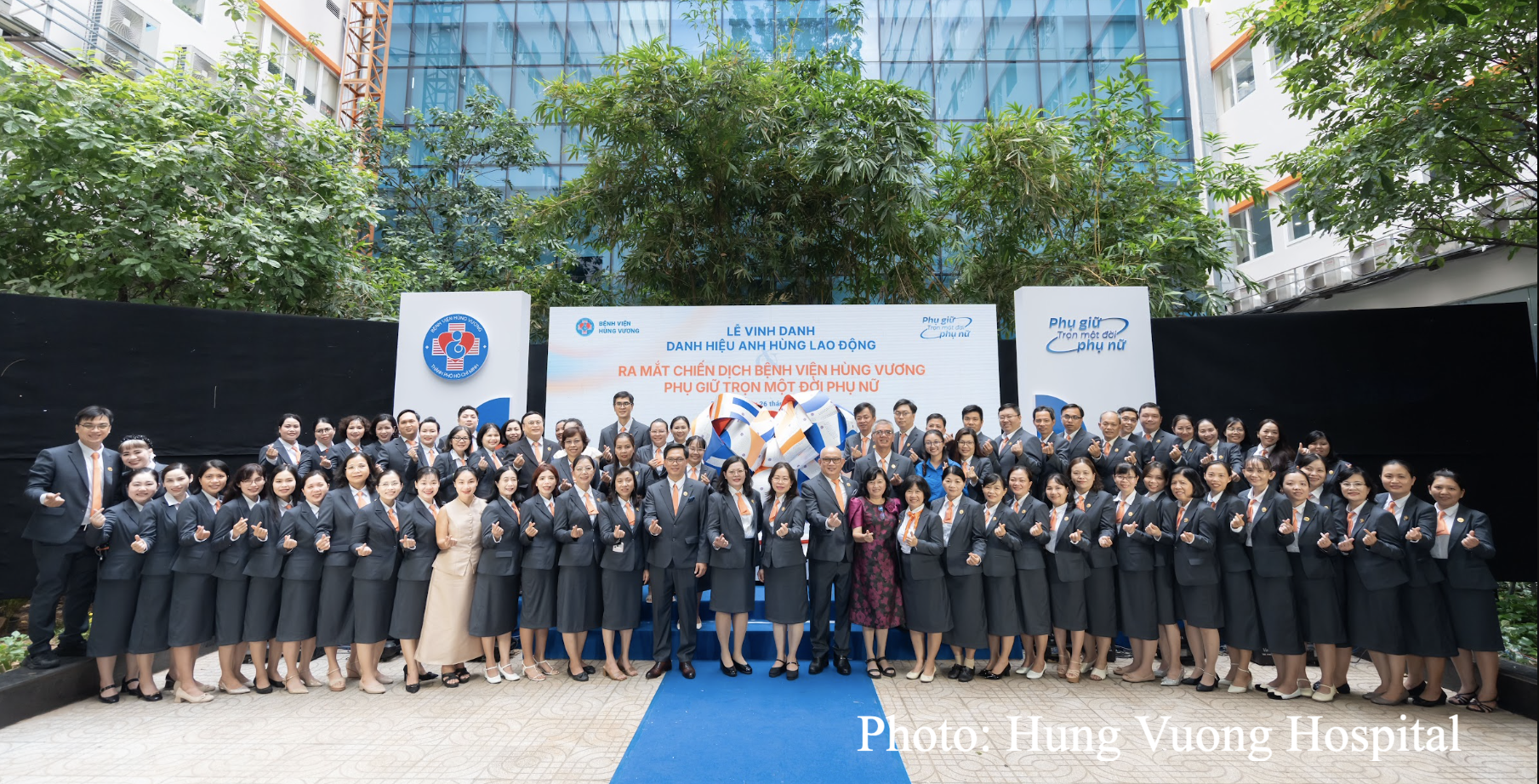
Hung Vuong Hospital held a ceremony to honor its Labor Hero title and launch the campaign “Supporting Women Throughout Their Lives,” marking a shift from its traditional image as an obstetrics and gynecology hospital toward a broader model of comprehensive, continuous women’s healthcare across different stages of life.
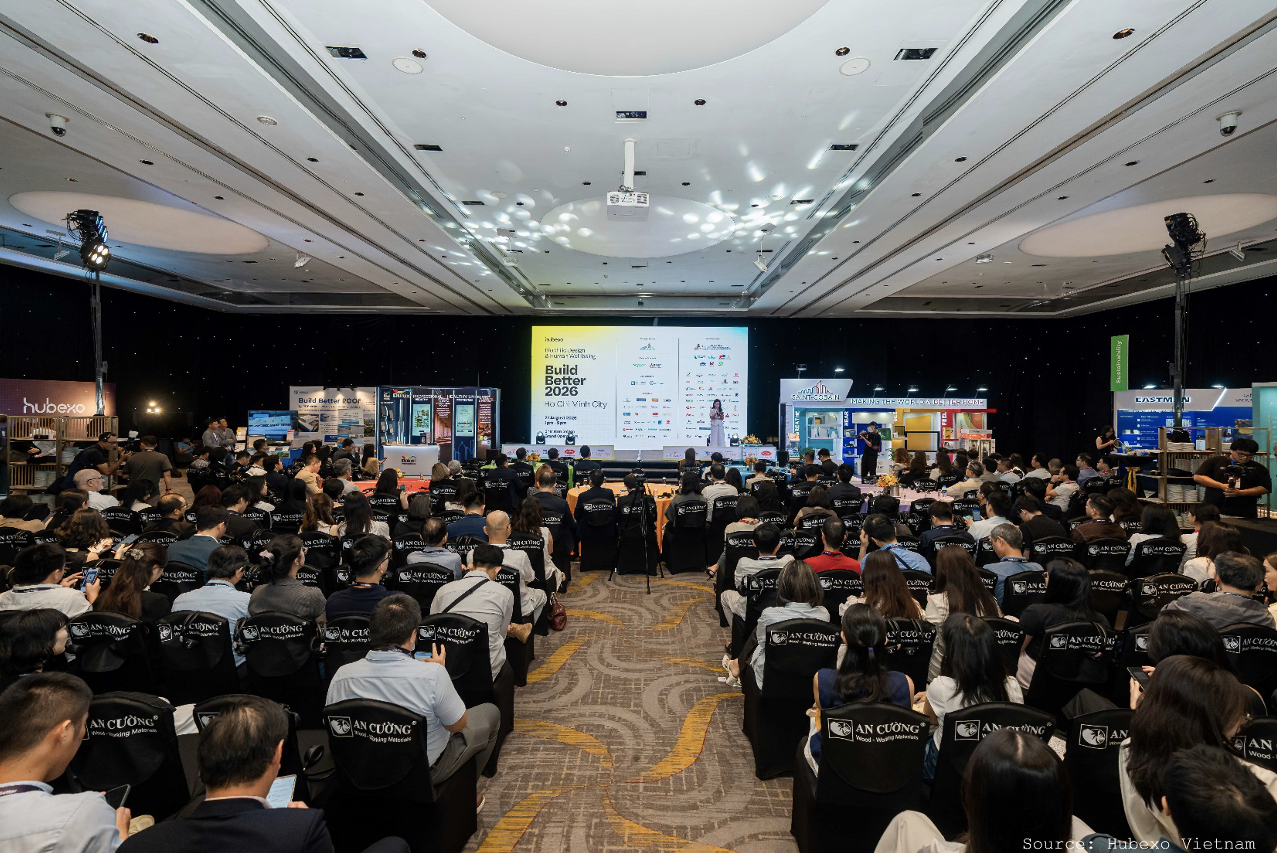
Build Better HCMC 2026 was successfully held in Ho Chi Minh City (HCMC), bringing together more than 450 attendees and 30 exhibition booths featuring brands providing materials, technologies and solutions for the construction industry.
From an economy devastated by the 1945 famine, with exports virtually paralyzed, Vietnam has, over the past 81 years, emerged as one of the region’s leading trading nations, with total import-export turnover approaching the USD 1 trillion mark.
Viet Nam showcases distinctive export products in Yunnan, seeking to expand distribution networks and strengthen access to the Southwest Chinese market.
Hung Vuong Hospital held a ceremony to honor its Labor Hero title and launch the campaign “Supporting Women Throughout Their Lives,” marking a shift from its traditional image as an obstetrics and gynecology hospital toward a broader model of comprehensive, continuous women’s healthcare across different stages of life.
Build Better HCMC 2026 was successfully held in Ho Chi Minh City (HCMC), bringing together more than 450 attendees and 30 exhibition booths featuring brands providing materials, technologies and solutions for the construction industry.
From an economy devastated by the 1945 famine, with exports virtually paralyzed, Vietnam has, over the past 81 years, emerged as one of the region’s leading trading nations, with total import-export turnover approaching the USD 1 trillion mark.
A visit and fact-finding tour in Can Tho city by National Assembly Chairman Tran Thanh Man and President of the National Assembly of Côte d’Ivoire Patrick Achi has opened up opportunities for Vietnamese businesses to showcase their production and processing capabilities, expand markets and strengthen connectivity with Côte d’Ivoire.