The MoIT is drafting a new import-export strategy that turns growth targets into 82 specific tasks, with clear timelines, outputs and clear implementation roles.
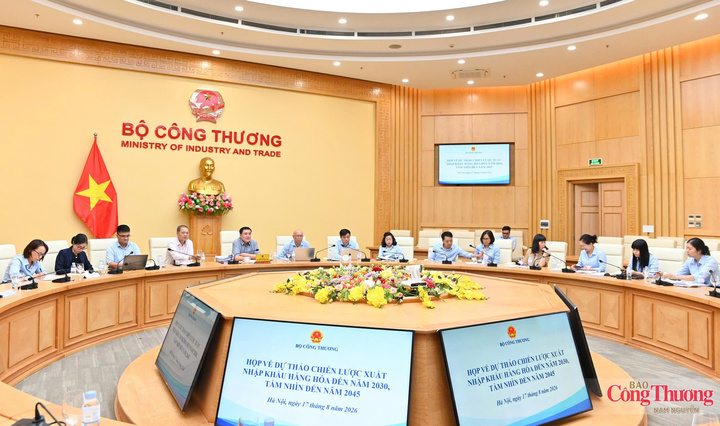
On August 17 in Hanoi, the Ministry of Industry and Trade (MoIT) held a meeting to seek opinions from its affiliated units on the draft Strategy for Goods Import and Export through 2030, with a vision to 2045.
Deputy Minister of Industry and Trade Nguyen Sinh Nhat Tan chaired the meeting. Also attending on behalf of the unit drafting the strategy were Nguyen Anh Son, Director of the Agency for Foreign Trade (AFT); Tran Thanh Hai, Deputy Director of the AFT; and representatives from relevant divisions and units. The meeting also brought together leaders and representatives of various departments, divisions and the Information Center for Industry and Trade under the MoIT.
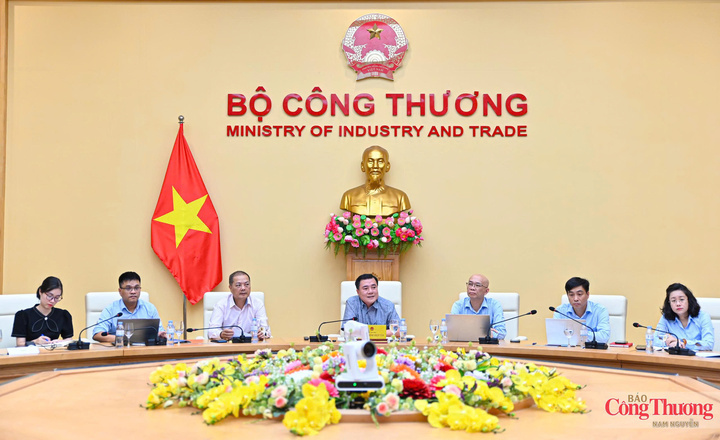
An overview of the meeting. Photo: Nam Nguyen
New strategy to align with objectives for the new development period
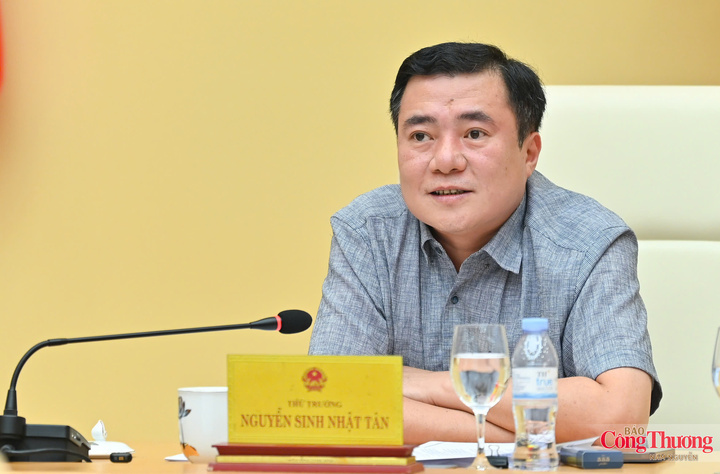
In his opening remarks, Deputy Minister Nguyen Sinh Nhat Tan emphasized that the Strategy for Goods Import and Export through 2030, with a vision to 2045, must be developed in line with the current context, be feasible and contribute to the goal of achieving double-digit economic growth in the coming years. This is also an important difference from the Strategy for Goods Import and Export through 2030 approved by the Prime Minister under Decision No.493/QD-TTg dated April 19, 2022.
Deputy Minister Nguyen Sinh Nhat Tan delivers opening remarks at the meeting. Photo: Nam Nguyen
According to Deputy Minister Nguyen Sinh Nhat Tan, the approach should also be renewed and integrated and aligned with new policies and resolutions. In particular, orientations related to renewing the growth model and promoting different advantages and resources should be studied and appropriately incorporated into the Strategy.
One requirement emphasized by the Deputy Minister was that import and export should be viewed from the perspective of "dynamic balance." Accordingly, the Strategy should not only focus on export growth but also take into account the trade balance, relations with individual partners and economic regions, and, particularly, the role of imports in domestic production and exports. Imports should not simply be considered in terms of turnover or the trade balance, but in relation to production capacity, supply chains and the economy's export capacity.
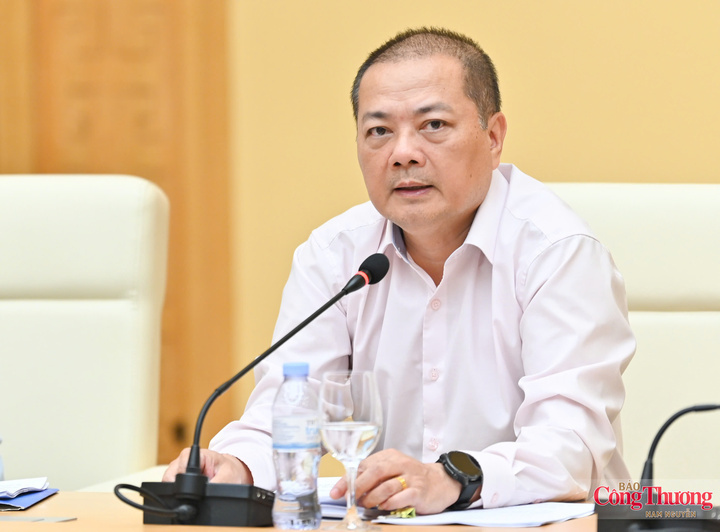
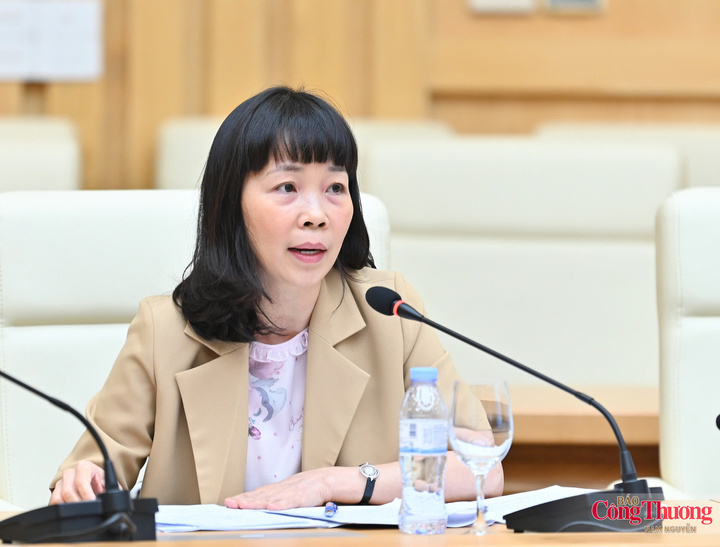
Nguyen Anh Son, Director of the Agency for Foreign Trade (MoIT), provides information on the draft Strategy. Photo: Nam Nguyen
Providing further information on the draft Strategy, Nguyen Anh Son, Director of the AFT, said that, implementing Conclusion No.18-KL/TW dated April 2, 2026, of the second Plenum of the 14th Party Central Committee on the socio-economic development plan, national finance, public debt borrowing and repayment, and the five-year 2026-2030 medium-term public investment plan associated with the goal of striving for "double-digit" growth, the MoIT has proactively coordinated with ministries, sectors and localities to review and assess the implementation of the current Strategy and develop a new draft Strategy.
Based on the consolidation of opinions from ministries, sectors, localities and units under the Ministry, the opinions broadly agreed on the need to develop the Strategy, the identified shortcomings, as well as the viewpoints and orientations for the coming period.
Opinions were also raised on objectives, growth scenarios, lessons learned, additional assessments of the context, specific solutions, implementation responsibilities, and the identification of tasks, timelines and implementing units. The AFT has carefully studied and fully incorporated these opinions to the greatest extent possible.
The draft Strategy sets out four strategic viewpoints, specifies objectives in terms of scale, quality and markets, and identifies nine groups of key solutions and tasks. These tasks are further broken down into 82 specific tasks, together with timelines, outputs and implementing units, in an appendix to the draft decision approving the Strategy. This is noteworthy because the Ministry's leadership has required not only solutions to be identified, but also for those solutions to be capable of implementation, monitoring and evaluation.
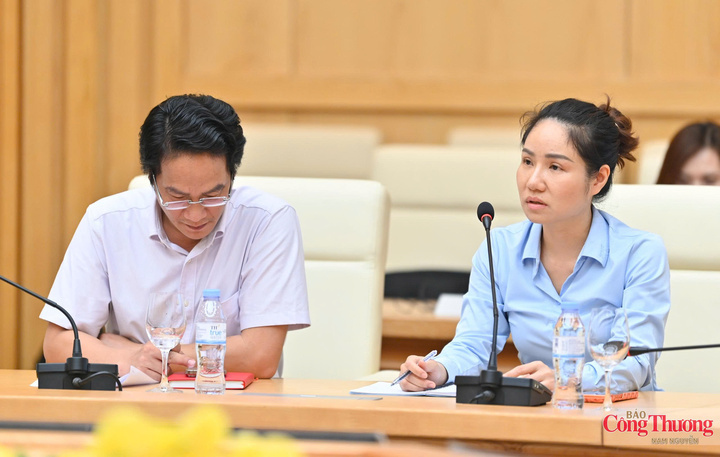
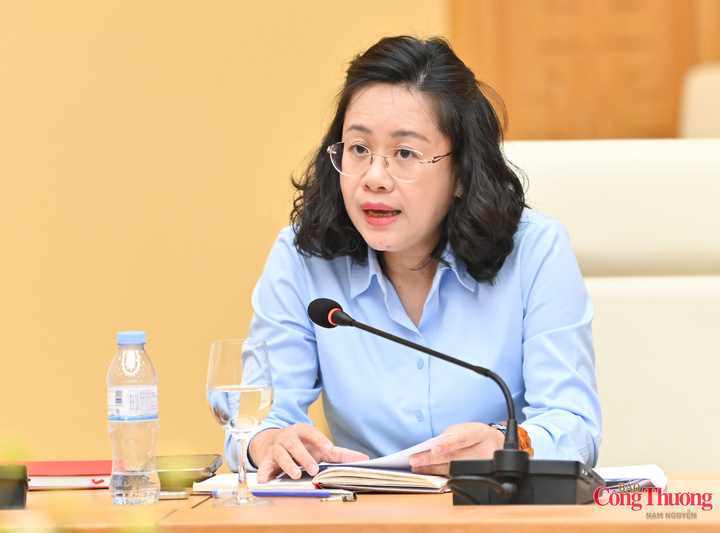
Representatives of several units under the MoIT offer comments on the draft Strategy. Photo: Nam Nguyen
At the meeting, representatives of various units proposed that the draft provide more specific objectives for the development of individual products and markets and include measures to support businesses in each market. In addition to markets, participants also highlighted the need to strengthen the capacity of domestic businesses, develop supporting industries, build Vietnamese brands and support businesses in expanding their presence overseas.
Quantifying targets with specific figures
In concluding the meeting, Deputy Minister Nguyen Sinh Nhat Tan requested that all opinions be fully consolidated, with particular attention paid to the feasibility of the objectives and solutions. "It is important not only to identify [growth targets] but also to clarify the path to achieving those targets, the solutions required, and ensure that those solutions are quantified through specific indicators and figures," Deputy Minister Nguyen Sinh Nhat Tan emphasized.
Deputy Minister Nguyen Sinh Nhat Tan delivers concluding remarks at the meeting. Photo: Nam Nguyen
The Strategy must set out solutions to adapt to fluctuations in international markets and take into account situations that may arise during implementation. At the same time, it should clarify responsibilities and coordination mechanisms among ministries, sectors, localities and businesses, while reviewing relevant international agreements, commitments and obligations.
The Deputy Minister requested that relevant departments and divisions send the contents related to their respective areas of responsibility discussed at the meeting to the AFT as the focal point for supplementing and finalizing the Strategy in line with the meeting's directives. On that basis, the AFT will continue to finalize the draft, seek internal opinions within the MoIT, and subsequently consult ministries, sectors, localities and businesses, ensuring that the Strategy is closely aligned with market requirements and implementation capacity.
With 82 tasks specified in the draft Strategy, together with the requirement to further quantify objectives, solutions and implementation responsibilities, the next step is to establish a clear roadmap for turning ambitious import and export growth targets into the economy's actual capacity.
Building on 50 years of diplomatic relations, Viet Nam and Thailand have continued to nurture friendship, strengthen mutual trust, expand cooperation and work toward new milestones in bilateral ties.
The Ministry of Industry and Trade completed all nine key Q3 legislative tasks and is prioritizing 56 remaining tasks to ensure timely, consistent and effective legal reform.
Vietnamese businesses are stepping up trade connections and seeking partners in Türkiye and Spain, opening up new opportunities to boost exports and gain access to European markets.
Access to advanced port technologies and stronger business connectivity are creating new opportunities for logistics cooperation between Viet Nam and China.
Building on 50 years of diplomatic relations, Viet Nam and Thailand have continued to nurture friendship, strengthen mutual trust, expand cooperation and work toward new milestones in bilateral ties.
The Ministry of Industry and Trade completed all nine key Q3 legislative tasks and is prioritizing 56 remaining tasks to ensure timely, consistent and effective legal reform.
Vietnamese businesses are stepping up trade connections and seeking partners in Türkiye and Spain, opening up new opportunities to boost exports and gain access to European markets.
Access to advanced port technologies and stronger business connectivity are creating new opportunities for logistics cooperation between Viet Nam and China.