Drastic shift from direction to substantive action and responsibilities of localities and enterprises were set to lift the IUU “yellow card.”
Seafood exports to EU amidst pressure to lift IUU “yellow card”
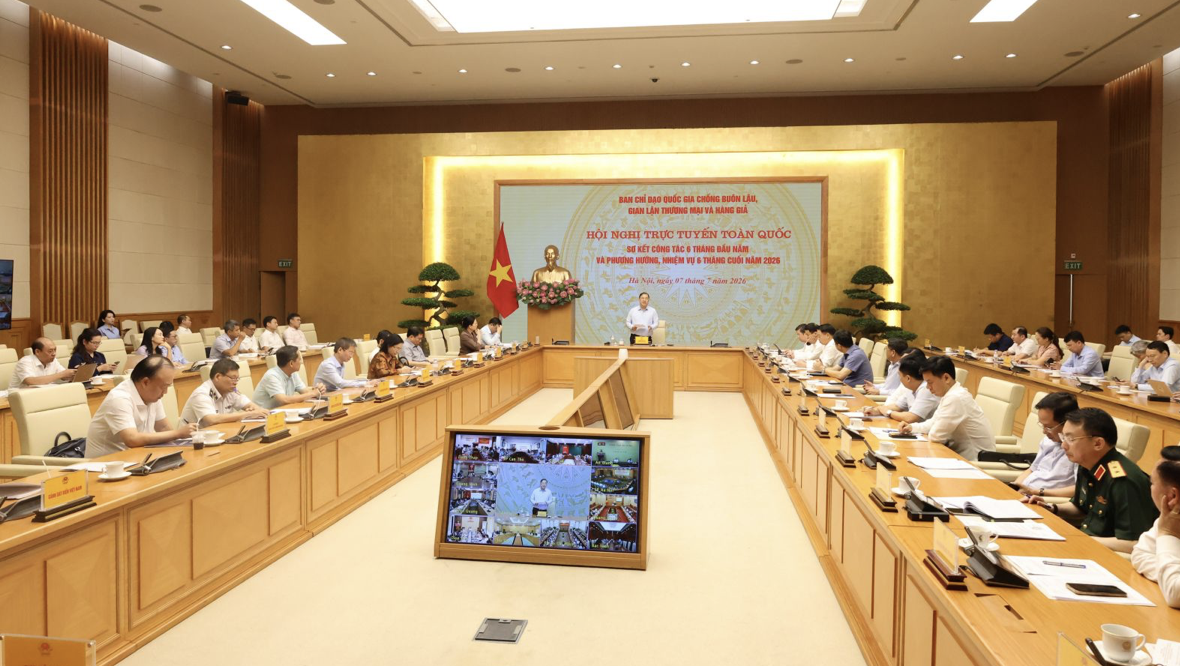
In 2025, the Department of Fisheries and the Department of Fisheries Surveillance (under the Ministry of Agriculture and Environment) advised and prepared full content for 15 periodic meetings of the National Steering Committee on IUU, chaired by Prime Minister Pham Minh Chinh and Deputy Prime Minister Tran Hong Ha. Simultaneously, the agencies regularly reported and sought direction on the situation and results of combating illegal, unreported, and unregulated (IUU) fishing, particularly the prevention and handling of Vietnamese fishing vessels violating foreign waters.
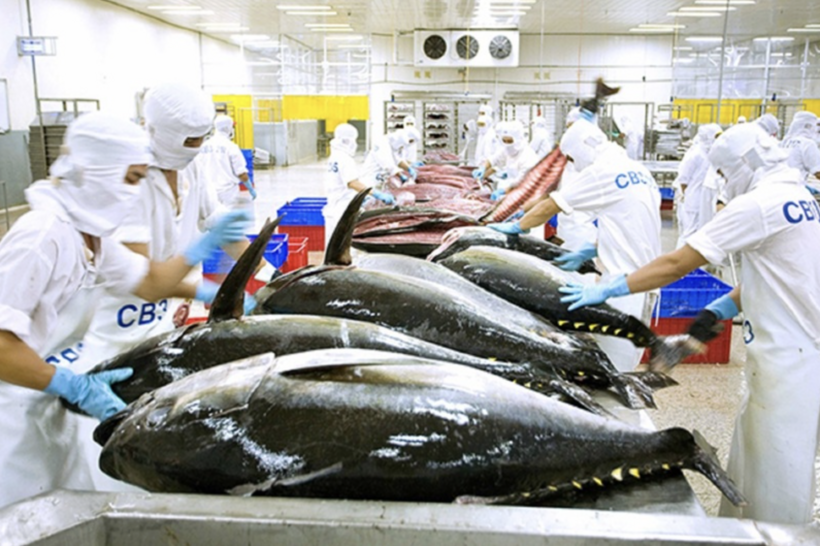
Vietnam's seafood export turnover to the EU reaches USD 1.01 billion in the first 10 months of 2025, an increase of 11.2% compared to the same period in 2024, accounting for 10.9% of the country's total seafood export turnover.
Based on this, the Prime Minister issued a directive on strictly handling fishing vessels and fishermen violating foreign waters, along with an urgent Peak Action Plan to implement the EC recommendations in preparation for the 5th EC Inspection Team. These documents demonstrate the Government's high political determination to end prolonged IUU violations, regarding this as an important political task directly related to national prestige and the long-term livelihoods of the fisheries sector.
Beyond direction, implementation was promoted through multiple inter-sectoral working delegations inspecting key localities. Three regional conferences (North - Central - South) were organized to unify solutions and review local readiness before the EC inspection. Additionally, the mechanism for daily monitoring and information exchange regarding vessels operating near boundaries and vessels losing Vessel Monitoring System (VMS) connection continued to be maintained, serving supervision, warning, and early prevention of violation risks.
In the 2021 - 2025 period, many important foundations in combating IUU fishing were established and gradually perfected: consolidating the National Steering Committee on IUU; working directly with the 3rd, 4th, and 5th EC Inspection Teams; deploying the electronic Catch Documentation and Traceability (eCDT) system; synchronizing the fishing vessel and crew database (VNFishbase) with the National Population Database; and strictly implementing the PSMA Agreement to ensure no products from illegal fishing enter the supply chain and consumer market.
However, reality shows that IUU remains the biggest “bottleneck” for Vietnam's fisheries sector. Some localities remain confused in fleet management; the status of inconsistent data reporting that does not reflect reality persists; and traceability in certain stages remains inadequate.
According to statistics, in the first 10 months of 2025, Vietnam’s seafood export turnover to the EU reached USD 1.01 billion, an increase of 11.2% compared to the same period in 2024, accounting for 10.9% of the country's total seafood export turnover. At the Conference reviewing 2025 performance and deploying the 2026 plan of the Department of Fisheries and the Department of Fisheries Surveillance (Ministry of Agriculture and Environment), Deputy Director of the Department of Quality, Processing and Market Development Le Thanh Hoa noted that IUU remains the biggest barrier for Vietnamese seafood in this market. Fishing vessel management, catch control, and traceability need to be implemented more strictly and transparently to provide sufficient grounds for issuing export certificates, creating a sustainable foundation for the goal of lifting the IUU “yellow card.”
Substantive action for sustainable yellow card removal
The battle to remove the IUU “yellow card” is entering a key phase, with higher requirements for substance, transparency, and verifiability ahead of the EC’s 5th Inspection Team, expected to visit Vietnam in April 2026. At meetings of the National Steering Committee on IUU and thematic working sessions in early 2026, the Government and the Ministry of Agriculture and Environment clearly determined: there is no room for formalistic reports, “unclean” data, or solutions that do not translate into practice.
According to Notice No. 16/TB-VPCP of the Government Office concluding the 29th Meeting of the National Steering Committee on Combating IUU Fishing, Deputy PM Tran Hong Ha emphasized the requirement to seriously rectify reporting work, regarding this as a key “bottleneck” directly affecting the results of working with the EC. Reports must clarify data by task group, update progress, compare results over time, and clarify causes of existence, avoiding the repetition of old data that causes misunderstanding.
To best prepare for the EC inspection, the Deputy PM requested a focus on implementing 9 key task groups. First, check and confirm the readiness of fishing vessel management and monitoring systems. The Ministry of Science and Technology shall preside over and coordinate with VNPT and Viettel to review data interoperability, access, and operation, ensuring the principle “open to enter - click to run - process to execute”; reporting to the Prime Minister before January 15, 2026.
Second, promote digitization and standardization of fishing vessel data; organize training for ship owners and captains to fully implement electronic fishing logs and traceability according to unified, easy-to-understand, and easy-to-apply guidelines.
Third, review and thoroughly handle “three-nos” fishing vessels (unregistered, uninspected, unlicensed); clarify the number of vessels revoked or deregistered; actual status of each vessel; and strictly handle cases where vessels are deregistered but still operating.
Fourth, perfect legal regulations on individual liability in managing revoked or deregistered fishing vessels; strictly handle loose management, dishonest reporting, and data falsification.
Fifth, perfect regulations on VMS installation towards strictness to prevent fraud while remaining flexible, not causing trouble for fishermen, and avoiding mechanical application in objective situations.
Sixth, innovate statistics on fishing vessels entering/leaving ports, managing by specific identification of each vessel nationwide; synchronize data between fishing ports and border guards; reduce pre-check and increase post-check on electronic records.
Seventh, fully standardize data on vessels and violating subjects, clearly classifying handled cases and cases ineligible for handling due to force majeure; clarify local responsibilities if violating subjects cannot be managed.
Eighth, definitively handle cases of fishing vessels violating foreign waters that are eligible for handling, especially in key localities such as An Giang and Ca Mau; to be completed before January 12, 2026.
Ninth, tighten the responsibility of seafood exporters to the EU. The Ministry of Agriculture and Environment coordinates with the Vietnam Association of Seafood Exporters and Producers (VASEP) to require 100% of enterprises to self-review, self-remedy, and self-take responsibility; strictly handling detected fraud, including considering criminal liability if there are sufficient grounds.
Also at the Conference reviewing 2025 performance and deploying the 2026 plan, Deputy Minister of Agriculture and Environment Phung Duc Tien emphasized that lifting the IUU “yellow card” is an urgent political task with no way back. The Fisheries Surveillance force must truly be a “precious sword” at sea, strengthening patrols and strict handling with no forbidden zones.
Notably, to resolve fishermen’s concerns when recording electronic fishing logs offshore, the eCDT and VNFishbase systems are designed to operate in parallel in both online and offline modes, allowing data storage when signal is lost and automatic synchronization when signal is available, ensuring feasibility, fairness, and suitability for actual conditions at sea.
In the context that seafood exports to the EU are growing but carry significant risks from IUU, the serious and synchronous implementation of the 9 key tasks aims not only to remove the “yellow card” but also serves as a fundamental step to restructure fisheries towards modernity, responsibility, and sustainability, protecting the prestige, brand, and long-term interests of Vietnamese seafood in the international market.
According to the plan, the 5th EC Inspection Team is expected to visit Vietnam in April 2026 to check and assess the results of implementing recommendations and the progress of lifting the IUU “yellow card” warning.
The FTA Vietnam - EFTA creates new opportunities for Vietnamese businesses while encouraging stronger competitiveness, compliance and sustainable development.
Ministry of Industry and Trade removed more than 9,000 infringing products and blocked over 2,000 online stores in a nationwide crackdown on counterfeit goods.
Sustainable production and consumption are becoming business imperatives as companies invest in greener technologies, circular design and digital transformation.
Vietnam's domestic market remained resilient in the first half of 2026 despite global turbulence, with inflation under control and retail sales continuing to grow.
From 29 June, Vietnam’s domestic carbon market officially entered its pilot phase, marking a transition from emissions management through administrative command-and-control measures to a market-based mechanism.
The FTA Vietnam - EFTA creates new opportunities for Vietnamese businesses while encouraging stronger competitiveness, compliance and sustainable development.
In an interview with the press regarding the Free Trade Agreement (FTA) between Vietnam and the European Free Trade Association (EFTA), Deputy Minister of Industry and Trade Nguyen Sinh Nhat Tan emphasized that the agreement will lay the foundation for economic relations between Vietnam and EFTA to enter a new stage of development.
At a second-quarter 2026 conference, the MoIT urged Vietnam's Trade Offices abroad to strengthen intelligence and help exporters adapt to changes and expand exports.
Vietnam and Israel discuss strengthening VIFTA implementation to expand trade, investment and cooperation, aiming to boost bilateral economic ties and market access.
More than 100 businesses attend the Vietnam-Japan Investment and Trade Cooperation Conference in Osaka to strengthen investment, trade and supply chain connectivity.