On December 8, Israel and Costa Rica signed a bilateral Free Trade Agreement (FTA).
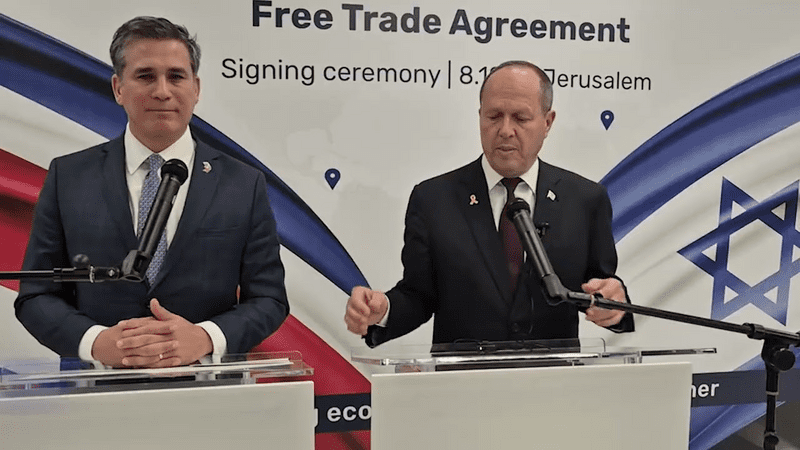
At the headquarters of Israel’s Ministry of Economy and Industry in Jerusalem, Minister Nir Barkat signed the agreement on behalf of Israel, while his counterpart, Minister of Foreign Trade Manuel Tovar Rivera, represented Costa Rica. The agreement marks a significant milestone in the two countries’ economic cooperation, a strategic move aimed at promoting Israel’s exports, expanding bilateral trade, deepening commercial ties with one of Latin America’s emerging economies, and contributing to lowering Israel’s cost of living through substantial tariff reductions.
The key principles of the FTA indicate that more than 90% of tariff lines will be eliminated immediately, and approximately 95% of products will benefit from the agreement. This means food products, raw materials, and industrial equipment will be imported into Israel at lower prices. The FTA’s scope includes modern trade provisions, such as the use of Origin Declarations instead of Certificates of Origin, recognition of software as part of the production process, flexible cumulation rules, and new mechanisms aligned with global supply chains. These measures are expected to simplify procedures, shorten processing times, and enhance the competitiveness of Israel’s industrial sector. For the first time, the agreement regulates bilateral trade in services, enabling remote service delivery, facilitating open and secure digital trade, recognizing electronic signatures, and ensuring equal rights for Israeli service providers.
According to Minister of Economy and Industry Nir Barkat, Costa Rica is a natural trading partner for Israel, an OECD member committed to open and free trade. Following the announcement of the resumption of FTA negotiations with India and just one week before the visit of the German Minister for Economic Affairs and Energy accompanied by a large business delegation, the official signing of the Israel - Costa Rica FTA marks an important achievement in Israel’s external economic policy, led by the Foreign Trade Administration under the Ministry of Economy and Industry. The negotiations were conducted by the Foreign Trade Administration in coordination with the Ministries of Foreign Affairs, Finance, Agriculture, and Justice, as well as the Competition Authority and the Customs Directorate.
Israel’s Minister of Economy and Industry, Nir Barkat (left), and Costa Rica’s Minister of Foreign Trade, Manuel Tovar Rivera (right), at the signing ceremony of the bilateral Free Trade Agreement in Jerusalem on December 8.
The agreement was finalized after two intensive negotiation rounds and multiple technical meetings. The FTA is expected to bolster Israel’s export growth trajectory, strengthen business cooperation, and help reduce the cost of living by lowering import prices. It reflects Israel’s policy of expanding into new markets, diversifying export destinations, and reinforcing the drivers of economic growth. The agreement will immediately eliminate more than 90% of tariffs, opening Costa Rica’s market to Israeli industrial and agricultural products. At the same time, Israel will reduce import costs for a wide range of Costa Rican products, including tropical fruits, nuts, vegetables, and medical equipment. Officials note that these tariff reductions will benefit both Israeli producers and consumers.
Meanwhile, Costa Rica’s Minister of Foreign Trade Manuel Tovar Rivera emphasized the potential benefits of the agreement. He stated that the FTA opens significant new pathways for both Costa Rica and Israel, enhancing access to high-quality Costa Rican goods and services while establishing a mutually beneficial platform for cooperation in high-tech industries, premium agribusiness, and specialized services. Costa Rica views this partnership as a catalyst for two-way investment, innovation, and expanded trade opportunities, thereby strengthening the economic relationship between the two countries.
The new agreement provides Israeli exporters with a genuine competitive advantage in the Costa Rican market, where currently only about 2.5% of tariff lines are duty-free. Once the agreement enters into force, 99 out of Israel’s 100 major export products to this market will receive duty-free access and enjoy broader market penetration. Under the FTA, Israel’s exports to Costa Rica, including fertilizers, agrochemicals, plastic sheets, machinery, laboratory equipment, extruded aluminum, printing ink, olive oil, dates, grapefruit, citrus fruits, wafers, and roasted grains will face a 0% tariff rate. Conversely, Israeli importers and consumers will benefit from price reductions on Costa Rican products. Costa Rica’s exports to Israel such as fresh and processed vegetables, asparagus, nuts, mushrooms, cabbage, celery, dried pineapple, tropical fruits, coffee, cocoa, cane sugar, medical and orthopedic devices, as well as industrial raw materials will be granted tariff elimination or preferential tariff treatment. Fresh pineapple, Costa Rica’s flagship export to Israel, will continue to enjoy general tariff exemption. These reductions will foster competition and expand product diversity in Israel’s domestic market.
Currently, Israel’s annual exports to Costa Rica remain modest, averaging around USD 32 million. However, officials from Israel’s Ministry of Economy and Industry expect that the new agreement will significantly expand bilateral trade across multiple sectors. Costa Rica already holds trade agreements with 18 major global partners, including the European Union, the United States, China, and the Republic of Korea. The newly signed FTA places Israel on an equal, if not more competitive, footing compared with other nations operating in the Costa Rican market. After signing, the formal ratification process will begin before the agreement takes effect. Roy Fisher, Director General of the Foreign Trade Administration, stated that the signing of the FTA is a major achievement for Israel’s industrial sector. Once in force, Israeli exporters will enjoy preferential access to a market that currently maintains high tariffs, an advantage that will strengthen their competitiveness. Furthermore, Israel and Costa Rica will complement each other in agriculture, manufacturing, and technology. The combination of both sides’ strengths, Israel’s technological, agri-tech, and industrial equipment capabilities, and Costa Rica’s agricultural and industrial power will provide a strong platform for expanding bilateral trade and unlocking new cooperation opportunities. Despite on-going challenges, the Ministry of Economy and Industry continues to represent the needs of Israeli industry even in wartime, and Israel expresses satisfaction with the benefits the agreement will deliver for its exporters and economy.
Most recently, Israel signed the VIFTA with Vietnam in July 2023, which entered into force in November 2024. After more than one year of implementation, trade between Israel and Vietnam has recorded strong growth.
Vietnam’s Ministry of Industry and Trade urges businesses to diversify markets and strengthen risk management amid escalating US, Israel, Iran tensions.
The success of the upcoming election will lay the groundwork for building a truly reformed, professional, and action-oriented 16th National Assembly capable of steering the country’s institutional reform agenda.
As transport costs make up a significant share of travel budgets, investing in spacious, stable vehicles is becoming essential for turning every journey into a comfortable and premium experience.
Prime Minister Pham Minh Chinh called for more effective use of the Vietnam - EAEU free trade pact to boost trade, investment, logistics and regional connectivity.
The revised Investment Law 2025 reduces conditional sectors and eases procedures, creating stronger momentum to attract and retain foreign capital in Vietnam.
Rising tensions in the Middle East may drive up oil prices and freight costs, disrupting Vietnam’s import-export and supply chains the Import-Export Department warns
Vietnam surpassed all 2025 socio-economic targets, with GDP growth over 8%, strong FDI inflows and record trade turnover, laying groundwork for double-digit growth.
Despite short-term fluctuations, exports to the UAE remain above USD 5 billion, reflecting a stable foothold as CEPA paves the way for deeper cooperation.