Industry leader Thai Nhu Hiep said transparency, sustainability and fair value sharing are key for Vietnamese coffee to compete in high-end global markets.
As Vietnam’s coffee sector faces mounting pressure to shift decisively from “quantity” to “quality,” and from raw exports to higher value creation, Thai Nhu Hiep, Chairman of the Members’ Council and General Director of Vinh Hiep Co., Ltd., and Vice Chairman of the Vietnam Coffee-Cocoa Association shared his perspectives on how Vietnamese coffee can achieve sustainable success in global export markets.
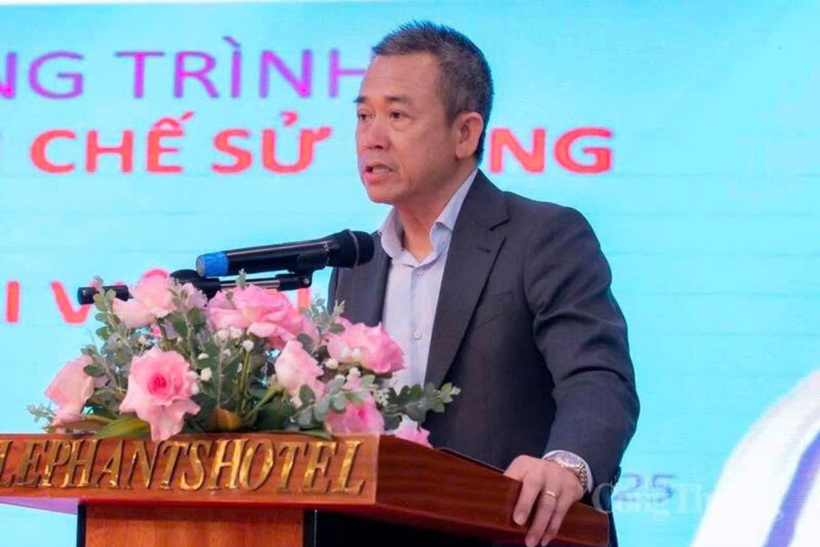
Thai Nhu Hiep, Chairman and General Director of Vinh Hiep Co., Ltd., and Vice Chairman of the Vietnam Coffee-Cocoa Association. Photo: NVCC
Transparency and sustainability the “passport” for Vietnamese coffee
What has motivated you to consistently pursue green, clean and sustainable agriculture over the years?
Thai Nhu Hiep: From the very beginning, I was clear that “sustainability” is not a slogan, it is an unavoidable choice if coffee is to survive in the long term and reach global markets.
We cannot practise agriculture with a short-term mindset. Today’s export markets buy not only on quality, but also on responsibility toward the environment, society and communities. Without responsible agriculture, Vietnamese coffee will struggle to enter the most demanding markets.
At Vinh Hiep, we have built production systems that prioritise biodiversity conservation, reduce environmental impacts, and promote efficient use of water and land resources. The company has participated in various initiatives, including greenhouse gas measurement in coffee farming; sustainable agriculture linked with forest ecosystems; voluntary carbon projects in coffee cultivation in Gia Lai; and efforts to reduce emissions while complying with the EU Deforestation Regulation (EUDR).
This is how we contribute to building a green, clean and safe agricultural system for consumers and for farmers themselves.
Gia Lai is one of Vietnam’s largest coffee-growing regions. How should this advantage be leveraged for effective and sustainable exports?
Thai Nhu Hiep: Gia Lai currently has more than 106,000 hectares of coffee, producing around 312,000 tonnes annually. This is a critical foundation for building a stable export supply chain capable of fulfilling large and long-term orders.
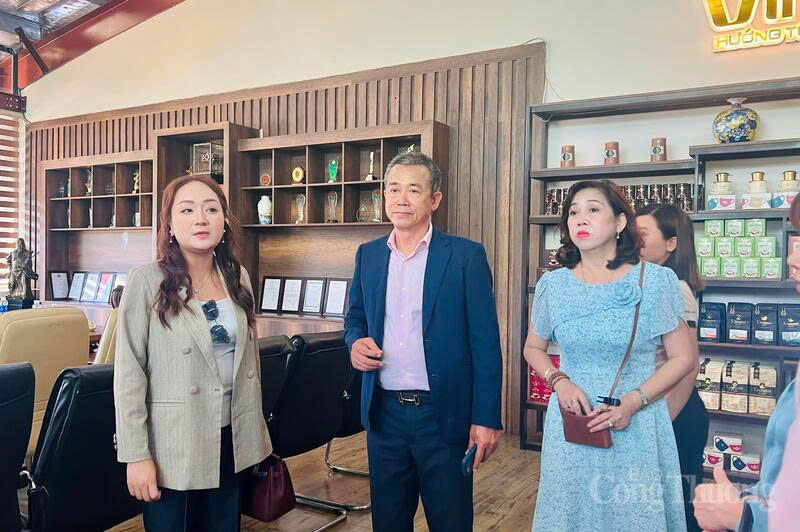
Thai Nhu Hiep exchanges views with a Japanese business delegation at Vinh Hiep’s processing facility. Photo: Hien Mai
However, in today’s deep integration context, scale only has real value when paired with quality and control. Fragmented, spontaneous production without traceability makes it extremely difficult to access premium markets.
That is why Vinh Hiep has proactively partnered with over 10,000 farming households under international standards such as 4C and Rainforest Alliance, while also developing farms certified organic by the United States, the EU, South Korea and Japan.
Our goal is not merely to purchase coffee, but to work with farmers to build organised, disciplined raw material zones that take environmental responsibility seriously. Only then can Gia Lai’s “large” advantage be transformed into a truly “strong” export advantage.
With export turnover exceeding USD 800 million in the most recent crop year, how do you view Vinh Hiep’s development journey?
Thai Nhu Hiep: The figure of over USD 800 million in the 2024-2025 crop year is not the result of luck. It reflects a long-term development strategy anchored in green and sustainable standards.
We believe companies do not only sell products they sell credibility and the image of Vietnamese coffee. To earn market trust, investment must be systematic, from production and processing to quality governance.
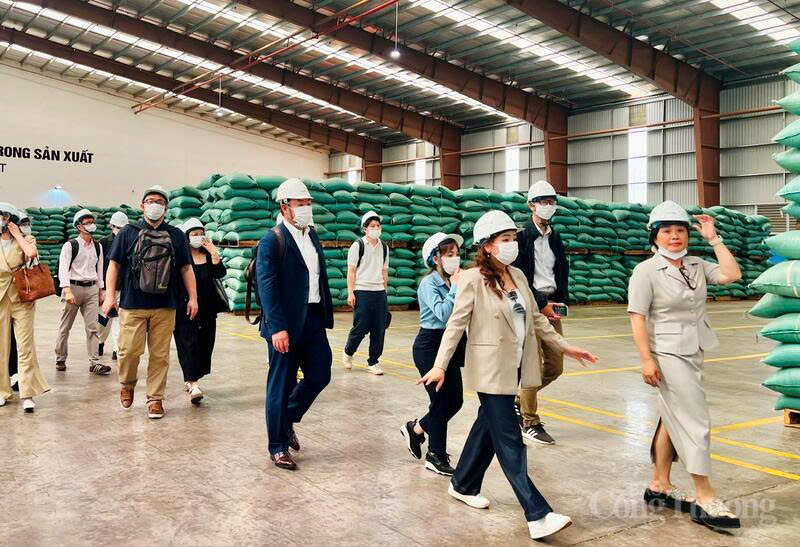
Japanese enterprises visit Vinh Hiep Co., Ltd. Photo: Hien Mai
Vinh Hiep has established food safety management systems under ISO 22000 and HACCP, invested in laboratories and internal quality control systems, and developed specialised human resources. As a result, our products meet not only technical requirements but also standards of transparency and social responsibility factors that increasingly determine global competitiveness.
Aspiration to elevate the value of Vietnamese coffee
In your view, what is the key for Vietnamese coffee to conquer demanding markets such as the EU, the United States and Japan?
Thai Nhu Hiep: I do not see these markets as “difficult” in a negative sense. They simply demand a higher level of honesty and transparency.
To enter this arena, companies must be able to demonstrate the full story of their products from raw material zones and cultivation practices to processing, logistics, and social and environmental responsibility.
Vinh Hiep has invested heavily in inspection systems, laboratories, digitalisation of raw material data, farmer training under unified processes, and long-term contracts to stabilise supply chains.
Today, a shipment of coffee carries not just beans, but the image of an entire production ecosystem. If that ecosystem is transparent, ethical and responsible, markets will open naturally.
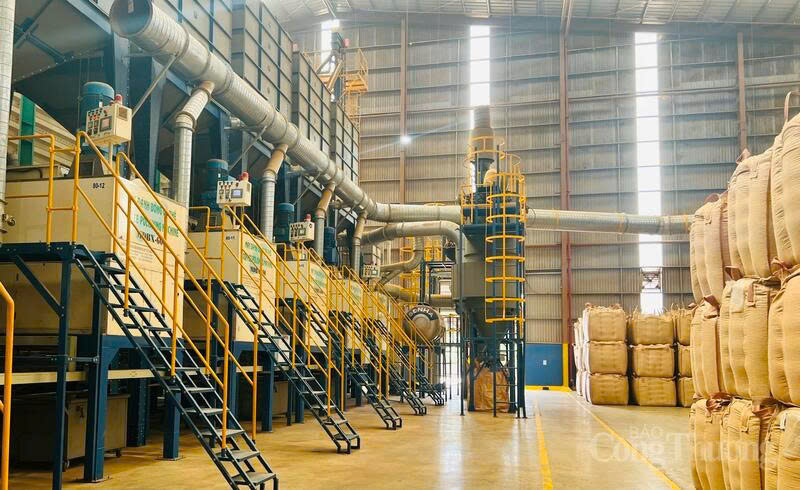
Coffee processing plant of Vinh Hiep Co., Ltd. Photo: Hien Mai
You often emphasise the need to raise the value of Vietnamese coffee. How can coffee become “not only abundant, but also strong”?
Thai Nhu Hiep: In reality, Vietnamese coffee has long been positioned in a low segment not because of poor quality, but due to a lack of standards, transparency and branding stories. I believe specialty coffee and high-quality coffee are the path to changing that position. Vietnam can absolutely produce refined, distinctive, high-value Robusta if investment is made correctly from varieties and farming to processing and branding.
My philosophy is that “to go far, we must go together.” Farmers, enterprises and markets must share benefits fairly. When farmers are rewarded appropriately, they care for their crops better and comply more closely with standards. When businesses uphold credibility and integrity, markets will view Vietnamese coffee differently. Then, Vietnamese coffee will travel far not by volume alone, but by real value and distinct identity.
From the coffee farms of Gia Lai to the world’s most demanding markets, the journey of Vietnamese coffee is being rewritten through transparency, standards and an aspiration for genuine value. As Thai Nhu Hiep shared, when coffee is produced not merely for sale, but with responsibility and integrity, “going far” becomes not a destination, but a sustainable path for Vietnamese agricultural exports on the global map.c
The FTA Vietnam - EFTA creates new opportunities for Vietnamese businesses while encouraging stronger competitiveness, compliance and sustainable development.
Ministry of Industry and Trade removed more than 9,000 infringing products and blocked over 2,000 online stores in a nationwide crackdown on counterfeit goods.
Sustainable production and consumption are becoming business imperatives as companies invest in greener technologies, circular design and digital transformation.
Vietnam's domestic market remained resilient in the first half of 2026 despite global turbulence, with inflation under control and retail sales continuing to grow.
From 29 June, Vietnam’s domestic carbon market officially entered its pilot phase, marking a transition from emissions management through administrative command-and-control measures to a market-based mechanism.
The FTA Vietnam - EFTA creates new opportunities for Vietnamese businesses while encouraging stronger competitiveness, compliance and sustainable development.
In an interview with the press regarding the Free Trade Agreement (FTA) between Vietnam and the European Free Trade Association (EFTA), Deputy Minister of Industry and Trade Nguyen Sinh Nhat Tan emphasized that the agreement will lay the foundation for economic relations between Vietnam and EFTA to enter a new stage of development.
At a second-quarter 2026 conference, the MoIT urged Vietnam's Trade Offices abroad to strengthen intelligence and help exporters adapt to changes and expand exports.
Vietnam and Israel discuss strengthening VIFTA implementation to expand trade, investment and cooperation, aiming to boost bilateral economic ties and market access.
More than 100 businesses attend the Vietnam-Japan Investment and Trade Cooperation Conference in Osaka to strengthen investment, trade and supply chain connectivity.