With 23 entrepreneurs elected, the 16th National Assembly marks a broader role for the business sector, alongside concrete action plans aimed at refining policy.
Amplifying the voice of production and business
The National Election Council has announced the list of 500 elected deputies to the 16th National Assembly. Within this broad representation, one notable highlight is the presence of 23 entrepreneurs and business leaders.
Their inclusion signals that the legislature is increasingly drawing from the production and business sector, individuals who directly operate the economy and confront institutional bottlenecks firsthand.
The group of 23 includes senior executives from large state-owned enterprises as well as leaders of private companies and conglomerates. This mix creates a diverse representative structure, reflecting a relatively comprehensive cross-section of the economy.
Nguyen Nhu So, Chairman of the Board of Dabaco Group, continues to serve in the 16th National Assembly. Photo: National Assembly Office
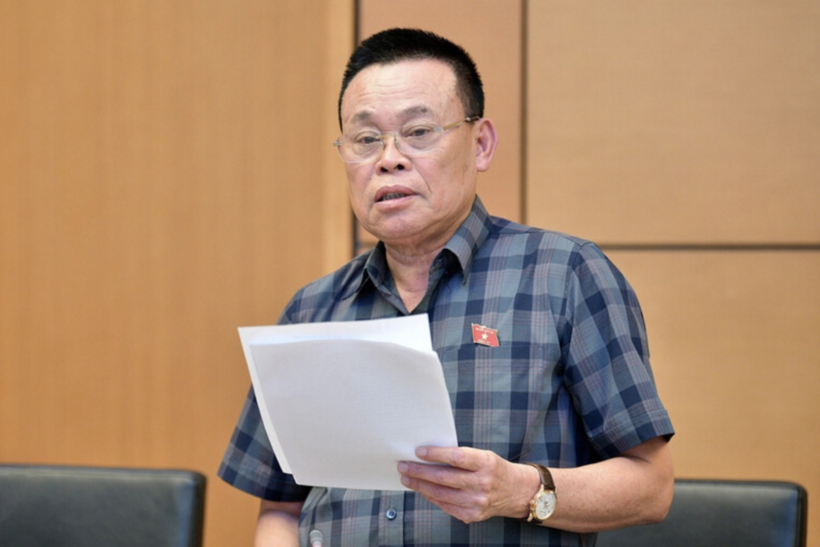
Notably, the 1960s generation remains a core force, with seasoned figures who bring years of parliamentary experience. Nguyen Van Than (born 1955), Chairman of the Vietnam Association of Small and Medium Enterprises, is the oldest deputy in this group. He secured re-election after two previous terms, representing Constituency No. 11 in Ho Chi Minh City.
Alongside him, Nguyen Nhu So (born 1957), Chairman of the Board of Dabaco Group, continues his presence in the 16th National Assembly, marking his third consecutive term. He previously served in the 14th and 15th National Assemblies as part of the Bac Ninh delegation.
Among experienced business figures, Nguyen Cao Son (born 1969), Chairman of the Phu Tho Business Association, also won voter confidence. He previously served in the 13th and 15th National Assemblies and has been active in supporting enterprises and promoting trade.
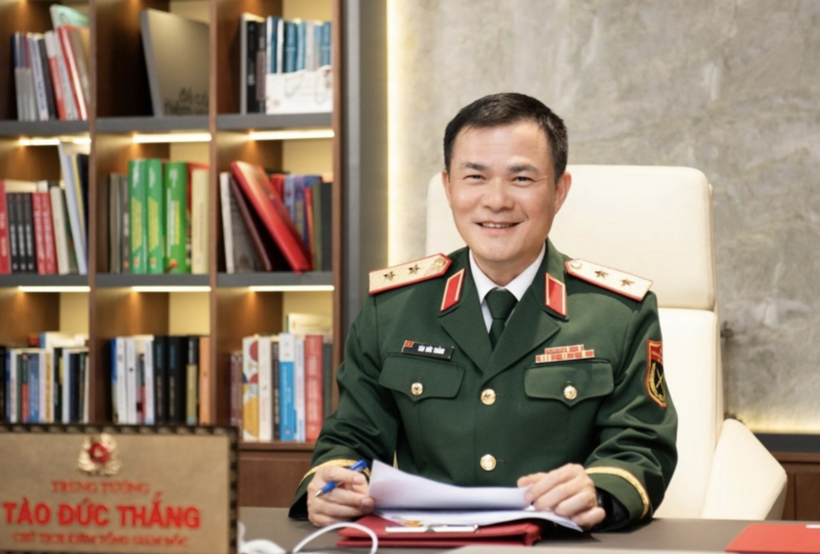
In addition to veteran figures, the new Assembly also sees participation from a younger generation of entrepreneurs born in the 1970s and 1980s who are actively managing businesses. The industry-energy sector is represented by Lieutenant General Tao Duc Thang (born 1973), Chairman and CEO of Viettel Group, elected in Ho Chi Minh City. Le Ngoc Son (born 1972), Chairman of the Members’ Council of Vietnam National Industry-Energy Group (PVN), and Pham Van Thanh (born 1972), Chairman of the Board of Vietnam National Petroleum Group (Petrolimex), were also elected for the first time in Ho Chi Minh City.
Lieutenant General Tao Duc Thang, Chairman and CEO of Viettel Group. Photo: Viettel
This group also includes Tran Manh Huy, Chairman of HTV Blockchain Solutions JSC, elected as a deputy from Da Nang, along with Nguyen Van Canh, Nguyen Thi Thanh Binh, and Vu Hong Quan, who are active across various sectors of the economy.
Notably, the emergence of Nguyen The Duy (born 1994), Vice Chairman and Deputy CEO of Becamex IDC, marks a new milestone. He is among the youngest entrepreneur-deputies, elected in Constituency No. 1.
From legislative promises to voter accountability
While the growing number of entrepreneur-deputies is evident, a closer look at their action programs reveals a clearer picture of how they intend to engage in legislative work.
Nguyen Van Than outlined four key priorities: strengthening voter engagement; promoting transparent legal frameworks to support small businesses and household enterprises; overseeing administrative reform and public investment to reduce costs for citizens and businesses; and monitoring urban issues such as traffic, healthcare, education, the environment, and human resource development. He emphasized a commitment to “speak truthfully, act decisively, and take responsibility to the end.”
Nguyen Nhu So noted that in his previous terms, he had been actively involved in lawmaking and oversight while maintaining close ties with voters, alongside running his business with a focus on social responsibility. In the new term, he pledged to further enhance voter engagement, contribute to policy refinement, promote economic development and job creation through production linkages and digital transformation, and prioritize social welfare and sustainable development.
For the younger generation of entrepreneurs, action plans tend to be more specific to localities and sectors. Tran Manh Huy, for instance, aims to combine economic development with social responsibility, with a focus on supporting vulnerable groups.
Among younger representatives, Nguyen The Duy stated that he would focus on social welfare solutions linked to urbanization and industrial development, particularly promoting social housing for workers in urban areas and industrial zones. He also plans to engage in policymaking related to urban infrastructure, transportation, and sustainable development, with an emphasis on aligning policy with real-world implementation.
A key highlight is the action program of Lieutenant General Tao Duc Thang. He underscored his commitment to fully performing the duties of a people’s representative, faithfully representing the will, aspirations, and sovereignty of the people; maintaining close ties with constituents; and listening, absorbing feedback, and remaining accountable to public oversight.
He aims to contribute to improving the quality of legislation, supreme oversight, and decision-making on critical national issues, while making tangible contributions to the development of Ho Chi Minh City. To that end, he emphasized timely recommendations to address obstacles affecting the legitimate rights and interests of citizens, as well as proactive participation in building and refining the legal system, particularly in areas such as the economy, science and technology, digital transformation, national defense, and security.
In addition, he outlined plans to propose solutions for developing smart models, promoting digital transformation in healthcare, education, and public administration; strengthening linkages between businesses and universities and research institutes; and supporting job transitions and sustainable income growth for urban residents.
Overall, these action programs converge on core economic and social issues, from institutional reform and infrastructure development to digital transformation and social welfare.
The presence of 23 entrepreneurs among 500 National Assembly deputies not only raises expectations but also places clear demands on accountability. Their commitments are tied to major issues with direct impacts on citizens and businesses. Yet legislative performance is measured not by promises, but by tangible outcomes in lawmaking, oversight, and policymaking.
In practice, business management experience is an advantage, but it does not automatically translate into legislative capability. The role of a National Assembly deputy requires balancing the interests of diverse social groups, not just the business sector.
The greatest challenge for entrepreneur-deputies, therefore, lies not in entering the legislature, but in translating their action programs into concrete, feasible, and effective policy proposals.
Greater representation of entrepreneurs reflects voter expectations to bring market perspectives into policymaking. At the same time, it creates pressure for these deputies to deliver on their commitments.
With 76,043,527 voters participating, equivalent to a turnout rate of 99.38%, public confidence in the 16th National Assembly is substantial. Within that broader picture, the entrepreneur group is not a marginal presence, but a force carrying significant expectations.
On April 24, Prime Minister Le Minh Hung chaired a nationwide conference on accelerating the allocation and disbursement of public investment capital in 2026.
International media highlight Vietnam’s strong growth, rising FDI, market upgrades and tourism appeal, reinforcing its growing role and global standing today.
The Ministry of Industry and Trade (MoIT) held trade promotion activities in Yunnan and Shandong, boosting business links, exports, and investment cooperation between Vietnam and China.
A prestigious international award and a two-million-guest milestone mark a strategic evolution, highlighting the success of the entertainment-led integrated resort model in the regional hospitality market.
A prestigious international award and a two-million-guest milestone mark a strategic evolution, highlighting the success of the entertainment-led integrated resort model in the regional hospitality market.
Permanent Deputy Prime Minister Pham Gia Tuc urged Hyundai Rotem to expand cooperation, technology transfer, and participation in Vietnam’s railway projects.
Prime Minister Le Minh Hung and President Lee Jae Myung led a Vietnam - the Republic of Korea (RoK) business roundtable in Hanoi, calling for deeper high tech cooperation.