According to VGP, on August 19, Standing Deputy Prime Minister Pham Gia Tuc and Deputy Prime Minister Nguyen Van Thang held a working session with relevant ministries and agencies on the development of a competitive electricity market.
On August 19, Politburo Member and Standing Deputy Prime Minister Pham Gia Tuc and Deputy Prime Minister Nguyen Van Thang worked with the Ministry of Industry and Trade, the Ministry of Finance, and relevant ministries and agencies on the roadmap, operating principles, structure of the electricity sector, and conditions for establishing and developing different levels of the competitive electricity market.
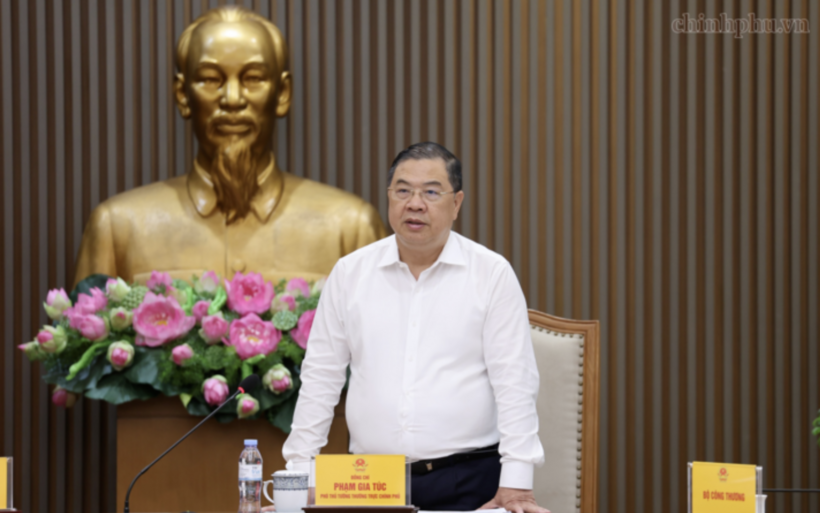
Standing Deputy Prime Minister Pham Gia Tuc addresses the working session - Photo: chinhphu.vn/Phuong Nguyen
According to a report by the Ministry of Industry and Trade, the draft Prime Minister’s Decision was developed based on the Electricity Law, Politburo Resolution No. 70-NQ/TW, and the Electricity Sector Development Strategy through 2050. The draft aims to further develop the different levels of the competitive electricity market, enhance transparency and efficiency, and meet the development requirements of the electricity sector.
A key provision of the draft is to set 2030 as the latest deadline for officially launching a competitive retail electricity market, subject to the fulfillment of all necessary prerequisites. At the same time, the competitive wholesale electricity market will continue to be improved, with a gradual transition toward a multiple-buyer model.
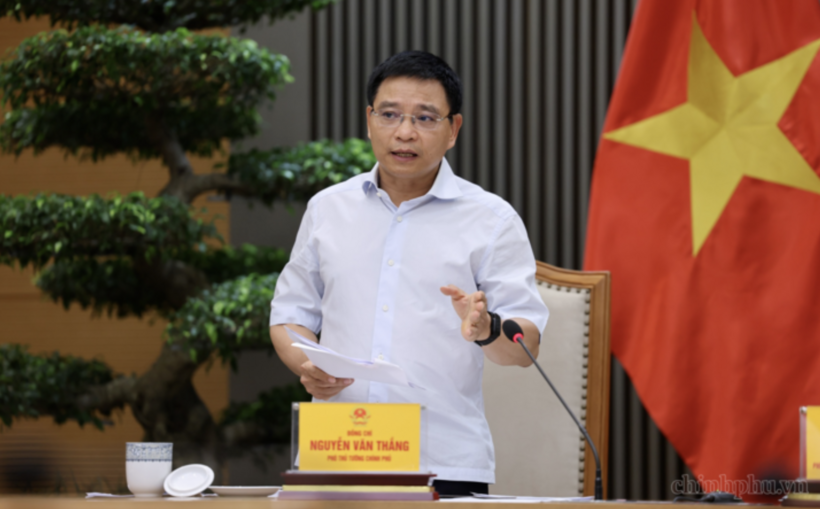
Deputy Prime Minister Nguyen Van Thang addresses the working session - Photo: chinhphu.vn/Phuong Nguyen
To achieve this goal, the Ministry of Industry and Trade has proposed implementing a comprehensive set of measures to improve electricity market operating mechanisms and enhance transparency and efficiency across the electricity sector. The ministry will also continue reviewing and refining the structure of the electricity sector to meet the requirements of a competitive electricity market.
At the meeting, participants focused on the need to ensure energy security while developing the competitive electricity market, the ability to attract investment to meet rising electricity demand, the roadmap for electricity price reform, financial and payment mechanisms, and conditions for ensuring stable market operations.
They also discussed options for restructuring entities within the electricity sector; the role of State-owned enterprises; and the organizational and operational models of power transmission, dispatch, and generation entities. In addition, they reviewed legal issues to ensure consistency between the draft Decision and relevant schemes, strategies, and regulations.
Concluding the meeting, the two Deputy Prime Ministers requested that implementation of the Decision on the roadmap, operating principles, electricity sector structure, and conditions for establishing and developing a competitive electricity market be carried out in parallel and in a coordinated manner with the EVN restructuring scheme. This must ensure consistency with the policies and directions of the Politburo, the Party Central Committee, and the Government.
During the drafting process, the Ministry of Industry and Trade was asked to carefully study the options, roadmap, and relevant mechanisms to ensure that the development of a competitive electricity market goes hand in hand with requirements for energy security and power system development.
Regarding electricity prices, the two Deputy Prime Ministers agreed on the direction of gradually reforming retail electricity prices according to an appropriate roadmap, while assessing the impacts and determining State support mechanisms for groups and areas where social welfare needs to be ensured.
Regarding the power transmission system, the two Deputy Prime Ministers affirmed that it is strategic infrastructure that requires synchronized investment and must be developed ahead of demand to meet requirements for power generation and electricity load growth. The Ministry of Industry and Trade was tasked with carefully studying options, the roadmap, and mechanisms for organization, finance, investment, and capital mobilization to ensure that any adjustment to the operating model does not affect the capacity to invest in and operate the transmission system.
The two Deputy Prime Ministers also requested further study and assessment of plans to restructure power generation corporations, ensuring consistency with the role of State-owned enterprises in the energy sector and the requirement to strengthen EVN’s capacity.
They directed the review and completion of financial and tax mechanisms and relevant legal regulations, ensuring a consistent legal framework for the development of a competitive electricity market.
Following the meeting, the Ministry of Industry and Trade was asked to urgently coordinate with EVN, the Ministry of Finance, and relevant ministries and agencies to finalize the EVN restructuring scheme alongside the draft Decision on the competitive electricity market. The two documents must be consistent, synchronized, free of overlaps, and aligned with the policies and directions of the Party Central Committee, with a report to the competent authorities in September 2026.
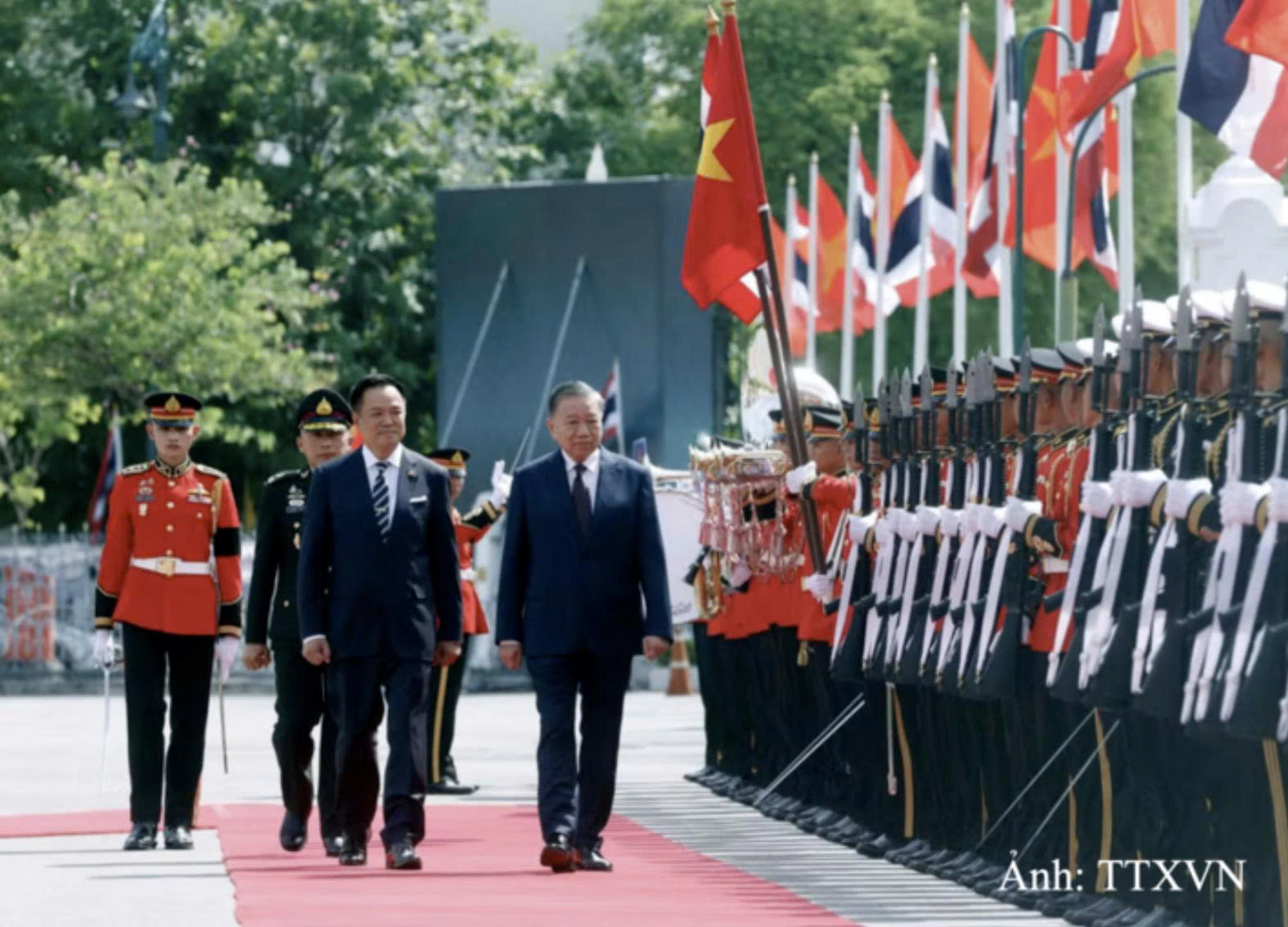
Building on 50 years of diplomatic relations, Viet Nam and Thailand have continued to nurture friendship, strengthen mutual trust, expand cooperation and work toward new milestones in bilateral ties.
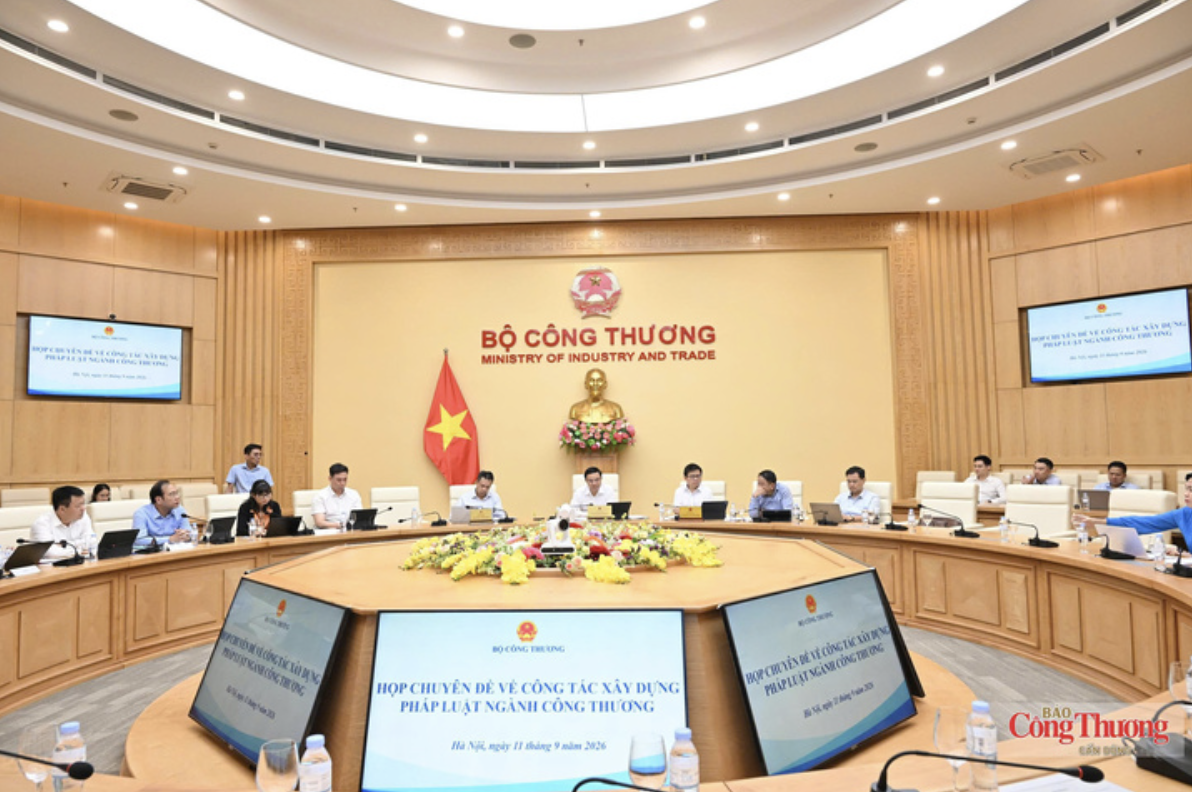
The Ministry of Industry and Trade completed all nine key Q3 legislative tasks and is prioritizing 56 remaining tasks to ensure timely, consistent and effective legal reform.
Vietnamese businesses are stepping up trade connections and seeking partners in Türkiye and Spain, opening up new opportunities to boost exports and gain access to European markets.
Access to advanced port technologies and stronger business connectivity are creating new opportunities for logistics cooperation between Viet Nam and China.
Building on 50 years of diplomatic relations, Viet Nam and Thailand have continued to nurture friendship, strengthen mutual trust, expand cooperation and work toward new milestones in bilateral ties.
The Ministry of Industry and Trade completed all nine key Q3 legislative tasks and is prioritizing 56 remaining tasks to ensure timely, consistent and effective legal reform.
Vietnamese businesses are stepping up trade connections and seeking partners in Türkiye and Spain, opening up new opportunities to boost exports and gain access to European markets.
Access to advanced port technologies and stronger business connectivity are creating new opportunities for logistics cooperation between Viet Nam and China.