ASEAN convened a special AECC meeting on April 30 to assess the Middle East situation’s impact on energy, supply chains and regional economic stability.
In response to the increasingly complex developments in the Middle East, ASEAN convened a Special Meeting of the ASEAN Economic Community Council (AECC) on April 30 to assess impacts on energy, supply chains, and the regional economy.
Assessing regional and global economic developments
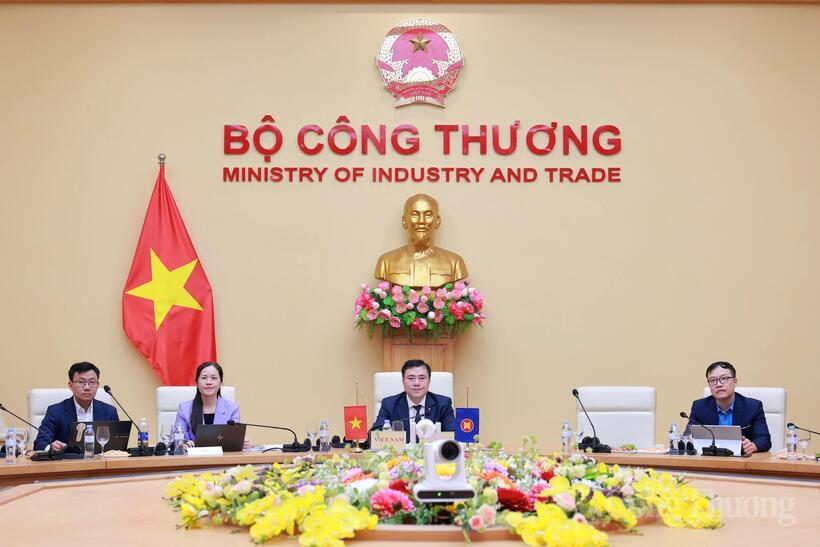
On April 30, the Special AECC Meeting on the Middle East situation was held virtually under the chairmanship of the Secretary of Trade and Industry of the Philippines. The meeting was attended by ASEAN Economic Ministers, the ASEAN Secretariat, and relevant agencies and organizations. The Vietnamese delegation was led by Nguyen Sinh Nhat Tan, Deputy Minister of Industry and Trade, with participation from representatives of the Ministry of Industry and Trade and the Ministry of Foreign Affairs.
At the meeting, ASEAN Economic Ministers exchanged views on recent developments in the Middle East and their wide-ranging economic impacts on regional growth, global energy markets, supply chain disruptions, food security, transport and logistics, tourism, as well as direct effects on production, business activities, and people’s livelihoods, particularly micro, small and medium-sized enterprises (MSMEs).
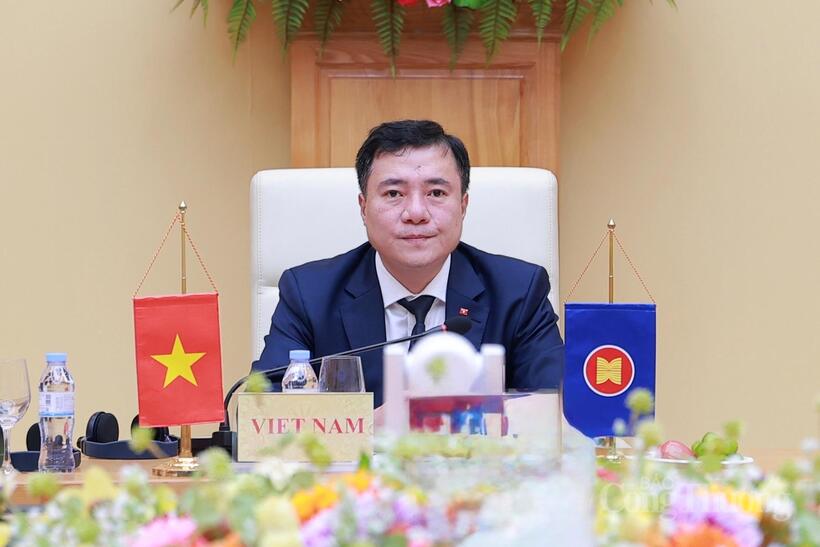
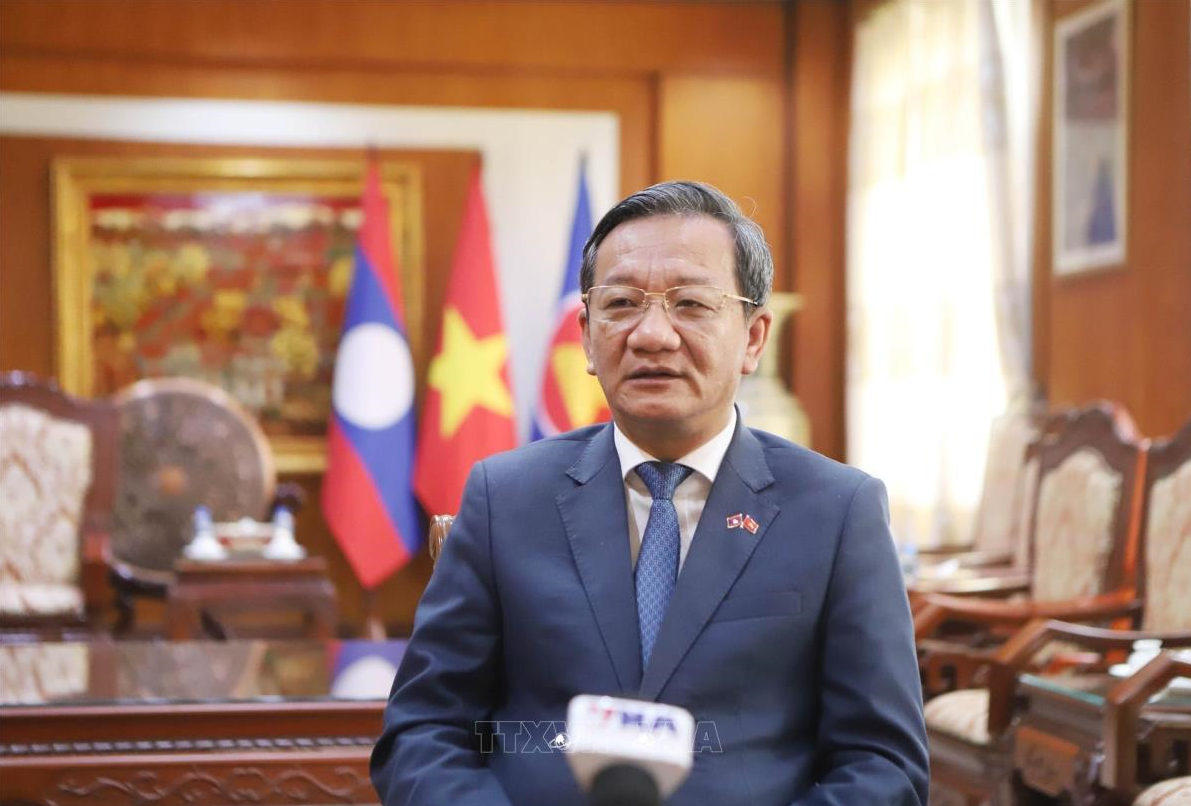
Deputy Minister of Industry and Trade Nguyen Sinh Nhat Tan at the event. Photo: Quynh Trang
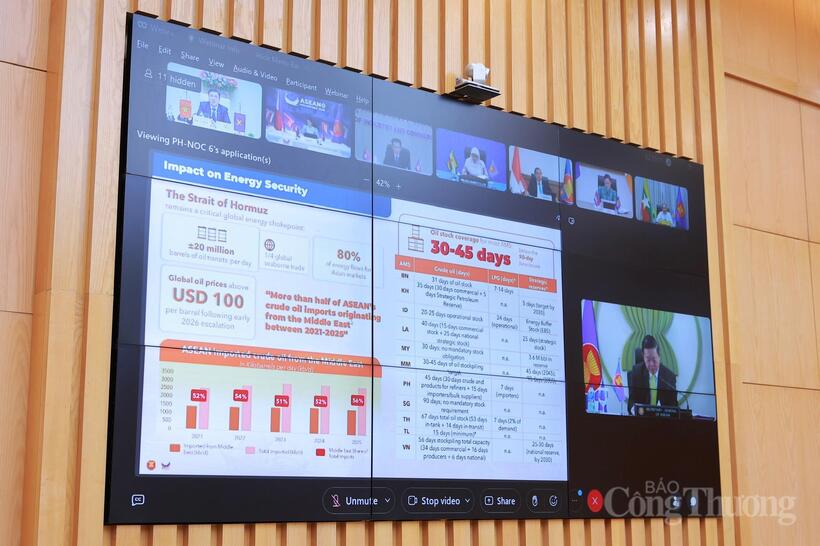
The countries expressed deep concern over rising risks stemming from supply disruptions along strategic transport routes, especially the Strait of Hormuz, through which around one-quarter of the world’s oil and liquefied natural gas passes, with more than 80% destined for Asia. This situation poses serious risks to global energy security, causes sharp fluctuations in oil and LNG prices, and drives up transport, insurance, and logistics costs, thereby exerting significant pressure on inflation, exchange rates, and global financial conditions, and affecting macroeconomic stability across the region.
The meeting heard updates from the ASEAN Secretariat, the Economic Research Institute for ASEAN and East Asia (ERIA), the Asian Development Bank (ADB), and the ASEAN Business Advisory Council (ASEAN-BAC) on regional and global economic conditions amid the Middle East crisis. These assessments indicated that the conflict is affecting ASEAN through multiple channels, including energy, trade, logistics, and finance, heightening risks to growth and inflation.
Enhancing cooperation to ensure supply chain stability
On that basis, the Ministers took note of analyses and recommendations from ERIA, ASEAN-BAC, and ADB, particularly proposals for ASEAN to strengthen energy resilience, explore a regional oil stockpiling mechanism, reinforce supply chain resilience, diversify sources of supply and production inputs, and enhance coordination and information sharing within ASEAN.
Deputy Minister of Industry and Trade Nguyen Sinh Nhat Tan delivers remarks at the meeting. Photo: Quynh Trang
Amid current global uncertainties, the Ministers underscored the importance of maintaining smooth trade flows, ensuring maritime safety and security, and upholding freedom of navigation along strategic sea lanes in accordance with international law, especially the United Nations Convention on the Law of the Sea 1982 (UNCLOS 1982). They also emphasized limiting unnecessary non-tariff measures, particularly on essential goods and production inputs, in order to stabilize markets and support businesses, especially MSMEs.
Addressing the meeting, Deputy Minister Nguyen Sinh Nhat Tan shared the common concerns of ASEAN countries regarding the far-reaching economic impacts arising from the Middle East situation, particularly on global energy markets, food security, supply chains, transport and logistics networks, and tourism, as well as spillover effects on regional macroeconomic stability, transport and production costs, logistics expenses, and pressures on inflation, exchange rates, and global financial conditions.
The meeting is held virtually under the chairmanship of the Secretary of Trade and Industry of the Philippines. Photo: Quynh Trang
He also briefed the meeting on several domestic policies and measures being implemented to respond to external uncertainties, and reaffirmed Vietnam’s commitment to working closely with other ASEAN member states to translate shared commitments into concrete actions, enhance regional preparedness, and move toward a more sustainable and resilient energy future for ASEAN.
Based on the discussions, the Ministers reaffirmed the need to closely monitor regional and global economic developments, promote information sharing, strengthen policy coordination, and effectively leverage existing ASEAN economic cooperation frameworks, including ASEAN+1 FTAs and the ASEAN Petroleum Security Agreement (APSA), in order to maintain macroeconomic stability, bolster market confidence, and enhance the region’s resilience to external shocks.
The meeting also agreed to continue monitoring the situation, strengthen cross-sectoral coordination, and report outcomes to ASEAN Leaders at the upcoming 48th ASEAN Summit in May 2026.
Industry and Trade Newspaper would like to introduce a podcast series on the implementation of the Politburo's Resolution No. 57 in the Industry and Trade sector.
GREENTECH HA NOI 2026 showcases green technologies and energy-efficient solutions that help businesses cut emissions, optimize costs, promote sustainable production.
The programme connects Vietnamese businesses with Chinese investors, expanding opportunities for investment, technology cooperation and supply chain links.
Viet Nam and Poland are exploring complementary strengths in furniture manufacturing, machinery, raw materials and technology to develop regional supply chains.
The MoIT calls for proactive risk management and supply diversification to prevent energy supply disruptions amid global geopolitical and market uncertainties.
GREENTECH HA NOI 2026 showcases green technologies and energy-efficient solutions that help businesses cut emissions, optimize costs, promote sustainable production.
On the sidelines of the BRICS Summit in New Delhi, Senior Lieutenant General Nguyen Truong Thang held a meeting with Indian Defence Secretary Rajesh Kumar Singh, agreeing to expand defence cooperation.
Viet Nam has identified strengthening energy security and resilience, accelerating a clean and just energy transition, and promoting innovation, investment and regional connectivity as three strategic priorities in responding to profound changes in the global energy landscape.
The Viet Nam-Japan Business Forum 2026 will take place in Hanoi, bringing together around 250 delegates for trade and investment matchmaking and business networking.