Deputy Minister Truong Thanh Hoai urges Vinachem to develop two key labs meeting international standards to advance its role in strategic tech value chains.
On April 2, 2026, the Vietnam National Chemical Group (Vinachem) convened a conference to study and assess its capacity to participate in strategic high-tech product value chains.
The event was attended by Deputy Minister of Industry and Trade Truong Thanh Hoai, Director of the Chemicals Agency Phung Manh Ngoc, representatives from affiliated units under the Ministry of Industry and Trade, as well as experts and scientists.
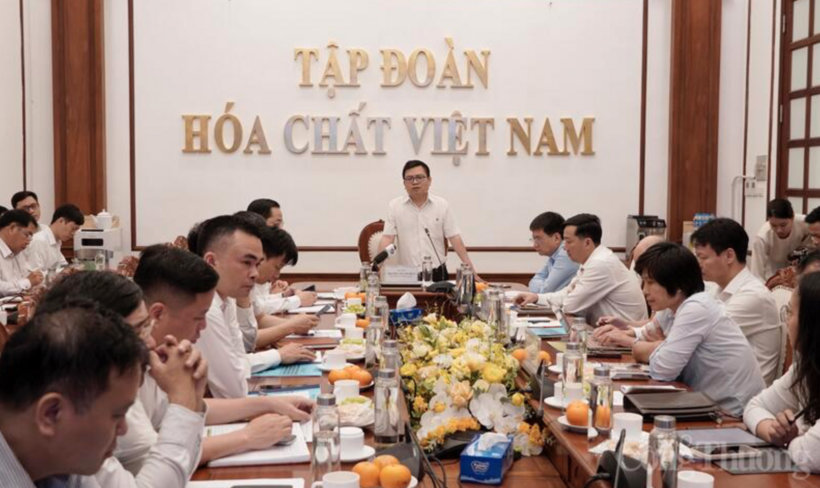
In his opening remarks, Nguyen Huu Tu, Chief Executive Officer of Vinachem, stated that in 2025 the group had successfully cleared its accumulated losses. Revenue reached VND 64,363 trillion, up 8% compared to 2024. Assigned industrial production value increased by 8%, while actual performance rose by 10.3% to VND 61,190 trillion, marking double-digit growth over the past year.
Nguyen Huu Tu, Director of Vietnam National Chemical Group, delivers the opening remarks.
Regarding profits, Vinachem recorded VND 3,853 trillion in 2025, up 73% year-on-year and 45% higher than planned. After nine years, the group has fully addressed its accumulated losses. Employees’ income, livelihoods, and job stability have significantly improved, with average monthly income now at approximately VND 16.65 million per person, double that of five years ago. Export value reached USD 58 million across seven markets.
“However, revenue exceeding VND 60 trillion remains modest relative to the group’s potential. Vinachem is fully aware of its responsibility toward the country’s industrial development,” Nguyen Huu Tu emphasized.
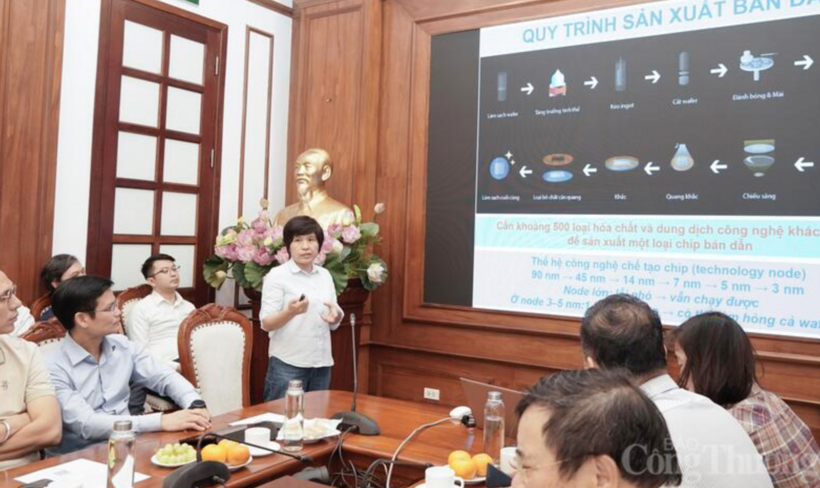
At the conference, Professor Vu Thi Thu Ha presented the results of Phase 1 of the science and technology project titled “Research on opportunities and capabilities for Vinachem to participate in the semiconductor industry value chain.”
According to her, the study has identified both opportunities and feasibility for Vinachem to engage in the semiconductor value chain, including the supply of chemicals and supporting materials. These include chemicals for the electronics industry and for the extraction and processing of rare earth elements areas that play a critical role in modern semiconductor supply chains.
Associate Professor Vu Thi Thu Ha reports the Phase 1 results of the science and technology project titled “Research on opportunities and the potential for Vietnam National Chemical Group to participate in the semiconductor industry value chain.”
Based on these findings, the project proposes orientations and a roadmap for Vinachem’s participation in the semiconductor value chain through 2050, along with required conditions in terms of policy mechanisms, technology, markets, and investment efficiency.
Strengthening competitiveness of the chemical industry
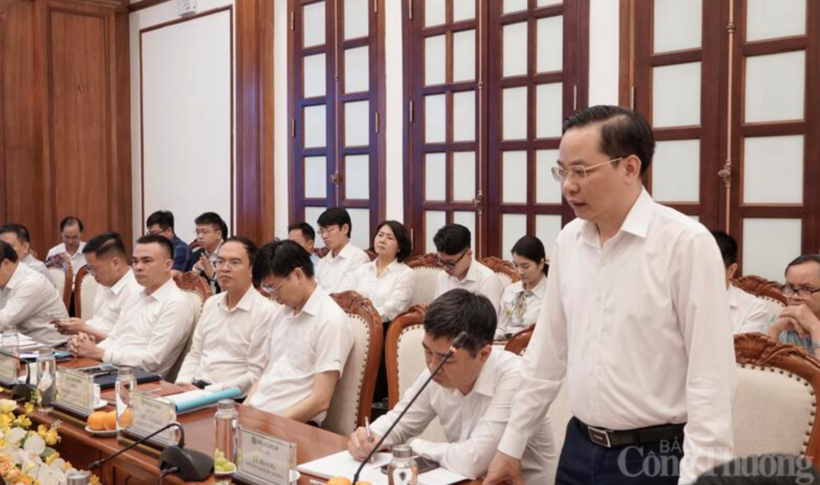
Delivering directives at the conference, Deputy Minister Truong Thanh Hoai noted that Vietnam’s chemical industry holds significant potential and advantages, but its development has yet to meet expectations. The sector remains relatively small in scale, with limited competitiveness. Key segments such as basic chemicals, high-purity chemicals, and pharmaceuticals have developed slowly, and to date there is no sufficiently strong industry association to connect enterprises, articulate challenges, and propose effective policies.
Deputy Minister of Industry and Trade Truong Thanh Hoai delivers directive remarks at the conference.
He emphasized that the chemical industry is closely linked with sectors such as mining, bauxite, and rare earths. Many stages are fundamentally chemical processes rather than purely metallurgical. In the coming period, geological and mineral resource management is expected to be transferred to the Ministry of Industry and Trade, creating conditions for establishing an integrated value chain from extraction to deep processing.
“This presents a major opportunity to develop strategic industries, particularly in renewable energy, advanced materials, batteries, energy storage, and the automotive sector,” the Deputy Minister stressed.
According to Truong Thanh Hoai, Vinachem’s financial capacity remains limited, with charter capital of around VND 13 trillion. To implement large-scale projects, the group will need a capital expansion plan tied to specific projects, strategic technologies, and clearly defined outputs.
The Ministry is prepared to report to the Politburo to consider increasing capital to a higher level, potentially up to VND 40 trillion provided that investment proposals are well-structured, feasible, and demonstrate clear contributions to economic growth.
The Ministry is also focusing on developing standards and technical regulations for chemical products, particularly in textiles, plastics, and consumer goods. The market still contains many low-cost, low-quality products that pose potential risks to consumer health but remain inadequately controlled.
Deputy Minister Truong Thanh Hoai instructed Vinachem to prioritize the establishment of two key national laboratories, with modern equipment, upgraded infrastructure, and high-quality human resources. These laboratories must ensure testing procedures meet international standards and work toward international accreditation and certification.
He further underscored the importance of human resources, calling for stronger efforts to attract experts and implement appropriate remuneration mechanisms, including for foreign specialists. In reality, many research institutes operate in a formalistic manner, lacking practical linkage, leading to resource inefficiencies and declining workforce quality.
Accordingly, restructuring is needed to reduce fragmented investment and concentrate resources on a system of key laboratories that meet international standards and are connected to global networks.
“Strategic technology products such as high-purity chemicals, rare earth materials, and food packaging should be prioritized in the coming period,” he noted.
The Ministry is currently drafting a Law on Key Industries, which will include a number of strategic technology products, with mechanisms expected to be similar to Resolution No. 193/2025/QH15 of the National Assembly.
“The group should take a leading role in establishing a Chemical Industry Business Association, rather than maintaining a purely scientific association as before, while also expanding both domestic and international markets and leveraging major partners,” he added.
On technology, the Deputy Minister also stressed that Vinachem must proactively conduct research rather than relying entirely on technology transfer, based on the characteristics of domestic resources. In the case of energy storage batteries, beyond chemical components, system control and management account for a significant share of value and must be carefully calculated.
In implementing Resolution No. 57-NQ/TW of the Politburo on breakthroughs in science, technology, innovation, and national digital transformation, Vinachem has identified science, technology, innovation, and digital transformation as core drivers to enhance competitiveness and ensure sustainable growth in the 2026 - 2030 period and beyond.
On April 24, Prime Minister Le Minh Hung chaired a nationwide conference on accelerating the allocation and disbursement of public investment capital in 2026.
International media highlight Vietnam’s strong growth, rising FDI, market upgrades and tourism appeal, reinforcing its growing role and global standing today.
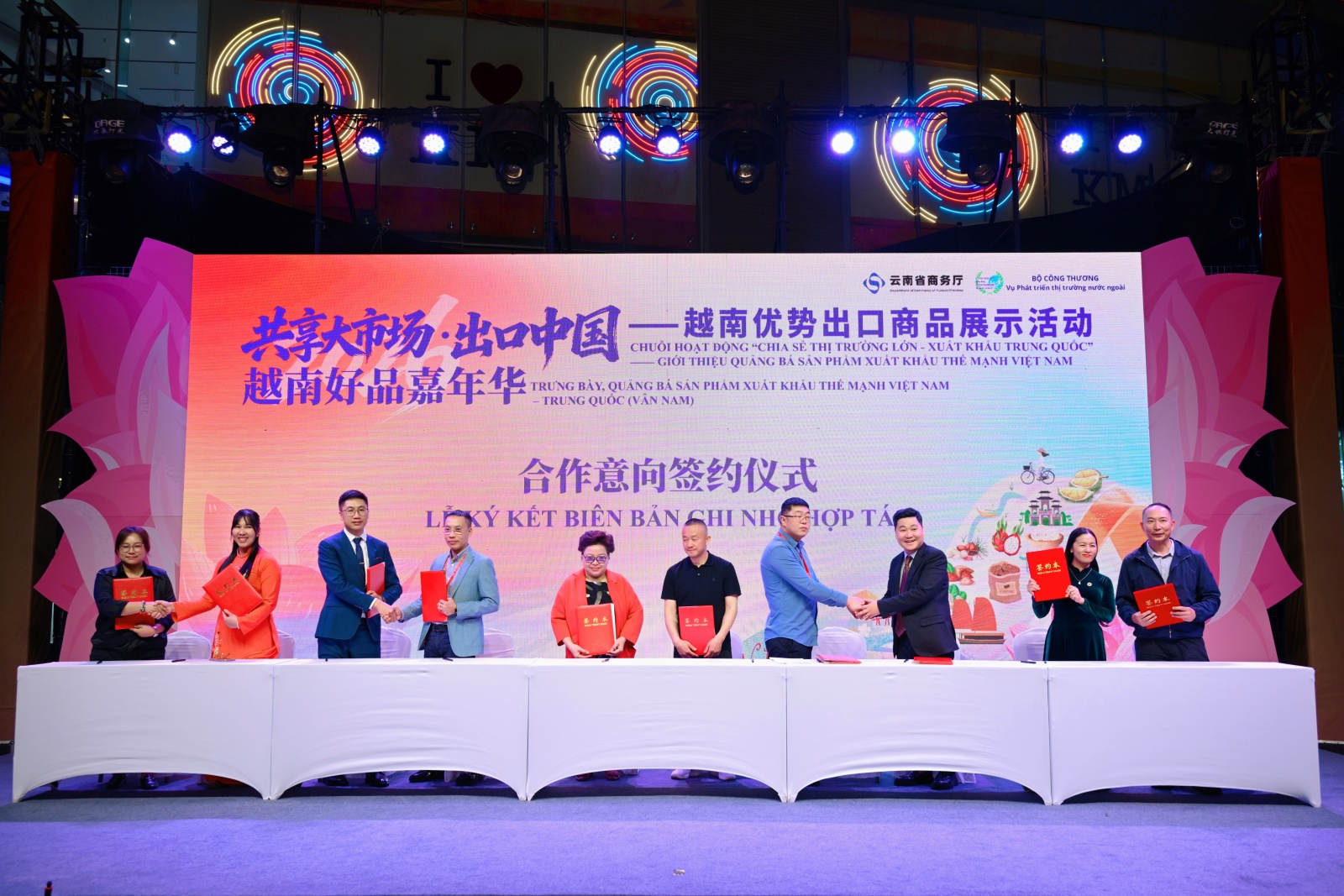
The Ministry of Industry and Trade (MoIT) held trade promotion activities in Yunnan and Shandong, boosting business links, exports, and investment cooperation between Vietnam and China.
A prestigious international award and a two-million-guest milestone mark a strategic evolution, highlighting the success of the entertainment-led integrated resort model in the regional hospitality market.
On April 24, Prime Minister Le Minh Hung chaired a nationwide conference on accelerating the allocation and disbursement of public investment capital in 2026.
A prestigious international award and a two-million-guest milestone mark a strategic evolution, highlighting the success of the entertainment-led integrated resort model in the regional hospitality market.
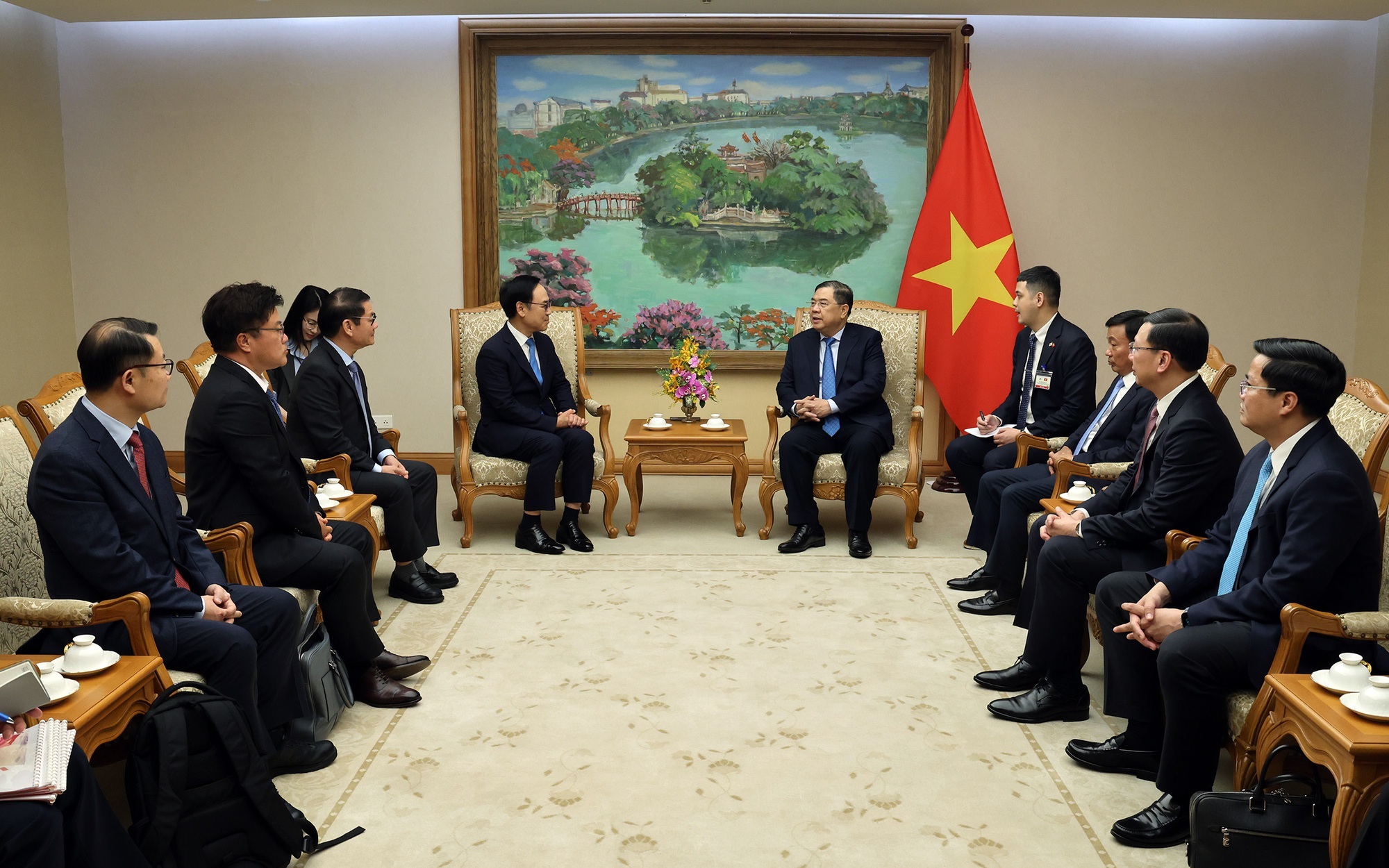
Permanent Deputy Prime Minister Pham Gia Tuc urged Hyundai Rotem to expand cooperation, technology transfer, and participation in Vietnam’s railway projects.
Prime Minister Le Minh Hung and President Lee Jae Myung led a Vietnam - the Republic of Korea (RoK) business roundtable in Hanoi, calling for deeper high tech cooperation.