
MoIT adjusts schedule for Earth Hour 2026 launch event
19:05 | 23/03/2025 20:59 | 07/03/2026Home Page
The Ministry of Industry and Trade has rescheduled the launch of the energy conservation campaign and Earth Hour 2026 activities to March 21.


Frozen tuna and loin products dominate the market
According to the Vietnam Association of Seafood Exporters and Producers (VASEP), the Dutch market has recorded a notable increase in tuna imports over the past three years, reflecting the strong rebound in seafood demand in a country considered a key gateway to Europe. Data from the International Trade Centre (ITC) shows that the Netherlands’ tuna imports in the first eight months of 2025 rose 24% year-on-year, indicating a steadily expanding market.
Notably, consumption of tuna certified under the Marine Stewardship Council (MSC) label has grown significantly in the Netherlands, reaching more than 10,900 tons in 2023-2024, mainly from skipjack tuna. This highlights a clear shift among European consumers toward sustainably sourced seafood with transparent origins and strict environmental compliance.
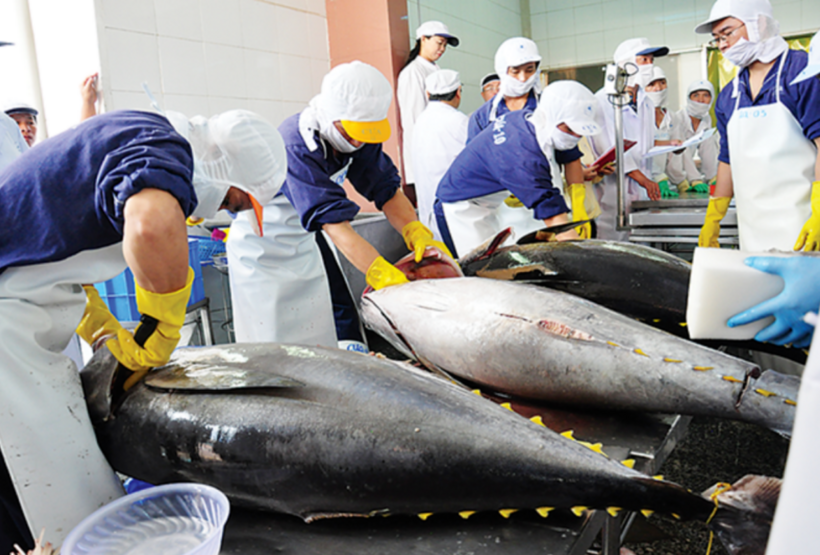
Vietnam’s tuna exports to the Netherlands have surged significantly.
In this context, Vietnam, one of Asia’s important tuna suppliers, has maintained its presence in the Netherlands, particularly in frozen tuna and tuna loin products. Many Vietnamese enterprises have exported stably to this market in recent years, helping consolidate Vietnam’s reputation in the EU tuna supply chain.
However, Vietnam’s tuna exports to the Netherlands have yet to achieve the expected growth. Despite the preferential tariffs offered by the EVFTA, export turnover in recent years has seen periods of decline in both volume and value, most visibly in canned tuna.
Rising logistics costs have prompted European importers to reduce shipments routed through Dutch ports and shift to lower-cost suppliers. At the same time, competition from Ecuador, the Philippines and Mauritius, countries with tariff advantages and strong processing capability, has narrowed Vietnam’s market share. Increasingly stringent EU requirements on sustainability certification, transparent supply chains, traceability and food-safety standards have also created additional pressure for Vietnamese firms.
“Nevertheless, opportunities remain significant. Demand in the Netherlands for frozen tuna loins, yellowfin tuna and fillet products is rising. These are segments where Vietnam has long-standing strengths, especially in deep processing, consistent quality and the ability to fulfill large orders. If Vietnamese enterprises accelerate the transition toward sustainable production, adopt certifications such as MSC, improve cold-chain technology and optimise logistics costs, they will be able to strengthen their competitiveness,” VASEP noted.
Bright prospects in the Dutch market
VASEP also assesses that tuna imports into the Netherlands are likely to continue increasing next year, driven by growing demand for convenient, ready-to-cook and environmentally certified products. Retail chains, restaurants and processed-food manufacturers in the Netherlands are expanding purchases, with expectations of further growth over the next one to two years.
This means Vietnam can fully increase its market share with an appropriate strategy, particularly in the frozen tuna segment where Vietnamese exporters already hold a solid foothold.
If Vietnam maintains traditional production methods and remains dependent on imported raw materials, it will face challenges in competing for EU market share. But by embracing technological upgrades, enhancing value-added processing, capitalising on the EVFTA and strengthening commitments to sustainability, Vietnam still has ample room to recover and expand its position.
“In a market that is restructuring toward transparency, quality and sustainability, Vietnamese exporters must seize this momentum to avoid being left behind. For tuna, an export sector generating hundreds of millions of USD each year, the Netherlands is more than a consumption market; it is a strategic gateway for deeper penetration into the wider EU,” VASEP emphasised.
In 2024, Vietnam’s tuna exports reached nearly USD 1 billion, up 17% from 2023. The US remained the largest importer with USD 388 million, followed by the EU with USD 197 million, Israel accounted for USD 65 million, Russia USD 45 million, and Canada USD 39 million.
19:05 | 23/03/2025 20:59 | 07/03/2026Home Page

19:05 | 23/03/2025 20:56 | 07/03/2026News and Events

19:05 | 23/03/2025 17:53 | 07/03/2026News and Events

19:05 | 23/03/2025 16:53 | 05/03/2026Home Page
19:05 | 23/03/2025 16:50 | 05/03/2026Trade