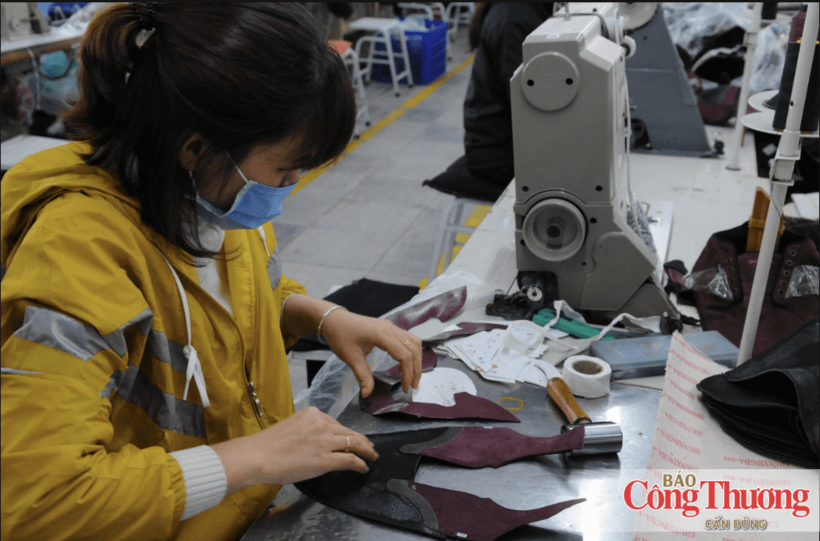
Trade promotion is helping Vietnamese footwear businesses connect with global buyers, strengthen domestic supply chains, develop brands and widen their global reach.
Not merely a place for signing contracts, trade promotion programs are opening doors for Vietnamese footwear businesses to meet the right customers, gain a clearer understanding of market trends and seek partners to develop domestic materials and components.
Attracting international buyers to Viet Nam
In recent years, trade promotion activities have undergone significant changes in their approach. Trade fairs and exhibitions are no longer places where businesses simply set up booths, showcase products and wait for partners to come. Many programs are now organized in a manner that combines exhibitions, business matching, seminars, market information provision and field surveys.
The Viet Nam International Sourcing (VIS 2026), an international goods supply chain connectivity exhibition taking place from September 3 - 5 in Ho Chi Minh City, is one example. Ahead of the event, domestic trade promotion agencies, together with Viet Nam's network of Trade Offices abroad, have actively promoted the event and connected with buyers. The success of VIS 2025 has also added to the event's appeal, raising expectations that it will continue to serve as a meeting point between international buyers and Vietnamese businesses.
For the footwear industry, this represents a noteworthy opportunity. A business seeking new customers often has to spend considerable time and money accessing individual markets. Meanwhile, when buyers are brought to Viet Nam, the scope of their search can be much broader.
Phan Thi Thanh Xuan, Vice President and General Secretary of the Viet Nam Leather, Footwear and Handbag Association
In an interview with Newspaper of Industry and Trade, Phan Thi Thanh Xuan, Vice President and General Secretary of the Vietnam Leather, Footwear and Handbag Association, said that such events not only provide information on trends, technology, equipment, materials and production models, but also help connect multiple stakeholders within the same ecosystem.
In particular, the effectiveness of bringing international buyers to Viet Nam does not lie solely in the time they spend attending an event. “When buyers have come to Viet Nam, they can spend time meeting many businesses and may even meet exactly the businesses they need. This is a very good advantage of events organized in Viet Nam,” Xuan said.
This is also an important difference between in-country trade promotion and taking businesses abroad. A Vietnamese business delegation promoting products in a particular market can generally introduce only a certain number of businesses, while a buyer coming to Viet Nam can proactively seek out multiple suppliers, visit factories and verify their production capabilities.
“For the footwear industry, where buyers' requirements are becoming increasingly specific in terms of quality, delivery schedules, environmental standards, traceability and the ability to fulfill orders, being able to directly see production capabilities is of considerable value,” Xuan added.
From the perspective of Dr. Nguyen Minh Phong, a member of the Economic Advisory Council under the Central Committee of the Viet Nam Fatherland Front, the effectiveness of trade promotion activities today should not be measured solely by the number of contracts signed immediately at trade fairs.
According to him, continued connections after an event are the more important part of forming long-term cooperation. Businesses can meet partners, learn about market demand, adjust their products, improve their capabilities and gradually participate more deeply in global supply chains.
This approach is particularly meaningful for footwear businesses seeking to move from contract manufacturing toward greater proactiveness in design, product development and building their own brands.
Solutions to the materials and components challenge and expanding Vietnamese brands
If market expansion is the most visible outcome of trade promotion, another value of greater long-term significance is the ability to establish connections to strengthen domestic supply chains.
Viet Nam's footwear industry is currently one of the country's important export sectors, but its dependence on imported materials and components, particularly in segments requiring high-quality materials, remains an issue that needs to be addressed. When international buyers come to Viet Nam, this also creates opportunities for suppliers of materials, accessories, technology and supporting services.
Dr. Nguyen Minh Phong said trade promotion activities could become a practical channel for domestic businesses to seek partners to develop supply chains. However, to turn opportunities into actual capabilities, businesses themselves must also make long-term preparations.
The footwear industry is working to increase localization rates and add value to products.
Viet Nam currently lacks a sufficiently professional specialized materials and components trading system capable of bringing together demand and connecting supply with demand. This is an issue that the footwear business community has raised for many years. Alongside this is the need to develop supporting industries, production infrastructure and technological capabilities.
If these conditions are improved, meetings at trade fairs and exhibitions could become the starting point for new investment projects, new materials and components suppliers and production linkages established in Viet Nam.
From this perspective, trade promotion and investment attraction have a fairly clear intersection. An international buyer coming to Viet Nam initially seeks sources of supply, but in the process of exploring the market, they may also recognize investment needs in links that are still missing from the domestic supply chain. This is an opportunity for the footwear industry to increase localization rates, reduce risks from supply disruptions and increase the value created domestically.
Alongside opportunities to develop domestic sources of materials and components, domestic footwear businesses also have opportunities to expand their brands, according to Dr. Nguyen Minh Phong. Vietnamese businesses have become more proactive in design and brand building. The trend toward product personalization and demand for products with distinctive identities are creating additional room for Vietnamese businesses to increase added value.
However, for Vietnamese brands to maintain a strong foothold in the domestic market and expand internationally, businesses must invest simultaneously in design, quality, technology and intellectual property.
“To turn potential into a genuine competitive advantage, businesses need to make more comprehensive investments in design, branding and intellectual property protection. At the same time, they should make effective use of trade promotion programs to expand markets and enhance the position of Vietnamese fashion on the global map,” Dr. Nguyen Minh Phong emphasized.
It can be seen that trade promotion activities are proving effective. In addition to connecting with partners, export sectors, including the footwear industry, have been making effective use of such events to study markets, improve products, build brands and seek missing links in their supply chains.
Polish Prime Minister Donald Tusk will pay an official visit to Viet Nam from October 24 to 26 as the bilateral trade continues to grow, creating opportunities for deeper cooperation.
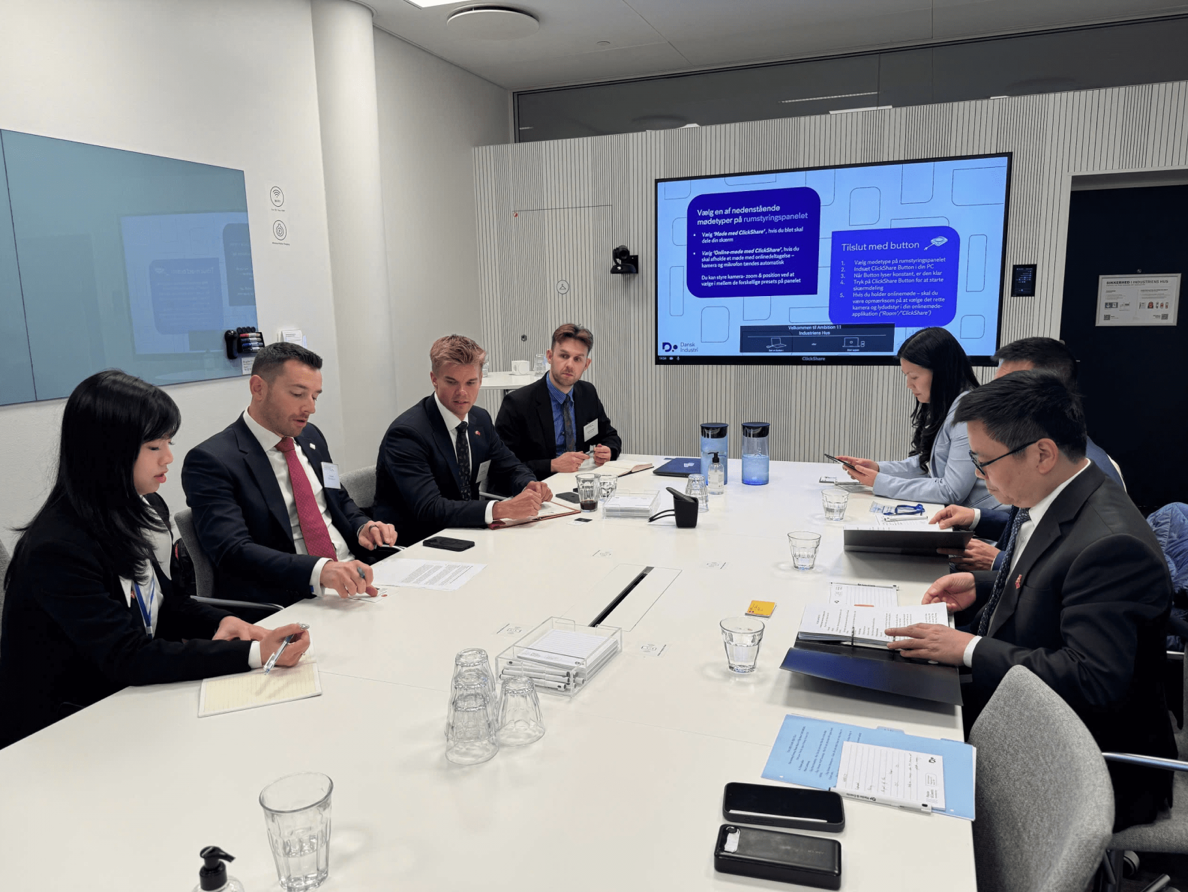
Deputy Minister Truong Thanh Hoai met with LEGO and Carlsberg in Denmark on October 20 to discuss green investment and sustainable manufacturing in Viet Nam.
For more than three decades, Ms. Dang Thi Thanh Huong has quietly shaped the legacy of Dong Phuong Cake & Confectionery, a brand rooted in tradition, craftsmanship.
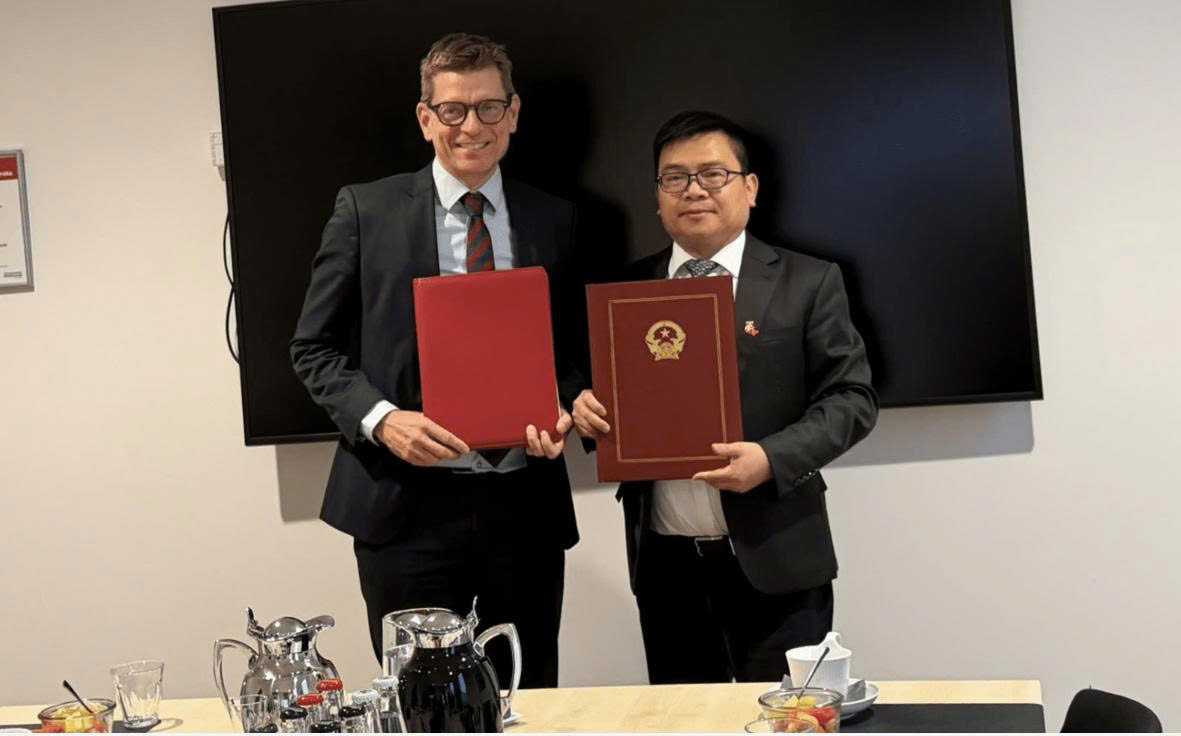
Viet Nam and Denmark have signed an MoU on energy cooperation to strengthen bilateral ties and advance collaboration in renewable energy and the green transition.
Deputy Minister Luong Hoang Thai met French Minister Delegate Eleonore Caroit on October 19 to discuss ways to strengthen Viet Nam - France cooperation.
Digital skills, AI adoption and online exports are expected to help young entrepreneurs transform their businesses and expand into international markets.
Norwegian Ambassador Stein Iversen said Viet Nam's economy could be twice the size of Norway's in 12 - 13 years if its current growth momentum continues.
Viet Nam - Malaysia trade hit USD 17.4 billion in the first nine months of 2026, exceeding the 2025 full-year total and signaling a stronger-than-expected year.
The official visit to Laos by Prime Minister Le Minh Hung is expected to inject fresh momentum into bilateral relations, with economic, trade and investment cooperation continuing to serve as a core pillar.