Addressing efforts to lift the European Commission’s IUU yellow card, the Prime Minister stressed decisive action and zero tolerance for violations.
Addressing efforts to lift the European Commission’s (EC) “yellow card” warning on illegal, unreported and unregulated (IUU) fishing, Prime Minister Pham Minh Chinh stressed that all shortcomings must be resolved decisively, and that no mistake by any individual or organization should undermine the country’s collective endeavor.
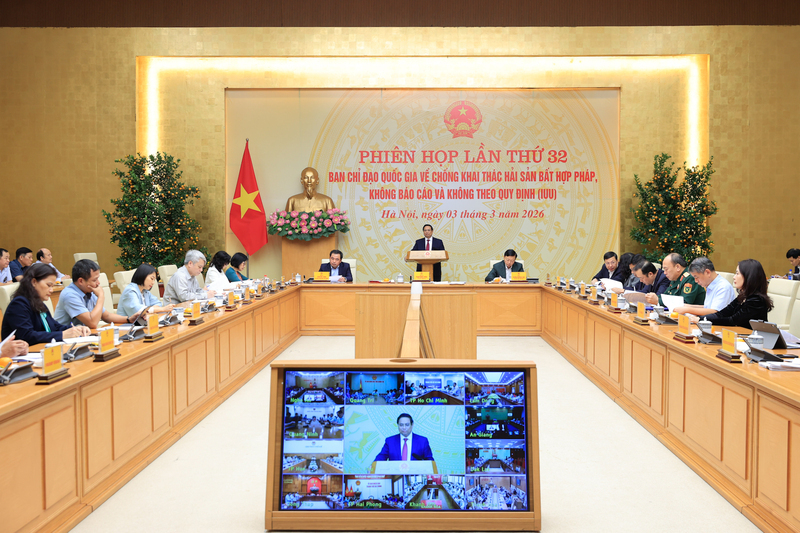
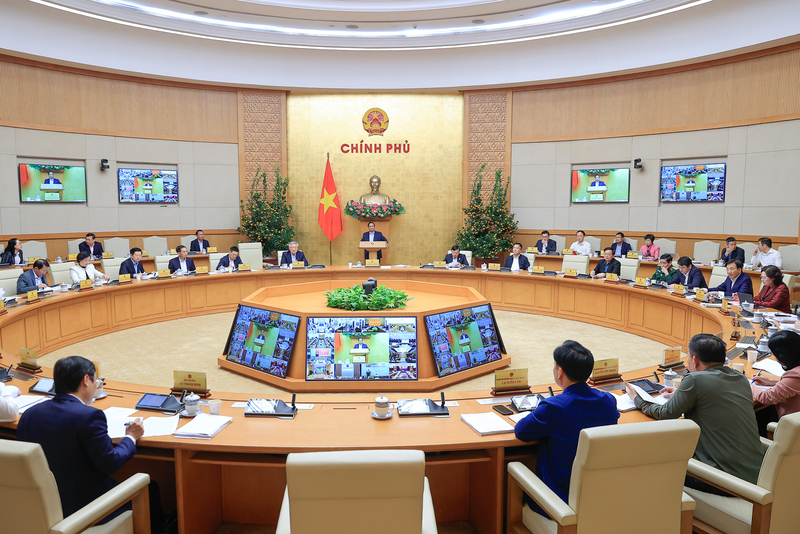
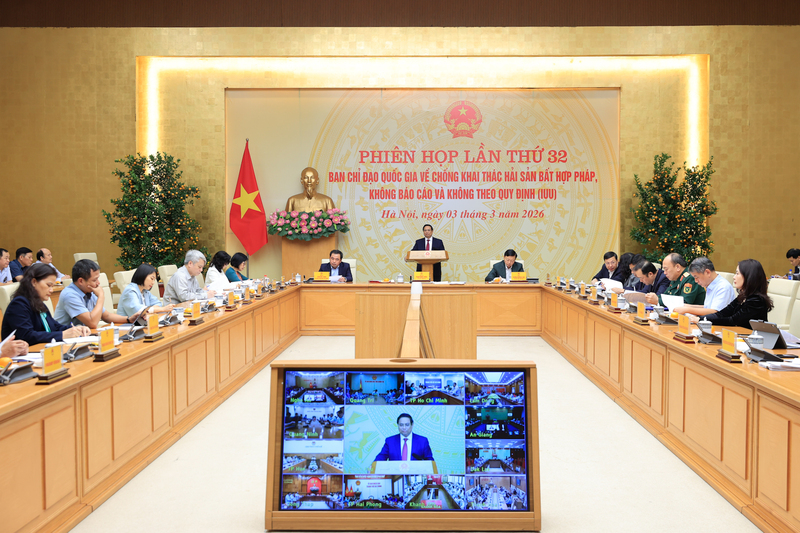
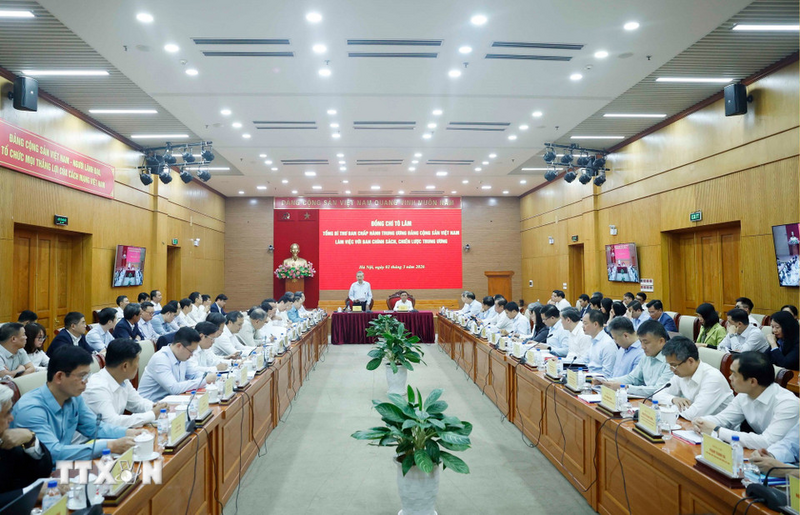
On March 3, Prime Minister Pham Minh Chinh chaired the 32nd meeting of the National Steering Committee on combating IUU fishing.
Concluding the session, the Prime Minister underscored the overarching dual objective: to develop the fisheries sector in a sustainable and long-term manner while securing the removal of the EC’s IUU “yellow card” in line with EU recommendations.
Prime Minister Pham Minh Chinh chairs the meeting. Photo: VGP
He noted would contribute to achieving economic growth of 10% or higher, advancing the country’s rapid and sustainable development, safeguarding the legitimate rights and interests of the people, and upholding the nation’s honor and credibility.
He emphasized the spirit of listening with sincerity, sharing with empathy, and acting with concrete results; working in a serious, substantive, effective, continuous and consistent manner, without formalism, superficiality, or campaign-style implementation. Efforts must be carried out with high determination, strong resolve and decisive action, in the spirit of “say it, do it,” honoring commitments and avoiding excuses or empty promises. Under no circumstances should errors by any individual or collective body affect the common efforts of the entire country.
While acknowledging positive results achieved to date, the Prime Minister pointed out persistent shortcomings that must be thoroughly addressed within this week. The application of technology and data in fisheries management needs to be further integrated and synchronized, ensuring that data are “accurate, sufficient, clean, live, unified and shared.” The handling of the EC’s five recommendations must be made clearer and more specific in reports. The pace of occupational transition in some localities remains slow, with delayed reporting.
He reaffirmed the principle of resolving each issue definitively, finishing what is started and ensuring that every task produces tangible outcomes. All matters related to the sustainable development of the fisheries sector must be reported in detail, with concrete solutions, clear accountability and designated responsible individuals, avoiding vague or generalized statements.
Regarding tasks in the coming period, the Prime Minister required that sustainable fisheries development and the fight against IUU fishing be identified as urgent and central political responsibilities of Party committees and authorities in coastal provinces, cities, communes, wards and special administrative zones. Thorough preparations must be made for working sessions with the EC delegation, including well-prepared programs, scenarios and documentation. All records and data must be accurate, complete and consistent. Absolutely no new violations related to EU recommendations should arise.
On specific tasks and solutions, the Prime Minister directed the Ministry of Agriculture and Environment to prepare a comprehensive report on sustainable fisheries development, focusing on long-term solutions such as reducing fishing intensity; managing the fishing fleet; controlling output; applying technology; and improving fishermen’s livelihoods.
The ministry is to coordinate with the Ministry of Foreign Affairs and the Ministry of Public Security to urgently propose the composition, venue and agenda for meetings between Government leaders and the EC delegation. These must be integrated into the overall reception plan and submitted to the Prime Minister in accordance with regulations.
The Ministry of National Defense was instructed to direct border guard forces to strictly control fishing vessels entering and leaving ports, intensify patrols in adjacent waters, and prevent new violations.
The Ministry of Public Security was tasked with expediting investigations and prosecutions of serious violations as recommended by the EC; closely monitoring vessel owners and fishermen at their places of residence; and coordinating to clarify responsibilities in localities with high rates of “case closure.”
People’s Committees of coastal provinces and cities must provide detailed reports on occupational transition and sustainable fisheries development; thoroughly prepare for on-site inspections by the EC delegation; and clearly assign responsible officials. Localities that have not yet issued policies on occupational transition must complete this immediately.
The VNPT and Viettel groups are required to review and ensure that fisheries data systems meet the criteria of being “accurate, sufficient, clean, live, unified and shared,” guaranteeing timely and effective management.
The Vietnam Association of Seafood Exporters and Producers must take resolute action to prevent enterprises from importing seafood consignments that violate IUU regulations.
The EC inspection delegation is scheduled to visit Vietnam from March 9 to 19, 2026 to assess the country’s efforts in combating IUU fishing. This will be the fifth inspection in the past nine years.
As Vietnam enters a new development phase, voters expect the 16th National Assembly to improve legislative quality, oversight, and decision-making effectiveness.
Amid mounting global volatility, the Prime Minister called for flexible policy scenarios and breakthrough measures to secure growth of 10% or higher in 2026.
Vietnam’s Ministry of Industry and Trade urges businesses to diversify markets and strengthen risk management amid escalating US, Israel, Iran tensions.
The success of the upcoming election will lay the groundwork for building a truly reformed, professional, and action-oriented 16th National Assembly capable of steering the country’s institutional reform agenda.
Prime Minister Pham Minh Chinh called for more effective use of the Vietnam - EAEU free trade pact to boost trade, investment, logistics and regional connectivity.
General Secretary said double-digit growth is sustainable only if resources are fully accounted for, efficiently allocated and anchored in macroeconomic stability.